 Ending a relationship and letting go can be incredibly difficult no matter how toxic it is. Part of this is for simple biological reasons, as some scientific studies have shown that being in love activates the same areas of the brain as being high on cocaine.
Brain scans of lovers and people experiencing cocaine addiction both display increased activity in the pleasure centers of the brain (most notably the dopamine centers) and decreased activity in the frontal lobe, which is the area responsible for cognition. This means that while falling in love can make us feel good, it can also profoundly affect our judgment.
It is for this reason that love can sometimes be compared to an addiction. In love, much like addiction, there may be negative side effects such as abuse or gaslighting. But despite all of those bad circumstances, it can still be difficult to kick the romantic attraction and feelings of love when letting a relationship go.
If you find yourself feeling trapped in a relationship you know is not healthy, consider these 15 tips for letting go of it for good:
1. Recognize the Problem
Awareness is the first step. Educate yourself or consider talking to a therapist or counselor about what constitutes an unhealthy relationship. Take a good, hard, and objective look at your relationship and be honest with yourself.
Ask yourself these questions:
- Is this relationship serving my highest good?
- Is this relationship negatively impacting other areas of my life?
- Is this relationship detrimental to my self-esteem?
If you answered yes to any of these questions, consider ending or talking to a professional about the relationship.
2. Allow Yourself to Feel
[fat_widget_right]Letting go of a relationship is usually not easy. It can be painful to end a relationship even if the relationship was not serving your highest good. Honor any feelings of grief you may have, and allow yourself to feel those emotions rather than attempting to suppress them. Accept grief as a part of the experience, and allow yourself the time you need to heal.
Reach out to one of our therapist in Raleigh, NC or find a therapist closer to you.
3. Discover the Lesson
Many people who move on from a toxic relationship feel guilt or shame as they perceive the time they spent in the relationship as a waste. However, every person who comes into our lives can teach us something. Rather than looking at your relationship as wasted time, try to find the lesson in it. What did this person teach you? What are you taking away from the relationship? How have you changed as a person, and how might you do things differently next time?
In life, lessons may often be repeated until they are learned. Look for the lesson from this relationship and you may be less likely to carry the same lesson over into your next relationship.
4. Create Separation
It can be hard to distance yourself from someone you’re used to spending so much time with, but it is usually necessary if you want to move on from the relationship. This doesn’t mean you can’t maintain a friendship with your ex, but it’s usually best to allow some time for both parties to heal before you try to spend time together as friends.
5. Let Go of the Mementos
It can be tempting to hang on to all the old relics of a past relationship. Doing so, however, may prevent you from moving on with your life. If you must keep the old love letters, movie ticket stubs, photos, or romantic gifts, you may want to store them somewhere out of sight until you’re ready to move on.
6. Take Off Your Love Goggles
Love often has a way of clouding your perception, which sometimes makes it difficult to a see someone for who they really are. If you really want to get out of an unhealthy relationship, you must be willing to take off your love goggles and look at the person objectively. Consider talking with a close family member or friend or even finding a therapist to help you look at the relationship impartially.
It isn’t uncommon to only hold on to the good memories of an ex and completely shut out the bad memories. Maintain your perspective by remembering both sides of the experience. Remind yourself of the good times, but don’t forget those bad times or you could end up forgetting why you ended the relationship in the first place.
7. Compose a Letter to Your Ex
Consider writing out all your feelings in a letter, even if you have no intention of sending it. You can choose to give this letter to your former partner or destroy it when you’re finished. The point of the letter is to allow you to release your feelings. Writing or journaling can help you reflect on the relationship as a whole, while giving you a way to further your mental and emotional wellness.
8. Focus On Empowering Yourself
Try your best to shift focus off the relationship and back to yourself. Consider trying new things or putting your energy into a hobby you’ve neglected. Remembering why the relationship was unhealthy and focusing on what it is you do want in a relationship can be empowering.
Most importantly, work on your relationship with yourself. Focus on cultivating self-love and respect. Remind yourself that you are worthy of love and that you deserve a healthy relationship.
9. Rewrite Your Story
We often tend to place the weight of our identities into our self-professed life stories. We believe we are what we continually tell ourselves. Examine your story and rewrite it in a more empowering way to start making positive changes in your life.
If you continually tell yourself you lost your soul mate and you’re destined to be alone, you might struggle to hang on to a relationship that is no longer serving you. Reframe your story and consider the fact this relationship may have just been one step on the journey toward an even better relationship in the future.
10. Practice Forgiveness
Release any feelings of guilt or regret you have surrounding the relationship. Forgive yourself for anything that happened in the past because you can no longer change it. You can only move forward and learn from it.
Be willing to forgive your former partner as well. Let go of any resentment you have regarding the relationship. Look at your partner with compassion and empathy and understand that all humans are susceptible to mistakes.
11. Live in the Present Moment
Life exists in the present moment. Choose to live in the present rather than getting lost in nostalgia. Often, people stay in a relationship that is no longer healthy because they are clinging to the past. Judge your relationship based on how it is at present rather than how it once was.
12. Accept What Is
We must be able to accept things as they are if we want to move forward. Many people remain in relationships that are unhealthy hoping they can somehow change their partner. It is important to remember you cannot change anyone, especially if they have no willingness to change themselves. If the relationship isn’t working for you, then you have the choice to leave and move on. That is something you can change.
13. Contribute to a Cause You Care About
If you’re having trouble letting go of the past, consider getting involved in a cause you feel passionate about. Doing this can not only occupy your time and mind as you process feelings and let go of the relationship, but it can also help shift your focus to something bigger than yourself. Studies have shown volunteering can significantly improve overall well-being. This can provide perspective and help you feel good as you also help your community.
14. Practice Self-Care
Most importantly, work on your relationship with yourself. Focus on cultivating self-love and respect. Remind yourself that you are worthy of love and that you deserve a healthy relationship.Letting go isn’t easy, and it isn’t uncommon to forget our own physical and emotional health after a painful breakup. The grief can be overwhelming and we may start to neglect our own needs.
Help yourself by choosing to practice self-care every day. Get plenty of rest. Eat nutritious food. Indulge. Take a hot bath. Get a massage. Whatever it is, just do something to meet your personal needs.
Furthermore, learning how to practice self-compassion. Moving on can be a big and scary step, so be gentle with yourself as you heal and create a new life after this relationship.
15. Embrace the Impermanence of Life
Forever is a misleading term. The only constant that exists in life is change. Despite our efforts to the contrary, we truly cannot hold on to anything in life forever. Everything—friends, family, and relationships—come and eventually go.
When it comes time for something to end, rather than clinging to what no longer is, realize impermanence is the nature of life and try to embrace it. Appreciate the good moments you had, cherish those memories, and let them go in exchange for new experiences.
Know When to Ask for Help
The first few moments, days, or weeks following a breakup can seem debilitating. For some, ending a relationship means a loss of identity, support, and normalcy. Ending a relationship—even a toxic one—can be incredibly challenging and emotionally draining. However, you do not have to do it alone. Know when to seek support if you need it.
If feelings of grief, shame, guilt, or other negative emotions persist and begin affecting your daily life after a relationship ends, consider finding a qualified therapist or counselor who can help you process and acknowledge your feelings in a healthy way. A qualified mental health professional can help you examine the past relationship in a safe place free of judgement while you work toward achieving a more complete sense of self after the relationship has ended.
Even if you feel like there is no hope after severing an important tie in your life, remember you can heal and you deserve a healthy relationship that meets your needs and complements you and your happiness.
References:
- Lahat, I. (2014, July 9). The brain looks the same when we’re in love or high on cocaine. Retrieved from http://www.businessinsider.com/the-brain-looks-the-same-high-on-love-or-cocaine-2014-7
- Tabassum, F., Mohan, J., & Smith, P. (2016). Association of volunteering with mental well-being: A lifecourse analysis of a national population-based longitudinal study in the UK. BMJ Open, 6(8). doi:10.1136/bmjopen-2016-011327
[cycloneslider id=”letting-go-slideshow-2″]
 More than 50 million students are enrolled in public schools across the United States. Of those, one in five meet the criteria for a mental health condition. About 70-80% of these students won’t receive any kind of treatment or therapy. Because children and adolescents spend most of their time at school, teachers, administrators, school nurses, and other staff are often in a unique position to be the first to identify any problems or issues in a child’s life. Here are some ways for public schools to better address this rising mental health crisis.
Mental Health Screening in Public Schools
Most schools do not have any type of mental health screening in place for students. The National Association on Mental Illness supports mental health screenings for several reasons. Half or more of chronic mental health issues begin at or before age 14. Early identification and treatment can help prevent more serious problems down the road.
Just as screenings are done for a variety of physical health problems, mental health screenings in public schools could greatly benefit vulnerable students. Conducting mental health screenings in schools allows teachers to recognize the warning signs of various mental health issues, allowing for earlier identification and quicker connections to the treatment resources students might need.
The Role of Public School Nurses in Mental Health
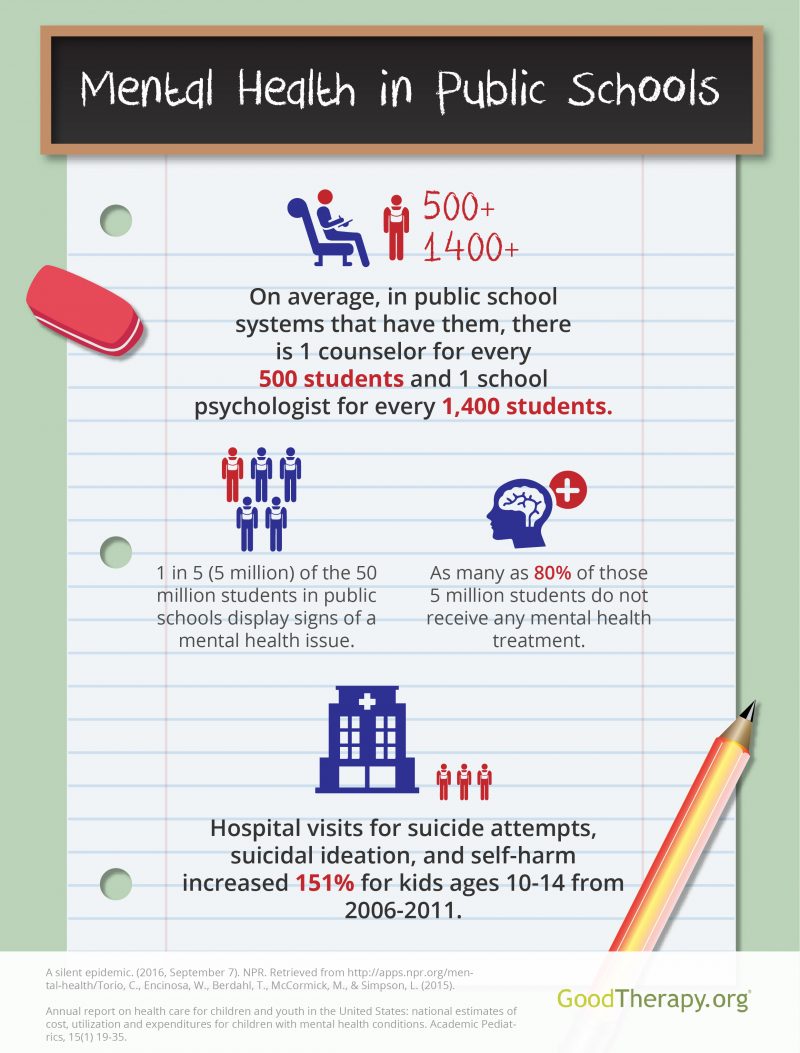
While school nurses are usually the most likely to catch any mental health issues early on, many schools only have one on-staff nurse, and many of these nurses only work part-time. It is not uncommon for entire school districts to share one nurse, meaning that one nurse may see hundreds or even thousands of students (depending upon the size of the district). This makes it more unlikely that a school nurse would be able to spot symptoms of mental health issues, as the nurse may not be available or have enough time with each student to address their needs.
According to the American Association of Pediatrics, schools function as the mental health system for approximately 80% of students. For this reason, school nurses play a critical role in identifying problems so they can be treated as soon as possible. Unfortunately, school nurses typically receive little to no training in mental health.
While nurses aren’t expected to be psychologists or therapists, they should be aware of emotional, physical, and behavioral warning signs for common mental health problems. Awareness and recognition of problems as soon as they arise could prevent a suicide.
Integrated Mental Health Strategy in Public Schools
Researchers suggest the best way to help students with mental health issues may be to have teachers, counselors, administrators, and school nurses work together to spot and handle mental health issues. Saddling this responsibility on one teacher or administrator is not likely to be effective because they typically do not have the necessary training or time. On average, school counselors see around 500 students. School nurses may see even more students, especially if they are the only nurse for an entire district. Teachers also see a significant amount of students, ranging from 20-30 in elementary schools to hundreds of students in middle schools and high schools where students change classes and teachers throughout the day.
[fat_widget_left]Integrating mental health care and strategies in public schools can help all staff who encounter students. They will likely be better able to recognize mental health problems and provide early intervention as well as prevention for many issues, including thoughts of suicide, drug and alcohol use, and relationship abuse. To recognize these potential problems, some degree of training in mental health will likely be necessary.
Some signs that a student may be experiencing a mental health condition include:
- Sudden changes in a student’s mood or behavior
- Frequent mood swings
- Behavioral problems such as aggression, temper tantrums, or lashing out in school
- Poor academic performance
- Poor hygiene
- Frequent absences
- No longer participating in extracurricular activities
- Isolation from peers
- Difficulty paying attention in class
- Excessive worrying or anxiety
- Hyperactivity
- Difficulty relating to others
- Somatic complaints (stomachaches, headaches) with no clear physiological cause
Providing Mental Health Services in Public Schools
According to the 2016 Children’s Mental Health Report, young people with access to mental health treatment and services in school are 10 times more likely to seek help for mental health and substance abuse concerns than those who do not have such programs available. Many schools are choosing to address the rising mental health crisis in the public-school system by hiring a professional psychotherapist, counselor, or psychologist on staff. Other schools have therapists come in from community mental health centers to see students who are struggling with mental health issues beyond the guidance counselor’s scope of expertise.
Congresswoman Grace Napolitano is currently working on implementing the Mental Health in Schools Act, which would provide $200 million in funding through competitive grants of $1 million each to 200 public schools across the country. This funding would help them provide on-site licensed mental health professionals in public schools. Napolitano has been executing these programs since 2001 in 14 public schools in her congressional district. This approach has proven successful and will be expanded nationwide through the funding provided by the Substance Abuse and Mental Health Services Administration.
References:
- Anderson, M. & Cardoza, K. (2016, September 7). A silent epidemic: Our public schools are struggling to handle millions of students with mental health problems. Retrieved from http://apps.npr.org/mental-health/
- Association for Children’s Mental Health. (n.d.). Problems at school. Retrieved from http://www.acmh-mi.org/get-help/navigating/problems-at-school/
- Cardoza, K. (2016, September 3). School nurses can be mental health ‘detectives’ but they need help. Retrieved from http://www.npr.org/sections/ed/2016/09/03/478835294/school-nurses-can-be-mental-health-detectives-but-they-need-help
- Child Mind Institute. (2016). 2016 children’s mental health report. Retrieved from http://childmind.org/report/2016-childrens-mental-health-report/
- Facts on the Mental Health in Schools Act. (n.d.). Retrieved from http://napolitano.house.gov/resources/additional-resources/mental-health-schools-act/facts-mental-health-schools-act
- Firth, S. (2015, February 20). Hospitals see alarming increase in suicidal children. Retrieved from http://www.medpagetoday.com/pediatrics/preventivecare/50117
- National Alliance on Mental Illness. (n.d.). Mental health screening. Retrieved from http://www.nami.org/Learn-More/Public-Policy/Mental-Health-Screening
- Shefall, A., Asti, L., et al. (2016, September). Suicide in elementary school-aged children and elderly adolescents. doi:10.1542/peds.2016-0436
 A new longitudinal study strengthens previous evidence that parental sexual orientation has no notable impact on childhood development. While this is not the first investigation to find the sexual preferences of parents don’t affect children, it is the first to track childhood well-being in relation to parent sexual orientation over time.
About 65,000 adopted children in the United States have same-sex parents. This study’s results may help inform future policy decisions regarding same-sex parents.
Childhood Outcomes Not Linked to Parental Sexual Orientation
Published in the journal Developmental Psychology, the study followed 96 families with adopted school-age children as they moved through early and middle childhood. Parent combinations included a mix of heterosexual pairings and same-sex couples. The study tracked childhood behavior and adjustment along with family functioning and relationship variables.
The analysis found no significant differences between parent groups in any of the examined factors, including family characteristics and childhood outcomes. These findings are consistent with many previous studies that are similar in nature, but not longitudinal in design. According to the study, research has consistently found no differences between these parent types on several important measures, such as childhood stress levels and quality of mental health.
[fat_widget_right]It is possible that continuing academic concerns about same-sex adoptive parents are the result of an existing conflict in popular psychological theories. For example, family systems theory is in line with the observed results, as it contends family functioning is more important than family structure. In contrast, family stress theory generates predictions of differences between children of same-sex and opposite-sex couples.
Variables That Do Impact Childhood Outcomes
Several other variables were found to have a significant influence on childhood outcomes over time. Specifically, it was shown that child adjustment problems and high parental stress in earlier years can contribute to a child’s behavioral issues and problems in overall family functioning during middle school. These additional findings provide potential targets for future research.
References:
- Farr, R. H. (2016). Does parental sexual orientation matter? A longitudinal follow-up of adoptive families with school-age children. Developmental Psychology. doi:10.1037/dev0000228
- Farr, R. H., Forssell, S. L., & Patterson, C. J. (2010). Parenting and child development in adoptive families: Does parental sexual orientation matter? Applied Developmental Science, 14(3), 164-178. doi:10.1080/10888691.2010.500958
- University of Kentucky. (2016, October 24). No differences noted over time for children of gay, lesbian, adoptive parents. ScienceDaily. Retrieved from www.sciencedaily.com/releases/2016/10/161024104229.htm
 New research has strengthened the belief that the fear of missing out (FOMO) is a legitimate phenomenon with threatening implications for psychological well-being. The rapid pace of modern society may be facilitating the effect by overloading lives with continually evolving social circles that require frequent monitoring and maintenance.
Most of the social networks people have in their lives today are online. Even the more traditional networks (family, employment-based, etc.) likely have an online component. Keeping up with these different networks can be an anxiety-inducing experience that can interfere with daily life.
Even before the term was coined, many were familiar with the feeling of FOMO. Missing out on enjoyable activities can lead to anxiety, especially as social networks have grown. Today, it often seems like there is even more to miss out on than there was in the past. Before social media, a person usually only had to go outside or call a few phone numbers to alleviate the fear of missing out on something. Now, just scrolling through Facebook can make a person acutely aware of how many activities from which they may perceive being excluded.
FOMO, Social Networks, and Online Vulnerability
[fat_widget_right]The study, published in the journal Computers in Human Behavior, examines FOMO tied to online social networks and its potential effect on several psychological measures, including sense of support, sense of connectivity, and self-esteem. Collectively, these measures were considered to represent someone’s online vulnerability and psychosocial well-being. A collection of 506 United Kingdom Facebook users participated by responding to an extensive online survey.
To avoid the feeling of FOMO, study participants were likely to post more frequently online. More disclosure of personal activities and emotions makes social media users more likely targets of cyberbullying, which can then lead to decreased self-esteem. The researchers identified FOMO as a mediator of the relationship between increased social media use and decreased self-esteem. After surveying study participants again six months later, the researchers determined FOMO, increased social media usage, and low self-esteem were all repeating factors in an ongoing cycle.
Online Social Activities and Mental Health
The rise of online social networks, content, and media has gradually led to changes in human behavior, many of which appear to have negative consequences for mental health. However, there is also evidence that social media use can be a positive contributor to mental health by enabling the formation of new connections. The conflicting nature of these reports may be due to differences in usage motivation, including the presence or absence of FOMO. The study’s authors say the key is for people to limit their social media usage and try not to compare their lives to others, as a social media representation of someone’s life is generally not exhaustive.
References:
- Buglass, S. L., Binder, J. F., Betts, L. R., & Underwood, J. D. (2017). Motivators of online vulnerability: The impact of social network site use and FOMO. Computers in Human Behavior, 66, 248-255. doi:10.1016/j.chb.2016.09.055
- Dovey, D. (2016, October 14). The real cost of FOMO. Medical Daily. Retrieved from http://www.medicaldaily.com/fear-missing-out-fomo-real-and-it-could-be-detrimental-your-mental-health-401321
- Pantic, I. (2014). Online social networking and mental health. Cyberpsychology, Behavior, and Social Networking, 17(10), 652-657. doi:10.1089/cyber.2014.0070
 A recently released investigation of mental health in British college students found a significant link between financial problems and risk of experiencing mental health issues. The authors highlight a cycle of financial hardship and poor mental health that could lead to more problems if left unaddressed.
College student mental health is an increasing problem in many parts of the world. In a 2013 survey, 95% of directors at U.S. college counseling centers reported seeing an increase in the number of students with significant mental health issues. Because many school counseling centers are unable to keep up with increasing mental health treatment needs, many researchers’ efforts are focused on reducing students’ exposure to factors that pose a threat to mental health, such as financial stress.
Student Finances and Mental Health: a Vicious Cycle?
Researchers surveyed 454 first-year college students at four different points in time during their first two years of college. They assessed mental health symptoms such as anxiety, depression, stress, and alcohol use. They also assessed financial variables, including level of family affluence based on assets and stress related to money concerns.
[fat_widget_right]Family affluence did not have a significant effect at any stage of the analysis, but financial stress was found to be associated with many mental health variables. At the start of the study, students under higher financial pressure were more likely to experience anxiety, depression, stress, and alcohol dependence problems. Financial stress also predicted greater anxiety and alcohol issues over time.
The researchers also found that the students’ mental health could affect financial stress, leading to an association between poor mental health or substance dependence and more difficulty meeting financial needs later on. Depression was a factor when financial stress was tied to thoughts of leaving school.
Managing Financial Stress
These findings also suggest a serious negative association between student debt and poor mental health over time. Students who reported worrying about taking on debt to pay for school experienced higher amounts of anxiety and stress throughout the survey period.
The connection between financial pressure and poor mental health in college students is not a new finding. A 2013 study focused on the factors associated with finance-based anxiety (a common consequence of financial stress). The study included 180 college students who were receiving counseling at their university’s counseling center. Differences in financial anxiety were found to exist based on age, gender, and socioeconomic status. The identification and verification of such relationships may help in the development of interventions that would be effective across a wide range of groups.
Though completely changing a financial situation may not be possible, the study’s authors suggest students meet with a financial adviser at their school to seek help managing their finances. Because the survey findings show financial stress can fuel mental health issues, being proactive about managing finances may help prevent mental health from spiraling out of control.
References:
- Archuleta, K. L., Dale, A., & Spann, S. M. (2013). College students and financial distress: Exploring debt, financial satisfaction, and financial anxiety [PDF file]. Journal of Financial Counseling and Planning, 24(2), 50.
- College students’ mental health is a growing concern, survey finds. (2013, June). American Psychological Association. Retrieved from http://www.apa.org/monitor/2013/06/college-students.aspx
- Novotney, A. (2014). Students under pressure. American Psychological Association. Retrieved from http://www.apa.org/monitor/2014/09/cover-pressure.aspx
- Pain, E. (2016, October 4). Tackling the ‘vicious cycle’ of financial challenges and poor mental health. Retrieved from http://www.sciencemag.org/careers/2016/10/tackling-vicious-cycle-financial-challenges-and-poor-mental-health
- Richardson, T., Elliott, P., Roberts, R., & Jansen, M. (2016). A longitudinal study of financial difficulties and mental health in a national sample of British undergraduate students. Community Mental Health Journal. doi:10.1007/s10597-016-0052-0
 Children with attention-deficit hyperactivity (ADHD) may have an impaired tolerance to being punished, according to a new study published in the Journal of Child Psychology and Psychiatry. The finding could have implications for several areas of study, including behavior modification and neuroscience.
Children with ADHD often run into problems with people in supervisory positions because of their symptoms. Distractibility, fidgeting, and apparent daydreaming are just a few of many potential behaviors associated with the condition that can be perceived as disruptive and result in punishment from authority figures. The research shows punishment-based behavior correction can have unexpected consequences for children with ADHD.
Measuring Punishment and Reward Sensitivity in Children
The study included 210 children, 145 of whom were diagnosed with ADHD (the rest participated as part of a comparable control group). Each child was placed in front of a computer with two game options visible on the screen at all times. They were then given time in which they could play either game as much (or as little) as they liked. The games were almost identical (the player could gain points as a reward for correct responses), except in one option there was a fourfold greater chance of being punished by having points taken away for giving incorrect answers.
[fat_widget_right]Both groups of children showed a tendency to play the less punishing game more often. This trend remained relatively stable until about 100 trials were completed by each child. At this point, there was a significant increase in the number of ADHD-diagnosed children choosing to play less of the game that had an increased rate of punishment, suggesting children with ADHD tend to avoid punishment more often than children not diagnosed with ADHD.
Motivational Systems in Children with ADHD
Some might say these findings validate persistent punishment as an effective means of behavior control in children with ADHD, but the study’s authors say there are some important caveats to consider. First, punishment is generally not advised as a form of behavior modification due to a high risk of causing more harm than good.
Additionally, the change in behavior (choosing the high-rate punishment game less often) occurred despite the rate of reward staying the same in both games. The researchers say this is not typical of developmentally sound decision-making processes and could indicate a wider problem with the brain’s motivational system in children with ADHD. They may be more sensitive to and focused on punishment, while other children are generally more focused on reward.
The study’s authors suggest frequent rewards and incentives may be an effective way to give children with ADHD what they need to seize opportunities for success, especially if they view a task as requiring a great amount of effort.
References:
- Doucette, J., Harris, B., & Jaffe, P. (2014). Educating Canadians on the health risks of corporal punishment and safe and effective alternatives. Health Tomorrow: Interdisciplinarity and Internationality, 2(1). Retrieved from http://ht.journals.yorku.ca/index.php/ht/article/download/40169/36356
- Furukawa, E., Alsop, B., Sowerby, P., Jensen, S., & Tripp, G. (2016). Evidence for increased behavioral control by punishment in children with attention-deficit hyperactivity disorder. Journal of Child Psychology and Psychiatry. doi:10.1111/jcpp.12635
- Hulst, B. M., Zeeuw, P. D., & Durston, S. (2014). Distinct neuropsychological profiles within ADHD: A latent class analysis of cognitive control, reward sensitivity and timing. Psychological Medicine, 45(04), 735-745. doi:10.1017/s0033291714001792
 A new study is in the works to evaluate mindfulness meditation as a treatment for pain after undergoing back surgery. The experiment is still in the participant recruitment stage at Mount Sinai Hospital in New York City, so results will not be available for a couple of years. However, once completed, the study may lead to the development of new, safer approaches to treating back pain than traditional opioid medications.
Back surgery can cause severe pain that lasts for weeks or longer. Opioids have traditionally been prescribed to treat this issue, but they are widely acknowledged to have dangerous side effects and have fueled an addiction and overdose epidemic. Drug overdose has now surpassed car accidents as the leading cause of accidental death in the United States.
Much of the issue has been attributed to a lack of effective alternative treatments. Mindfulness meditation—deliberately focusing attention on the present moment—has been verified as an effective method for addressing many types of pain, so it is possible the effect could be applicable to post-surgical back pain.
Mindfulness Meditation as Pain Treatment
[fat_widget_right]The researchers were motivated to conduct this study after reading a 2011 Journal of Neuroscience article. In the experiment described in the article, 15 people were subjected to varying levels of pain via heated probes at two different points in time. In between these tests, they participated in four 20-minute sessions of meditation training (one session per day for four days). All sessions were conducted by a trained instructor with more than 10 years of related experience.
A comparison of MRI (magnetic resonance imaging) results from before and after mindfulness meditation training identified significant changes in several key brain areas along with reductions in the intensity of pain (40% less) and the unpleasantness of pain (57% less). The associated regions of the brain include those linked to high-level executive functioning, sensory processing, and contextual evaluations, suggesting the effectiveness of mindfulness meditation as a pain treatment is reliant upon multiple neural mechanisms.
Alternative Treatments for Pain
Even if the experiment is successful as far as identifying meditation as being helpful for patients with pain after back surgery, researchers do not expect the approach to be a replacement for modern narcotics. Instead, the goal would be to implement complementary strategies to help manage anxiety and stress after surgery and reduce the need for higher dosages and/or prescriptions for less severe situations.
There are no guarantees that a significant effect will be found at all. Some critics suggest patients may be unable to achieve the necessary focus for mindfulness mediation to be effective near the time of surgery. But with the mounting pressure on doctors to write less prescriptions for opioid painkillers, researchers are continuing to look into alternative treatments for pain.
References:
- Ballantyne, J. C. (2015). Assessing the prevalence of opioid misuse, abuse, and addiction in chronic pain. Pain, 156(4), 567-568. doi:10.1097/j.pain.0000000000000105
- Lagnado, L. (2016, September 19). Can meditation help pain after surgery? Wall Street Journal. Retrieved from http://www.wsj.com/articles/can-meditation-help-pain-after-surgery-1474299114
- Zeidan, F., Emerson, N. M., Farris, S. R., Ray, J. N., Jung, Y., Mchaffie, J. G., & Coghill, R. C. (2015). Mindfulness meditation-based pain relief employs different neural mechanisms than placebo and sham mindfulness meditation-induced analgesia. Journal of Neuroscience, 35(46), 15307-15325. doi:10.1523/jneurosci.2542-15.2015
- Zeidan, F., Martucci, K. T., Kraft, R. A., Gordon, N. S., Mchaffie, J. G., & Coghill, R. C. (2011). Brain mechanisms supporting the modulation of pain by mindfulness meditation. Journal of Neuroscience, 31(14), 5540-5548. doi:10.1523/jneurosci.5791-10.2011
 The information age has rapidly changed how we conduct ourselves in business, education, and in general human interaction.
Advances such as email, instant messaging, and social media were all created to make communication easier and more convenient. Families and friends across great distances can now more easily communicate face-to-face anytime they want. Dating sites successfully match thousands of soon-to-be spouses each year, and parents can more easily keep in touch with their children throughout the day.
However, as society adapts to these fresh avenues of contact, there are also ways new technology threatens to strip away important aspects of how people relate and connect on a personal level. This can be especially true in our most intimate relationships.
Here are three areas in which technology may negatively impact relationships:
1. Intimacy
Intimate relationships often have their own challenges, and changing technologies can contribute even more to the stress of modern relationships. Sometimes, the ways people use technology can create problems between romantic partners, potentially stirring conflict and dissatisfaction in the relationship.
A 2014 Pew Research Center poll indicated that one in four cell phone owners in a relationship or marriage found their partner too distracted by their cell phone. Nearly 1 in 10 had argued with a partner about excessive time spent on the devices. The poll noted that many arguments between couples may have something to do with tech use, such as deciding when to use devices and when to abstain. They also found that younger users were more likely to report both increased tension and enhanced closeness in their relationships as a result of technology.
[fat_widget_right]Technology is also changing some of the most intimate ways in which couples connect. Sexting—sending someone text messages containing explicit sexual content—has increased among adults since 2012, with one in five cell users having received a sext from someone they know—a one-third increase in four years.
2. Distraction
Technology can be an effective distraction in the current moment, over a long period of time, and even in its absence. According to a 2015 poll of 453 adults across the United States, nearly half of all respondents reported being distracted by their phones in the presence of a romantic partner.
Those moments spent focused on technology can quickly add up to a sizable portion of a person’s waking hours. The same allotment of time that just a few years ago might have been considered an online addiction is now commonplace in smartphone use, especially among younger users. It represents a shift in how people spend their time and where they focus their energy.
Technology can also be a distraction when it is not in use. When briefly disconnected from their smartphones in a 2014 study, self-described heavy users indicated having higher anxiety levels than moderate users after just 10 minutes.
3. Depression
Heavy use of social media has also been shown to negatively affect mental health. A recent study from the University of Pittsburgh School of Medicine examined depression rates in younger adults, finding significantly increased odds of depression among those spending the most time engaged in social media.
Looking specifically at only personal social media activity, they concluded that heavy use was significantly associated with increased depression and highlighted the importance of identifying interventions for heavy social media users before they experience any mental health issues.
The report also notes that multiple studies have linked social media use with declines in mood, sense of well-being, and life satisfaction. These declines could be related to FOMO, or the fear of missing out, which studies have shown is often exacerbated by social media use.
Syncing Up by Powering Down
According to Ohio counselor Jessica Wade, MAMFT, LPCC, the emotional connections forged by couples through body language, nonverbal communication, tone of voice, and facial expression are essential to the relationship and impossible to replicate with technology.
“Overreliance on technology might cause misunderstandings, and partners lose the opportunity to make those immediate relationship repair attempts that happen in the moment during in-person communication,†Wade said.
The benefits of technology reside in an ability to elevate the human experience, but experts advise use of new devices and platforms should be grounded in perspective of how the new technology has the power to change communication and the way people relate to one another.Experts recommend finding alternatives for curtailing technology’s potential downsides. To break the cycle, the first step may be to temper, or significantly reduce, how much time is spent focused on devices, apps, and messaging services.
Finding time to consistently detach may require penciling it in on a daily schedule. Allotting non-use times (such as during dinner or date night) can help reground partners in their relationship or individuals to their surroundings.
Many individuals, couples, and families have sought therapy when technology overtakes other priorities. Experts also advise improving communication skills whenever possible—something technology can actively disrupt. In a time when emails and text messages have replaced other methods of communicating, the manner and skill with which people express themselves can become less robust and more mechanical.
Studies have also found significant value in spending as much time in nature as possible. One study by Dutch researchers found lower levels of anxiety and depression among people living within 0.6 miles of a park or wooded space.
The benefits of technology reside in an ability to elevate the human experience, but experts advise use of new devices and platforms should be grounded in perspective of how the new technology has the power to change communication and the way people relate to one another. Identifying ways to use these new inventions successfully—without cheating yourself out of genuine human connection in the process—may ultimately require more low-tech solutions.
References:
- Cheever, N. A., Rosen, L. D., Carrier, L. M., & Chavez, A. (2014). Out of sight is not out of mind: The impact of restricting wireless mobile device use on anxiety levels among low, moderate and high users. Computers in Human Behavior, 37, 290-297. doi:10.1016/j.chb.2014.05.002
- Gardner, A. (2009, October 15). Being near nature improves physical, mental health. Retrieved from http://usatoday30.usatoday.com/news/health/2009-10-15-nature-anxiety-exercise_N.htm
- Lenhart, A., & Duggan, M. (2014). Couples, the internet, and social media. Retrieved from http://www.pewinternet.org/2014/02/11/couples-the-internet-and-social-media/
- Lin, L. Y., Sidani, J. E., Shensa, A., Radovic, A., Miller, E., Colditz, J. B., . . . Primack, B. A. (2016, January 19). Association between social media use and depression in U.S. young adults. Depression and Anxiety, 33(4), 323-331. doi:10.1002/da.22466
- Penn, C. (2015, October 5). Stop “pphubbingâ€: New research shows what happens when you focus more on your phone than your lover. Retrieved from http://www.essence.com/2015/10/05/stop-pphubbing-new-research-cell-phones-relationship
 A growing body of research over the past decade has expanded the understanding of optimism and its potential long-reaching benefits. Finding greater personal happiness and even longer life expectancy has been shown more likely among optimistic-leaning individuals. Psychologically, optimism is also associated with stronger mental health and improved coping abilities in times of emotional difficulty.
Optimism is the disposition or tendency to look more favorably on events, conditions, oneself, or the future. Not everyone is naturally optimistic, and some self-described pessimists may even mock an optimistic outlook, but optimism is often a way of thinking coveted by many.
For those less inclined to be optimistic, is there a path to finding a sunnier perspective?
From Pessimism to Optimism: Adjusting Your Outlook
A study led by researchers from the University of British Columbia found a genetic marker may play a significant role in determining whether someone sees a glass as half empty or half full. A gene variant was shown to cause a more vivid retention of mostly negative responses following an emotional event, suggesting many people may intuitively steer toward pessimism.
However, according to two prominent psychologists who have each taken a career interest in the concept of optimism, the practice can be learned, but—like many skills—may need to be maintained through exercise.
Suzanne Segerstrom is a clinical psychologist and professor of psychology at the University of Kentucky. Her years of research reflect an interest in how self-regulation can potentially improve mental and physical health. Through behavioral adjustments, she believes even longtime pessimists can slowly rewire how they approach life and its many challenges.
Likewise, psychologist and self-help author Martin Seligman has long been intrigued with how perspective can have a significant impact on everyday life. He has devoted decades of energy and research to understanding how personality, outlook, and disposition play a pivotal role in shaping individual happiness. According to his research, finding a more positive outlook can effectively reduce depression symptoms while also boosting the immune system.
So how do the experts advise people to locate their optimism? Here are some steps to becoming more optimistic.
1. Practice Your Optimism
[fat_widget_right]Research shows practicing a more positive attitude can help people learn to be optimistic. Through persistence and motivation, people may be able to shape their outlook and lives in a more positive direction. Optimistic people generally handle problems more directly and are less likely to give up looking for a viable solution. By trying to adopt those traits—along with the presumption that everything will work out in the end—we can affect how we feel, how we respond, and how quickly we recover from setbacks.
2. Focus on Positive Inner Dialogue
Rewriting your own internal script can be a real game changer. By learning to reflect on things more positively, we develop new patterns for responding to challenges. Simple reinforcements about keeping things in perspective and putting a more positive spin on the interpretation of your own behavior can help reframe the view.
Sport psychologists routinely use both inner dialogue and self-talk techniques to keep athletes in the best possible mindset for competition. The actual thoughts or language used are often general in nature, aimed at maintaining a more positive, confident, and serene attitude. They can also be more specific and goal-oriented, directed at overcoming certain challenges or replacing existing negative thought patterns.
Diann Wingert, LCSW, BCD, suggests using affirmations as a way to unlearn the negative and reroute your mind.
“The brain does not resist new messages from our own voice as strongly as it resists new messages from elsewhere,†Wingert said. “Even if we are not used to saying positive, affirming things to ourselves, over time, the brain becomes trained to think in this way.â€
Instead of letting thoughts veer into a negative space, try to fill your thoughts with affirmations. Research shows positive words and thoughts are more likely to contribute to positive feelings, while negative thoughts can bring about negative emotions.
3. Chase Specific Goals
Research points to how optimists spend more time and energy focused on their goals, making them more likely to achieve them. By defining your wants and plotting a course of action, you can begin to take positive steps toward your goals rather than dwelling on how things might fall apart.
Whether you’re aiming for a better job or learning to speak a new language, approaching each step in the process with hopefulness and a good attitude can set you up well. Visualize reaching your goal, anticipate success, and you may find yourself closer to achieving it.
4. Don’t Give Up
Much of the research into optimism has focused on the habits and behaviors of those who demonstrate it. One recurring trait they tend to share is a more dogged pursuit of what they want. Maintaining motivation and perseverance may be why optimistic people are more likely to succeed in reaching their goals. They are able to maintain their focus and recover better from setbacks, rather than succumbing to a defeatist attitude.
Another trait shared among optimistic types is a stronger ability to seek out creative solutions to problems. By reminding yourself, in advance, that setbacks are not going to define your success, you can become better positioned to deal with them should they arise.
Is Optimism Really Better?
Despite some research suggesting pessimism may offer its own competitive advantages, most studies squarely land on the side of optimism. Whether the metric is health, wealth, or happiness, a sunnier outlook has been shown to have many positive effects. In a 2015 study of more than 1,000 participants from Europe and the U.S., researchers from Germany’s University of Cologne found optimistic types earn more income and were more trusting of others versus cynics in the study.
Wingert believes each person is born with a specific temperament and some may be more naturally cheerful, hopeful, and optimistic than others.
Aside from the physical and mental health benefits and improved chances at success and happiness, many people practice optimism for a simpler reason: it just feels better.“These differences are noticeable in infants, and personality traits are fairly stable over the life span,†Wingert said. “The human brain is hardwired to pay more attention to the negative, and this so-called ‘negativity bias’ has allowed humans to survive, evolve, and climb to the top of the food chain.â€
Wingert recommends mindfulness meditation and the use of a daily gratitude journal to detail the more positive aspects of life. Sometimes, this shift in perspective can make a big difference in how a person feels.
“Two people can go to the same party, and one of them will think it was a blast and another will think it was a bomb,†Wingert said. “Oftentimes, their experience was based on what they expected would happen and what their brain was trained to look for and notice.â€
Self-help books and professional journals often promote positive thinking as a way to effect positive change. Looking to the future with a hopeful outlook is widely accepted in professional and clinical circles as both a healthier way to live and a more beneficial psychology to maintain.
Aside from the physical and mental health benefits and improved chances at success and happiness, many people practice optimism for a simpler reason: it just feels better.
“There are no overnight miracles with these practices, but they all do change the mind and the brain over time if we stick with them,†Wingert said. “We have nothing to lose but our negative outlook.â€
References:
- Boesveld, S. (2013, October 10). Pessimists may be genetically predisposed to see the world darkly: New UBC study. Retrieved from http://news.nationalpost.com/news/canada/pessimists-may-be-genetically-predisposed-to-see-the-world-darkly-new-ubc-study
- Brody, J. (2012, May 21). A richer life by seeing the glass half full. Retrieved from http://well.blogs.nytimes.com/2012/05/21/a-richer-life-by-seeing-the-glass-half-full/?_r=1
- Burling, S. (2010, May 30). The power of a positive thinker. Retrieved from http://articles.philly.com/2010-05-30/news/24964448_1_positive-psychology-positive-thinker-soldiers
- Corley, T. (2016, April 21). In 5 years of studying millionaires, the vast majority said a simple change in outlook was critical to their success. Retrieved from http://www.businessinsider.com/studying-millionaires-showed-me-the-importance-of-optimism-2016-2
- Parashar, F. (n.d.). Optimism and pessimism. Retrieved from http://positivepsychology.org.uk/pp-theory/optimism/98-optimism-and-pessimism.html
- University of Kentucky (n.d.). UK College of Arts & Sciences – Psychology. Retrieved from https://psychology.as.uky.edu/users/scsege0
 It’s another day at work. You’re preparing an upcoming presentation, checking your email every few minutes, texting your best friend, planning the weekend, and scrolling through Facebook—all while watching the clock and anxiously anticipating lunchtime. You’re multitasking, and you probably think you’re doing it well.
If you ask most people, chances are they will tell you they’re good at multitasking. Research tells us that isn’t the case. In fact, multitasking may actually make you less productive, even if you’re completing multiple tasks at once. According to Stanford professor Clifford Nass, the more you multitask, the less you are able to concentrate, learn, and even be nice to people.
Here are six reasons why you’re actually not as good at multitasking as you think you are:
1. Multitasking Makes It Harder to Filter Information
Research indicates that the more you multitask, the less your brain is able to filter out information. When comparing the brains of people who multitask versus those who don’t, researchers found those who multitask not only have difficulty filtering irrelevant information, but they actually exert more energy using parts of the brain that aren’t necessary for the task at hand.
On the contrary, when you focus on one thing at a time, the brain is able to zone in and filter out the rest, leaving more of your brain’s resources available to what you are actually doing.
2. Multitasking Makes It Difficult to Pay Attention
[fat_widget_right]Frequent multitasking can change the neural pathways in the brain. When we are constantly scattered, it makes it increasingly difficult for the brain to sustain attention for even short periods of time. MRIs taken of individuals while driving indicate that adding just one more activity in addition to driving can reduce the brain’s ability to pay attention to the road. For example, when drivers listen to other people in the car speak, the drivers’ attention levels toward driving go down by about 37%.
3. Multitasking Lowers Your Efficiency
Continuously switching back and forth between tasks makes the brain less available for the individual task at hand and ultimately lowers efficiency rather than improving productivity. A University of London research study indicated that people who multitask while performing cognitive tasks show significant drops in IQ (intelligence quotient) similar to those of people who had smoked marijuana or had not slept the night before. Something as simple as knowing there are unread emails in your inbox can lower IQ by 10 points.
4. Multitasking Makes Long-Term Goals Harder to Achieve
Multitasking trains our brains to seek instant gratification. Constantly switching from task to task, checking your email, and scrolling your Twitter feed creates a constant need for feedback.
With each text message you send or email you respond to, your brain gets a surge of dopamine—one of the brain’s feel-good hormones—which encourages you to continue the rewarding behavior. This leads the brain to seek more instant gratification and makes it difficult to sustain the attention needed to work toward long-term goals.
When you don’t quickly receive that release of dopamine, you may become bored or uncomfortable and give up on the task in order to do other short-term tasks. While these tasks offer that reward more quickly, they are less rewarding in the long-term. This feedback loop may make you feel like you’re accomplishing a lot, but you may realize it doesn’t amount to much at the end of the day.
5. Multitasking Lowers Emotional Intelligence
Research has shown multitasking lowers emotional intelligence and can actually make us less friendly. A study conducted by the University of Sussex concluded that individuals who used multiple devices at once (cell phone, computer, television, etc.) and who multitasked more often showed less brain activity in the anterior cingulate cortex—the area of the brain that governs emotional control and empathy.
6. Multitasking Causes More Stress
According to multiple studies, chronic multitaskers have increased levels of the stress hormone cortisol. Normal levels of cortisol can be helpful for the body, but when levels are too high it can cause reproductive issues, increase inflammation in the body, raise blood sugar, weaken the immune system, increase belly fat, and damage the parts of the brain that control memory. Many people who multitask have issues with working memory, which can make it more difficult to make rational decisions.
Tips for Improving Your Ability to Single Task:
- Practice mindfulness meditation: Mindfulness meditation can help train your brain to slow down and focus on what’s happening in the present moment. This can make you less likely to give in to distraction and improve your ability to sustain your attention for longer periods of time.Continuously switching back and forth between tasks makes the brain less available for the individual task at hand and ultimately lowers efficiency rather than improving productivity.
- Take frequent breaks: Rather than doing several things at once, focus on one task at a time and take frequent breaks to allow your brain to reset.
- Make a to-do list: Making a to-do list can help you organize and keep track of the tasks you need to complete. With a to-do list, you can work on completing your tasks one at a time until you are finished rather than trying to work on multiple tasks at once. To-do lists also work well for achieving long-term goals. You can break your goals down into small tasks and check each task off as you finish, receiving a surge of dopamine for the completion of each small milestone along the way.
- Use timers for intense focus time: Because many of us in the digital age are tempted to switch from tab to tab, screen to screen, or device to device, it isn’t always easy to focus on one task at a time. Productivity and time management coaches recommend setting a timer for a designated period of time (i.e. 45 minutes) and not allowing yourself to do anything else other than that task until the timer goes off. This can help curb the urge to check your email and respond to that text message.
- Eliminate distractions: When attempting to conquer a task, eliminate as many distractions as possible to help you stay focused. Turn off the television, keep your phone on silent, and find a quiet space where you won’t be interrupted.
- Set designated time to check email: Employees spend approximately 28% of their day responding to emails. Email can be incredibly distracting and is known to drain productivity. Rather than constantly refreshing your inbox every few minutes, set designated times each day to check your email, and then avoid checking it outside of those times. For example, you might check it in the morning, at lunch, and right before you stop working each day.
- Try therapy: For those who want some extra help improving productivity, finding a qualified therapist can be a good option. Therapists can help people improve their ability to single task by teaching cognitive behavioral therapy (CBT) techniques. These techniques can be used to help improve time management skills as well as learn to change thought patterns that may contribute to distraction or the desire to multitask. Many other types of therapy can also help someone who wants to feel less overwhelmed or who wants to become more successful at work.
References:
- Baer, D. (2013, October 9). What multitasking does to your brain. Retrieved from http://www.fastcompany.com/3019659/leadership-now/what-multitasking-does-to-your-brain
- Chapman, S.C. (2013, May 8). Why single-tasking makes you smarter. Retrieved from http://www.forbes.com/sites/nextavenue/2013/05/08/why-single-tasking-makes-you-smarter/#18e70d131b5c
- Gupta, S. (2016, August 1). Your brain on multitasking. Retrieved from http://www.cnn.com/2015/04/09/health/your-brain-multitasking/
- Kim, L. (2015, July 15). Multitasking is killing your brain. Retrieved from http://www.inc.com/larry-kim/why-multi-tasking-is-killing-your-brain.html