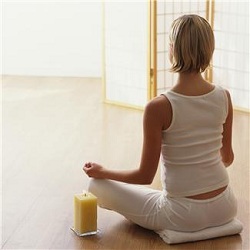
 I almost always suggest to clients that they learn focused abdominal breathing and practice a minimum of 5 minutes every day; for the best results, I recommend they practice 20 or more minutes per day. Sometimes they look at me funny and ask “You mean all I have to do is just breathe and everything will be better?†I tell them that no, everything is not going to magically change to exactly what you want in life, but learning and practicing focused abdominal breathing every day WILL do this for you:
1) Special breathing techniques can help reduce physical pain. Often when people are in pain, they breathe in a very shallow, disordered pattern. They also may frequently hold their breath without even realizing it. These are mostly unconscious protective reactions to pain, but they can actually increase the level of pain. Several recent scientific studies have shown that breathing at a slower rate from the diaphragm can significantly reduce sensations of pain.
2) Breathing helps to properly balance oxygen and carbon dioxide levels in the body. Breathing properly from the diaphragm will:
•   Fuel energy production
•   Improve focus and concentration
•   Increase relaxation and calmness
•   Reduce tension and anxiety
•   Eliminate toxins
•   Strengthen the immune system
•   Improve bowel function
•   Lower blood pressure
•   Increase metabolism, aiding in digestion and weight loss
On the other hand, not breathing correctly can cause problems for a number of systems in the body, including the immune, circulatory, endocrine, and nervous systems. Improper breathing can produce various symptoms including:
•   Difficulty focusing attention
•   Dizziness
•   Numbness
•   Anxiety
•   Chest pain
•   Digestive problems
•   Irritable bowel
•   Neck and shoulder pain
3) Breathing releases emotional energy that is trapped in the body. People with anxiety and/or depression are almost always (and I mean 99.9% of the time) either breathing very shallowly or frequently holding their breath. Holding the breath is one of the most common ways that people stop emotions from coming up (think about the last time you tried not to cry, feel afraid, or get angry). Once you hold in an emotion it stays trapped in your body, until you release it. Breathing allows stifled, buried emotions to finally start to surface and be released.
4) Breathing keeps you in the present moment, instead of the past or the future. People with depression are often stuck in thoughts about the past, and people with anxiety are stuck in thoughts about the future. When you’re concentrating on your breathing, you are paying attention to your body sensations, the sound of your breath, and the process of breathing, all of which are happening RIGHT NOW. When you’re paying full attention to RIGHT NOW, you take AWAY energy and attention from the thoughts about the past or future. When you bring your attention to NOW, you automatically feel calmer.
Using the breath is a way to learn how the body and mind are connected. This is why I teach proper breathing to clients. Thoughts are directly related to feelings in the body and likewise, body sensations give rise to thought patterns in the mind. Mind and body are in a constant dance of influence, and it is important for people to learn that they have more choice and control in the matter than they thought.
Basic Instructions for Focused Abdominal Breathing
More than likely, if you are experiencing depression, anxiety, or pain, you are breathing shallowly from your upper chest. You want to train yourself to breath from your diaphragm/abdomen. Although it’s most effective to have someone teach you the process in person, here are the basic steps:
1)Â Sit in a comfortable upright position with your back against your chair and your feet on the ground. Keep your back straight, but let your shoulders and the rest or your body be very relaxed.
2) Place your left hand on your abdomen. Imagine that the entire area from your lower abdomen up to your chest is one large, rectangular balloon. Now, start by exhaling as completely as possible. Empty out as much air as possible. Your left hand will move inwards as the “balloon†area deflates. Now, slowly and gently, inhale, imagining that you are filling the balloon starting from the bottom, all the way up to the top. When you are breathing correctly from your abdomen, your lower abdomen will inflate, followed by your chest expanding, and your left hand will be pushed outward. Your shoulders will not go up, they will stay in place. When you inhaled did your hand move? Or did your shoulders go up instead? If your shoulders rise up when you inhale, you are breathing from your upper chest. Exhale and try again. This type of breathing may take a little practice to get the flow going. Work on this step until you can fill and empty the “balloon†completely. Then add the next steps.
3) Now that you are breathing abdominally, relax into a natural breathing rate. Your body will take over the breathing and settle into its own rate and depth. Your job is to just observe your breathing. Focus your attention on the tip of your nose and intently notice the pressure, temperature, and sensations of the air passing in and out of your nose. If it helps you to focus, you may also silently say “breathing in†on your inhalation and “breathing out†on your exhalation. Do this focusing for 5 minutes a day to start with, and work up to 20 minutes or more per day.
4) During your focused breathing session, especially when you first start practicing, you will more than likely notice that you are thinking about something else other than breathing. Thoughts have intruded into your mind and distracted your attention. When this happens, try not to react with any emotion (such as frustration). Just gently and silently allow the thoughts to drift upwards far away in to the sky like a soap bubble and then turn your attention back to your breath. At first you will find yourself re-directing your attention many, many times each session. Over time you’ll be able to maintain focus on your breathing for longer and longer periods of time and it will get easier to let go of intruding thoughts. It will even become easier to let go of unhelpful thoughts you have during the rest of the day (such as disturbing thoughts of the past or worrisome thoughts of the future). The most important thing is to keep doing the focused breathing every day, no matter what.
Open, full, unrestricted, unobstructed breathing is very important for your physical, mental and emotional health. It is something simple that can make a very big difference in your life. There are many things in life that we have no control of, so doesn’t it make sense to do the things we can have some control over? You can actively affect your own physiology and mental/emotional state just by mastering the art of breathing, focusing, and being present.
Related articles:
Deep Breathing and Guided Imagery
Alcohol and Anxiety: Not As Helpful As You Think
Managing Your Moods Through Mindfulness
Many people curb their nervousness with a nice glass of wine or other alcohol beverage. Whether you’re gathering the courage to socialize with people you barely know, fly on an airplane, or even if you’re just feeling worried about the future, alcohol can help loosen inhibitions and dampen self doubt and fears.  While you may feel more relaxed temporarily, using alcohol to tame your anxiety can backfire in the long run.
Immediate Effects
Even though you may be feeling calmer after the first one or two drinks, your body is processing the alcohol and the physiological effects can actually trigger feelings of anxiety. Alcohol can negatively impact blood sugar levels each time that it is consumed. Research has shown that the body responds to alcohol by increasing insulin secretion, causing low blood sugar and also impairs the body’s hormonal response that would normally be able to normalize blood sugar levels. Drinking as little as two ounces of alcohol on an empty stomach can lead to very low blood sugar levels. Low blood sugar levels can cause dizziness, confusion, weakness, nervousness, shaking and numbness, all of which can mimic the symptoms of anxiety, or even trigger an episode of anxiety.
Alcohol consumption can also cause dehydration. Alcohol is a fairly strong diuretic, meaning that the body loses water by producing an increased amount of urine. Symptoms of dehydration include dizziness, muscle weakness, lightheadedness and nausea, again, all of which can mimic symptoms of anxiety, or induce anxious reactions related to the fear of being ill.
Alcohol consumption has a sedative effect on the body. It is a drug that depresses the central nervous system. Immediate effects are a sense of euphoria, decreased inhibitions, and lessened anxiety. However, over time the chronic use of alcohol could result in tolerance, dependency, and damage to many organs of the body including the brain, liver, and heart.
Longer Term Effects
People with anxiety are up to three times more likely to have an alcohol problem or other substance abuse than those without anxiety. It takes increasingly larger amounts of alcohol to achieve the same effects, leading to alcohol dependence. Long-term alcohol use can have multiple negative effects on the body and aggravate existing anxiety.
Recent studies have shown that heavy drinking or long term drinking stresses the body and causes it to have higher levels of the stress hormone, cortisol. Cortisol is necessary in short term stress situations because it helps focus alertness and attention, but cortisol also suppresses bodily functions such as wound repair, bone growth, digestion, and reproduction. Chronically high cortisol levels therefore interfere with these important processes in the body. Alcohol use also depletes the body of vitamin B6 and folic acid, which the body needs to help cope with stress. Long-term exposure to alcohol reduces the levels of the GABA-benzodiazepine receptor in the central nervous system and reduces the brain’s ability to calm the mind and the body and cope with anxiety in the long run.
Serotonin is a chemical in the body which is needed for memory, learning, and especially for feelings of ‘wellbeingâ€. Drinking alcohol can temporarily boost serotonin levels, therefore making you feel happier, but in the long term, excess alcohol can actually lower serotonin levels, and therefore either causing or exacerbating depression.
In another recent study, researchers found that high anxiety levels in humans are related to a deficiency in an important protein called CREB, which is needed by the amygdala, the area of the brain where emotions are processed. The amygdala is important in calming anxious thoughts. The study results showed that drinking alcohol boosts the CREB levels in the brain and therefore lessens anxiety, which helps to explain why so many anxious people us alcohol to self-medicate. The good news is that there are other, healthier ways to naturally raise CREB levels, such as getting regular exercise and listening to music. Some antidepressants can also help raise CREB levels also.
So, even though using alcohol is an easy, short term fix for anxious feelings, you’re not doing your body or your mind any favors by self-medicating with alcohol. Learning to manage anxiety (and naturally boost your CREB levels) in healthy ways such as through exercise, music, and expressing creativity is possible. Psychotherapy can also be very helpful. In fact, research shows that psychotherapy is usually the most effective long-term treatment for anxiety disorders. Therapy treats more than just the symptoms of anxiety. It helps you discover the underlying causes of your worries and fears. In therapy, you’ll learn to relax, perceive and interpret situations in new, less frightening ways, and learn better coping and problem-solving skills. Through therapy, you learn the tools to overcome anxiety and how to use them effectively.
 If you’ve done any channel surfing at all in the last year or so, you might have come across a couple of documentary shows (Hoarders on A&E; Hoarding, Buried Alive on TLC) featuring people who are living with massive amounts of clutter and/or trash in their homes. The piles of “stuff†often reach to the ceilings, and there is barely space to stand, much less walk across a room. The programs show professional organizers and psychotherapists working with people to clean out their homes. If you’ve seen either of these shows, then you know what I mean when I say it’s something you don’t forget easily. Although the people being featured on the shows are treated with respect and compassion, the images are shocking and disturbing. How does this happen? Why do people do this? Can they be helped?
Contrary to what you might think, people experiencing compulsive hoarding are not just being lazy or careless. They are experiencing an anxiety related condition; although, there is disagreement in the medical/psychiatric community as to whether hoarding is its own issue, or that compulsive hoarding is a subtype of obsessive compulsive disorder (OCD). Although many people experiencing OCD also exhibit hoarding behavior, not all people experiencing OCD also hoard, and many people who hoard have no other symptoms of OCD.
People who compulsively hoard do experience excessive extreme anxiety, doubting, checking, and reassurance seeking before discarding items, which does suggest a close relationship to OCD. However, recent research suggests that compulsive hoarding may also be associated with a range of other psychiatric conditions, in addition to OCD. Compulsive hoarding behavior has been reported in disorders including schizophrenia, social phobia, eating disorders, depression, and dementia. In studies of the brain, researchers compared neurochemical activity and patterns of blood flow in the brain of people who compulsively hoard and people who experience OCD who did not hoard. They found that the neurochemical activity and blood flow patterns in people who hoard were different than those in people with OCD, suggesting that compulsive hoarding is a separate symptom/condition from OCD.
Many, if not most, people have a certain amount of clutter in at least one part of their homes. Where is the line between average messiness and compulsive hoarding? Hoarding behavior includes:
- Acquiring and keeping, indefinitely, a large number of possessions which appear to be useless or of limited value
- Living in spaces so intensely cluttered as to preclude activities for which those spaces were designed
- Significant distress or impairment in functioning caused by the hoarding (e.g., health problems, inability to keep a job, difficult relationships or lack of relationships with other people)
- Reluctance or inability to return borrowed items; impulsiveness and compulsion to acquire more “things†sometimes leading to stealing or shoplifting
Why/how does a person cross the line from messiness to hoarding? There are several proposed explanations for the causes of hoarding behavior. Investigators have suggested that errant cognitive processing leads to hoarding. These include information processing deficits, meaning that people who hoard have substantial problems focusing and sustaining attention, difficulty categorizing and prioritizing their possessions, and difficulty in making decisions about their possessions.
Maladaptive beliefs about, and extreme emotional attachment to, possessions may also contribute to a person’s hoarding behavior. People who hoard have an exaggerated sense of responsibility for their possessions, and desire complete control over them. They experience intense emotional distress (anxiety, grief, or guilt) about the ideas of discarding or losing an object, leading to avoidance, and escape in the form of saving and acquiring.
There are also studies showing that difference in brain activity and /or brain injury can lead to hoarding behavior. Scientists have identified the areas of the brain involved in hoarding. One study showed reduced glucose metabolism in certain areas of the brains of compulsive hoarders. Some people with traumatic brain injury, stroke, and neurodegenerative diseases have also developed hoarding behavior.
In the past, clinicians have used the same treatment methods for compulsive hoarding that they used for OCD, with poor results. While medication, cognitive behavioral therapy for OCD, exposure and response prevention therapy have all been effective treatments for OCD, they have been shown to be of little benefit for compulsive hoarding. People with hoarding behavior have high instances of poor insight, refusal of treatment, lack of cooperation, and inability to recognize hoarding as a problem, all contributing to difficulty in effective treatment.
There is hope for people who hoard, though. In a recent study, researchers designed a new cognitive-behavioral treatment especially for treating compulsive hoarding. In this treatment, motivational interviewing (getting people excited about the seriousness of the hazards of hoarding and the benefits of clearing out their homes), skills training for organizing and problem solving, and modification of beliefs about possessions are emphasized. Also, treatment includes frequent off-site sessions in which therapists helped people to sort, discard, and learn to resist acquiring more items. People typically respond more positively when the therapists are at the home with them, assisting them with sorting and discarding.
The sight of such intense messiness and disarray is certainly disturbing to see, but knowing that hoarding is a symptom of a person who is possibly experiencing severe emotional distress, hopefully, helps to engender compassion and patience in friends and family members. Information about help for hoarding can be found online at www.ocfoundation.org/hoarding/.
 Maybe you’ve been struggling with anxiety and panic and you’ve tried everything: medication, progressive relaxation, meditation, exercise, deep breathing, herbs, watching TV till your eyes glaze over in a stuporous fog—and still you’re feeling nervous, irritable, unable to focus, panicky, and tense.
What you’re missing might surprise you: you could be suffering from lack of sleep.
Studies show sleep deprivation to be one of the primary contributors to anxiety problems, depression, and other psychiatric disorders. Sleep appears to be very important for emotional regulation and processing.
[fat_widget_right]
At University of California Berkeley’s Sleep and Neuroimaging Laboratory, assistant professor Matthew Walker’s experiment with sleep deprivation in humans showed that without sleep, the brain reverts back to more primitive patterns of activity. People then become less able to put emotional events into context and respond appropriately.
The amygdala is the part of the brain that prepares the body to protect itself when it perceives danger. When it senses danger, it sends a message to the prefrontal cortex, which then interprets and assesses the situation and decides whether to activate the fight or flight response. Under normal circumstances, the amygdala and prefrontal cortex work together to respond appropriately to danger while also keeping people from overreacting to emotional experiences. Under conditions of sleep deprivation, subjects’ amygdales and prefrontal cortexes stopped working together. Emotional centers were 60% more active, resulting in slower reflexes, increased irritation, problems with focus and concentration, and higher feelings of anxiety.
Other studies suggest that lack of REM sleep causes or worsens psychological problems. REM sleep, also known as dreaming sleep, is very important for processing emotions and memories, clearing the mind of the stressful events of the day, and dreaming. During this stage of sleep, the areas of the brain used in learning and developing new skills are stimulated. About 70 to 90 minutes after falling asleep, the first REM cycle occurs; ideally, people will have three to five REM episodes per night. Getting more and better REM sleep has been shown to boost people’s moods during the day. Fortunately, improving the quantity and quality of REM sleep you get is relatively easy.
Many experts recommend getting seven to nine hours of sleep per night, although some say that the quality of sleep is more important than quantity. Getting six hours of high-quality, uninterrupted sleep is more beneficial than eight hours of restless, interrupted sleep. You can immediately improve the quality of your sleep by making two important changes: change what you put into your body and what you do with your body, both during the day and when getting ready for sleep.
Change What You Put into Your Body
- Eating, drinking, and medication habits may be disrupting your sleep more than you think. Too much food, especially rich, fatty food, can keep your stomach working overtime to digest, and spicy food can cause heartburn. Too much liquid can cause numerous trips to the bathroom at night. Your first step to better sleep is to limit your intake of rich, fatty, or spicy food, especially during your evening meal. Stop eating and drinking fluids several hours before you go to bed for the night.
- Alcohol and caffeine use can also be very disruptive to your sleep cycle. Although you may feel temporarily relaxed after using alcohol, it causes you to wake up later at night, interrupting deep sleep and REM sleep. Caffeine can disturb sleep for up to ten to twelve hours after ingestion, so cut out the caffeine after lunchtime. Nicotine is another stimulant which disrupts sleep, so cut down or eliminate smoking to improve your sleep—although if you’ve been a smoker for a while, nicotine withdrawal may temporarily make it harder for you to sleep.
Change What You Do with Your Body
- Regular exercise can help you fall asleep easier and achieve better rest. It doesn’t even have to be intense or rigorous: a brisk walk or bike ride is plenty. As little as twenty or thirty minutes per day of moderate exercise can be very helpful, and you can even break your activity up into ten- or fifteen-minute segments if you wish. You will want to schedule your exercise in the morning or early afternoon, because your body needs sufficient cool-down time to sleep well.
- Set up a consistent, relaxing routine before bed. This trains your brain to recognize that it is time to wind down, making it easier for you to fall asleep. For thirty minutes to an hour before bed, find peaceful, quiet things to do to relax your body and mind. You might try things such as reading a light, entertaining book or magazine, listening to soft music or audiobooks, enjoying a hobby such as knitting or doing puzzles, or making simple preparations for the next day. A cup of hot tea or a glass of warm milk can also be helpful.
- Although many people use watching TV as a way to relax or fall asleep, television actually stimulates your brain rather than relaxing it. Watching disturbing, violent material on the news or prime-time shows stimulates thinking as well as your physiology. Even if you do manage to fall asleep with the TV on, the continuous flickering of the screen can interfere with your body’s clock, which is sensitive to any light. You will get higher-quality sleep with the TV and computer off. If you have a hard time getting used to sleeping without the television, try turning on soft music, a sleep sound maker, or a fan.
- Avoid napping during the day, which interferes with your body’s clock. Set up your nightly relaxation routine and stick to a consistent sleep schedule, and your quality of sleep will improve.
Getting adequate, quality sleep is extremely important for emotional regulation and processing. Fortunately, it is relatively easy to make changes in this area. Start today, and the effects can be felt almost immediately.
Reference:
- Yoo, S., Gujar, N., Hu, P., Jolesz, F.A., Walker, M.P. (2007) The human emotional brain without sleep: A prefrontal amygdala disconnect. Current Biology 17: 877-878
 Breathing deeply, relaxing your muscles, and staying in the present moment are some of the most common and effective ways to manage anxiety. But did you know that changing your eating habits can also help you feel more calm and balanced?
There are certain foods and substances which tend to trigger stress and anxiety in the body, and in fact, there are several foods that can even trigger panic attacks.
Ingredients of Anxiety
Caffeine, sugar, and alcohol all increase lactic acid levels in the bloodstream. Recent studies show that a high accumulation of lactic acid in the body can increase anxiety and cause panic attacks. Caffeine also blocks adenosine, a neurotransmitter that is believed to play a role in suppressing arousal and promoting sleep. Without adenosine, the pituitary gland produces adrenaline and the increase in adrenaline can either cause or increase symptoms of anxiety. In addition to increasing lactic acid levels in the blood, sugar intake causes a release of insulin which decreases blood glucose, which can result in mood swings and agitation. Alcohol use also causes fluctuations in blood sugar levels, leading to increased anxiety and agitation.
[fat_widget_anxiety_right]
Seasonings used in cooking can also cause symptoms of stress on the body. Salt depletes potassium in the body. Potassium is important to the proper functioning of the nervous system. Salt also raises blood pressure, which strains the heart and arteries. Monosodium glutamate, commonly known as MSG, can irritate the nervous system causing headaches, tingling, numbness, and chest pains.
Artificial food additives, preservatives, and processed foods can also trigger reactions in people who are sensitive to them. Aspartame, an artificial sweetener, is neurotoxic and should be avoided. Processed foods, those made with refined ingredients such as white flour, white sugar, and white rice, can cause a vitamin B1 (thiamine) deficiency, which can lead to symptoms of anxiety and emotional instability. Refined and processed foods are usually stripped of much of their magnesium as well, and magnesium deficiency may be a factor in symptoms of panic.
People who manage panic disorders should avoid skipping meals. Hypoglycemia, or low blood sugar, can cause the body to release adrenaline in order to prevent fainting, which can trigger a panic attack in susceptible individuals. It helps to eat small meals every three to four hours throughout the day rather than only two or three large meals. It is also important to stay well hydrated.
Food allergies can also be a factor in anxiety and panic disorders for some people. It may help to try eliminating different foods (e.g., wheat or dairy) for two weeks at a time to determine whether a food allergy or sensitivity is aggravating anxiety symptoms.
Certain eating habits can induce symptoms of anxiety. Eating too fast, not chewing enough (15-20 times per mouthful), eating too much, and drinking too much fluid with a meal can all interfere with digestion and the assimilation of food into the body.
A deficiency in several key nutrients can cause symptoms of anxiety:
- B complex vitamins are important for healthy nervous system functioning and in helping the body to relax and recharge. Symptoms of B complex deficiency include fatigue, irritability, nervousness, and insomnia.
- Magnesium is needed for muscle relaxation, healthy heart muscle, and healthy blood vessels. A deficiency of magnesium can cause agitation, anxiety, confusion, cold hands and feet, insomnia, and restlessness.
- Calcium is used by the body for maintenance of electrolyte balance, muscle contractions, and nerve transmission. Calcium deficiency can cause agitation, depression, heart palpitations, insomnia, and irritability.
Although vitamin supplements can help keep B complex, magnesium, and calcium at healthy levels, it is especially helpful to get these nutrients through eating fresh fruits and vegetables, adequate protein, and simple carbohydrates.
Managing anxiety involves changing behavior on several levels. In addition to learning to breathe properly, relax, and use cognitive skills to stop anxious thinking, it is important to keep your body physically healthy. Watching what you put into your body can go a long way in keeping it healthy and calmly functioning.
* GoodTherapy.org is not intended to be a substitute for professional advice, diagnosis, medical treatment, or psychotherapy. Always seek the advice of your physician or qualified mental health provider with any questions you may have regarding any mental symptom or medical condition.