 “Go into your grief, for there your soul will grow.†—Carl Jung
Grieving is a powerful and personal journey. It is an inevitable part of living. Eventually we all grieve something or someone. If you’ve lost a child or parent, or a friend, lover, or spouse, you know that grief has the power to transform.
We usually live within the illusion that we are in control. That is, we live a certain way until something happens to shatter our perception. The resulting dissolution—or you might say dis-illusion—that follows is actually the beginning of a remarkable process of being healed. It marks the first stage in the grief journey.
Stages of Grief
In 1969, Elisabeth Kübler-Ross, a Swiss American psychiatrist, introduced the “five stages of grief.†Her work with people who had terminal cancer led her to define the five distinct phases a dying person goes through while coming to terms with their fate:
- Denial: Disbelief, shock, and numbness after hearing the “bad†news.
- Anger: When the numbness lifts, anger may be easier to feel than the intense pain associated with what is being lost. This free-flowing anger can be directed inward toward the self or outward toward doctors, nurses, friends, family, spiritual advisors, and/or God.
- Bargaining: For some, bargaining can be a reaction to the vulnerability that occurs when feeling the sorrow of loss. It can be an attempt to feel more in control of a situation where control just isn’t possible. It is characterized by an attempt to seek the impossible; to find a way out.
- Depression: The full impact of the unmasked impending loss of life finally hits, and feelings of sorrow, sadness, and depression follow.
- Acceptance: Coming to terms with what is happening and finding a way forward.
[fat_widget_grief_right]
While many have applied these stages to the process of grieving the death of another person, it was not Kübler-Ross’ intention that they be used this way when she created the model. There are other models that are more specific to grieving the loss of a loved one that are used by grief counselors and therapists. While the stages described by these models differ somewhat, like Kübler-Ross’ model they all chronicle a journey-type process that leads to acceptance and the eventual ability to once again move forward.
Acknowledging Brokenness; Being Present
When the shock of sudden loss subsides, the numbness that initially accompanies that shock wears off as well. A pain-filled state ensues when the harsh reality of loss is realized. This early phase of grief is about brokenness. When we experience a loss, the bond that once attached us to the other—whether the other is a person, place, or thing—is severed. When the bond that ties is severed, we feel as though we have been broken. It is a painful and searing state; a state that can’t be rushed.
What a grieving person in this stage needs most is to feel that those they are closest to can accept the pain they are experiencing. Unfortunately, many people are uncomfortable with their thoughts and ideas about endings and death. The feelings that arise with grief are just too much for them. Their attempts, aimed at getting a grieving person to feel better and leave the sorrow behind, only serve to prolong the grief process.
A kind touch and a shared quiet moment that honors the feelings of a grief-stricken friend can be the best offering of condolence. A willingness to simply be present, to witness and accept the raw emotions of grief, is the first step in a transformative and healing process for both the bereaved and those who surround them.
Support Groups
The feelings that come with grief are powerful. Grieving takes time, and often the family and friends of a grief-stricken person are ready to move on long before the grieving one can or wants to. Support groups are a viable option for those who find themselves alone in their grief. Being able to share the experience with others on the same path may be a relief. Since the grieving process is different for everyone, a support group can accommodate these differences. Some studies suggest that men and women grieve differently, with women needing to speak about and share their intense feelings with others while men often deal with their own intense emotions by taking action. In a support group setting, all experiences can be heard, shared, and validated.
Widows and widowers in the gay community often have difficulty finding the support needed while experiencing the grief of bereavement. Even finding a support group can be difficult. Blogger Dan Cano writes poignantly about his experience after finally finding a support group where he could speak freely and be understood:
“I started my lesbian and gay bereavement group a few weeks ago, and every Thursday night we gather to tell our stories. We share of our history with our partners, lovers, husbands and wives. We share the trauma of losing the most central person in our lives. We tell of our difficult goodbyes, and of the daily anguish that we must now endure. We talk about being left behind, of feeling lost, of struggling with a new identity. We talk of people’s well intended, but missing the mark, words. We cry, we laugh, we listen.â€
What We Learn from Grief
When we sit in stillness and accept the waves of grief that wash over, eventually there will come a time when the urge to move will stir. It will be quiet, unassuming, and almost imperceptible. From intense feelings over what has been lost there will arise a feeling of gratitude for what is remaining. When experiencing the loss of a loved one, an inevitable gratitude for life and living unfolds. The gift of grief is ultimately a strengthening of the ability to truly appreciate and value the process of being alive.
References:
- Greenspan, Miriam. Healing Though the Dark Emotions: The Wisdom of Grief, Fear & Despair. Shambhala Publications Inc. Boston, Massachusetts, 2003.
- Hanson, Rick, Ph.D. (2007). Grief Recovery: Implication of Neuroscience and Contemplative Wisdom. Retrieved from: http://www.wisebrain.org/KaraSlides.pdf on 21/06/2014.
- Cano, Daniel (2009). Gay Grief. Retrieved from http://daninrealtime.blogspot.ca/2009/11/gay-grief.html on 22/06/2014.
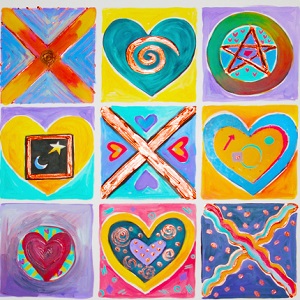 “When you wish upon a star,
Makes no difference who you are.
Anything your heart desires
Will come to you.”
“When You Wish Upon a Star” is a song written by Leigh Harline and Ned Washington for Walt Disney’s 1940 adaptation of Pinocchio.
Over the past few years a relatively new tool has changed how people manage their own destinies. The tool, called a vision board, is created to represent in a visual manner what a person wants in life. The practice suggests that visualization can lead to the realization of goals. This is a helpful and therapeutic technique for people as they work on goal-oriented outcomes.
Vision boards are collages of images, photographs, and phrases glued or taped to a surface like a poster board. Your selection of items on your board typically represents the dreams you want to materialize in your life. The idea behind the board stems from the reasonable hypothesis that positive thinking leads to a positive outcome. Positive thinking is one result, but the process of creating an inspiring vision and working toward it creates the energetic vibration to manifest it.
We all can agree that a positive outlook is a precursor to positive results in one’s life, but how exactly can the imagery you choose on your board make things happen? The premise of this increasingly popular tool suggests that if you glue a picture of your favorite house from a magazine onto your vision board, you will enable the dream or fantasy to become a future reality. Your vision can be anything from a house to a new car, or something of a more personal nature like fostering a new relationship. All things on the board are what you want or what you are passionate about.
The vision board speaks to the fundamental principles of the Law of Attraction. The basic tenet offered by the Law of Attraction is that a person can attract anything into their lives by “being†more of the emotional vibration they wish to have. By choosing images or phrases the person can begin igniting their emotions with a passion that will lead inevitably to the manifestation of those things they desire.
[fat_widget_right]When working with clients, this can support them to focus on the positive emotions associated with those images. Therapists will inevitability have opportunities to work with whatever resistances come up and support people to work through them. Emotional Freedom Technique is one such method for working with resistance within the Law of Attraction principles.
The vision board has been popularized in recent years by the enormously successful publication of the book The Secret. The Secret, a best seller from 2006, is a self-help book written by Rhonda Byrne. The book is based on a film of the same name. Both the book and the film promote the Law of Attraction and the power of positive thinking. As the official website of The Secret states on its home page, “Everything is possible, nothing is impossible.†In the actual film, success expert John Assaraf tells his story of using vision boards to realize his dreams.
Its proponents from the self-help field have embraced the tool. Christine Bagley-Jones, a psychologist from Brisbane, sees vision boards as a motivational tool. “It’s not like the vision board itself has some magical properties. But it helps to create a platform for the individual to identify and conceptualize what they most want in life, and through their actions they can then manifest it.â€
The tool has been adopted by a variety of disciplines in the self-help field, including art therapy. Advocates insist vision boards can help people build self-esteem, teach goal setting and prioritizing, and make individuals more proactive.
Carolyn Mehlomakulu, a licensed Marriage and Family Therapist and Registered Art Therapist, states on her Creativity in Therapy blog, “Through the process of choosing my images, I was able to clarify my goals and hopes, think about what I consider truly important in my life, open my mind to the possibility of having the life and business that I want, and inspire myself to keep moving forward.â€
I also have a vision board that I’m always working on. It supports what I believe in, what I want to manifest in my life, and primarily how I want to feel. I also notice that my vision board has things on it that I don’t want on it—things I’m not interested in attracting: reminders, a phone list, a business card, etc. Note to self: keep your vision board clean of distractions! As you grow so will your vision board change and grow with you.
Not everyone is into the joy of creating their own vision boards. There are detractors who see the practice of using boards as counterproductive. Some argue that people who use vision boards spend too much time in the fantasy and not enough time establishing a realistic plan to achieve them. Troubled by the reliance on the cultural forced feedings of positivity, some thinkers see the energy in this area of thought as a waste of time.
Barbara Ehrenreich, a much respected writer, states, “Besides, the constant effort of maintaining optimism in the face of considerable counterevidence is just too damn much work. Optimism training, affirmations, and related forms of self-hypnosis are a burden that we can finally, in good conscience, set down. They won’t make you richer or healthier, and, as we should have learned by now, they can easily put you in harm’s way. The threats that we face, individually and collectively, won’t be solved by wishful thinking but by a clear-eyed commitment to taking action in the world.†Hard work has to be an integral part of the vision. Accepting the possibility of failure is equally important as it teaches significant life lessons.
It is how you use the board that matters. Working with resistances, enjoying the dream, and taking action are all part of the vision board process. It is clear that vision boards are valid tools with therapeutic value to a great many people. Equally apparent are the critics who claim users are only setting themselves up for failure if their vision boards become wallpaper.
The real answer lies more likely somewhere in between the opposing arguments. No one should ever tell anyone not to dream. Just remember there’s always some sweat and tears. The vision board is an expressive tool to support your “being†attractive in attracting the things you most desire.
I’ll leave you with this final quote from Bob Doyle:
“The sooner you can move from ‘trying to be’ to actually ‘being,’ the sooner you will see your desire fulfilled.â€
References:
- Loo, Tristan.How to Use a Vision Board to Activate the Law of Attraction. Retrieved from: http://www.selfgrowth.com/articles/How_to_Use_a_Vision_Board_to_Activate_the_Law_of_Attraction.html. Retrieved on: 19/04/2014.
- Byrne, Rhonda. The Secret. Retrieved from: http://thesecret.tv/. Retrieved on: 22/04/2014.
- Doyle, B. (2011). “Follow Your Passion, Find Your Power.†Charlottesville, VA: Hampton Roads Publishing Company.
- Body and Soul website. Why You Need a Vision Board. http://www.bodyandsoul.com.au/health/health+news/why+you+need+a+vision+board,29981. Retrieved on: 22/04/2014.
- Mehlomakulu, Carolyn. Realizing the Future—Creating a Vision Board. Retrieved from: http://creativityintherapy.blogspot.ca/2013/02/realizing-future-creating-vision-board.html. Retrieved on: 21/04/2014.
 We know that certain functions of the body shut down when a person is faced with a threatening situation. This allows other parts to become more active. Larger sets of muscles receive more blood as heart rate increases, allowing for the well-documented “fight-or-flight†response. While the body tenses and readies to “respond,†some areas of the brain become less active. Hence, the ability to process emotional responses and store memories during a traumatic event can be impaired while pre-programmed survival mechanisms kick in.
Posttraumatic Stress
For some, this will lead to a condition known as PTSD (posttraumatic stress). The intense emotions associated with an unintegrated traumatic memory can impair normal functioning in daily life for those experiencing PTSD. Read more about this here.
[fat_widget_trauma_ptsd_right]
Not everyone experiencing a traumatic event will go on to develop PTSD. However, for those that do, PTSD is treatable. Eventually, there can actually be benefits that result from a well-integrated traumatic event. This is called posttraumatic growth.
Posttraumatic Growth
Many people experience a meaningful improvement in their psychological outlook on life after a traumatic or life-altering event. For example, after a near-death experience, some report a renewed zest for living, an intense wonder at the beauty of the natural world that surrounds them, and a deeply felt sense of purpose not previously recognized.
In one study, Robert James Miller II and David Read Johnson noted an increased capacity for symbolic thinking in a group of 56 Vietnam War veterans who experienced PTSD. From the abstract: “Unexpectedly, subjects with PTSD in comparison to subjects without PTSD showed greater capacity for symbolic representation, and no difference in lexical capacity, raising new questions as to the mechanism by which trauma could increase the capacity for mental imagery.â€
It’s possible that in order to avoid re-experiencing a traumatic event (because memories of the event have not been properly stored), some people unknowingly strengthen their ability to think symbolically as a coping mechanism. Since we know that symbolic thinking is a cornerstone of the creative process, can an unexpected benefit of trauma be an increase in creativity?
Surges in Creativity
There is compelling evidence that suggests surges in creativity could be linked to the experience of trauma. Dr. Marie Forgeard conducted an online study to investigate this idea. An online questionnaire was filled out by participants, whose answers were used to measure posttraumatic growth, rumination related to the event, and growth of creativity. Forgeard used two measures in the study: (1) scores on a measure of posttraumatic growth and depreciation and (2) scores on self-reported measures of creativity in the aftermath of adversity.
She found that “… adversity-induced distress predicted self-reported creative growth and breadth in a sample of online participants. Cognitive processing [intrusive/deliberative rumination] as well as domains of posttraumatic growth/depreciation—in particular, self-reported changes in interpersonal relationships and in the perception of new possibilities for one’s life—mediated the link between self-reported distress and creativity outcomes.â€
It is important to note that intrusive rumination describes a process where the individual is primarily focused on the symptoms of the distress being experienced as opposed to solutions for these symptoms. On the other hand, deliberate rumination is a process by which an individual turns inward and engages in reflection along with contemplation about various problem-solving possibilities.
Creative Therapy and Deliberate Rumination
Given the links between trauma and creativity that are being uncovered, creative therapies such as art therapy or expressive writing, coupled with supported deliberate rumination practice, could be beneficial in the recovery process for individuals wishing to deal with the aftermath of traumatic, life-altering events and/or full-blown PTSD.
References:
- Miller II, Robert James, and Johnson, David Read. Psychological Trauma: Theory, Research, Practice, and Policy. Vol. 4(1), Jan 2012, 112-116. doi: 10.1037/a0021580. Retrieved 3/21/14 from: http://psycnet.apa.org/journals/tra/4/1/112/
- Thompson, Paula. The Traumatized Imagination: Creativity, Trauma, and the Neurobiology of the Resilient Spirit. Retrieved 3/21/14 from: http://www.healingresources.info/article_thomson1.htm
- Forgeard, Marie J. C. Perceiving Benefits after Adversity: The Relationship Between Self-Reported Posttraumatic Growth and Creativity. Psychology of Aesthetics, Creativity, and the Arts. Vol. 7(3), Aug 2013, 245-264. doi: 10.1037/a0031223. Abstract retrieved on 3/21/14.
 There are different kinds of trauma, but in general an experience can be considered traumatic when what is happening threatens to overwhelm those involved, making them feel helpless. Some types of traumatic experiences can have long-lasting and far-reaching consequences.
The body is programmed to work in a specific way when faced with a threat. The heart rate increases, and muscles are supplied with more blood in the event running becomes necessary. While this is happening, less important bodily functions temporarily shut down as the body readies itself for “fight or flight.â€
Studies show that the areas of the brain involved with emotional responses, thinking processes, and memory storage become less active. This can lead to experiences not being processed or “integrated†by these various brain functions at the time the traumatic event is happening.
[fat_widget_trauma_ptsd_right]
Trauma and Emotional Response
Some people find that posttraumatic stress (PTSD) follows life-threatening events such as an earthquake, a tsunami, a sexual assault, or war-zone encounters. It can affect those who go through the event, individuals who witness it, and people who come later, such as first responders and those who just happen onto the scene.
As time passes, memories, thoughts, and feelings of the trauma can surface unexpectedly in a disconnected and confusing fashion, making it difficult for those who deal with severe forms of PTSD to get on with the challenges of daily life.
Scientists, doctors, psychologists, and counselors are still studying and learning about the effects and consequences of different types of trauma on the human psyche. Not all traumatic experiences will lead to identifiable PTSD, but it is generally understood that the effects of an unintegrated experience can be unexpected and often will occur without warning.
The way a person responds emotionally can be profoundly affected. An unintegrated traumatic experience can affect how an individual meets the world and his or her ability to be authentic.
Being Authentic
Being authentic means to act in a way that is consistent with, and in accordance with, one’s core beliefs. It isn’t hard to see that a person dealing with the disconnects associated with unprocessed trauma will inevitably come face to face with the fact his or her emotional responses don’t always reflect true beliefs and intentions.
The person may wish to express a loving feeling, for example, but the sheer emotional vulnerability of such an expression may result in withdrawal from the very people he or she holds near and dear. When repressed and left unexamined, the fragmented thoughts and feelings associated with traumatic events often find expression in behaviors that impede and distort authentic expression.
Seeking Treatment
After a traumatic experience, it is normal for the people involved to have mixed emotions—to feel angry, sad, and anxious. They may also feel disconnected from other people and their surroundings. This is to be expected, is normal, and may fade as time passes.
For some, though, these feelings don’t fade.
There are a variety of successful treatment options for people experiencing the effects of trauma, and there is no shame in opting for therapeutic interventions. There are identifiable biological reasons for post-trauma difficulties that have nothing to do with culturally rooted ideas of who is weak and who is strong.
To overcome the effects of trauma, it is essential to meet what happened head-on. Doing this with the support of a knowledgeable therapist will help ensure that the traumatic event becomes a successfully integrated past experience and support the healthy expression of authenticity.
References:
- Posttraumatic Stress Disorder (PTSD) and the Family. Retrieved 2/22/14 from: http://www.veterans.gc.ca/eng/mental-health/publications/ptsd-families#cn-tphp
- Goldman, Brian M. (under the direction of Michael H. Kernis) (2004). Interrelated Roles of Dispositional Authenticity, Self-Processes and Global Role Functioning in Affecting Psychological Adjustment. Retrieved from: http://athenaeum.libs.uga.edu/bitstream/handle/10724/7885/goldman_brian_m_200412_phd.pdf?sequence=1
- Treatment, Services and Support for PTSD. Retrieved 02/25/14 from: https://www.nami.org/Template.cfm?Section=posttraumatic_stress_disorder
- Posttraumatic Stress Disorder (PTSD). Retrieved 02/25/14 from: http://www.helpguide.org/mental/post_traumatic_stress_disorder_symptoms_treatment.htm
 Transpersonal therapy can be a powerful framework for using the expressive arts, such as music, drama, and visual art. But many people are unfamiliar with transpersonal therapy. You may be wondering what this term means and how it relates to expressive arts processes. Here’s what you need to know about transpersonal psychology and how it connects with expressive therapies.
What Is Transpersonal Therapy?
You have probably heard of the so-called “three forces of psychologyâ€: behavioral, psychoanalytic, and humanistic. The classic examples that come to mind are Pavlov and his dog (behavioral); Freud’s dream interpretations (psychoanalytic); and Carl Rogers’ use of “unconditional positive regard†(humanistic). These examples are the stereotype of each of these psychological orientations. In truth, most therapists these days are influenced by more than one of the “three forces.â€
And now, introducing transpersonal therapy (circa 1960s)—the fourth wave of psychology. The word “transpersonal†literally means “beyond the personalâ€â€”what Ken Wilber has described as “personal plus.†That is, it includes all of the personal and individual aspects of our experience, including our thoughts, physical sensations, and emotions, but it also moves beyond this personal framework to address our spiritual experience. Naropa University’s transpersonal counseling program clarifies this by including “mystical or religious experiences, intuition, different states of consciousness, creativity, and contemplative practice.â€
Transpersonal psychology is also unique in its focus on wellness rather than pathology. A key idea in transpersonal therapy is the belief that all humans, under the right circumstances, will move naturally toward a state of wellness and wholeness. The role of the therapist is to guide the individual in this move toward wholeness by acting as a facilitator and not an expert.
Expressive Arts in Transpersonal Therapy
The expressive arts and transpersonal therapy make a great team because they are both focused on exploring a wider range of possibility outside traditional talk therapy. Expressive arts therapies can include:
- Art therapy
- Movement or dance therapy
- Drama therapy or psychodrama
- Music therapy
- Sand tray therapy
- Journaling or poetry therapy
Your specific experience in doing expressive arts with a transpersonal therapist will vary depending on your own creative interests, the therapist’s background and training, and the problems for which you are seeking help. In some cases, one expressive process might blend with another. For example, you might sculpt and paint a series of masks showing the different aspects of your personality, then create a skit in which you use the masks to act out a scene. You might then also write a journal entry or poem describing your experience of producing the skit. All of these actions would be undertaken with the guidance and support of your therapist. And, of course, any creative processes that you engage within transpersonal therapy will be handled with care by your therapist. Your therapist will assist you in exploring the emotional, intellectual, and spiritual meanings that you find in these processes.
In many instances, your therapist may encourage you to engage in imaginal processes. This term refers to an ability to relate to your own artwork, music, or writing as if it is a messenger. For example, using an imaginal process with visual art might mean that after you’ve painted a dragon-like creature, your therapist will help you to create a dramatic or written dialogue in which the dragon itself is given a voice.
Another common technique in transpersonal expressive therapies is to explore archetypes, evocative symbols that are found throughout human history. Some basic archetypes include the magician, the wise old woman, the hero, and the trickster. These symbols and their relationship to your own situation can be explored with various expressive arts practices such as journaling, visual art, drama, or sand tray therapy.
While some of you might prefer a more direct approach that is planned and structured with clear homework assignments, such as cognitive behavioral therapy, others might prefer the looseness of a more organic process that lends itself to the transpersonal realm. If you are lucky, you might even find a therapist who is skilled at applying an eclectic approach, combining different therapies for a dynamic outcome.
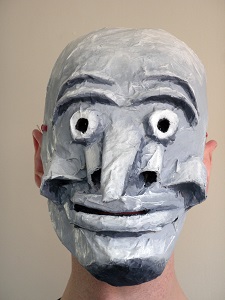 A baby first focuses on the faces of those around them. Hard-wired to recognize our caregivers, at a primal level, we all understand the human face communicates information. Understanding the messages others are sending us can even be essential to survival. Cover a face and the transformation can be mildly unnerving, terrifying, or even extremely funny. A face that is covered denies us access to the signals we are used to seeing and sends out new signals or messages for us to interpret.
A mask-making session can afford fertile ground in an expressive therapy setting for both client and therapist. Making a mask invites the creator to explore various aspects of his or her own persona. The activity can be revealing because it takes the mask maker out of the realm of words and employs imagination and nonverbal action.
Exploiting the Mind-Body Connection
One mask-making technique involves molding clay into facial features and then applying materials such as paper mache, celluclay, or various molding cloths over the top of the sculpted mask face. The tactile process of modeling clay with hands, fingers, and palms can provide a powerful connection to deep-rooted feelings through the tactile, nonverbal (somatic) experience of working physically with the clay. The body can hold all kinds of memories from the past, and by engaging in this nonverbal activity the imagination of the mask maker may find new ways to communicate hidden thoughts, feelings, and memories through the creation of meaningful symbols that are shaped into the clay as the mask evolves.
During the process, through verbal or nonverbal communication, the therapist may help the client to experience and consciously come to terms with these previously locked up and hidden memories. This can happen as the feelings or memories emerge during the mask-making session or sometimes in later sessions when the mask, made by the client, is used in other ways.
Finding Joy Through Creativity
Many memories and the feelings associated with them are difficult and painful, but it’s also true that the result may well be the reclamation of joyful creativity. When we are children, we play with abandon; it’s part of the learning process. The ability to playfully explore the world within as well as the environment that surrounds is often lost as we age into adulthood. It becomes prey to many cultural pressures and sometimes to misinterpreted parental reprimands.
A parent may react strongly to a child playfully exploring a shiny object such as a sharp knife. The child may then interpret the reprimand as being connected to their natural interest and creative exploration process and assume that this is a “wrong behavior.†A little bit of their creative energy then gets locked up with some repressed feelings and lost joyfulness. We all want to be loved and protected by our parents; when we are children, our survival depends on it.
Mask making and working with masks in a therapeutic situation can help unlock that playfulness and sense of creative adventure through the process of remembering moments, such as the one just described, and revisiting the feelings that accompany such memories.
Out of the Nowhere and into the Here
Besides being a therapeutic tool, mask making can be a simple pleasure on its own. Adults engaged in busy and demanding lives don’t often have or take time to engage in a hands-on creative process. By simply indulging in the mask-making process, the participant can reopen doors and creative pathways long ago forgotten. There’s an age-old nursery rhyme that goes:
Where did you come from, baby dear?
Out of the nowhere, and into the here.
Our creations are like our babies. The simple act of bringing an object, in this case a mask, “out of the nowhere and into the here†can be a liberating process in and of itself.
The Rich Tradition of Mask Making
For more than 12,000 years, human beings have been making and using masks. We find the earliest evidence of this on the walls of caves around the world. At the Trois-Frères (“three brothersâ€) site in France, a figure considered to be a male shaman is depicted on the wall of the cave, wearing a large, antlered stag’s head. The headpiece mask has the face of an owl superimposed over the facial area with wolf-like ears and a long goat’s beard.
Masks can capture a state of mind. They evoke, memorialize, reveal, and conceal all at the same time. Even the most simply constructed masks can powerfully transform the face. The inanimate mask comes to life when worn. It becomes charged with a life force from within the wearer. Shamans and healers around the globe today, as well as the shamans of the ancient world depicted on caves so long ago, all understand the magic of making and using masks.
We can heal and be healed through integration by using our innate gift of imagination and our ability to create. Masks are a powerful tool in the process of healing and the journey toward wholeness.
References:
- Science Magazine (July 6, 2001): Vol. 293 no. 5527 pp. 51-52. DOI: 10.1126/science.1062331. Artistic Creativity and the Brain: Zeki, Semir.
- Sivin, Carole, (1986). Maskmaking. Worcester, Massachusetts: Davis Publications, Inc.
- Quest Magazine (January – February 2004): Spirit and Art: and the Puzzles of Paradox. James, Van. Retrieved July 20, 2013 from: http://www.theosophical.org/publications/1238.
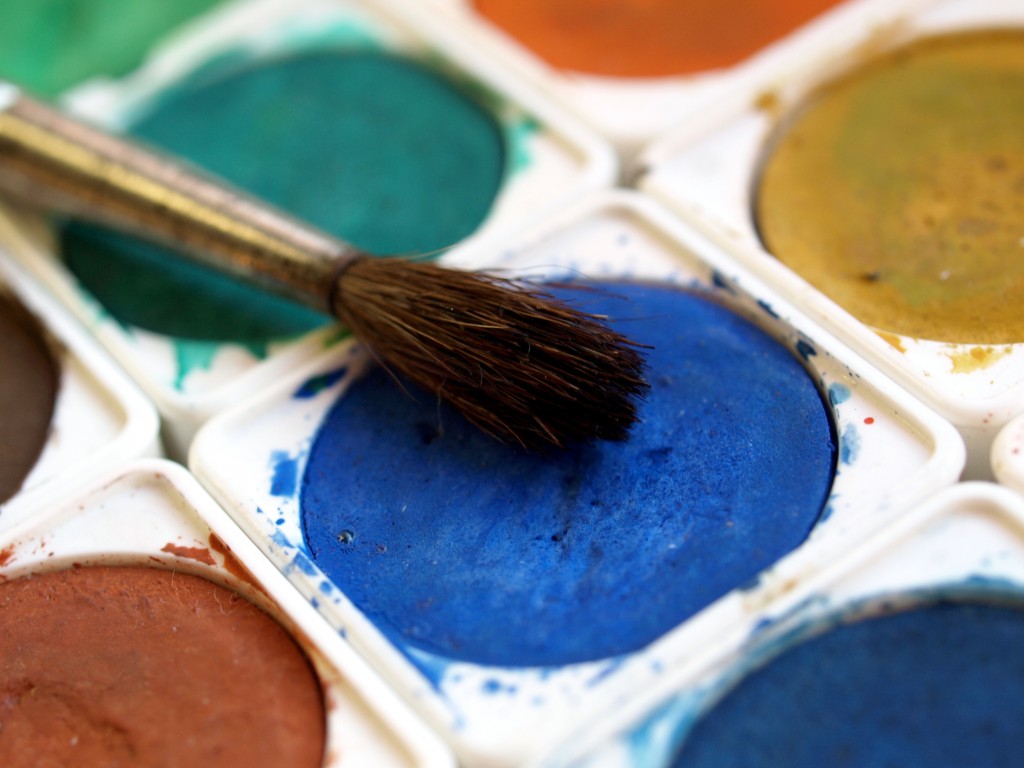 Art therapy is a specialized area of mental health that uses art materials and the creative process to explore emotions, reduce anxiety, increase self-esteem, and resolve other psychological conflicts. The American Art Therapy Association states that art therapy can be an effective mental health treatment for individuals who have experienced depression, trauma, medical illness, and social difficulties. Making art in therapy can be a way to achieve personal insight as well as healing.
There’s more to art therapy than simply “drawing your feelings.†Art therapists are trained to lead people through the creative process in a therapeutic way. Just as your doctor may prescribe a medication or behavioral change to aid your physical healing, your art therapist offers art-based therapy interventions that are tailored to your needs. As with every aspect of therapy, the choice to engage with specific types of materials will ultimately be up to you.
“Art washes from the soul the dust of everyday life.†—Pablo Picasso
In this article, we’ll take a look at some of the top questions people have about art therapy.
Q: Do I need art training or experience to participate in art therapy?
A: No art experience is necessary for you. Your art therapist is highly trained in visual art as well as psychology, and he or she will guide you in the process of creating art using specific types of materials. All you need is a willingness to experiment and explore.
Q: What kind of training should my art therapist have?
A: Art therapy is a profession that requires at least a master’s degree in a program with specific art therapy components.[fat_widget_right]While expressive arts therapists are trained in art therapy, there is also the designation of art therapist whereby the therapist studies only art therapy. There are also associations that offer certification as a supplement to your education, rather than a degree. Many art therapists have an art therapy credential called an ATR that indicates they are registered with the national art therapy credentials board.
Q: What kind of art will I make in art therapy?
A: It depends on your interests as well as the therapeutic benefits of certain types of art for your situation. Art therapy can include a wide range of art materials and processes. Your sessions could potentially include activities such as working with clay, painting, making a mask, creating a visual journal, and assembling a collage. Most often, the focus will be on the process rather than creating a finished art product.
Q: Do I get to keep the artwork that I make in art therapy? Will the art therapist show it to anyone else?
A: Your artwork is your creation and always belongs to you. Some people choose to keep the finished artwork, while others may decide to leave it in the care of the art therapist. Your art therapist will not show your artwork to anyone without your permission. The code of ethics followed by art therapists specifies that an art therapist must safeguard a client’s art creations the same way he/she would protect any other privileged information.
Q: Why are some art materials more appropriate for my situation than others? What does it mean to have an art therapist prescribe an art process for me?
A: Art materials have inherent healing qualities, but some are more appropriate for certain types of situations. For example, there is a therapeutic difference between using colored pencils, which are very dry and controlled, as opposed to watercolor paint, which is extremely wet and difficult to control. Your art therapist has specialized training in assessing which materials to suggest based on the issues you are facing, your frame of mind during the session, and other factors. Art therapists also have an extensive personal background in studio art, making them personally familiar with the use of specific types of art materials so that they can guide you through any difficulties that may arise in the creative process.
Q: Will the art therapist “interpret†my artwork?
A: Art therapists can use a variety of approaches, just as counselors or psychotherapists may utilize different approaches. It is not customary for a therapist to interpret your art. In a humanistic or transpersonal approach to art therapy, the focus will be on the personal meaning that you find within your own creative work, rather than an arbitrary meaning imposed by the therapist. You are the expert on your own artwork and creative process, and the art therapist’s role is to facilitate explorations of your work rather than to analyze or interpret it.
Reference:
Pablo Picasso Quotes—Art as Therapy. (2010, October 10). Retrieved May 6, 2013, from quotes: http://www.arttherapyblog.com/c/art-quotes/#ixzz2SYtZgGua
 Chances are most of what you think you know about therapy is misrepresented in the media. Why? Because pop culture’s idea of what goes on in the therapy room is largely based on fictional therapists. In short, good TV and movies depict bad therapy. The dramas—made famous by fictional therapists—that interest viewers portray the qualities that would be harmful to real-life people in therapy (and most likely would get those therapists in legal trouble).
Below are the top five lies that you may have learned about therapists on television and in movies, followed by a more realistic view of therapy:
Lie No. 1: Therapists can’t be trusted to keep your secrets or respect your privacy. Television and movie therapists are often portrayed as devious or self-serving. On Mad Men, Don Draper’s wife was seeing psychiatrist Dr. Arnold Wayne, who then reported the details of their sessions to Draper (this one tops the list).
The reality: Therapists are ethically bound to maintain confidentiality. What is said in a therapy session will never be shared with anyone else without your permission. The exception to this rule is when someone is in danger, as in the case of child abuse, for example. Legitimate therapists will explain the limitations of confidentiality at your first session.
[fat_widget_right] Lie No. 2: Therapists’ foibles, oddities, and mistakes are the norm. The media often portray therapists as incompetent, either because they are pompous or because they just aren’t effective in therapy. Sometimes they’re depicted simply as being off-the-wall. The most obvious example of an incompetent therapist is the delusional Tobias Fünke on Arrested Development—a failed psychiatrist with multiple phobias and a total blindness to the problems in his marriage and family. Mind you, Tobias is a hilarious character (and that is the point)—but there’s nothing therapist-like about him.
The reality: Therapists are highly educated, normal people. In general, therapists hold either a doctorate or a master’s degree in psychology or a subspecialty (such as marriage and family therapy), and they are required to take continuing education courses on a regular basis to keep their skills and licenses current—a license is required in most states. Therapists are bound by the ethical standards of their profession as well as by local and federal laws. While perfection might be desired by a person in therapy, therapists are human just like everyone else.
Lie No. 3: Your therapist will fix your problems. Fictional therapists on TV and in movies tell people in therapy what to do, taking for granted they “have the answer.†Even Dr. Phil (who is not fictional) primarily lectures and offers advice on his show.
The reality: A good therapist will assist you in finding your own answers. Your therapist might occasionally offer a suggestion about changing a behavior, or give you “homework†to try out between sessions (this isn’t advice, but a directive). It is much more likely that if you ask your therapist for advice, he or she will help you explore your own inner knowledge about what is best for you in a given situation. Each therapist has his or her own style. And there are different therapies that prescribe a more direct vs. indirect approach.
Lie No. 4: Your therapist will become very involved in your life as your on-call crisis manager. Many TV therapists are portrayed as being intimately involved in the day-to-day dramas of people’s lives, taking endless phone calls to help the client resolve a sticky situation. In the comedies Analyze This and What About Bob? this concept is taken to an extreme, as the therapists become overly involved and react defensively to people’s needy behaviors.
The reality: Therapists maintain therapeutic boundaries in order for therapy to be effective. The therapist will explain his/her policies at your first visit. Most likely, your interaction with your therapist will be limited to scheduled visits, which are typically just once a week, but short five- or 10-minute calls between sessions are usually not prohibited (this is an individual therapist courtesy). Therapists often do respond to crisis calls when deemed appropriate to do so. It is good practice to ask your therapist how he or she handles these issues if you are uncertain.
Lie No. 5: Your therapist might become romantically or sexually involved with you. It’s easy to think, from the examples we see on TV and in the movies, that most therapists end up in romantic entanglements with people in treatment. As an example, in the blockbuster romance The Prince of Tides, the psychiatrist played by Barbra Streisand begins therapy with her client’s brother and eventually has a sexual fling with him.
The reality: Therapists are ethically bound to avoid dual relationships or sexual contact with people in therapy. A dual relationship refers to a situation in which the therapist interacts with a person in therapy in a way that may be harmful to the person. In general, this is highly frowned upon by therapeutic ethics. No therapist should engage in a romantic or sexual relationship with you while you are in treatment with him/her.
“My therapist told me the way to achieve true inner peace is to finish what I start. So far today, I have finished two bags of M&M’s and a chocolate cake. I feel better already.â€
—Dave Barry
So, how are you supposed to feel safe and keep pace with all these potential issues? First of all, it’s your therapist’s responsibility to handle sticky situations correctly and within the laws that govern them. Mental health professionals are required, ethically and legally, to explain these issues to you before the process of therapy begins. Typically, you will be asked to read and sign a detailed document (usually called an “informed consent†or “disclosureâ€) that describes the therapist’s way of practicing and his/her ethical and legal obligations. If you have questions, you can also contact your state licensing board, as it is set up to protect your rights.
Reference:
Squiddo (2013), Retrieved May 5, 2013, http://www.squidoo.com/psyquotes by Jaktraks.
 Many people associate a sandbox with children’s play. However, there is a special type of expressive therapy in which a tray of sand is used to create and explore imaginary worlds. This modality, called sand tray therapy, can be appropriate for people of any age. Many adult clients enjoy sand tray therapy as a way to bypass the logical and intellectual parts of themselves in order to access a deeper, creative aspect.
Sand tray therapy has been in use since the 1940s. It emerged in the form of Jungian sandplay, a type of psychoanalytic expressive therapy in which clients were asked to “create a world†in the sand. In current times, sand tray therapy has evolved to be used by therapists from a variety of backgrounds, including humanistic or transpersonal.
How It Works
The sand tray that is used in therapy with adults and adolescents is a rectangular, wooden tray, several inches deep and painted blue on the inside. Typically, the tray is placed on a wheeled table that is about regular table height. The tray is filled about two-thirds full with clean, white sand.
In the same room, there is an open shelf containing a broad variety of small toys or figurines. These usually include human figures of different types, as well as animals, plants, buildings, vehicles, and other types of things that are commonly seen in everyday experience. Any of these figurines can be placed within the sand tray to create a small, imaginary world. In addition, the sand in the tray can be shifted to make an evocative landscape. Sand can be piled up to show a hill or mountain, or it can be scraped away from the bottom of the tray to show the blue interior in order to represent water.
How It Helps
Sand tray therapy can be used with adults when success with verbal therapies is stifled, or when a therapeutic modality that allows more access to innate creativity is desired. An excellent use for the sand tray can be with grief or trauma, when words are difficult to utter or fully process. When clients touch the sand, it can be very soothing to the psyche, offering a healing beyond what we can visibly understand.
“When the beginnings of self-destruction enter the heart, it seems no bigger than a grain of sand.†—John Cheever
There are several components of sand tray therapy that make it effective for many people, including:
- The design of the sand tray environment is a safe, contained world that is fully controlled by the client, and can be manipulated or changed by adding, subtracting, or moving figurines within the scene.
- It does not require any artistic skill to have a satisfying sand tray experience—only selecting and placing objects.
- Physically moving representational objects within the sand tray container has a beneficial effect on the body, especially in people who have undergone traumatic experiences—more so than simply talking about memories or ideas.
What to Expect
In a session using sand tray therapy, the therapist will typically begin by encouraging the client to explore the sensory experience of the sand tray itself. Many clients may spend a few minutes just experiencing the cool, smooth sand on their fingers.
The client can leave the sand smooth and flat or create a landscape by shifting the sand in the tray. Then the therapist will explain how to choose figurines in order to create a world or scene in the sand tray. The therapist will instruct the client to choose several figurines that elicit a strong reaction, either positive or negative, and reassure the client that it’s OK not to “know†what each figure represents. Then the client will decide where to place each object in the sand landscape. The scene may be static, or it may evolve over the course of the session. The therapist will encourage the client to observe what has happened in the world of the sand tray and discuss the meaning that the client sees in this experience. A photograph of the scene may be taken in order to keep a record of the session.
My Experience
Having sand trays in therapy rooms can provoke a client’s curiosity. I recall a non-sand tray client in the sand tray room stroking the sand as he was talking to me. I called his attention to this and he remarked, “It’s soothing.†Just having the sand tray nearby to touch supported his ability to relax in the room. Another example is when I was working with a couple. After a turbulent session with his wife, the man took the opportunity before he left the therapy room to put a shark head down in the sand—a visual and nonverbal communication about his feelings.
As I allow each and every client to have his or her own experience, I find the benefits of sand tray therapy useful. It allows clients to have experiences they may not if they were to use only language.
Reference:
The Columbia World of Quotations (1996), Columbia University Press. Retrieved April 11, 2013, from http://quotes.dictionary.com/search/sand_?page=3
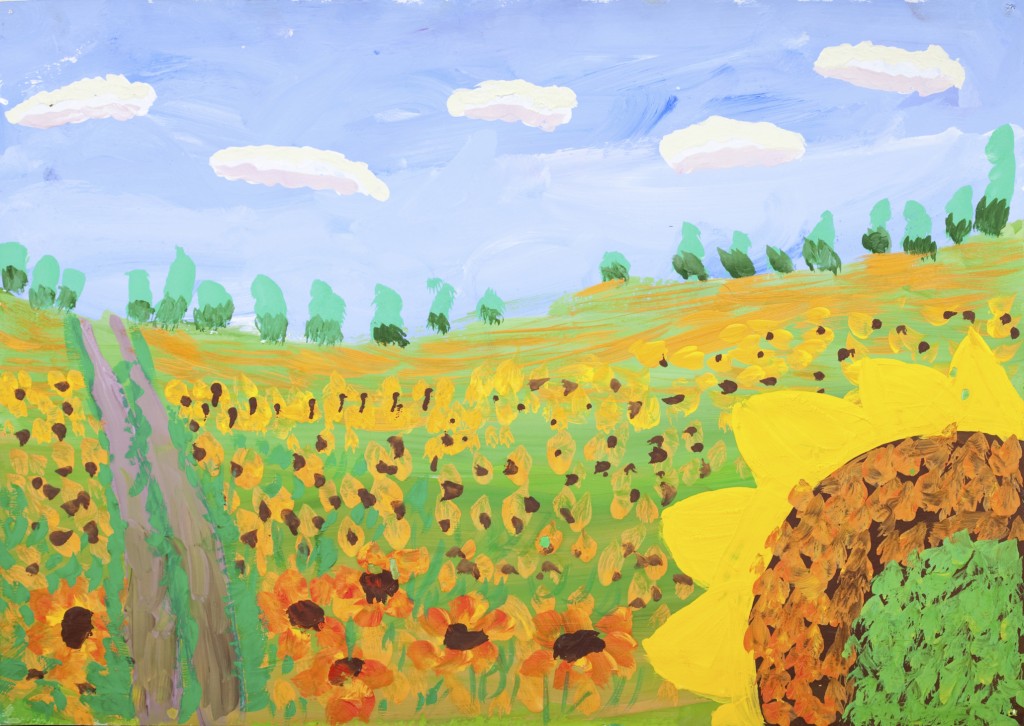 “It is so difficult to put the complexities of the trauma recovery process into words—artwork does this much better!†– Joan Turkus, M.D.
Posttraumatic stress (PTSD) is a condition that is, unfortunately, quite common in modern society. Statistics show that 70% of adults in the United States have experienced some form of traumatic event at some time in their lives and that up to 20% of this population will go on to develop PTSD. If you have undergone trauma, you are not alone. While many forms of therapy continue to emerge to treat those who have experienced trauma, art therapy is one that has been proven by a number of studies to be effective in dealing with the aftereffects of trauma. Whether you are a survivor of abuse, war, natural disaster, or another traumatic event, art therapy will likely be able to help you heal.
[fat_widget_trauma_ptsd_right]
Breaking the Silence
A common occurrence after a person has experienced trauma is a hesitancy or inability to discuss the incident out loud or verbally, even with a professional therapist. Repressing all thoughts and feelings is one reason this can happen. In expressive arts therapy, words are not necessary; much can be achieved without them. Expressive arts therapy moves the client and therapist from the traditional talk therapy roles and into a process that may be less provocative. The medium serves as a bridge between you and the therapist, allowing exploration to occur at a comfortable pace.
Each medium is carefully selected by the therapist to support giving voice to your experience. You don’t have to strain to say the right thing; the medium can speak for you and act as a support for your experience. Some emotions may be better expressed through art than through verbal language anyway. While you may not be able to put what you feel into words, viewing your work in front of you is something else entirely—something that can lead to your healing.
Journey to the Unconscious
Repression, or the brain’s attempt to send difficult thoughts straight into the unconscious, supports clients in handling their trauma. This phenomenon is observed frequently in trauma victims, who claim to have no recollections of the disturbing events. Many experts view art therapy as a way to tap into these unconscious thoughts and memories and bring them to the surface, so that individuals can heal and reconcile them.
You’re probably familiar with the left-brain and right-brain theory, which has been common knowledge among the general public for quite some time now. The act of creative expression utilizes the right-brain hemisphere. What’s interesting is that the right brain is also where visual memories are stored. Many theorize that the two are therefore very closely linked and that this is one of the reasons that art therapy has been so successful at uncovering repressed, unconscious images.
Helping Children Heal
Although art therapy has been proven to be a successful treatment for people of all ages, research shows that it has been particularly effective in the treatment of children. Various developmental theories claim that children do not fully develop verbal skills until adolescence, and it is therefore no surprise that your child may better respond to a creative outlet for self-expression than a chat with a therapist.
Seeking the right treatment for you or your child following a trauma is often frustrating, particularly when you do not know where to turn. While it is important to read about all of your options, if you or your child has experienced any form of trauma, then art therapy may be helpful.
References:
- Art therapy. (2011). Retrieved July 15, 2012, from Trauma Recovery Center: http://www.traumarecoverycenter.com/art_therapy.html
- Art therapy. (n.d.). Retrieved July 15, 2012, from Casa Palmera: http://www.casapalmera.com/articles/art-therapy/
Art therapy what is it? (n.d.). Retrieved July 15, 2012, from CRC Health Group: http://www.crchealth.com/types-of-therapy/what-is-art-therapy/ - Clatch, M. (2012, January 1). Trauma recovery through art and play therapy. Retrieved July 15, 2012, from Courage to Connect Therapeutic Center: http://www.couragetoconnecttherapy.com/trauma-recovery-through-art-and-play-therapy
- Malchiodi, C. (2012, February 22). Art therapy shows promise in treatment of PTSD & trauma. Retrieved July 15, 2012, from Art Therapy: http://www.arttherapyblog.com/ptsd/ptsd-treatment-showing-promise/#more-26
- Malchiodi, C. (2012, March 6). Trauma-informed expressive arts therapy. Retrieved July 15, 2012, from Psychology Today: http://www.psychologytoday.com/blog/the-healing-arts/201203/trauma-informed-expressive-arts-therapy
- Rosenthal, M. (n.d.). PTSD statistics. Retrieved July 15, 2012, from Heal My PTSD: http://healmyptsd.com/education/post-traumatic-stress-disorder-statistics