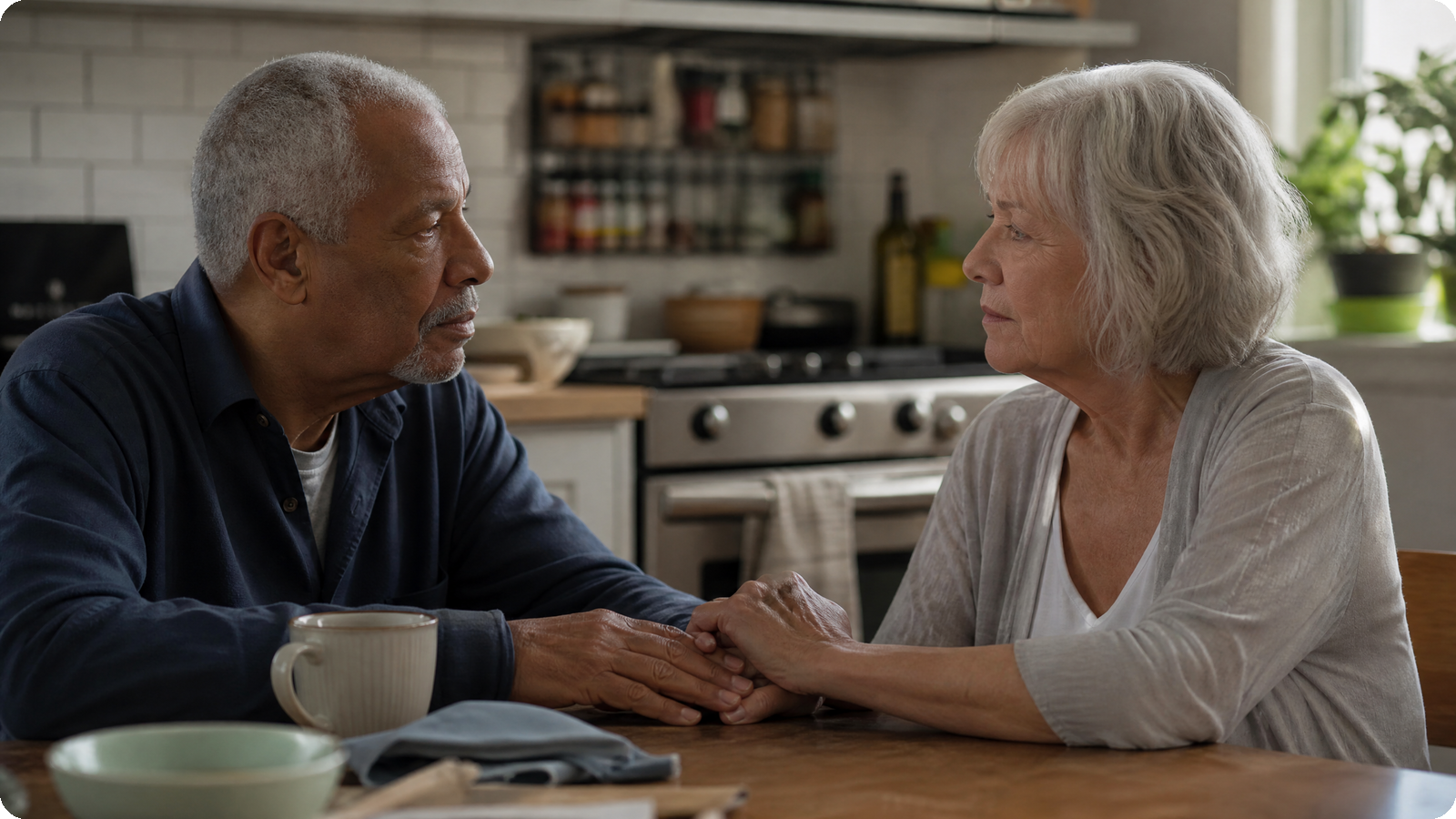
Couples therapy after 70 is not “too late” work. In my experience, it can be some of the most meaningful work we do. I was surprised when a longtime colleague once told me she no longer took clients over age 70 because, in her view, people were too rigid, too set in their ways, and carrying too many decades of unresolved issues to truly change. I have never experienced older couples that way.
Love and repair
Later-life intimacy
Long-term marriage
In this blog
Key insight
The couples who reach out in their seventies are not giving up. They are leaning in. They are demonstrating commitment, courage, and a desire for healing, even in later life.
Why couples therapy after 70 is not too late
I recently opted out of taking Medicare insurance because of low reimbursement rates. It was a difficult decision. But it never occurred to me to turn away couples in long-term marriages, partners who have spent 30, 40, or even 50 years together and are now seeking more intimacy, better communication, or support through life’s transitions.
Personally, I welcome these couples. Couples of all ages come to therapy for similar reasons. They feel disconnected. The romance has faded. They have the same argument on repeat. They feel lonely, misunderstood, or unappreciated. They may be navigating financial stress, parenting differences, or a longing for deeper emotional or physical intimacy. Most of all, they want to feel seen, heard, and valued.
At 70 and beyond, those desires do not disappear. Additional layers often enter the picture, but the longing for connection remains human. GoodTherapy has written about how partners can grow together or grow apart while aging. Couples therapy after 70 can support the choice to keep growing together.
When therapy may help
If you and your partner keep returning to the same painful conversation, a couples therapist can help slow the pattern down. You can search for support through GoodTherapy’s Find a Therapist directory.
Changes in physical and mental health
Health concerns frequently become part of the relational dynamic in later life. Chronic pain, illness, mobility limitations, depression, anxiety, or cognitive changes can shift the balance in a relationship. One partner may take on a caregiving role, altering the sense of equality and partnership. Medications can affect mood, energy, sleep, and sexual functioning.
Couples who once moved through life as equals may now struggle to maintain dignity, connection, and even romance in the face of very real practical challenges. The National Institute of Mental Health notes that later-life changes, including illness and loss, can affect mental health. In a marriage, those changes rarely affect only one person. They enter the way partners speak, listen, plan, and reach for each other.
Later-life layers that may enter couples therapy
| Health changes can alter roles, independence, energy, patience, and each partner’s sense of being desired. | |
| Retirement can reduce structure and increase time together, bringing old patterns closer to the surface. | |
| Losses may include friends, siblings, homes, routines, health, or a previous version of the marriage. | |
| Adult children and extended family can affect decisions about care, housing, money, boundaries, and time. |
Retirement, loss, and family dynamics
Retirement
Retirement can be a gift or a stressor. For some couples, it opens the door to travel, hobbies, and meaningful shared time. For others, it means spending more time together than ever before. When work no longer provides structure or distance, unresolved tensions can surface. Partners who once coped by immersing themselves in their careers may now need new ways of relating and managing conflict.
Loss
By their seventies, most people have experienced significant loss: parents, siblings, friends, homes, routines, health, or the future they expected. Grief enters a relationship in complex ways. Because partners often grieve differently, one seeking connection and the other withdrawing, disconnection can happen at the very moment they need each other most.
The National Academies report available through NCBI Bookshelf describes social isolation and loneliness as important health concerns for older adults. That does not mean a spouse should become someone’s only support. It does mean the emotional safety of a long-term partnership can matter deeply in later life.

I recently worked with a couple who returned to therapy after losing their longtime home to a fire. While still displaced, the wife received a cancer diagnosis. They were navigating layered stress: housing instability, health concerns, differing coping styles, and a sense of responsibility to their adult children.
One partner wanted to talk and process. The other coped by staying busy. Both loved each other deeply, yet felt alone. Our work was not about solving the external problems. It was about helping them slow down, regulate their nervous systems, and access the vulnerability beneath their coping strategies. When they were able to say, “I’m scared,” “I miss you,” and “I need you,” something shifted.
They reached for each other. In the midst of uncertainty, their relationship became a source of comfort rather than strain. This is what is possible in later life, not the elimination of hardship, but a transformation in how partners face it together.
Family dynamics
Later life often brings increased involvement from adult children and extended family. Decisions about housing, finances, lifestyle, caregiving, and medical choices can become points of tension. At the same time, couples are often more aware that time is finite. Many want to be intentional about how they spend the years ahead, resolving old conflicts, offering forgiveness, and creating a sense of peace and companionship.
A gentler next conversation
If conversations about retirement, caregiving, or adult children keep escalating, start with one shared goal: “I want us to feel like a team while we talk about this.” GoodTherapy’s guide to communication skills for couples offers simple practices that can support this kind of shift.
Sexuality and intimacy after 70
Cultural myths suggest that sexuality fades with age. In reality, many older couples still long for touch, closeness, affection, and connection. What changes is not always the need for intimacy, but its expression. Research on sexual aging and older adults continues to examine how sexuality and sexual health remain part of later-life well-being.
Therapy offers space to expand sexuality beyond performance and toward presence, tenderness, and emotional connection. Some couples need help talking about changing bodies without embarrassment or blame. Others need help rebuilding emotional safety before physical closeness can feel possible. The goal is not to prescribe one kind of sexual relationship. The goal is to help partners speak respectfully about affection, desire, comfort, boundaries, and care.
Try this now: a repair pause
| 1 | Pause before repeating the familiar argument. Take one breath and notice what you are protecting. |
| 2 | Name one feeling without making it your partner’s fault: “I feel scared,” “I feel alone,” or “I feel overwhelmed.” |
| 3 | Ask for one small reachable response: “Could you sit with me for a minute?” or “Could we talk about this after dinner?” |
Long-standing patterns and new possibilities
Of course, long-standing patterns exist. A pursuer-withdrawer dynamic that has lasted for decades does not disappear overnight. A partner who has defended, criticized, shut down, or kept peace for years may not immediately know another way.
But longevity also brings strengths: shared history, resilience, humor, loyalty, and a deep understanding of each other’s inner worlds. These couples are not starting from scratch. They are revising a long and meaningful story. Studies on marital quality and well-being among older adults also point to why the quality of later-life relationships deserves attention.
So, is it too late to change? In my experience, it is not. Therapy with couples in their seventies can be some of the most powerful and moving work we do. There is often a clarity of purpose, a willingness to take responsibility, and a deep desire to feel seen and appreciated by the person who has witnessed their entire adult life.
This is not too late work
This is essential work. Couples therapy after 70 can help partners make room for old pain, current stress, and renewed connection.
When there is still time for love
Rather than rigidity, I often encounter courage. Rather than resistance, I see urgency. Time, after all, is precious. The couples who pick up the phone in their seventies are not demonstrating rigidity. They are saying, “We don’t want to live the rest of our lives disconnected.” That is not pathology. That is motivation.
Yes, they bring decades of history. But those decades also hold shared memories, resilience, humor, loyalty, and deep familiarity with one another’s wounds and longings. When we help them slow down, regulate, and truly listen, sometimes for the first time in years, the shifts can be profound.
I have seen couples in their seventies learn to apologize in ways they never had before. I have watched partners soften long-held defenses and rediscover tenderness. I have witnessed emotional and physical intimacy deepen in ways that feel more meaningful than earlier stages of life. I have seen forgiveness emerge when each partner finally understands the loneliness the other has been carrying.
Development does not stop at midlife. The later decades invite us into integration, meaning making, connection, and peace. Couples therapy can be a powerful vehicle for that process. As long as partners are willing to reach for each other, repair is possible. And as long as there is time, even a little time, there is time for love.
Finding support for couples therapy after 70
A later-life relationship may include old disappointments, deep loyalty, exhaustion, gratitude, regret, and hope at the same time. Couples therapy after 70 honors that complexity. It does not assume partners are too old to change. It assumes that the need to be understood remains profoundly human.
If you are considering therapy, you might begin by looking for someone who respects older adults, understands long-term relationship patterns, and can help both partners feel heard. You may also find it useful to read about ways couples counseling can help.
Frequently Asked Questions
Common questions about couples therapy after 70 and later-life relationship repair.
Support is available at any age
Whether you are facing old patterns or new losses, you do not have to sort through relationship pain alone.
 |
About the Author Mary Kay CocharoLicensed Marriage and Family Therapist Mary Kay Cocharo is a Los Angeles licensed marriage and family therapist who works with individuals and couples seeking deeper connection, emotional safety, and healthier communication. Her practice centers on relationship repair, intimacy, premarital counseling, long-term partnership, and the patterns that shape how partners reach for or withdraw from each other. She is trained and certified in Imago Relationship Therapy and is a master-level practitioner of Encounter-centered Couples Therapy, integrating relationship theory, dialogue skills, and current understanding of connection and the nervous system. Along with weekly and intensive couples work, she offers workshops and retreats for engaged and married couples and trains other therapists in couples therapy. |

Have you ever noticed how the biggest changes in life often bring out both the best and most challenging parts of our relationships?
Whether it’s moving to a new city, starting a new job, welcoming a child, or adjusting to an empty nest, life transitions can feel overwhelming. But they also offer powerful opportunities for growth, especially when couples approach them with empathy, curiosity, and open communication.
Why Life Transitions Test Relationships
Change, even when welcome, stirs up uncertainty. A long-awaited promotion, a beautiful new home, or even retirement can disrupt familiar routines, shift roles, and bring unspoken expectations to the surface. These disruptions can trigger old fears or emotional wounds from earlier in life. Unfortunately, it’s easy to unintentionally take that stress out on the person closest to you.
In these vulnerable moments, many couples find themselves more reactive, more disconnected, or even questioning their compatibility. But the issue isn’t necessarily the change itself—it’s how the couple experiences and navigates that change together.
How to Stay Connected During Major Life Changes
1. Pause and Check In Regularly
Set aside intentional time to talk about what’s changing and how you each feel about it. Even a 10-minute check-in over coffee can deepen your awareness and connection. This simple practice helps prevent small issues from becoming major relationship problems.
2. Share Your Inner Emotional World
Don’t just talk about the logistics—talk about your emotional landscape. Ask open-ended questions like:
- “What’s been hardest about this transition for you?”
- “What are you most hopeful or excited about?”
- “How can I better support you during this change?”
Communication issues can strain relationships, especially during times of change. Learning to share your emotional world effectively is crucial for maintaining connection.
3. Practice Empathy, Not Problem-Solving
You don’t need to have the perfect solution for every challenge your partner faces. Just being present and saying “I hear you” or “That makes sense” can be profoundly comforting. Sometimes validation is more valuable than advice.
4. Maintain Rituals of Connection
Transitions often upend routines that keep couples connected. Try to preserve at least one or two daily or weekly rituals—like a morning walk, an evening check-in, or Sunday breakfast. These small anchors help maintain emotional continuity when everything else feels uncertain.
5. Ask for Professional Support When Needed
Sometimes, no matter how much love you share, a transition brings up more than you can hold on your own. A few sessions with a skilled couples therapist during a major life change can make a world of difference. Research published in academic journals shows that couples therapy has large effects on relationship satisfaction and helps couples develop better communication patterns.
Struggling with major life changes? Learn expert strategies with our guide on navigating life transitions successfully and discover why your brain resists change.
The Role of Couples Therapy During Life Transitions
If you’re sensing that a big change is testing your connection, consider seeking couples therapy—not as a last resort, but as a proactive step toward staying aligned.
A good couples therapist offers a safe space for you and your partner to:
- Slow down and process emotions calmly
- Express feelings without judgment
- Understand recurring communication patterns
- Learn new ways of connecting and communicating
- Reconnect as teammates rather than adversaries
Ready to strengthen your relationship during this transition? Get started with our guide on how couples therapy can help you talk it out and improve your communication patterns.
Importantly, couples therapy is a specialized skill—not all therapists are trained in it. Look for a professional with advanced certification in a couples-specific modality, such as:
- Imago Relationship Therapy
- Encounter-Centered Couples Transformation
- Emotionally Focused Therapy (EFT)
- The Gottman Method
- Psychobiological Approach to Couple Therapy (PACT)
- Relational Life Therapy (RLT)
These evidence-based models all share one thing in common: they use a relational paradigm, focusing not just on individual experiences but on the interactional dance between two people. That makes couples therapy distinctly different from individual therapy, where the client is one person and the work centers on that person’s internal world.

What to Look for in a Couples Therapist
Beyond credentials, experience matters. Look for a therapist who has worked extensively with couples, especially those navigating transitions like parenthood, retirement, caregiving, or relocation. Finding the right therapist is crucial for successful outcomes.
And don’t underestimate the importance of therapeutic fit. You both should feel respected and hopeful in the presence of your therapist. It’s normal for one partner to feel more hesitant about therapy, but no one should feel like they’re being dragged into treatment unwillingly.
Consider these questions when evaluating potential therapists:
- Do they have specific training in couples therapy modalities?
- Have they worked with couples facing similar transitions?
- Do both partners feel comfortable and understood?
- Does the therapist maintain neutrality rather than taking sides?
Need help improving your relationship communication? Discover the 5 communication skills every couple should develop to strengthen your connection during challenging times.
Building Resilience Together Through Change
Relationship resilience isn’t about avoiding difficult transitions—it’s about developing the skills to navigate them successfully. Strong marriages require intentional effort, especially during times of change.
Couples who thrive through transitions often share these characteristics:
- They view challenges as opportunities for growth
- They maintain open, honest communication
- They support each other’s individual growth within the relationship
- They seek help when needed without shame
- They maintain perspective about temporary vs. permanent changes
It’s important to understand that when one person changes in a relationship, it naturally affects the dynamic. This is normal and can actually strengthen your bond when approached with empathy and understanding.
Final Thoughts: Embracing Change as a Couple
Life transitions are unavoidable—they’re part of the natural evolution of life and love. What matters most isn’t avoiding them, but learning how to walk through them side by side.
With the right support and intention, even the most disorienting changes can become doorways into deeper connection. When couples face change with empathy, curiosity, and a commitment to grow together, they don’t just survive—they transform and build even stronger relationships.
Remember: seeking support during transitions isn’t a sign of weakness—it’s a sign of wisdom. Whether through improved communication strategies, professional guidance, or simply making time for regular check-ins, investing in your relationship during times of change is one of the best decisions you can make.
Ready to transform your relationship during life’s biggest changes? Start with understanding change and life transitions and discover how therapy can help you adapt and build resilience together.