 If her heart is broken, maybe it’s because her father broke it first. Her inability to accept herself is probably because he told her that she would never be good enough for anyone or anything.
I am a young lady that grew up without a father. I would watch enviously as friends celebrated father’s day, wishing I could do the same. I remember spending hours imagining my father coming back and telling me how he has missed me in his life. I imagined conversations and holidays that I knew would never happen. I could not fathom why I was never good enough for him to call daughter. If I am not good enough for my father, how will I be good enough for anyone else?
[fat_widget_right]This began my journey to self-loathing. As an eight-year-old, I would spend hours drawing circles around the areas I wanted to change. As more and more people around me commented about my weight and unattractive features, I began to obsess about my image. I moved from dreaming about plastic surgery to experimenting with ways to lose weight. People around me were too busy to realize that I had begun experimenting with diet pills, binging and purging, and starving myself for days on end. All I could think about was being skinny. Maybe if I was smaller, I would be sexier. Maybe if I was skinnier, more people would love me. Maybe if I was skinnier, my father would come back…
My strong desire to be loved strained my relationship with food, and began to take a toll on my mind. I would find myself crying for hours on end, not even sure what I was crying about. I began hiding from the world, thinking of ways to give myself an early exit. At that moment I did not realize that I was suffering from depression. In all honesty, I thought that’s how life worked: some people deserved happiness, and some didn’t. I was one of those that didn’t deserve it. I was not popular, and I didn’t fit in with anyone in my family. I was a constant outcast, and this pushed me into further isolation.
My isolation made me desperate. I wanted someone, anyone to love me. I wanted to feel like I belonged somewhere. So I clung on to the first sign of love that presented itself to me. It always came in the form of an abusive relationship, but that didn’t matter to me. I allowed people to cheat, because at least they would come back to me. I justified the physical abuse, blaming myself for saying or doing the wrong thing. I endured the emotional and psychological torture, because at least I was not alone. Any attention I received was better than nothing at all. I would run away from any “good guy†because someone like me didn’t deserve anything good.
Today, I’m a work in progress. I still have food issues that make me border on an eating disorder. After six different combinations, I have found antidepressants that are helping to pull me out of the dark shadows of my mind. I still find myself afraid of relationships, scared that I might end up in more abusive relationships. I try to keep my mind occupied with small happy thoughts, which will one day lead me to some form of happiness.
 I was first diagnosed with depression in my last year of university. From that day on, my life changed. I have tried over four combinations of medication over the last two years. I try to focus on the positive: my love for God, writing, and yoga. I am lucky to have family and friends that support me even when they don’t understand my struggle. Â
Ros keeps a blog at memoirsofavirginprostitute.blogspot.com.
 Sexual assault, a difficult subject for many people to talk or even think about, is an unfortunate reality for the approximately 250,000 people who are sexually assaulted in the United States each year.
April is nationally recognized as Sexual Assault Awareness and Prevention Month, and April 7 is the designated Day of Action. These campaigns exist as a means to raise awareness of sexual assault in the U.S., so that people not only begin to think about sexual assault and its implications, but start doing something about it, as well.
You have the power to make a difference. Here are eight ways you can help raise sexual assault awareness and also work to prevent its occurrence in the future.
1. Educate Yourself about Sexual Assault
Sexual assault is any unwanted sexual contact that a person is coerced or forced to participate in against their will. According to the results from a Centers for Disease Control and Prevention (CDC) survey released in 2014, nearly one in five women has experienced rape or an attempted rape in her lifetime. Research also paints a grim picture for males. Studies show that one in six men experiences some form of unwanted or abusive sexual experience in his lifetime, as well.
Sexual assault impacts the lives of both men and women, and the resulting trauma often goes far beyond the event itself. People who experience sexual assault are more likely to experience posttraumatic stress, depression, anxiety, suicidal thoughts, drug and alcohol addictions, problems with intimate relationships, and difficulty at school and/or work.
You can help raise national awareness of sexual violence simply by educating yourself and your family. There are several national organizations that provide information and resources on sexual violence. Two of the leading organizations are:
- RAINN (Rape, Abuse, and Incest National Network) is the largest anti-sexual violence organization in the United States. RAINN operates the National Sexual Assault Hotline 24-7, which anonymously links callers to a counselor at a rape crisis center nearest them. RAINN also offers online support, resources, and information.
- The NSVRC (National Sexual Violence Resource Center) creates and shares resources to help prevent and respond to sexual violence in the United States and around the globe. They coordinate Sexual Assault Awareness Month (SAAM), operate an online resource library, sponsor national conferences and events, and help integrate research with community projects.
2. Volunteer
There are many ways you can personally get involved in the fight to raise awareness and prevent sexual violence in your local community.
You can volunteer at a crisis center, staff a hotline, participate in fundraising events, advocate for survivors, help raise awareness and improve safety measures on college campuses, or get creative and host your own educational or advocacy event.[fat_widget_right]
3. Lobby Your Representatives
You can speak for those who do not have a voice or are not able to express it. Congress needs to hear from citizens who support legislation to improve the criminal justice system, provide support to survivors, and help prevent further violence. The RAINN Action Center has pre-written letters and tweets available to send to members of Congress asking them to support measures related to sexual assault prevention and support. You can use the RAINN hashtag #ActWithRAINN when posting about sexual violence advocacy measures this month.
4. Use Social Media
Connect with the cause and share it on social media to help increase awareness among those in your network. You can use the RAINN hashtag #ActWithRAINN to talk about the cause and connect with @RAINN01 to stay informed.
The NSVRC hosts a twitter discussion every Tuesday in April at 11Â a.m. PDT. Follow the conversation or get involved through the hashtag #TweetAboutIt.
5. Learn How to Help Those Who Experience Sexual Assault
It can be difficult to know how to reach out to a loved one who has experienced sexual assault. Below are some tips to help if you are unsure of what to do:
- Lend a compassionate, nonjudgmental ear. Many people just want to be heard. They do not necessarily need advice or comments.
- Be patient and considerate. Don’t try to force your friend or loved one into seeking support or taking action if he or she is not yet ready for it.
- If the person plans to seek support or medical attention, offer to be there. As simple as it may seem, your presence alone can make a significant difference.
- If someone you know is sexually assaulted, your reaction can have an impact on his or her recovery from the trauma. Do not question what he or she was wearing or why he or she was not able to stop the assault. One of the most important things you can say to a sex abuse survivor is, “I believe you.â€
6. Engage the Community
Consider reaching out to your local community to help with prevention efforts. You might talk to bar owners about the role their employees can play in prevention, seek support from faith-based or youth organizations, or encourage college faculty and staff to raise awareness and improve safety on campus.
7. Become an Advocate against Military Sexual Assault
Military sexual violence is one of the most overlooked forms of sexual assault. An estimated 19,000 service members become victims of military sexual assault each year, and at least half of those victims are men, with an estimated 38 military men being sexually assaulted every day. Unfortunately, many of these cases go unreported, as survivors rarely speak up.
You can also get involved and spread the word about prevention and support programs for military sexual violence survivors. RAINN operates a Department of Defense Safe Hotline and website for victims of military sexual assault to obtain crisis intervention, emotional support, and other related resources.
8. Donate
There are several nonprofit organizations against sexual violence that rely mostly on monetary donations from supporters to survive. Even if you cannot volunteer or take any other action, you can still help the cause by providing a donation to the organization of your choice. In addition to RAINN and NSVRC, there are several other nonprofit organizations working to prevent sexual violence and provide support, including:
- 1 in 6: an organization that helps men who have experienced sexual abuse.
- MCSR (Men Can Stop Rape): an organization that seeks to prevent male violence against women by redefining masculinity and male strength.
- NAESV (National Alliance to End Sexual Violence): an organization that helps educate the policy community about federal laws and legislation that prevent and work toward ending the cycle of sexual violence in the United States.
In addition to national organizations, there are a variety of support and prevention resources available on the local level as well. Get involved in your community. If you are unsure what projects exist near you, the NSVRC provides an online directory of local organizations and projects working to eliminate sexual violence.
We hope you will join us during Sexual Assault Awareness and Prevention Month in supporting several important organizations working toward a safer community for all. On April 7, the Day of Action, we urge you to pick out at least one item and help us create a ripple effect of positive change for those who are suffering, those who have been victimized, and for those who we hope never have to experience the trauma of sexual assault.
References:
- Help Someone You Care About. Rape, Abuse, and Incest National Network. (RAINN). Retrieved from: https://rainn.org/get-help/help-a-loved-one
- Kearl, H. (April 1, 2013). 10 Ways to Mark Sexual Assault Awareness Month. American Association of University Women. (AAUW). Retrieved from: http://www.aauw.org/2013/04/01/sexual-assault-awareness-3/
- Penn, N. (2014). Military Sexual Assault: Male Survivors Speak Out. com. Retrieved from: http://www.gq.com/long-form/male-military-rape
- Prevalence and Characteristics of Sexual Violence, Stalking, and Intimate Partner Violence Victimization — National Intimate Partner and Sexual Violence Survey, United States, 2011. (2014). Centers for Disease Control and Prevention. Retrieved from http://www.cdc.gov/mmwr/preview/mmwrhtml/ss6308a1.htm?s_cid=ss6308a1_e
- RAINN Action Center. Rape, Abuse, and Incest National Network. (RAINN). Retrieved from: https://rainn.org/public-policy/rainn-action-center
- Resource Directory. National Sexual Violence Resource Center (NSVRC). Retrieved from: http://www.nsvrc.org/organizations?tid=8&tid_1=All
- SAAM Day of Action (2015). Sexual Assault Awareness Month. National Sexual Violence Resource Center (NSVRC). Retrieved from http://www.nsvrc.org/saam/current-campaign/day-of-action
- The 1 in 6 Statistic. 1 in 6. Retrieved from: https://1in6.org/the-1-in-6-statistic/
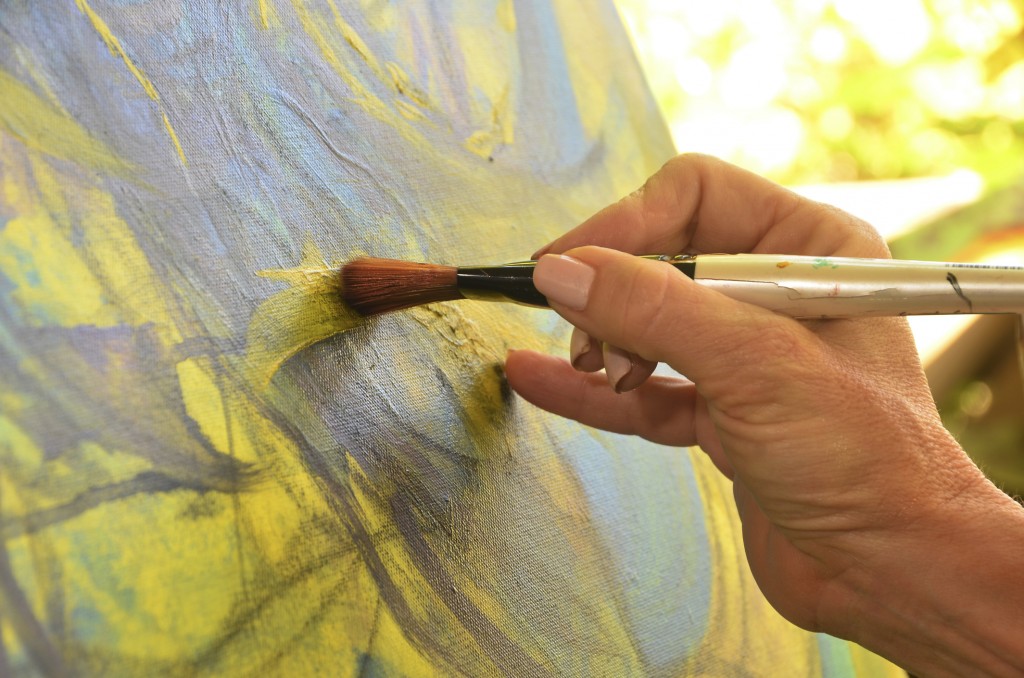 About a year ago, I was working as an art therapist in private practice and I had a 12-year-old client struggling with anxiety and figuring out who she was in the world. I asked her to create a self-portrait—a great exercise for a girl trying to define herself. At one point I realized I had never made a self-portrait, at least not since grade school. So I went out, bought a canvas, took a “selfie,†and began my own personal process answering, “who am I?â€
I began with a light sketch, trying to see myself from the observer view. Then I started painting, layering first in basic colors to assign shadow and light areas. I have a lot of experience painting, but painting a person is definitely challenging. Faces have complex layers of subtle shadows and highlights. I worked layer after layer. Too dark. Too light. Too dark again …
One night I came home and looked at the painting in process and wondered, “Have I gone too far? I just keep layering and layering, will it ever be finished? This painting is getting overworked.†I paused, contemplating this chosen word. That’s exactly what I had created: “overworked Michelleâ€. Working three jobs and always doing a lot, I was overworked and my self-portrait reflected this state.
[fat_widget_anxiety_right]
This is the beauty of art therapy: even though you’re not trying to do it, your self comes through in the art you create. There I was, “overworked Michelle,†in painting as in life. I didn’t like how she looked … and I didn’t like how it felt to be overworked Michelle, either. At that point, I stopped working on the painting and bought a new, blank canvas of the same size. “Who would I be if I wasn’t overworked Michelle?â€
I challenged myself to make the Michelle I wanted to be, my ideal state of being. To avoid overworking the painting again I limited my work time to two sittings. In the beginning, I did not sketch anything, but started with paint on canvas, finding a portrait through color and strokes. Without a photo to reference I was free to make the face, body, and shading however I wanted. The result was a representation of how it feels to be me on the inside.
A few nights previously I had had a powerful dream about a mountain lion and when the hole in the chest appeared in my painting, I knew I wanted a cougar coming from the darkness. But how would I paint a cougar in such a short amount of time? Actually, I had already cut one out of a magazine and it was just hanging on my bulletin board nearby. Should I put collage in my painting?! I’d never done that before!
 I found freedom in creating this painting. All rules went out the window. I could be whoever I wanted to be! This is the truth of life. We create imaginary confines around ourselves that don’t actually exist. With the focus of actually creating the me I wanted to be, I found myself soft and open, vulnerable and dangerous, with strong roots hanging down, looking for soil.
Art is a powerful medium. It reminds us that we are creators, born to make what we want out of life. Art is an opportunity to ask yourself, who do you really want to be? I practiced what I wanted in this painting, and then my life followed suit. I am no longer “overworked Michelle.†Now I have one job, and it is my passion—the place where I share my heart with others and practice vulnerability and openness. I take care of myself first, every day. I don’t feel overworked, because I love what I do. I continue to draw and paint what I want out of life because, in the very near future, it could all come true.
Michelle Lynn Baker is an art therapist and owner of MBodied Art Studio in Westminster, CO. She teaches art classes to children and adults and runs therapeutic art groups for parents and children. Michelle enjoys the spectrum of art as therapy from learning to healing.
 Editor’s note: Tempus Bell is a continuing contributor to the Share Your Story feature on The Good Therapy Blog. Tempus Bell’s previous article is Stigma: Come at Me, If You Can!
Just the other day I made a choice to stop going to a therapist that I haven’t seen in over three months. I stopped going to this therapist because they told me when I called to make a scheduled appointment that they were going to have to ask the therapist if they wanted to see me again because I have a record of canceling. This made me feel really uncomfortable to go back to them. It made me feel as if I was more of a dollar sign then a person with a mental illness.
I am in the process of finding a new doctor, but until I do I am looking online for free help, at the urging of my previous therapist. Did you know that there are workbooks online that are for specific mental illness and mental problems? Why do you have to pay all this money and insurance and doctor fees when you can go online and find the same kind of information you would get from your doctor?
It’s hard for me to find a therapist because first I have to like them, second I have to feel like they understand me and like me, and third I have to feel like I’m not a money bank to this organization. If those don’t line up, then I won’t go back. I have seen a total of three therapists and two psychiatrists in my life. I do not have a history of going to a lot of doctors and messing up the relationship. I’m actually really skeptical of doctors and hospitals because I feel like it’s always about the money and not really about my illness and me.
So to help myself in the meantime, until I find a doctor, I have downloaded some cognitive behavioral therapy workbooks to help me understand where my anger and depression come from, other than my mental illness. CBT therapy is a form of treatment that focuses on the relationship between thoughts, feelings, and behaviors. So it’s a therapy that helps you understand why you think something, how you think it, and how to help you try not to think those thoughts anymore. CBT has been helping me since I never understand where my anger comes from. It seems to come over me out of nowhere and I’m just always angry for nothing. But by writing things down and going through the workbooks, I can look back and actually see the trigger of my anger or depression.
When I was seeing my last therapist, she gave me handouts from a skills-training manual for treating borderline disorder. While she said she didn’t think I had borderline personality, she thought that the worksheets and handout she gave me would help me in my situation. I recently rediscovered them and thought to myself, if she can print out something from a website and give it to me as homework, why can’t I do the same thing?
I started to search Google for bipolar worksheets, anxiety worksheets, and anger worksheets, and that’s when I came across cognitive behavioral therapy and related worksheets online. I printed out two sheets: one for anger, and one for depression. The worksheets have homework that takes a whole week to do, and after that week you go back, look at what you did, and try to put together the pieces of how you feeling the week before.
Consistency is not my strong suit, but I know that I need to figure out what my triggers are and why I’m feeling the way I am. These worksheets haven’t cured me, but they have put in perspective the possible reasons for my anger and depression, other than my mental illness. I can’t do anything about my mental illness other than take medicine and go to therapy, but if I don’t want to take medicine and go to therapy what else can I do?
I find the trigger and let it go.
Here are some websites that I’ve found for worksheets on CBT training and other worksheet help. Good luck my friends, and please tell me if you know where I’m coming from!
- http://www.getselfhelp.co.uk/freedownloads2.htm
- http://psychology.tools/download-therapy-worksheets.html
- http://www.therapistaid.com/therapy-worksheets/cbt/none
OhTemp writes a blog called Bipolar, Unemployed, and Lost, which you can read at bipolarunemployedlost.com.
 Just over three years ago I considered myself happily married and content to grow older gracefully. I was 46, working hard as a senior school teacher and raising two teenage girls. My husband, who is almost 10 years older than me, had been in poor health after an operation and had been off work for several months. Much of my life was about obligation—it was tedious and I was in a rut.
At the start of the academic year I was assigned, once a week, a 29-year-old trainee teacher. The first day I worked with him I thought what a nice young man he was and wished my daughters would meet someone like him one day. He had a gentle nature and such a non-confrontational approach to teaching that the students took to him immediately.
By week three I was hopelessly in love with him. We were relaxed with each other, could talk for hours and had such an intense connection. I could think of little else, day and night. I have never longed for someone, cried over someone, or been absolutely driven to distraction like I was with this man. I completely lost my perspective, and almost my sanity.
The thing is, unlikely as it may seem, he was obviously attracted to me. He paid me endless compliments, stared at me constantly in class, commented that my husband was lucky, described me to a colleague as ‘beautiful’ and ‘wondrous,’ blushed and stammered when we met around school and generally acted like someone with a teenage crush. The week of Valentine’s Day, he gave me a beautiful drawing of a heart that had obviously taken hours; another day, when I complimented him on his teaching, he responded with “There are just not enough superlatives in the world to describe how wonderful I think you are.†I was in heaven. [fat_widget_left]
Against this barrage of affection I consistently maintained a ‘you’re very sweet but I’m happily married and far too old for you’ response. It was agony but I couldn’t show him how I felt. What held me back was my devotion to him—a relationship between us could never have worked and the one thing I wanted in the world more than him was for him to be happy. When he left after a year I was heartbroken and went for counseling to make sense of it all, which really helped in several ways: I could talk my obsession through in safety and realize how impossible it was, I was able to explore what was missing in my marriage at that time and try to identify the positives, but moreover, my counselor helped me to address problems at home and improve the relationship with my husband.
Three years on and things are completely different—this infatuation, or whatever it was, is all but forgotten and hardly seems real. My husband is mostly back to good health and we are much happier. I’m also doing more things for me—I’ve reduced my working hours and enjoy a more balanced life. And the young teacher? We have stayed in touch, but inevitably he has moved on. When we occasionally meet I can’t honestly understand what I saw in him.
 Karina is a senior school teacher, now aged 49. She lives in England, is married and has two daughters—one at college, one at university. The episode that she recounted happened three years ago.
 The matter of trust is always a burning issue, especially nowadays when technology has taken over the bigger part of our lives. With the development of social media, we forgot how to talk to each other, and replaced our real life communication with calls, chats, and videos. We think we have the company of friends and lovers, but when the Internet goes dark, we face the terrifying reality—our virtual worlds are just an excuse to avoid complete solitude.
One of the biggest problems we face while using the Internet is jealousy. It starts with simple comments, “likes,†and then progresses to messages and even calls. If there were a way to check your better half, would you do it? Does online chatting constitute cheating?
Many stories start with flowers and chocolate, mine was no different. I met my husband in college, where both of us were studying programming. It is not news that there are few girls in that field, and I was lucky to catch the best boy in our group.
Soon after graduation, we got married and moved to New York. Things were going pretty well except that we hardly saw each other. He joined an international company and was constantly away. Quite a common story, you might say, but it wasn’t just distance that set us apart—there was technology.
I could not stop thinking of what he was doing and with whom he was talking when he was not with me. One time I caught him chatting with another woman, and I was foolish enough to start spying on him. In reality, though, I had neither time nor money to hire a private detective to follow him to Japan, so I bought a spying pen, which indicated his GPS location and recorded his surroundings, but in practical terms, it was nothing but a waste of money. I didn’t know how to make my husband carry it with him all the time; moreover, I couldn’t hear anything because of the wind. Eventually, the battery charge got so low that I had to ditch that idea. [fat_widget_left]
Next, I took my friend’s advice to use a mobile spying app. It was quite a simple thing to use: I downloaded the file and installed it on his iPhone, then I could track his messages, calls, his GPS location. I became obsessed, lost sleep, could hardly work, and was even admitted to a hospital.
You probably want to know if he was actually cheating. There was a girl—his coworker—I saw them taking pictures together, which he deleted before coming home. I could see those pics through my spying app; I tracked his messages, and I knew how many times he called her, but I could not prove that they were involved in an affair.
Spending all my money on shrinks, I got lost completely. I couldn’t sleep and one of the shrinks I went to told me I had neurosis—symptoms of anxiety, depression, and obsessive behavior. He told me to visit another doctor who gave me antidepressants. It’s easy to become addicted to those pills, though, and they don’t really cure the real problem. I felt better, but I knew that I felt so only because of the drugs, so I stopped using them, and then it all changed into a nightmare.
There was a time when I couldn’t even work, and my mom had to take me to my parents’ house where I stayed for a whole week while my husband was in Indonesia. I knew one thing: I needed help, real help that surprisingly came from no one else but my husband. He got back and called my mother. He pestered me for information, as he couldn’t understand the reason for my behavior. When suddenly I cracked and told him everything, he just started crying. He confessed that there was a crush and that on one occasion he had almost taken it too far. Nevertheless, I was the reason he was interested in her. My depression led me to neglect self-care, and I had no interest in making love or spending romantic time together. He thought there was no more love left from me, and he was also stressed because he was under risk of getting fired. I pushed him off and abandoned him when he needed me most. I was so wrapped up with thoughts of jealousy, I thought only about myself, when the person I loved the most was devastated.
I relied on technology to reveal the truth, when all I had to do was to talk with him upfront.  Eventually, we figured out a way to stay together—he quit his job and found a new one in the city. Surprisingly, we needed no recovery therapy, our main medicine was honesty and love.
Although my story has a happy ending, I really think that love and technology do not match. Because it is true, as the author Frank Crane wrote, “You may be deceived if you trust too much, but you will live in torment if you don’t trust anyone.â€
Paula Green is an IT professional who currently works as a writer for a college writing service.
 While stigma still surrounds nearly every mental health issue imaginable, some are plagued more than others. Depression continues to be one of the least discussed mental health issues, though it is possibly the most commonly experienced. Not all causes of depression are apparent or even existent; it can start to affect the brain chemistry of anyone at any time, and many people are often unaware that it has become an issue.
Because apathy and a sense of numbness are common side effects of depression, it can be extremely difficult to seek help or even start caring about recovery. Luckily, some people do enter therapy for help with depression and have reduced their symptoms and experienced healing. And many people are in the process of doing so now.
[fat_widget_right]
It’s important to hear stories from people during all stages of depression, which is why we’re continuing our series of articles that recognize blogs about mental health issues with this roundup of depression-related blogs. We look for writers who, like us, are dedicated to eliminating stigma around mental health issues and educating others about their personal experiences. The authors featured below share this passion, and we encourage you to check out their sites!
A Splintered Mind (DouglasCootey.com)
Douglas Cootey writes that he started blogging to achieve three things: reducing stigma, connecting with others who experienced similar mental health issues, and improving as a writer. His blog addresses ADHD and depression with refreshing self-awareness, positivity, and humor. “Thinking negatively was making me miserable,†writes Cootey. “It took years of hard work to change how I looked at life, but now I feel quite optimistic. I see optimism as a mindset that opens windows of opportunity and solutions and negativity as a mindset that closes those windows.†Among the many reasons we admire A Splintered Mind is its dedication to therapy as a method for healing (Cootey says he “strongly advocates†for cognitive behavioral therapy) and support for mental health treatment without medication.
Depression Marathon (DepressionMarathon.blogspot.com)
Etta is a runner and health professional who created Depression Marathon as a way to combat stigma and record her treatment and recovery from depression. Studies show that exercise can have a significant positive impact on mental health, and Etta exemplifies this effect. “Running is so much a part of my life,†she writes. “It keeps me balanced and mentally healthy.†For anyone experiencing depression and looking to incorporate physical fitness into a treatment plan, Depression Marathon is an inspirational account of one woman’s journey in self-reformation.
Lawyers with Depression (LawyersWithDepression.com)
With a title like Lawyers with Depression, it might seem like this blog is appealing to a severely narrow niche. Don’t be fooled, though—every post contains some universal wisdom or helpful perspective on the experience of depression. “The 25 Paradoxes of Depression,†for instance, articulates some common symptoms associated with depression in terms many people aren’t able to voice. The primary author of Lawyers with Depression is Dan, a lawyer in Buffalo, New York. Dan also works with an organization in Buffalo called Compeer, which pairs mentors with individuals experiencing mental health issues.
Hyperbole and a Half (HyperboleAndAHalf.blogspot.com.au)
Ever heard someone say, “clean ALL THE THINGS!â€? This phrase, which has become a meme both on the Internet and offline, comes from this webcomic and blog by Allie Brosh. Specifically, it comes from a blog post from 2010 called “This Is Why I’ll Never Be an Adult,†in which Brosh hilariously details the relatable process of rededicating herself to productivity and adulthood, subsequently failing or rebelling, and cycling back to her original fervor and commitment. Pick any one of Brosh’s hundreds of illustrated blog posts and you’ll find they all contain her signature wit, humor, and poignancy—whether she’s talking about her dogs, ADHD and depression, or that one time she ate an entire cake and got terribly sick. It’s impossible not to be entertained by Hyperbole and a Half, but you’ll probably also find her posts heartwarming and wonderfully truthful. (Note: All ages can appreciate this blog, but many posts do contain swear words.)
Daisies and Bruises (DaisiesAndBruises.com)
As her brief bio states, Daisies and Bruises is “the product of a 29-year-old named Erin finding her way after she lost most of her youth to severe depression.†After years of depression, self-harm, and several suicide attempts, Erin entered a residential treatment center and experiences many types of therapy, including cognitive behavioral therapy, art therapy, and horticultural therapy. When she accepted that her depression was treatable, she started finding her voice and being able to heal and share her journey. “I realize I’m one of the lucky ones,†Erin writes. “For every person that regains their life back from depression, there are ten in the background that never do … I’m not out of the woods yet, but I’m really getting there. Read along, learn from my experiences, share yours with me, and together we can make it through.â€
Give the above authors some of your time and appreciation by visiting their sites. We know there are many more blogs related to depression that we’ve missed—what are some of your favorites? Let us know by sending an email to inquiries@goodtherapy.org, and we will check it out!
 In addition to adapting to the brand new experience of parenting, many new parents may also be managing preexisting mental health issues, like depression or bipolar. Others may experience postpartum depression (PPD) after the birth of a child. The American Psychological Association states that postpartum depression affects 9–16% of postpartum women, and women who experienced PPD after the birth of their first child are even more likely to experience PPD after a second pregnancy.
Online resources like GoodTherapy.org can be valuable in helping you understand issues like postpartum depression—you can find a selection of blog articles related to PPD on the GoodTherapy.org Blog—but finding others who can relate is also essential. That’s why we appreciate the many wonderful blogs by parents who have experience with postpartum or general depression. It’s comforting to find people who have documented their stories and shared their own inspiration for coping with mental health issues.
Below are some of our favorite blogs by and for parents who are experiencing or have experienced PPD or depression.
[fat_widget_depression_right]
Postpartum Progress
With a team of over 15 writers, Postpartum Progress discusses the experience of motherhood—for parents-to-be, those who have decades of parenting behind them, and everyone in between. Because so many authors are contributing, you can follow the stories of mothers who are in all stages of PPD and depression. Click on “Find Moms Like You†under the Get Hope tab to explore personal stories you can relate to and resources for moving forward.
All Work and No Play Makes Mommy Go Something Something
A wife and mother who has experienced PPD and been diagnosed with bipolar II, Kimberly has many published pieces to her name in addition to her popular blog. In her bio, she writes, “Together, my boys have guided me through the darkest times of my life and held onto my hope when I lost it. Their love saves me every single day.†The link above takes you to her posts specifically addressing PPD and recovery.
Beautiful Courageous You
Lauralee writes that her faith has been of the utmost importance to her success in dealing with mental health issues while raising her five children. “Most of what I write about is a real and raw journey through depression, anxiety, and grief, not to bring you down but to bring you UP and fill your heart to brimming over with Hope.†Many people search for a spiritual approach to overcoming hardships in life; if you’re looking for inspiration from a mother with a Christian perspective, Beautiful Courageous You is the account of a woman who has learned to embrace change and rejoice in life’s trials.
Ivy’s PPD Blog
After a failed pregnancy and an unsuccessful cycle of in vitro fertilization, Ivy gave birth to her daughter in December 2004 and experienced PPD six weeks later. Though she considers her experience with PPD over, she has continued to be an advocate for education about maternal mental health issues, perinatal mood issues, and infertility. Ivy’s blog is one of our favorites because of her dedication to reducing stigma about mental health issues that women and mothers face. She also shares insightful posts about bullying and the importance of staying wary of social media—both for kids and adults.
Farewell Stranger
Robin Farr named her blog not for the Supertramp song “Goodbye Stranger‗OK, maybe a little bit for that—but because, “In telling this story, I’m saying goodbye to a version of myself that I didn’t know and didn’t understand.†Robin has presented a TEDx talk, contributed to Huffington Post, and written for Postpartum Progress about her ongoing experience with depression and the recurrence of what she calls “blips‗those times that might make one hyperaware of mental health issues. Farewell Stranger has formed an online community around Robin, her life with her two sons, and maternal depression.
PPD to Joy
The author of PPD to Joy, Yael, had a traumatic introduction to postpartum depression: her mother committed suicide when Yael was 6. When Yael found herself having similar thoughts and motives after the births of her own children, she said the memory of her mother’s death “ignited a spark†under her. She began seeking help and finding strength through support networks and professionals. Years later, she continues her blog, hosts support groups in Ithaca, New York, and helps eliminate stigma and confusion about PPD.
While there tends to be an abundance of resources available for women with postpartum depression, the help for their partners is not as plentiful. Spouses should not only learn how to support a partner with depression; they should also be prepared for dealing with depression issues themselves. Studies have shown that fathers, too, may experience postpartum depression. We are still looking for blogs by fathers with PPD; please email inquiries@goodtherapy.org with suggestions.
Are there other blogs about depression and PPD that you read? Please let us know! Have your own blog that covers these issues? We want to find it! Leave your suggestions in the comments, so we can include them in future lists like this.
 What if we told you that with a single simple phrase, you could turn a bad day into a great one and turn pessimism into an instantly brightened attitude? You could write “I am beautiful” in the fog on the bathroom mirror. You could repeat Aibileen’s mantra from The Help: “You is kind. You is smart. You is important.” Or, you could print out these nine affirmations and hang them around your home or office, tape them on the dashboard of your car, or commit them to memory to pull out during trying times.
Affirmations are statements that reflect a positive outlook on life, one’s abilities, one’s potential, and more. Because the verb “to affirm” means “to maintain as true” (Dictionary.com), affirmations inherently uphold truths. In other words, by repeating these phrases you aren’t teaching yourself anything new—you’re simply repeating and reinforcing truths. Sometimes it’s difficult to remember that you are kind, smart, and important. You may need to continue to tell yourself those things so your brain can recognize and accept them.
Repeating affirmations can relieve anxiety, ease day-to-day pressure and stress, and even have a positive effect on healing from other mental health issues, like addiction. Don’t believe us? It’s scientifically proven!
[fat_widget_right]
GoodTherapy.org has reported before on the astounding benefits of using affirmations:
- For toddlers with autism, affirmations can increase language development.
- Teens develop a stronger sense of identity when using affirmations.
- Simply stating affirmations in times of stress can increase likelihood of success.
- Self-affirming can help people consume less alcohol.
Add these affirmations to your daily routine, and let us know in the comments how they’re helping you achieve goals, gain self-esteem, and foster positivity in life!
1. I have the strength to face the challenges before me.

2. I am worthy of love and respect.

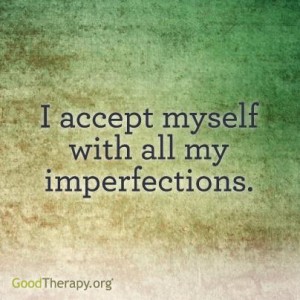
3. I accept myself with all my imperfections.
4. I recognize my own talents and gifts.

5. I am unique. There is beauty in my differences.

6. I focus on what I can do, not what I can’t.
7. I have value and worth in my community and in society.
8. I am grateful for every learning experience I have had.

9. I can change.
Having a hard time accepting these statements to be true? You’re not alone—many people experience self-esteem issues, low self-worth, or reluctance to accept oneself. Therapy can help. Search the GoodTherapy.org directory for the right therapist for you, and take the first step to making a change in your life.
 Editor’s note: This article is an excerpt from Sarah Burleton’s New York Times bestselling child abuse memoir Why Me. The article contains sensitive detail about physical violence and abuse that some readers may wish to avoid.
My name is Sarah Burleton and I am the spokesperson for Prevent Child Abuse Illinois. Looking at me now, one would never guess that I endured such a horrific childhood—a childhood full of extreme physical beatings and mental abuse at the hands of my own mother. One would never guess that my own mother pushed me into an electric fence and watch me writhe on the ground in agony.
One would never guess that my beloved animals were murdered cruelly at the hands of my mother for her own sick enjoyment. And one would never guess that not once in my life did I hear my mother say the words “I love you†or feel her arms wrapped around me in a loving, warm, motherly embrace.
One would never guess this about me and my life because I made the conscious choice at a very young age not to let my child abuse define me. I refused to walk around like a victim and wear my child abuse as a badge for the world to see and pity me for.
As many of you can relate, the last thing a child abuse victim wants is pity from people who have no idea what we have had to endure. We don’t want anyone to know what we have been through because there is a shame attached to child abuse, a sense of self-blame, as if we deserved to be beaten or called names. Personally, I would bottle my emotions up inside and put on a tough façade to everyone around me, masking my true feelings of pain with sarcasm and aloofness.
[fat_widget_right]When it became too much for me to bottle up my emotions anymore, I opened my laptop and poured out my life story into a Word document, self-published it, and fell over the day I found out my little book had made the New York Times. Being on the list was great; however, the most rewarding part of my job has been traveling and speaking to adult survivors, CPS workers, and foster children.
I realize that there are many of us out there, thousands of us who have been hurt by people who were supposed to love and protect us the most. But I’m here to tell you that we are not victims; we are survivors. We are here today because of our will to survive and our determination to overcome the demons from our childhood.
Each of us has the power to use our horrible pasts as stepping stones to our bright, positive futures and as examples of how not to act. Every story matters and every voice should be heard. I love you all.