 Rachel Dolezal, a Caucasian woman, has dominated recent news with her assertion that she identifies as black. Like many people, I was initially perplexed about why someone would choose to identify with an oppressed culture. What benefit is there to choosing to belong to a group of people who have been marginalized?
When people have difficult and character-forming experiences, they generally want them to be witnessed, honored, and respected. People with visible identities, as race typically is, naturally have this validating experience. For many people, parts of their identities and the way they understand themselves come from the struggles and challenges they have endured.
Poverty is a prime example. Though we may not consciously consider poverty an identity, for many people it is one. Many people who experience poverty have a shared experience of not having enough, being judged, and being marginalized. Poverty informs how people experience and interpret the world.
I worked with a 48-year-old woman—I’ll call her Nina—who consistently spoke of “being poor.†For most of her childhood, her family struggled financially and did not have their basic needs of food, shelter, and clothing met on a regular basis. When she was 14, her family’s situation changed. Her mother got a well-paying job, they bought a home, and they had financial security, as is true to this day.
[fat_widget_right]
As a grown woman, Nina continued to refer to herself as poor, though she factually had not experienced poverty for 34 years. Nina’s earlier experience of living in poverty was so defining that it became part of her identity.
This phenomenon is also true for internal experiences. Consider people who have experienced, say, addiction or depression. “I’m an addict†and “I’m a depressed person†are phrases that I have heard many times. People often define their entire being by a challenging part of themselves, when in reality it is one of many aspects and identities that comprise who they are.
As human beings, we are wired to connect to others and to be recognized and understood by others. Tightly gripping an “old†identity is a way to keep that part of you visible—to keep the struggle of addiction or depression or trauma or poverty as a real and acknowledged part of your existence.
Being depressed is not all of a person. It is an experience, albeit it an unpleasant one. People who are depressed are also parents and friends and colleagues. There are many other pieces to who they are in addition to their depression. However, unlike depression, being a parent is visible. Being a colleague is visible. People see and understand these roles and identities and, in turn, validate them.
What happens when life circumstances shift and their current experiences no longer fit their description of themselves? Though Nina no longer lives in poverty and has not for more time than she has, she still very strongly identifies with being “poor.†When someone is no longer depressed, does he or she still say, “I’m a depressed person� Many people do. They become so used to understanding themselves one way that it becomes the dominant narrative of their life, even when it no longer fits the circumstances.
As human beings, we are wired to connect to others and to be recognized and understood by others. Tightly gripping an “old†identity is a way to keep that part of you visible—to keep the struggle of addiction or depression or trauma or poverty as a real and acknowledged part of your existence.
But you can release parts and identities that no longer fit while still having them as part of you and your story.
Narrative therapy is a technique that allows people to share and tell the stories of their lives. It makes visible what is invisible. The struggles, challenges, and resilience that you have developed during your lifetime are part of your story. The ways we self-identify at one point in our lives may be different than at another point, and both identities can be true. Narrative therapy helps to weave together these many different aspects of life into a multifaceted story. It gives us the richness and fullness of our experiences as people rather than limiting us to one way of being. It helps us understand that we are not only our race or gender or depression or addiction. Instead, those aspects are pieces of a changing, evolving, and larger picture of who we are.
 As we covered in last month’s article on microaggressions, they are often subtle, racial insults by well-intentioned people. And they’re experienced by people of color on a regular, sometimes daily, basis. One study found that 96% of African-Americans reported that they experienced microaggressions within the previous year.
Some of the most common microaggressions that racial minorities experience are:
- When shopping or dining, the assumption that they are service workers rather than customers.
- The assumption that minorities are likely thieves and thus are followed around retail stores. A black woman shared that this happens to her “at least once a week at places where I am receiving some kind of service.â€
- Critical and offensive comments, stated as fact, on how minorities talk, dress, or style their hair. For example: comments that a person is “too loud†or “speaks so well,†as though it is unexpected from someone of their culture.
- Not understanding racial and cultural differences and assuming that racial minorities are the same ethnicity. For example, when my Japanese friend moved to Chinatown, people constantly asked her if she felt “at home.†She’s not Chinese. It’s not the same.
- Assuming that all Latinos speak Spanish. No other ethnic group in the United States is expected to be bilingual.
- Asking, “What are you?†when unable to identify his or her racial or ethnic background.
[fat_widget_right]
While there are individual instances of microaggressions, there are also environmental ones. These are microaggressions that occur and are supported on a larger, societal scale:
- The Oscars is a perfect example of the environmental aspects of microaggression. An all-white actor/actress nominee selection for the Academy Awards ceremony sends the message that white is the standard and the only important perspective or influence there is.
- The constant bombardment of feisty, neck-rolling black women in media as a standard and accepted representation of black women.
- Questioning and challenging the need for minority spaces within larger organizations that are dominated by the majority. For example, when I was planning a meeting for social workers of color (in a predominantly white organization), I heard the comment, “This offensive. This is wrong.â€
- Finally, the denial by people in the majority of racial experiences is a cornerstone of microaggressions.
What can be done about it? A multipronged approach is needed. First, people inflicting the pain need to stop. As in any relationship, when someone is hurt, the person who caused the hurt needs to stop the painful action, apologize, and commit to not repeating it.
Of course, this is easier said than done. Change is a long process, just like in relationships. Mistakes will be made, and painful interactions will continue to occur. But making a commitment not to engage in microaggressions is a useful start.
Here are some concrete steps and important considerations:
Stop and Think Before Speaking
How will your comment be received? Does the setting make a difference? Is it something you should say to another person?
I recently had a white friend ask me about commenting on a black woman’s hair. She knew that hair was an important and sensitive topic in the black community, and she wanted to be respectful in complimenting this woman’s hair. We talked it through and discussed what she wanted to say, why she wanted to say it, and her relationship with the woman. It seemed “safe†to compliment the woman’s hair.
Context Matters
And then I asked about the environment. Where would they be and who else would be present? Those factors can have a big impact; in this case, it changed my perspective. Suddenly a compliment no longer was “safe†and felt different when singled out to one black woman in a room of white women.
For the record, when my friend approached me to ask her question and have this discussion, she prefaced it by saying she wanted to ask me something related to race and understood if I didn’t want to have the conversation with her. She didn’t act on her privilege and assume that she could ask me anything because she’s white and I’m black. This is very different than when people approach minorities and ask them questions about race assuming that they will represent their entire race—another form of microaggression.
For those of us on the receiving end of microaggressions, we need to acknowledge its impact on us. Constant exposure to microaggressions has a significant toll on the physical and mental health of racial minorities. Research demonstrates that the cumulative effects of microaggressions are devastating. They can lead to feelings of isolation, self-doubt, and frustration.
Recognize It for What It Is
We need to acknowledge a microaggression for what it is. To ignore or dismiss it allows it to fester within us, causing harm to who we are as people. This isn’t to say it should be at the forefront of our minds each day, or that you need to confront everything you experience. But it does mean that you need to be aware that this happens and has an effect. Then you can prepare to deal with it.
Awareness Is Key
There are some situations and environments where you may experience microaggressions more frequently. If you are in an environment where you are the “only,†this may be one of those situations. Be aware of this so you can prepare for those times.
Do a Self-Inventory
The hardest part of dealing with microaggressions is that they are easily deniable.
I just like your hairstyle. What’s the big deal?
OK, so you don’t speak Spanish. It was an honest mistake. Don’t overreact!
These are common responses when calling out microaggressions. When you experience a microaggression, there’s something inside you telling you that you’ve been hurt. Perhaps you get a knot in your stomach, flashes of warmth, an instant headache, or a voice saying, “That’s not right.†Often there is some physical experience that acts as a red flag for you. Pay attention to it.
Seek Support
Have someone in your corner who sees and understands microaggressions. You need someone you can talk to and explain what happened, your feelings, and to do some reality testing with. Because the offender and bystanders will likely deny and even become defensive about microaggressions, you need someone you can talk to without defending your experience.
If you don’t feel comfortable talking to someone in your life, seeking the guidance of a qualified therapist can help you sort through your feelings about your experiences.
Let It Out
Don’t let the self-doubt, anger, or frustration eat away at you or cause you more harm. Whether it’s walking, talking, screaming, crying, or running, find a way to let the pain out. After you’ve done this, you’ll be able to think clearly and decide on your next plan of action.
To Confront or Not Confront?
There are pros and cons to this, particularly in work settings, often placing us in a catch-22. Each circumstance and each person is different. What you need in your life changes with time and environment. Be compassionate and flexible with yourself as you make the decision to confront or not confront a microaggression.
The societal and environmental aspects of microaggressions need to change. Though it may seem overwhelming trying to change centuries-long systems of oppression, “never doubt that a small group of thoughtful, committed citizens can change the world; indeed, it’s the only thing that ever has†(Margaret Mead).
References:
- Klonoff, E. A., & Landrine, H. (1999). Cross-validation of the schedule of racist events. Journal of Black Psychology, 25, pp. 231-254.
- Pierce, C., Carew, J., Pierce-Gonzalez, D., & Willis, D. (1978). An experiment in racism: TV commercials. In C. Pierce (Ed.), Television and education, 62-88. Beverly Hills, CA: Sage.
- Steele, C. M., Spencer, S. J., & Aronson, J. (2002). Contending with group image: The psychology of stereotype and social identity threat. In M. Zanna (Ed.), Advances in experimental social psychology, 23, pp. 379-440. New York: Academic Press.
- Sue, D. W., Capodilupo, C. M., Torino, G. C., Bucceri, J. M., Holder, A. M. B., Nadal, K. L., & Esquilin, M. (2007). Racial microaggressions in everyday life: Implications for clinical practice, American Psychologist, 62(4), pp. 271-286.
 Fall and winter bring cooler nights and darker mornings. Along with the temperature and light changes, many people are also dealing with back-to-school changes for themselves or their children. There are changes in schedules, routines, expectations, and even relationships.
Though many people consider spring to be a time of new beginnings, autumn is that for many people. It is a time of reflection on the summer and the year thus far, as well as a time of preparation for the winter and upcoming holidays. As we enter the harvest season, consider the physical, emotional, and relational ways you may be affected by this transition.
The impact of light and temperature on the human body is profound. We all need some level of light and warmth for our bodies to survive and thrive. Autumn, for some parts of the world, marks a change in both light and warmth as we approach colder and darker days.
Consider the ideal temperature and amount of light that you physically desire. Do you love the bright sun and hot weather? Or do you prefer cooler temperatures with less intense sunlight? Are you more active now than you were two months ago? Or are you struggling to be physically active? Whatever your preference, the change in season will affect you. Understanding and responding to your needs will help you prepare for whatever season is approaching.
[fat_widget_right]
Many people struggle with seasonal affective mood issues, commonly referred to as seasonal affective disorder (SAD)—a depression related to the change in seasons. For most, this begins in fall and continues through the winter months. It’s marked by moodiness, low energy, difficulty sleeping, a lack of interest in activities and relationships, feeling hopeless, and an overall sense of depression. Known more casually as “the winter blues,†SAD can have a significant impact on your mood and relationships. If you are more irritable, withdrawn, or moody during the winter months, the time to plan and prepare is now.
“Vanessa†called me at the beginning of August wanting therapy to plan for the winter. I was impressed that she was being so proactive. “I can’t do winter like that again,†she told me when I praised her. She wasn’t willing to experience another winter feeling as low as she did last year, so she wanted to do it differently this time.
To help you prepare for the upcoming season, ask yourself the following questions:
- Do you find yourself sleeping more? Are you struggling to get out of bed?
- Is it harder or easier to exercise now?
- Do you feel less patient? Are you easily annoyed or irritated?
- Do you feel more energized and productive?
- Has there been a shift or change in any of your relationships in recent weeks?
- Are you actively involved in your relationships?
Answering these questions could give you some insight about how the change in season may or may not be affecting you. Regardless of whether you are affected by SAD, there are three key points that will help you navigate and manage any seasonal changes.
- Exercise, exercise, exercise. Moving your body on a regular basis has far-reaching, positive effects on your physical and emotional health. You don’t need to train for a marathon. Walking around your neighborhood, doing push-ups, running around outside with children—these all have the same benefit.
- Get more light. Everyone needs to be exposed to sunlight on a daily basis. Since many jobs can be done indoors, this often takes effort. But the benefits are great, physically and emotionally. Our bodies absorb vitamin D, important to our health, from sunlight. And the energy and emotional boost that we get from a few minutes in the sun can be exceptional.
- Talk it out. All transitions have their challenges, and it’s always easier when you’re talking to someone about it. Whether you’re talking to a friend, coworker, or therapist, let someone into your inner thoughts and experiences.
What works best for you as you enter a new season? What tips or techniques do you have to share with others? Share your experiences with us. Let’s learn from each other!
 Being deserving means having an expectation of goodness in your life. It is the goodness of people, relationships, and situations that we all want and deserve in our lifetime. We are all deserving of:
- a safe place to live and work
- relationships and people who love us
- colleagues and employers who respect and support us
The idea of being deserving isn’t a new one. But for someone who is not used to feeling deserving or worthy, it can be a difficult concept.
As a black woman, I grew up with conflicting messages from my family telling me that I was capable and deserving of whatever my heart desired. But then I went into the world only to be told directly and indirectly how undeserving I was. Whether I was undeserving of the same respectful treatment my colleagues were given, of being seated at a restaurant, or of the promotion that I’d worked hard for, I was constantly told and reminded how undeserving I was.
For many people, there is a tension between what we come to believe we deserve and what others tell us we deserve. Whether it’s an outsider or ourselves limiting our expectations, though, it makes it more challenging to live a fulfilled life. Perhaps the limitations you experience in life are a result of a deeper belief that you don’t deserve more. Though it doesn’t feel good, it is familiar to stay in a situation that you’re used to.
[fat_widget_right]
But it doesn’t have to be this way. There are steps you can take toward having the life you want and deserve.
First, ask yourself, “Do I deserve good things in my life?” If the answer is no, why not? Why can’t you have the relationship, job, or life that you want? Take the time to write your answers. You may surprise yourself with the thoughts that are unconsciously swirling around your head. Many times, these buried thoughts come from long-ago experiences that hurt us and continue to influence us today. If you don’t uncover them, you can’t change them!
Now that you know where your feelings of being undeserving come from, you have some investigating to do. Are the comments that were made to you 20 years true today? Were they true then? Don’t give yourself an automatic answer; take the time to expose the validity, or lack thereof, of these thoughts.
A true investigation requires more than just your perspective. Gather three people who are honest, who love and encourage you. Ask for their opinion and thoughts about the messages you received when you were younger. Picking the right three people is key. They shouldn’t be people who will agree with you no matter what; otherwise, you won’t believe them. Nor should they be the people who initially conveyed these messages! They need to be people who will be honest with you while loving and supporting you.
Once your investigation is complete, you need to review this new information. Ask yourself again, “Am I deserving?” and “What am I deserving of?” Are your answers any different than the original ones?
What do you want to do with this new information? Do you want to hold onto it and ponder it? Or are you ready to take action and make changes in your life?
If you are ready to make a change, repeat the following daily: “I am worthy and deserving of goodness.â€
Imagine the difference on your psyche and in your interactions with others if you move from saying “I’m worthless” day after day to saying “I am worthy and deserving of goodness.” Repeat “I am worthy and deserving of goodness” each time you go outside. Whether you’re leaving for work in the morning, taking a lunch break, or going to the store, say it. In doing so, you will challenge your thinking and your beliefs about your worth. It will lead you to the interactions, relationships, and situations that you are truly deserving of!
What or who makes you feel deserving? Let us know in the comments section below.

Much of the United States has had a long, harsh, and cold winter. While it seemed like it would never end, some of us are starting to see the light of spring.
Winter can be a perfect representation of the darkness and despair that we feel from time to time. Whether it is grief associated with death, a trauma that we had to endure, or the end of a relationship, we all have had experiences of darkness and despair that feel never-ending.
But when you have lived long enough and seen enough winters, you know that the despair and darkness do not last forever. There comes a time when the pain recedes, is not all-consuming, and you have a desire to live life again.
[fat_widget_grief_right]
The process of re-emerging into life can be challenging. When you have been wearing the cloak of sadness, grief, or depression for so long, it can feel strange to walk through the world without it. You may even experience a cultural shock, in a sense. Coming back into the world can seem different and even strange.
Just as it takes time to deal with a difficult emotion, it takes time to adjust to its leaving you. It is a process of recognizing that the pain is no longer all-consuming. There are steps you can take to help you navigate this re-emergence:
Reconnect
Reach out to your support system. Many people retreat into isolation when they are struggling with depression or grief; it is necessary to reconnect with people and activities you previously enjoyed. Rather than let the shame or embarrassment of being out of touch stop you from reconnecting, speak to it. Call a friend and acknowledge that you were out of touch. Apologize and tell him or her why it’s been so long since you called. Let the person know that his or her friendship is important to you.
Review
As you reconnect with people and activities, you will need to take time to review what you came through. Think about the grief and sadness that you experienced. Consider how you dealt with it. Ask yourself:
- How did I get through the grief? What did I do?
- Who helped me through this rough time?
- What do I need now to continue my healing?
Reviewing the depression and grief can be scary; it might feel as if you will fall right back into the despair. But the contrary is true. Reviewing your sadness allows you to see your resiliency and how you survived. It also provides an opportunity to consider options you may try in the future when facing challenges.
Rest
Finally, it is time to rest. People often wonder, “What do I need to rest for? I was just in my bed/house for two months!†Grief and sadness are exhausting. Recuperating from them is a necessary part of the healing process. Allow your body to be active as you re-engage with the world, but also let your emotions rest, as they have been on a roller coaster of sadness, darkness, and re-emergence to light.
Taking the time to process and come out of the darkness is a foundational tool that you can use throughout your lifetime. When life is challenging, as it will be, you will not only survive it but come through in a way that is healing and compassionate toward yourself.
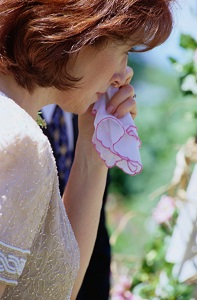 We are familiar with the grief associated with death. Denial, anger, and acceptance are part of the grieving process as it pertains to death. But what about grief that is unconnected to death? What about the loss and grief that occurs with expected and even happy events?
A few years ago, at a friend’s wedding, I was surprised to find her mother sobbing in the restroom. She was happy for her daughter and liked her son-in-law, but she was pained by the loss of her daughter. She was grieving the transition of her relationship with her daughter, who was no longer fully hers. Her daughter’s primary relationship was now the one she shared with her new husband. While her mother did celebrate and have joy for her daughter, she also had sorrow and grief for her own loss and transition. But she had no place to put her grief.
Marriage and partnerships, moving, new jobs, and graduations are often joyous occasions that we readily share and celebrate with others. We have traditions associated with these transitions in life. There are weddings and housewarming parties and happy hours organized to commemorate these events. But there aren’t any traditions or processes to acknowledge and assist with the natural grief and loss that comes along with these occasions and transitions.
As it does following the death of a loved one, grief during joyous occasions impacts all aspects of your life and of you. As a society, we have great traditions and markers of change, but we do not have ways to encourage and support people after the actual transition. What happens after the wedding ceremony or six months into the new job? What do you do with your sadness and grief about what you have lost even while you are happy or satisfied with what you have?
First, acknowledge the complexity of the situation. Identify the bittersweet emotions of enjoying your new job while simultaneously missing your old one. Grief is not solely comprised of pain. For example, even during the most tragic deaths there can be moments of joy and laughter during the funeral service. This speaks to the varied emotions associated with grief, the mix of pain with moments of pleasures.
Also, remember that grief is fluid and changes with time. The way you feel at the beginning point of change is different than in the following month, in six months, or years later. Your feelings of sadness, pain, fear, and loss transform and become less gripping and more integrated into you and your life. The grief and feelings of loss can recede over time.
One of the ways people get stuck in their grief—meaning it is unchanged and unmoving—is when they have no place to express it. Silent grief makes the process of grieving much worse. Being able to talk about the grief not only eases the pain but moves the process forward. Talking about and sharing the grief makes it possible to be sad but not stagnant.
Whenever you are in the midst of change and transition, consider what you are losing as well as what you are gaining. This is not to focus on the unpleasant or negative aspects of change, but rather to be more prepared when the inevitable feelings of loss and grief rise for you.
How do you navigate the intersection and bitter sweetness of joy and grief? How do you celebrate the newness while also recognizing and honoring what passed?
 I was getting my morning cup of coffee, and while waiting to pay I saw others hand their money to the clerk and leave. When I attempted to do the same, another clerk rudely stated to me that she was helping someone. So I waited in line, watching others who came in after me be served before me. As I walked back to my office, a wave of emotions ran through me. Initially I was fuming. Why should I have to wait when others didn’t? Is it because I’m black? Was she being discriminatory? I thought to myself.
This is a place that I frequent with regularity, even going out of my way to get my coffee there because the staff is usually very friendly. So I began to doubt myself. The clerk who was rude was a different clerk than the one who took the people’s money. Was she a new employee? Did she not know that she could just take my money? Or maybe she was just having a bad day? My mind was racing with questions.
There I was, vacillating between anger and doubt and confusion from a seemingly simple interaction. This swirl of emotions is par for the course when you’re a minority or part of an oppressed group. We encounter these thoughts and questions and anxieties and doubts about the meaning or intent of others’ actions on a regular basis.
This is not to say others are always being racist/sexist/heterosexist/fill-in-the-blank. On the contrary, many times they aren’t. But this process of questioning and wondering is what we go through on a daily basis. We have to feel, review, and process these little interactions all the time, and it is an incredible weight to carry.
“Samantha,†who works at a law firm, is often asked if she’s bringing a date to social functions. Initially her coworkers asked her occasionally, but now it seems like multiple people, including her boss, are hounding her every time there’s a function. She isn’t out as a lesbian at work and wonders why her colleagues keep asking her about her private life. Are they trying to find out if she’s gay? If they do find out, will she lose her job? Or do they just want to know her personally? Samantha doesn’t know, but the thoughts and questions are a constant presence for her.
[fat_widget_right]
Whenever you are part of a minority that regularly interacts with the majority, there are additional layers of thought and emotional processing that occurs. There is so much unconscious and invisible energy that goes toward deciphering the intent and motives of others. And then there are our own emotions while we consider what, if any, action to take. As we consider our options, we also consider any possible consequences or retribution. If Samantha brings a female date to the next happy hour, will people treat her differently? Will work become uncomfortable and unpleasant? Will it affect her boss’ perception and perhaps review of her? All of this requires a significant amount of emotional and even physical energy that can be exhausting.
So what can you do about it? As overwhelming as this is, there are ways to move through it. The first step is to acknowledge the burdens that you carry. Acknowledge that there are times when being a woman or gay or Muslim or Latino (or part of any minority group) is challenging. Acknowledge that being part of a minority means constantly attempting to discern people and situations that are discriminating against you from those who are not. There are times when it is difficult, if not impossible, to determine, while at other times it can be crystal clear. Acknowledge that this continuous questioning in your mind exists.
The next important step is to manage and cope with these emotions and experiences. Find friends and family members to talk to. Determine who will be supportive and understanding of you and your experiences and talk with them. Writing is another excellent way to cope with your emotions. It allows you to express your emotions without holding them inside and gives you a much-needed release. Exercise is another great coping mechanism. It is a physical way to expel your anger, sadness, and frustration. Go for a run, speed walk around the block, or do push-ups in your office to release the emotions.
Letting go is the final and most important step. This is an acquired skill and something that takes practice. Acknowledging and coping with the challenges are useful in managing your day-to-day life. But the ability to let go of the pain, anger, and confusion allows to you be more joyful and not hold onto the painful experiences that may occur throughout your day. Some people use prayer or meditation to let go. Others can let go after they exercise and feel the release in their body. Talking to someone who understands and has similar experiences helps me to let go. I also find that practicing gratitude and appreciation for what is good in my life helps me to let go.
What works for you? How do you manage the thoughts, emotions, and anxieties that come from being a minority?
 Many years ago, I was betrayed by a friend I admired. If I had been asked to forgive her, my immediate answer would have been, “No.†But if someone had asked if I wanted to be free from the anguish and distress that I felt from her betrayal, I would have shouted, “Yes!â€
Forgiveness is more than releasing your hands from the neck of the person who hurt you. It is truly about releasing your hands from your own neck. Forgiveness is about your own freedom from the grip of pain caused by someone else. In reality, forgiveness has nothing to do with the other person; it’s about you. Forgiveness does not need to be asked for because it isn’t done for the sake of the “offender.†It’s done for our own healing and well-being.
[fat_widget_right]
It goes without saying that when we’re considering forgiveness, it is because we’ve been hurt, wronged, or betrayed. Someone has done something to us that caused us pain. A pivotal component of forgiveness is the recognition of the intensity of your pain. You have to sit in and with your pain. You can’t ignore, rationalize, or wish it away. You must simply let it be. You can talk, journal, cry, or scream about the hurt and painful emotions, but they must be allowed to surface.
Another key step to forgiveness is in understanding how the pain and betrayal affected you. Pain isn’t an isolated experience or emotion. When we are hurt, it affects all aspects of ourselves and our relationships. Consider a man who just learned that his wife was cheating on him. Understandably, he is hurt, sad, and angry. He also has trouble focusing at work, his patience with his children is low, and he begins to withdraw from his friends because he is too embarrassed to discuss his wife’s infidelity. His emotions go beyond his wife’s betrayal; now the pain seeps into other relationships.
Part of understanding the intensity and depth of the pain is in comprehending how your pain affects you in other ways. Ask yourself the following questions:
- Have your feelings of betrayal and sadness spilled into other relationships?
- Has it affected how you view yourself?
- Are you less willing to be emotionally intimate and vulnerable with people because you’ve been hurt?
- How are you restricted or imprisoned by this pain?
Take time to write, think, or talk about your answers to these questions. Revisit the questions over time, perhaps at three months, six months, and one year. Have your answers changed? Do you notice anything different each time you answer? Are your feelings the same or have they shifted?
You cannot simply decide to forgive someone and expect it to be done. It takes time, compassion for yourself, and the support of others to work through the pain that you endured. Often when we are hurt or grieving, there is internal pressure and external pressure from family, friends, and society to “get over itâ€: “It’s been six months; why haven’t you forgiven him for cheating? Are you still upset about what she said to you?†These statements suggest a time limit for moving on after being hurt, but everyone has a different time frame. What takes one person two weeks to forgive may take another person one year to forgive. We all have our personal and individual processes of forgiveness that cannot be rushed.
When you are in the process of forgiveness, it is crucial that you have compassion toward yourself. Enlisting the support of people who are also compassionate toward you and will not rush your process is also beneficial.
Once you’ve acknowledged your pain and you understand how it has affected you, you can ask yourself: What do I need in order to be free from this pain?
What are your stories and experiences of forgiveness? How have you been able to forgive? When have you struggled or been unable to forgive? I want to hear from you!
 A name, or identity, is a powerful thing. It is a descriptor that allows people to make quick judgments and assumptions about us. While we can understand the harm of assumptions, for the human mind it is a fast way to categorize a lot of information in a short amount of time. Assumptions also give us social context for the “rules†we need to interact with new and different people.
If you are at an event and you overhear someone talking about their upcoming church event, you might make an assumption about them. Based on that assumption you may speak differently to them. Perhaps you would avoid using curse words, for instance. Or, you may avoid interacting with them altogether.
Names and identities are our first impressions. How we dress, the way we wear our hair, how we behave, and even where we go all begins with our identity and what we call ourselves. Whether it is religion, sexuality, or gender, if it is part of an identity then it will influence how you present yourself to the world and how you interact with the world. The critical factors in creating an identity are that it describes who you are and it is self-chosen.
Identity Describes Who You Are
Our names and identities describe who we currently are. It is a present-day representation of how we perceive ourselves in this world. During my first day of high school, our gym teacher took attendance. She paused when she came to a girl who she had taught since kindergarten and asked, “Is it still Susie, or is it Susan now?†Upon the transition to high school and young adulthood the teacher recognized that the student may no longer see herself as a child and may prefer a different name to the one she previously used.
The name and identity that we have at 15 years old may be different than when we are 25 or 50 years old. As we grow, change, and have new experiences what we call ourselves may change as well.
Identity Is Self-Chosen
The second important point about our identity is that it is self-chosen. Other people may give us names (e.g. our parents) and labels (e.g. society) but an identity can only come from us. An identity represents how we perceive ourselves and how we want other people to perceive us. A label is a descriptor given to us by others based on their stereotypes of us.
My father is from Nigeria (African) and my mother is from Mississippi (African-American). I am truly African-American as a blend and product of them. There are many times when I publically call myself African-American, but I also call myself black, more privately, as that term resonates with me. For me, black describes the uniqueness of my culture: growing up American, but also as a first-generation American in many ways. Black describes the complexity of my experience in a way that African-American does not.
Depending on the situation and circumstance what we call ourselves may change. Perhaps our identity changes over time. What once resonated with us no longer does. Identity is a personal process and decision about what you call yourself. It is a process that is complex and full and fluid. It may change with time, or it may change with the environment or circumstance.
For example, I make a distinction between what I am comfortable with publicly versus privately. I am uncomfortable with some people calling me black and I use the term African-American publically. Similar to people who use familiar and formal names, different relationships have different ways of relating to each other.
Consider taking time to review your own identity. What names and identities do you have today? Is your identity based on your relationships (i.e. sister, partner, father, etc.)? Is it based on your work? Is it based on your religion? Or your sexuality?
What creates the identity that you have today? Is it different than it was 10 years ago? Do you think that it will be different 10 years from now? Share your thoughts and experiences with us; we want to hear from you!
 What happens to a relationship when one person changes?
“Vanessa†is on a path of self-discovery and change, but that does not mean that her husband, “Mark,†is on the same path. Nor does it mean he wants Vanessa to be on that path or to change who she is. Many times I see couples who come to therapy because someone has changed. “Vanessa didn’t used to be this way,†Mark said. “When we were first married, she liked staying home and watching television. I don’t know what happened.â€
When you are in a committed marriage or partnership, it stands to reason that you will change. Can you imagine being the same person at age 55 as you were at age 25? But what do you do when your changes and journey do not match up with where your partner is or what he or she desires? What if you find yourselves on different paths?
First, acknowledge the change. Talk about the elephant in the room. Not only is it OK to tell your partner about the changes that you are making in your life, it is imperative to do so. An intimate relationship is about two people and what they create together. In order to keep the health of your relationship and respect it, you must speak to your partner about what is going on for you. Your partner needs to know about the personal changes that you are making, as they affect your marriage. Because these personal changes are long-lasting, not fads or temporary, it will require that the couple have multiple conversations over an extended period. This ongoing conversation may last months and even years.
Second, check in with your spouse. Ask about his or her feelings and needs. Yes, you may be changing, but you also need to tend to the needs of your relationship and your partner. What does your partner need during your process of change? While you may be changing and growing, being in a committed and intimate relationship means that the needs of your partner are essential to you. Considering what he or she needs must be part of your process as well.
Third, determine if you or your spouse is growing in different directions. Notice that I did not say “growing apart†but “growing in different directions.†If you are in a long-term relationship, it makes sense that you and your partner will not always be focused on the same thing at the same time. There will be differences even if there were not previously. Acknowledging that you are on different paths and that you have different goals and desires is helpful to your relationship. Once you acknowledge this, you can take the necessary steps to maintain the health of your relationship.
Finally, be respectful of your relationship or marriage. Just because you have different goals or desires does not mean that you cannot be together. It does mean that you need to be more active and conscious about tending to your relationship. When clients see me for couples therapy, my first statement is that their relationship is my primary client and I work for what is best in that relationship.
What does your relationship need to stay strong even if you are making personal and individual changes? Does it need time and attention? Does your relationship need activities that are special and specific to you and your partner? What can remain the same and unchanged that you both enjoy? What compromises do you and your partner need to make? These are a sampling of questions to ask yourself and for you to discuss with your spouse/partner if you want to navigate personal growth while also tending to and allowing your relationship to grow.