
A chronic pain cycle can begin when real physical pain interrupts daily life, then slowly shapes how a person thinks, feels, moves, rests, and connects with others. Pain rarely stays only in the body; over time, it can become part of an emotional and behavioral pattern that deserves compassionate support.
Pain management
Mind-body connection
Therapy support
In This Blog
| What the chronic pain cycle looks like | |
| Why emotions do not make pain imaginary | |
| The emotional side of chronic pain | |
| How therapy can help | |
| FAQ |
Key insight: The chronic pain cycle does not mean pain is imagined. It describes how physical pain, nervous-system sensitivity, fear, avoidance, grief, and stress can influence one another over time.
In his counseling work, Bryan Van Vranken, MA, MBA, RMHCI, often meets people living with chronic pain after surgery, injury, cancer treatment, nerve-related conditions, repeated physical strain, or years of medically complex symptoms. Each story is different. Still, many people describe a similar pattern: pain interrupts life, distress grows around the pain, and the distress begins to make daily life feel smaller.
What the Chronic Pain Cycle Looks Like
The chronic pain cycle often begins with pain that makes ordinary tasks unpredictable. A person may wonder, “Will this get worse?” or “What if I cannot do what I used to do?” Those questions are understandable. Pain can affect work, sleep, relationships, movement, independence, and identity.
From there, many people start pulling back. They may avoid certain movements, activities, errands, social plans, or responsibilities. Sometimes avoidance is protective and wise. Other times, it grows because pain feels uncertain, overwhelming, or difficult to explain to others.
A common chronic pain cycle
Pain → distress → avoidance → decreased activity → sadness, anxiety, or hopelessness → pain feels heavier.
Over time, reduced activity can bring loss. Someone may grieve the life they had before pain, the version of themselves that felt more capable, or the ease they once had in their body. That grief can add emotional weight. The emotional weight can increase tension, worry, and isolation, which may make the experience of pain feel even harder to carry.
Why Emotions Do Not Make Pain Imaginary
One of the most important points is simple: the chronic pain cycle does not mean the pain is not real. Chronic pain is a real health concern. An NCBI Bookshelf overview describes pain as both a sensory and emotional experience, which helps explain why chronic pain can affect mood, relationships, movement, and daily life.
The body and mind are deeply connected. When pain persists, the nervous system can become more sensitive. Stress can increase muscle tension and guardedness. Thoughts can shift toward worst-case scenarios. The American Psychological Association describes how chronic stress can affect multiple body systems, including muscle tension, mood, and daily functioning.
This is not “all in your head.” It is a whole-person experience. GoodTherapy has explored this connection in the mind-body connection in chronic pain and in articles about how physical health and mental health can influence one another.
A compassionate reframe
Instead of asking, “Why can’t I just get over this?” try, “What is my body protecting me from, and what kind of support would help me respond with more steadiness?”
The Emotional Side of Chronic Pain
The emotional side of chronic pain often goes unspoken. Some people feel frustrated because their body no longer responds the way it used to. Others feel isolated because friends, family, coworkers, or clinicians may not fully understand what they are living with. Some carry constant worry about making symptoms worse.
There can also be grief. Grief for lost routines. Grief for independence. Grief for hobbies, work roles, intimacy, sleep, or simple activities that once felt automatic. These reactions are deeply human, not signs of weakness.
According to a 2024 CDC National Center for Health Statistics data brief, 24.3 percent of U.S. adults reported chronic pain in 2023, and 8.5 percent reported high-impact chronic pain that frequently limited life or work activities. Chronic pain is common, but the loneliness around it can still feel intensely personal.
Support is allowed
If pain is affecting your mood, relationships, sleep, or sense of self, a therapist can help you work with the emotional layer without dismissing the physical one. You can search GoodTherapy for a therapist who fits your needs.

How Therapy Can Help the Chronic Pain Cycle
Therapy does not replace medical care, and it does not promise to eliminate pain. Its role is different. Therapy can help reduce the added layer of suffering that builds around pain: fear, shame, isolation, hopelessness, all-or-nothing thinking, and the feeling that life has narrowed to symptoms alone.
In therapy, people often begin by understanding their own chronic pain cycle. From there, they may practice small, realistic shifts that support long-term well-being.
| Therapy focus | How it may help |
|---|---|
| Thought patterns | Notice and gently question thoughts that increase fear, helplessness, or self-blame. |
| Movement fear | Reduce avoidance in gradual, supported ways that respect medical limits. |
| Meaningful activities | Reintroduce valued routines at a manageable pace instead of waiting for a perfect pain-free day. |
| Flare-up planning | Build coping tools for difficult days so setbacks feel less frightening and isolating. |
| Nervous-system support | Practice calming skills, pacing, mindfulness, or values-based choices that help the body feel less constantly on alert. |
Research on psychological and mind-body approaches varies by condition and person, but some approaches have evidence for helping people cope with chronic pain. The National Center for Complementary and Integrative Health summarizes evidence on mind and body approaches for chronic pain, including relaxation, mindfulness, and multidisciplinary care. GoodTherapy has also covered pain reprocessing therapy and chronic pain as one emerging approach for some people.
Small Shifts That Can Make Pain Feel Less All-Consuming
Meaningful change is rarely immediate or perfectly linear. Still, small shifts can matter. Some people begin to feel less controlled by pain when they rebuild a sense of choice in the day. Others reconnect with activities they had avoided, even in modified ways. The pain may still be present, but it no longer defines every moment.
Try this now: the one-step pacing check
- Choose one activity that matters but feels hard right now.
- Name the smallest version that would still count.
- Decide what support, rest, or modification would make it more realistic.
- Afterward, note what helped, what hurt, and what you would adjust next time.
A helpful question is not always, “Why is this happening to me?” That question is understandable, but it can keep a person circling the same painful place. Another question may create more room: “How can I respond to this in a way that supports me?”
This is not passive acceptance. It is a flexible, compassionate response that can make space for engagement, connection, and meaning alongside the reality of pain.
Frequently Asked Questions
Common questions about the chronic pain cycle, emotions, and therapy support.
You do not have to carry chronic pain alone
Therapy can help you understand the chronic pain cycle, reduce emotional distress, and rebuild steadier ways to move through daily life.

|
About the Author Bryan Van VrankenMA, MBA, Registered Mental Health Counselor Intern in St. Petersburg, Florida Bryan Van Vranken works with adults navigating chronic pain and illness, anxiety, depression, life transitions, stress, and injury recovery. His approach integrates person-centered therapy, cognitive behavioral therapy, mindfulness, and practical coping strategies. |

When people think of anxiety, they often picture some visible signs. They imagine panic, spiraling thoughts, avoidance, or moments when someone clearly looks overwhelmed. While anxiety can look like that.
Hidden anxiety
Perfectionism
Burnout
In this blog
That is not the only way it shows up.
Sometimes anxiety is harder to notice, even for the person living with it. It can hide behind routines, ambition, reliability, and the ability to keep going. It can look like answering every email, meeting every deadline, remembering every key event and detail, showing up for people who matter, and still never quite feeling calm. It can look like being the one everyone depends on while your own mind never fully quiets down.
That is why it is important to recognize this type of anxiety. Commonly known as high functioning anxiety, this experience is not recognized as a formal mental health diagnosis, but it describes something very real. Many individuals continue to function at a high level while carrying persistent worry, pressure, and internal distress that often goes unseen.
How Anxiety can Fuel Performance
One of the reasons high functioning anxiety can go unnoticed is that it often wears socially acceptable masks and may often look like success. In fact, in may look like being very responsible. It may look like caring deeply. It may look like staying organized, always preparing, or trying hard not to let anyone down. Some people learn to manage anxiety by becoming exceptionally good at anticipating problems, staying busy, and keeping control wherever they can.
In many cases, anxiety does not stop people. It pushes them.
Pushes them to care deeply, to stay highly organized, to always prepare for things and events in advance or or try to not let anyone down.
Research indicates that certain forms of anxiety, especially when tied to performance or expectations, can coexist with high achievement. In academic settings, for example, perfectionistic standards can even have a positive relationship with performance outcomes, despite underlying stress.
At the same time, this productivity is often driven by fear. Fear of failure, fear of letting others down, or fear of not being “good enough.”
This creates a cycle where:
| 1
Anxiety fuels effort |
2
Effort leads to achievement |
3
Achievement reinforces the anxiety |
What looks like discipline or ambition from the outside may actually be a coping mechanism on the inside.
Signs of High-functioning Anxiety that are Easy to Miss
High functioning anxiety rarely looks like avoidance or breakdowns. Instead, it shows up in patterns that are often socially rewarded.
For some people, anxiety shows up as perfectionism. For others, it appears as people pleasing, irritability, muscle tension, difficulty sleeping, or the sense that their mind is always running in the background. Some people stay busy because slowing down brings them too close to feelings they do not know how to sit with. Others become highly attuned to everyone else around them, constantly tracking moods, reactions, and signs of disappointment.
Some of the most common but overlooked signs include:
| Constant overthinking, even about small decisions | |
| Perfectionism and fear of mistakes | |
| People-pleasing and difficulty saying no | |
| Staying busy to avoid slowing down | |
| Difficulty relaxing, even during rest | |
| Persistent physical tension or fatigue | |
| Becoming attuned to surroundings, tracking moods, reactions and signs of disappointment |
Research shows that perfectionistic tendencies and worry are closely linked, with worry often acting as a core feature of anxiety.
In fact, maladaptive perfectionism has been consistently associated with anxiety symptoms across multiple studies and populations.
If these patterns feel familiar, talking to a therapist can help you understand what is driving them.
Why High-Functioning Anxiety often goes Unnoticed
High functioning anxiety often goes unnoticed not because it is rare, but because it usually does not align with what we expect anxiety to look like.
Mental health systems typically define disorders based on distress and impairment. But what happens when someone is distressed, yet still performing well?
People with high functioning anxiety often:
Meet expectations |
Maintain relationships |
Succeed professionally |
As a result, their internal experience is often overlooked, both by themselves and by others.
This is reinforced by social and cultural expectations. Productivity, reliability, and achievement are rewarded, even when they come at the cost of mental wellbeing.
The Breaking Point: Burnout and Emotional Exhaustion

Despite being hidden, high functioning anxiety can take a toll on your emotional and physical well-being and is not sustainable indefinitely.
It can make it hard to be fully present. You may be physically in the room but mentally somewhere else, scanning the next problem, thinking about the next task, or the next thing that could potentially go wrong. You may struggle to enjoy moments of rest because your mind treats stillness like a threat instead of relief.
Over time, this feeling piles up and can feel exhausting.
You may find yourself becoming more irritable, more physically and emotionally drained, or more disconnected from joy. This is one of the quieter harms of anxiety. It can steal peace long before it interrupts performance.
Over time, the constant pressure, overthinking, and need to perform can lead to:
| 1Burnout | 2Emotional exhaustion |
| 3Irritability or detachment | 4Difficulty concentrating |
| 5Sudden breakdowns after long periods of coping | |
Research shows that perfectionism and anxiety are linked to chronic psychological distress and rumination, which can intensify over time if not addressed. Similarly, studies highlight that individuals with strong perfectionistic tendencies are more vulnerable to long-term stress and mental health challenges. Such people don’t fall apart slowly but rather hold it together, until they can’t.
You do not have to wait until burnout to seek support. Early conversations with a therapist can make a meaningful difference.
When should you seek help?
One of the biggest barriers to seeking support is the belief that your condition is not serious because you are fully functional and able to carry out everyday tasks as expected.
But functioning is not the same as feeling okay.
Your body may be sending subtle signals you tend to overlook, but they could be a sign that you need professional support.
It may be time to seek support if:
Because the external signs of struggle are minimal, high functioning anxiety often delays help seeking, but getting support early can prevent long term burnout and more serious mental health challenges.
Connect with a licensed therapist who specializes in anxiety and stress.
Effective forms of Therapy for High Functioning Anxiety
Many people with high functioning anxiety hesitate to seek help because they feel like they are “managing.” But therapy can help you understand what is driving that constant pressure and give you tools to move through life with more clarity and less strain.
Some of the most effective approaches include:
| 1 |
Cognitive Behavioral Therapy (CBT)CBT helps you identify patterns of thought that fuel anxiety and replace them with more balanced, realistic perspectives. It is especially helpful if you:
|
| 2 |
Acceptance and Commitment Therapy (ACT)ACT focuses on helping you accept internal experiences rather than constantly trying to control them. This can be helpful if:
|
| 3 |
Therapy for PerfectionismSome therapists specifically work with perfectionism and high standards. This approach helps you:
|
How to Approach Therapy if you have High Functioning Anxiety
If this type of anxiety resonates with you, it can help to look for therapists who:
- specialize in anxiety or generalized anxiety disorder
- have experience working with perfectionism or high achievers
- focus on stress, burnout, or overthinking
- use structured, evidence-based approaches
Browse therapist profiles and connect with someone who aligns with your needs and approach.
Moving Forward
High functioning anxiety can be easy to miss, especially when it looks like success. But just because you are meeting expectations, staying productive, and showing up for others does not mean you are not struggling.
Anxiety does not always look like falling apart. Sometimes, it looks like holding everything together, at a cost. Recognizing that cost is the first step toward something better.
Frequently Asked Questions
Common questions about high functioning anxiety and getting support.
Resources:
| Fletcher, S. (2024). What are signs of high functioning anxiety? Canadian Centre for Addictions. https://canadiancentreforaddictions.org/what-are-signs-of-high-functioning-anxiety/ | |
| Lunn, J., Greene, D., Callaghan, T., & Egan, S. J. (2023). Associations between perfectionism and symptoms of anxiety, obsessive-compulsive disorder and depression in young people: A meta-analysis. Cognitive Behaviour Therapy. https://doi.org/10.1080/16506073.2023.2211736 | |
| Macedo, A., Marques, M., & Pereira, A. T. (2014). Perfectionism and psychological distress: A review of the cognitive factors. International Journal of Clinical Neurosciences and Mental Health. https://www.researchgate.net/publication/260552234_Perfectionism_and_psychological_distress_a_review_of_the_cognitive_factors_REVIEW | |
| Stöber, J., & Joormann, J. (2001). Worry, procrastination, and perfectionism: Differentiating amount of worry, pathological worry, anxiety, and depression. Cognitive Therapy and Research, 25, 49–60. https://doi.org/10.1023/A:1026474715384 | |
| Wu, R., Chen, J., Li, Q., & Zhou, H. (2022). Reducing the influence of perfectionism and statistics anxiety on college student performance in statistics courses. Frontiers in Psychology, 13, Article 1011278. https://doi.org/10.3389/fpsyg.2022.1011278 |
 Nineteen years ago, I made a decision that changed my life: I had gastric bypass surgery. At the time, I weighed 365 pounds, and my relationship with food, my body, and even my self-worth was deeply complicated. Today, I’ve lost and maintained a weight loss of 230 pounds, but what I’ve learned about the weight loss mental health connection has been even more transformative than the physical changes. While the surgery was a powerful tool, the real work, the kind that often goes unnoticed, has been mental, emotional, and deeply personal.
In the last two years, I added a GLP-1 medication to my routine, which has helped support my continued progress. Make no mistake: medication and surgery are not shortcuts. They are tools, and the real, lasting transformation has come from reshaping my mindset and prioritizing my mental health.
The Mental Side of Weight Loss No One Talks About
We often hear about diet plans, workout regimens, and before-and-after photos. What’s less visible is the emotional and psychological journey that runs alongside the physical one. For me, this was the hardest part.
Research consistently shows that bariatric surgery affects mental health significantly, with studies indicating both positive and negative psychological changes post-surgery. Before surgery, food was more than just fuel; it was comfort, distraction, and a coping mechanism. After surgery, I had to relearn how to eat, but even more importantly, I had to relearn why I eat. That’s where mental health came into play.
Healing My Relationship With Food: A Weight Loss Mental Health Journey
Gastric bypass changes your anatomy, but not your mindset. I had to face the habits and beliefs I carried with me for years. I had to confront emotional eating patterns, self-sabotage, and a negative internal dialogue that often told me I wasn’t “good enough” or that I’d always struggle.
Research demonstrates that psychological interventions targeting emotional eating can be highly effective, with cognitive behavioral therapy, mindfulness-based treatments, and acceptance-based therapies showing significant improvements in both emotional eating behaviors and weight outcomes.
Therapy, journaling, support groups, and self-reflection became just as important as meal planning and exercise. I learned to check in with myself emotionally before meals. Was I really hungry? Or was I stressed, bored, anxious, or sad?
Mindset: The Hidden Engine Behind Success
Losing weight and keeping it off for nearly two decades has taught me that mindset is everything. I’ve had to be patient when progress slowed. I’ve had to stay grounded when the scale didn’t move, and I’ve had to keep showing up for myself, even when it felt hard.
A growth mindset, believing that I can change, adapt, and grow, has carried me through setbacks and plateaus. Stanford psychologist Carol Dweck’s research demonstrates that individuals with a growth mindset consistently outperform those with a fixed mindset, particularly when facing challenges.
I stopped seeing challenges as failures and began to see them as part of the journey. This shift in perspective has been crucial to my resilience and long-term success.
The addition of GLP-1 medication over the past two years has given me another helpful tool, especially when it comes to appetite regulation and managing food cravings. The medication didn’t erase the need for mindful eating, therapy, or self-care. If anything, it amplified the importance of those things.
Nutrition Isn’t Just Science—It’s Personal
Nutrition advice is everywhere, but what works for one person may not work for another. I’ve had to learn what my body needs, how to listen to its signals, and how to feed it with both nutrition and self-compassion. Some days I eat to nourish, other days I eat for joy. I’ve learned that both are okay, and balance, not perfection, is the key to sustainable health.
Understanding that weight loss can be difficult helped me set realistic expectations and develop patience with the process. This acknowledgment actually improved my long-term success rather than hindering it.
Final Thoughts
Today, I live in a body that feels strong and capable. More importantly, I live with a mind that’s kinder, more resilient, and more aware. My journey hasn’t been linear or easy. It’s been filled with detours, lessons, and growth. Through it all, the most significant transformation hasn’t just been what I see in the mirror, it’s how I see myself.
If you’re on your own weight loss or health journey, know this: your mindset matters. Your mental health matters. You are so much more than a number on the scale. Consider focusing on positive behavioral changes rather than just the number on the scale, this approach often leads to more sustainable, lasting results.
The Mayo Clinic emphasizes that gaining control over emotional eating requires addressing both the psychological triggers and developing healthier coping mechanisms. Remember, if you’re struggling with emotional barriers to weight loss or need support on your mental health journey, consider reaching out to a qualified therapist who can help you develop the tools and mindset for lasting change.

by Allie Dainow, Registered Psychotherapist (Qualifying), in Toronto, ON, Canada
“That Never Happened†— Experiencing Gaslighting
What Is Gaslighting?
Gaslighting is when someone distorts reality, which has the intentional or unintentional effect of causing another person to doubt their own perceptions. It has become such a commonly used term that there are even songs about it. In the Chicks’ (formerly known as the Dixie Chicks) song titled “Gaslighter,†Natalie Maines sings about someone cheating on her and trying to convince her she was imagining it:
You just had to start a fire, had to start a fire
Couldn’t take yourself on a road a little higher
Had to burn it up, had to tear it down
Tried to say I’m crazy
Babe, we know I’m not crazy, that’s you
Gaslighting
The term first originated from the 1944 movie Gaslight (based on a play written in 1938), in which a husband tries to prevent his wife from realizing that he’s a criminal by altering her reality and trying to make her believe she is imagining what’s happening. The title itself specifically comes from a scene where he makes the gaslights in the attic flicker and, when she asks him why they’re flickering, he tells her that she’s hallucinating it.
Gaslighting is a very common behavior that is used in many different situations and relationships to gain power and control. It also occurs at a group level, often with women and other marginalized groups, whose experiences are frequently dismissed, seen as “crazy†and “too emotional,†and judged by double standards (Sweet, 2019).
Understanding Why People Gaslight
Healthy ways of dealing with negative behavior involve acknowledging it, reflecting on why it happened, and trying to learn from it. Gaslighting occurs when the person is aware, either consciously or unconsciously, that their behavior is inappropriate in some way, but they are unable to acknowledge this because they cannot handle the guilt and shame associated with it. It is very commonly used as a narcissistic defense, because narcissists attempt to compensate for a core of shame by presenting themselves to others (and often convincing themselves) that they are perfect. They cannot admit to negative behavior (even if it’s actually quite minor) because it’s too threatening to this image. Narcissists also become immune to this sense of shame by developing a sense of shamelessness, which allows them to engage in unethical and cruel behavior that others wouldn’t.
Strategies Used in Gaslighting
There are several common tactics that gaslighters use to manipulate others. They can have a preferred strategy that they use the majority of the time or cycle through several of them, especially if the first ones they use are not having the desired effect. These tactics include:
- Denial — Claiming that something that happened didn’t happen or that something that didn’t happen did.
- Distraction — Changing topics to something unrelated.
- Deflection — Blaming the situation on someone other than themselves. There are several different ways they try to deflect, including:
- Projection — Denying they behaved negatively and accusing someone else of the behavior they engaged in.
- False equivalencies — Excusing their inappropriate behavior by comparing it to a minor mistake that the other person made and acting as though those actions are of the same severity, e.g., “Yes, I did that, but what you did was just as bad (or worse).â€
- Black and white standards —Emphasizing mistakes the other person made to make them believe they’re at fault. This is effective because the other person will almost always make some mistakes, since no one handles situations perfectly. This is different from false equivalencies because when using false equivalencies, the gaslighter will acknowledge mistakes on their part, but claim that other person’s were worse. With black and white standards, they will deny any wrongdoing on their part.
- Bringing up past mistakes — Causing the other person to doubt themselves by bringing up previous incidents that are irrelevant to the current one where they did or remembered something incorrectly, e.g. “You know you have a problem remembering things.â€
- Claims of misinterpretations — Saying that they didn’t do anything wrong and the problem is that the other person misinterpreted or misunderstood what they said or did.
- Omitting context — Presenting the other person or their behavior as bad by neglecting to mention the context in which it occurred, which would make it understandable or reasonable.
- Overnormalizing — Insisting that their behavior is fine because “everyone†does it when in actuality most people would not behave this way.
- Comparing to extremes — Downplaying the severity of their actions and framing them as acceptable or even good by bringing up examples of worse behavior that they didn’t do e.g. “What I did wasn’t that bad.â€
- Invalidation — Minimizing and trivializing your feelings and the effect that an experience had on someone else, e.g., “You’re oversensitive,†“This isn’t a big deal,†“You shouldn’t feel that way.â€
- Non-apologies — Giving apologies that deny any responsibility and put the blame back on someone else, e.g., “I’m sorry you felt that way,†“I’m sorry that you saw it that way.â€
- Guilting/shaming — Making it seem as though the other person is doing something wrong or is a bad person for standing up against mistreatment, e.g., “You’re making me feel bad by bringing this up,†“You’re so negative.â€
The Experience of Being Gaslit
Gaslighting can feel very disorienting, almost like having whiplash. It often causes us to leave a situation completely confused, wondering what just happened or thinking that something was wrong, but not being able to pinpoint what it was. It can lead to intense rumination where you go back and analyze every detail of a situation to ensure that you’re not imagining it. It’s exhausting to do this and it’s scary to feel like you can’t trust your own perceptions. Once you start to uncover what really happened, it can be extremely upsetting, disturbing, and infuriating. Gaslighting, especially when experienced repeatedly, can cause adverse psychological effects, including chronic self-doubt, shame, isolation, depression, anxiety, impaired relationships, trauma, and physical symptoms related to stress (Christensen & Evans-Murray, 2021, Pietrangelo, 2019).
Responding to Gaslighting
Trying to have a conversation with someone who’s gaslighting you is incredibly difficult and draining. Here are some strategies for how to communicate with them:
- Redirection — If they’re trying to distract you by changing the topic, keep redirecting the conversation back to the situation at hand.
- “I†statements — This is an assertiveness skill where you communicate how their behavior affected you and set a boundary (“I felt ______ when you did ______ so I would like it if you did/didn’t ______â€). This is meant to be a non-blaming way of communicating that focuses on your experiences, which can reduce denial and defensiveness from the other person.
- The broken record technique — This is also an assertiveness skill where you can repeat what you’re saying if you think the other person is not hearing you (Larsen & Jordan, 2017). In this case, if the gaslighter is claiming you’re wrong about the facts, you can repeat and assert the facts.
- Collaboration — Try to find common ground by talking to the other person about the shared goal or values you have and how you can go about achieving them. This can shift the conversation’s tone to cooperation, rather than antagonism.
- Walking away — Talking to someone who’s gaslighting can be like talking to a brick wall. No matter what you say or how much evidence you provide, nothing gets through to them, and sometimes it’s just not worth it to keep trying. You can let the person know that you don’t think this conversation is productive and you’re not going to continue it.
Recovering from Gaslighting
It is important to give yourself time to identify that you were gaslit and process what happened. You can use mindfulness strategies to detach from your thoughts and reduce the urge to ruminate about it until you’re ready to reflect on it or if the distress from this is interfering with other aspects of your life. These might include meditation or thought diffusion techniques from Acceptance and Commitment Therapy, such as saying to yourself “I’m having the thought that…†before a distressing thought in order to distance yourself from it (Harris, 2006).
In order to process the feelings that arise from being gaslit, we need to identify and validate them. We often invalidate ourselves and say that we shouldn’t feel a certain way or that our reactions don’t make sense, but when we try to understand why we might have reacted that way, we realize it makes sense and stop criticizing ourselves. In the case of gaslighting, it is an extremely unpleasant experience, and it makes sense that you would experience negative emotions in reaction to it. It’s very helpful to practice self-compassion, which involves noticing these difficult thoughts and feelings and being kind to yourself about them. Many people describe self-compassion by saying it’s like speaking to yourself the way you would to a good friend.
Sometimes knowing that you were gaslit can stop you from criticizing yourself, but other times this just makes us feel bad and blame ourselves for being manipulated. Unfortunately, gaslighting is a very common behavior because it’s effective. The very nature of gaslighting makes it so difficult to identify what’s happening because it disorients you and makes you even wonder if you’re being paranoid for questioning the gaslighting behavior. Many of us also want to give others the benefit of the doubt and think that perhaps we did misremember or misinterpret their behavior because it can be so difficult to accept that not only did the initial hurtful behavior happen, but that the gaslighting did as well. It’s important to be self-compassionate about the pain you have experienced from both. Try to remember that the problem isn’t you, it’s the person who did the gaslighting.
References
Christensen, M., & Evansâ€Murray, A. (2021, May). Gaslighting in nursing academia: A new or established covert form of bullying? In Nursing Forum.
Harris, R. (2006). Embracing your demons: An overview of acceptance and commitment therapy. Psychotherapy in Australia, 12(4).
Larsen, K. L., & Jordan, S. S. (2017). Assertiveness training. Encyclopedia of Personality and Individual Differences, 1-4.
Pietrangelo, A. (2019, March 29). What are the short and long-term effects of emotional abuse? Healthline. https://www.healthline.com/health/mental-health/effects-of-emotional-abuse
Sweet, P. L. (2019). The sociology of gaslighting. American Sociological Review, 84(5), 851-875.
 “As courage imperils life, fear protects it.†—Leonardo da Vinci
Da Vinci’s sentiment might not sound helpful to you. It doesn’t to me. In my view, courage expands life and fear shrinks it. But this isn’t how everyone sees it. At some point in their lives, about 25 million Americans (roughly 4 million more than the population of Florida) will experience posttraumatic stress (PTSD), and for them, fear may feel like a reasonable and necessary part of everyday life.
Posttraumatic stress can occur after exposure to an upsetting or frightening event such as actual or threatened death, serious injury, sexual violence, or a prolonged distressing experience. The emotional, behavioral, and psychological effects of posttraumatic stress can include depression, anxiety, sleep problems, and suicidality. Because of the debilitating impact of posttraumatic stress, some people are unable to work or engage in productive lives. Friendships and physical health can also suffer.
[fat_widget_trauma_ptsd_right]
Posttraumatic symptoms can include the following:
- Distressing memories and dreams
- Flashbacks or feelings of detachment
- Intense psychological distress
- Physical reactions
- Excessive avoidance of or efforts to avoid distressing memories, feelings, thoughts, people, places, and events regarding or associated with the trauma event
- Distorted thoughts
- Fear, anger, sadness, disbelief, shame, horror, irritability
- Recklessness and self-destructive behavior
- Hypervigilance
- Sleep disturbances
People respond in different ways to these symptoms, and some recover more quickly than others. Effective coping methods are predictive of better outcomes. One method of coping is known as acceptance and commitment therapy (ACT).
Acceptance and commitment therapy involves taking action toward values with an acceptance of increased emotional and sometimes physical pain. ACT methods help improve mindful awareness of the present moment and of emotional pain, distorted thinking, and physiological distress. The six ACT domains include the following:
Present Moment
Posttraumatic stress symptoms can lead to excessive worry about the future or regret or sadness about the past. When we are caught in the past, we can get stuck on what is gone or unfixable. When focused on the fortune telling of the future, we can get stuck jumping to conclusions. Through engagement of one’s senses into the here and now, mindful awareness of the present moment helps mitigate these cognitive distortions.
Try it. Take a moment to feel your feet in your shoes or your clothes on your body. Notice the space between where the cloth meets the skin and focus in. Try to really feel your way through the moment. When you shifted focus, you may have experienced a softening of your thoughts.
Breath is also an important part of present-moment awareness. PTSD symptoms often involve an increased alertness and fight-or-flight responses. Using controlled and relaxed breathing techniques, the startle symptoms can be decreased and even stopped.
Identification of Values
One of the challenges of posttraumatic stress is the decreased connection with meaning. The emotional and physical hurt that results from the trauma can feel meaningless, and individuals dealing with PTSD often report the pain as pointless and cruel.
It is not uncommon to feel disconnected from one’s values following traumatic events. When we lose touch with the importance of our lives, including our role as parent, employee, or partner, we lose reason to push on. Viktor Frankl, in his seminal work Man’s Search for Meaning, put it best: “The man who knows the why of his life can bear any how.†Our “why†is defined through an examination of our values. Soldiers returning from combat may benefit from remembering they value being a teacher to their children. Teachers who fear returning to work could experience greater confidence if connected to the value of being a leader in their profession.
Commitment to Action
Values are maintained not in the mind, gut, or heart, but through action. A value is best felt through verbs and events. When a person is engaged in the event, it is sufficient to say they are living in their values. Value for physical health is evident in consistent attendance at the local gym. Value for music is witnessed not through a dream of becoming a famous musician, but through daily commitment to practicing on the piano.
When a person is dealing with posttraumatic stress, it is important to commit to actions to help them move toward their value. If a father finds it hard to appreciate his family because he can’t stop thinking about combat, he must put his energy into events that foster familial closeness, such as spending time with his children and taking his partner to dinner. After all, before the trauma, these were the events that gave life meaning and purpose.
Self-Observation
One of the hardest parts of dealing with posttraumatic stress is the constant bombardment of physical and emotional stress. The body is in a persistent state of alert, which can take a toll. For this reason, many individuals dealing with PTSD feel they are “broken†or “weak.†They may feel guilty about their inability to “beat†the symptoms.
An important skill in managing PTSD symptoms involves recognizing the mind and body are not you.
An important skill in managing PTSD symptoms involves recognizing the mind and body are not you. When we are able to step away from our cognitive and physical experiences, we become more compassionate and open to ourselves.
If our body is setting off alarms due to fears of bombs, death, or whatever, we would benefit from mentally looking at the body and noticing its sensations without judgment, because our experiences—both internal and external—do not have to be defined, only felt. This is not an easy process, but for the person dealing with posttraumatic stress, observing the self with curiosity and openness is an important step toward recovery.
Cognitive Defusion
Anyone who has gone through a frightening moment knows what inner turmoil feels like. It is hard to stop thinking about the stressful event. We replay the event in our head over and over again. The lover’s betrayal, the results of an important physical exam, or a lost puppy can all cause us to obsess. So what do we do?
Instead of trying to avoid the thought or find a better one, allow the thought to exist without taking ownership of it. Posttraumatic stress and negative thinking go hand-in-hand. If the mother is to reengage with her family or the police officer is to go back to work, they will likely have to do so with negative thoughts in their heads. By defusing from thoughts, we do two things. First, we disconnect from their truth. And second, we take away their power.
Acceptance
As light comes from heat and heat from pressure and friction, so does growth come from pain. Posttraumatic stress requires that the person exposes themselves to the unwanted distress. By facing fear, we allow our mind to create new, healthier symbols and definitions of what the fear represents. For this reason, we need to be willing to feel distress when moving toward our values.
Posttraumatic stress is a challenging condition to overcome. But like anything in life, it can and is overcome daily by people just like you and me. It starts with believing in yourself and remembering there is nothing wrong with being human. The part of us all that overcomes challenges is available to us every day. Humans are wonderfully adaptable. So take these skills and if you need them or someone you know could benefit from them, share them. The life we live is here and now, and if we trust movement and commit to what is important, then the valued future we seek is just a moment away.
If you want support in healing from posttraumatic stress, contact a licensed therapist who is trained in acceptance and commitment therapy.
References:
- American Psychiatric Association. (2013). Diagnostic and statisticalmanual of mental disorders (5th ed., text rev.). Washington, DC: Author.
- Frankl, V. (1984). Man’s search for meaning: An introduction to logotherapy. New York: Simon & Schuster.
- Hayes, S., & Strosahl, K. (2004). A practical guide to acceptance and commitment therapy. New York, NY: Springer.
 What are your core values? Can you state them without thought?
A better place to begin might be, What are core values?
A core value can be considered a life direction, an internal compass that serves to guides us throughout our lifetime. Our values mold who we are and help point us in the direction we want to take in life. According to Russ Harris, therapist and author of The Happiness Trap: How to Stop Struggling and Start Living, values are what we want our lives to be about, deep in our hearts. Values—which vary from person to person and may change over time—include ideals like trust, love, success, wealth, freedom, health, and adventure.
Some of us may have identified our core values but experience challenges or barriers of some sort in moving forward with them. For many, chronic illness may be one of these barriers. Many of the people I work with in my practice who have a chronic illness experience an internal battle between their core values and what their bodies will allow as they attempt to work to establish these values in their lives. [fat_widget_right]
Allison,* for example, is in her early twenties. She recently married, and she and her husband had planned on having children soon after their wedding, but instead Allison received a cancer diagnosis. Without hesitation, she went through the necessary therapies to treat the cancer, but unfortunately these treatments left her unable to conceive. “I want to have children, but I can’t because of my illness,†she sobbed in one session.
Allison values family, but her plan to have children was waylaid by cancer treatment. “I’m so disappointed and sad,†she disclosed, tears streaming down her face. “This isn’t where I thought I would be at this point in my life.â€
Allison and I began to address this by first paring down her value list to her top three—love, family, and health— in order to help her come up with some committed action steps to help move her forward. While she cannot become pregnant herself, she can adopt children to start her family. To this end, she and her husband have begun the adoption process by going to informational meetings, saving money, and interviewing different adoption agencies.
Sometimes Allison has to sit with the feelings of sadness and grief, accepting the temporary pain with the knowledge that the feelings will pass. But she also knows that if she continues to move toward her values through committed action, she will indeed find a life filled with love, family, and health.
Determining Our Core Values
How do we determine these values for ourselves? And once we have done so, how do we take action in our lives to implement them? It’s not all that easy to do, but it can be life-changing! There are lists of core values available online, but you can also make a list for yourself.
When you have a list, further whittling it down to the top three values is next. This process, which can be an interesting and insightful one, is important, because it may be too overwhelming to find direction if we have too many core values. Like the old adage says, “The hunter who chases two rabbits catches neither.â€
Once we have identified three top core values, we can move forward. Proactive behavior moves us in the direction of our values. If we find we value adventure, making plans to travel someplace new could be a “moving toward†behavior. If health is one of our core values, eating more nutritious food, exercising regularly, and practicing self-care are some committed action steps we might take.
Along the way, we might notice certain distracting behaviors that move us away from our values, rather than moving us forward with them.
Learning to be observant of our behaviors can help us catch ourselves when we’re moving away from our values and get us back on track.
Behaviors that sidetrack us might include:
- Substance use
- Binge-watching television
- Isolating from others
- Sleeping too much
- Overworking
- Excessive spending
When we get caught up in these behaviors, our values are waylaid, and ultimately, we are left feeling unsatisfied. Learning to be observant of our behaviors can help us catch ourselves when we’re moving away from our values and get us back on track. (Any of these behaviors might also be indicative of an underlying concern, though this is not always the case. It can be helpful to raise these concerns, and others that may impact daily life and function, with a mental health professional.)
Sometimes even ordinary illness or fatigue can get in the way or slow down the process of moving toward our core values, and coping with a chronic illness can make a person’s quest to attain their values particularly challenging. However, because our values are ever-present in our lives, we can always commit to some kind of action steps, even if they are small.
What kinds of distracting behaviors are keeping you from moving toward your values? Acceptance and Commitment Therapy (ACT) is one approach that can help us identify our values and make a commitment to taking action steps. I believe that doing so can ultimately help bring meaning to life, even in the midst of chronic illness.
What’s stopping you from living a rich and meaningful life?
Editor’s note:Â Names in the preceding article were changed to protect confidentiality.Â
Reference:
Harris, R. (2008). The Happiness Trap: How to Stop Struggling and Start Living. Boulder, CO: Trumpeter.
Cognitive fusion is a process that involves attaching a thought to an experience. Cognitive fusion is beneficial in many ways. Through the process of cognitive fusion, people can become interested in story lines in movies and books because they attach their emotions to the events. Hobbies that elicit positive feelings can be enhanced as a result of cognitive fusion as well. Even feelings of love can be influenced by cognitive fusion. But this process can also impair behavior in individuals with certain psychological issues. People who struggle with anxiety and depression experience negative thoughts that can prevent them from taking positive actions. For instance, when someone with depression focuses on feelings of worthlessness because they have been unable to overcome their depression, they may continue to avoid seeking help because of the perceived outcome. Individuals who suffer with anxiety also find themselves trapped by cognitive fusion when for instance, they believe they will panic if they are exposed to stressful situations, and therefore avoid all situations that could induce stress, even if they are necessary for recovery.
Understanding how cognitive fusion affects mental health is a relatively new area of research. Acceptance and commitment therapy (ACT) is a mindfulness-based therapeutic approach that teaches clients how to accept negative feelings independently of perceived outcome. Therefore, ACT and other mindfulness techniques aim to teach cognitive de-fusion. Because there is little evidence exploring this, Kristen N. Herzberg of the Department of Psychology at the University at Albany of the State University of New York, recently conducted a study that employed a new tool to measure the effectiveness of ACT on cognitive fusion.
Herzberg and her colleagues developed the Believability of Anxious Feelings and Thoughts Questionnaire (BAFT) and administered it to over 900 individuals, half of whom struggle with extreme anxiety, undergoing 12 weeks of internet ACT treatment. She found that BAFT was quite accurate at identifying levels of cognitive fusion. Specifically, the BAFT was able to measure anxiety sensitivity, avoidance, and cognitive de-fusion in the participants. The results also showed that the anxious participants saw significant reductions in avoidant behaviors after completing the cognitive fusion–targeted ACT program. Herzberg added, “Taken together, these findings suggest the BAFT to be a reliable, valid, and useful measure of cognitive fusion.â€
Reference:
Herzberg, K. N., Sheppard, S. C., Forsyth, J. P., Credé, M., Earleywine, M., Eifert, G. H. (2012). The Believability of Anxious Feelings and Thoughts Questionnaire (BAFT): A psychometric evaluation of cognitive fusion in a nonclinical and highly anxious community sample. Psychological Assessment. Advance online publication. doi: 10.1037/a0027782
 It’s a classic. Of all the themes in the history of relational strife, the I’m Right, You’re Wrong story is by far the most common.
Like many things, we often take this argument for granted or overlook the magnitude of its influence. When couples enter into therapy together, it may be a hidden goal for each of them to convince their therapist that one of them is right and the other is wrong. They demonstrate this in many ways—either subtly or in more painfully blatant ways. By doing so, they hope to feel validated, and that feels good.
Being right gives you a rush of dopamine—the brain chemical associated with winning and victory. You may feel strong—even invincible. The problem with needing to be right is that if we hold it too tightly, it becomes a necessary component for feeling good in the relationship. Any time you are outsmarted, out-shouted, or out-whatever, you feel bad in the relationship. So if this is the game you’ve set up for yourself and for your partner, the relationship cannot logically thrive for both of you. When one is right, that partner is elevated to a higher power position and the other is knocked down a peg.
Effectively, this game creates division. We all want to be on the right side of the wall—not the wrong side. But that means your partner has to be on the wrong side. The more this dynamic is strengthened, the thicker that wall becomes, creating more division. You may feel nice and superior on your side of the wall, but you are drifting further and further from your partner. You become less connected, less caring, and may end up contributing less to the relationship.
[fat_widget_right]If you are convinced you are not the problem, and it is your partner that needs fixing, how does clinging to this belief affect the way you treat them or your attitude toward them? In therapy, I am never going to argue whether or not something is true. I am only interested in what works. What is it going to take for you to increase intimacy, compassion, and loving action in your relationship? I’m guessing that being right hasn’t worked so well in the past. Let’s try something different.
The first step will be to knock down that wall. After all, it isn’t made of bricks and mortar, but simply attitudes and beliefs that you alone are holding in place. How do you knock it down? Simply let go of it. Loosen your grip on it, and you will start to see it crumble. Let it go completely, and it will completely disappear.
One way to do this is to give your story a name or a title. The next time it comes up, say to yourself, “Here goes I’m Right, You’re Wrong again.†By doing this simple exercise, it creates a cognitive space between you and your thoughts about being right. It is the difference between being right and just being while having the thought about being right. It may not sound like a huge shift, but try it. You may find it makes a big enough difference that you are not compelled to react in ways that you might have when you were fused to your beliefs about being right.
Put down your weapons, and take off your armor. Nature has endowed us with the proclivity to feel protected and safe, so stripping your defenses may feel vulnerable and weird. This is the part where you have the uniquely human freedom to make an important choice. Many will take a quick look at the prospect of being unguarded and will clench their armor even more tightly. Being vulnerable means you might get hurt. But how do you expect to be intimate while swathed from head to toe in battle armor? Intimacy is best experienced naked—physically and emotionally. Vulnerability is an essential part of being open and deeply connected, and it’s a risk. There’s no other way, but once you make the choice to get naked—so to speak—the rest can be pretty fun.
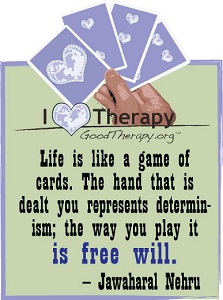 One of the cornerstones of Acceptance and Commitment Therapy (ACT) is the concept of workability. The aim of ACT is for our clients to create a rich, meaningful, and vibrant life. Workability is how we determine whether a client’s behaviors are serving that end. Usually, people know when their behaviors are not working for them, but because they are often fused with their thoughts, they may have a hard time acting any other way. Instead of bringing them closer to the life they want, their behaviors are more or less a means of struggling with or avoiding painful thoughts and feelings. To demonstrate how this might appear in a therapy session I’d like to present the case of Samantha (Of course names and details have been altered to protect confidentiality):
Samantha is in her late twenties, single, no children, has her own apartment in a suburban neighborhood, a cat, a steady job for the last year and a half, an unused gym membership, and hasn’t been on a date in four years. She complains about her female co-workers being “fake†and “slutty†yet she secretly wants to be like them and to be liked by them. Any time an opportunity arises where she is invited to attend a happy hour with work people, she has an excuse not to attend. She then goes home and cries before opening a pint of ice cream and watching pre-recorded episodes of “fill-in-the-blank-reality-television.†(more…)