
What is visual journaling?Â
Visual journaling [also called art or drawing journaling] has been identified as both an important and accessible approach in expressive arts therapy, counseling, and education. It is not only an effective method for stress reduction, but also is considered a creative way to express personal narratives and life stories as well as make meaning through images, creative writing, and story sharing. Â
Why combine images with words?  Â
In a comparative study on the efficacy of art and writing therapy on stress reduction, Pizarro (2004) noted that the combined effects of art therapy and writing demonstrated more significant positive changes in terms of perceived levels of stress than writing alone. Â
History of visual journalingÂ
Visual records of thoughts and daily life have been maintained throughout history. Petroglyphs (rock carvings) and pictographs (rock paintings) are the oldest forms of symbolic language representing complex cultural meanings often layered over time. Japanese 10th century “pillow books†were private written and visual journals (collection) depicting personal thoughts, feelings, and reflections about court life (Kasahara, 2017). Indigenous methods of recording historical events are also typified in the Lakota Winter Counts: a storyteller creates a pictograph for every year (snowfall to snowfall) on hide or cloth (Atka Lakota Museum & Cultural Center, n.d.).
Benefits of visual journalingÂ
There are a number of proven health benefits correlated with visual journaling or artmaking. For instance, engaging in brief artmaking has been shown to enhance immunity and decrease cortisol levels (Lorance & Warson, 2012; Hayes et al., unpublished raw data). Although, many of these benefits can be transferred to the effects of the visual journaling process, research on the specific effects of visual journaling demonstrated a decrease in anxiety levels and negative affect (Mercer et al., 2010). Â
In a 2012 study with southeastern tribal elders, visual journaling was sustained over a two-month period with a 95% response rate among 26 participants (Warson, 2012). Preliminary data analysis indicated a preference for depicting every-day life events such as picking peas in the garden, designing quilt patterns, as well as references to family and spirituality. These preliminary findings suggest that mindfulness-based awareness was evident in the re-experiencing of important daily tasks and events. As a result, there is growing evidence for visual journaling as a promising intervention for stress reduction.Â
Guidelines for visual journaling Â
For maximum benefit, choose a consistent time of day to work in your journal. Keep a small container of favorite art supplies close by in addition to a small travel case. Health benefits such as increased dopamine and serotonin production can be achieved after five minutes of sustained visual journaling (Zaidel, 2014). Â
Research on visual journaling has demonstrated that a self-directed approach is just as beneficial as using specific prompts (Mercer et al., 2010). Create your own approach and vary it as your awareness grows. For example, visual journaling process over a period of time can elicit new themes as broad as your depiction of wellness. Mindfulness-based practices are also a natural fit with visual journaling.  Â
Suggested visual journaling exercisesÂ
- Create a symbol of how you feel in the present moment and write one word to describe this feeling.Â
- Create a symbol of your day and write one word to describe your day.Â
- If you are having a not so good day, draw or trace a circle. Using lines, shapes, and colors create a symbol of this feeling in the circle. Write down words that describe this feeling. You can take this drawing out of your journal if you choose to.Â
- Create a drawing of your favorite place. Share this place with someone.Â
- Create a symbol of tension and write down a word to describe this state of being. Starting at your feet, focus on tensing up each muscle and then releasing it. Do this until you reach the top of your head.Â
- Create a symbol of relaxation and write down a word to describe this state of being.Â
- Create a circle of wellness. Draw or trace your circle and divide your circle into 4 sections and include symbols of physical, emotional, spiritual, and mental activities. Label each activity and share your wellness circle with someone. Â
- Create a circle of family and friends. Draw or trace a circle. Paste copies of pictures (or magazine images) of family and friends (past and present) who have been a source of support. Be sure to include a picture of you. Share stories about each person.Â
- Create your own approach and have fun!Â
The GoodTherapy registry might be helpful to you. We have thousands of therapists listed with us who would love to walk with you on your journey. Find the support you need today!
References Â
Atka Lakota Museum & Cultural Center, (n.d.). Lakota winter count. http://aktalakota.stjo.org/site/News2?page=NewsArticle&id=8993Â
Mercer, P., Warson, E., & Zao, J. (2010). Visual journaling: An intervention to influence stress, anxiety, and affect levels in medical students. The Arts in Psychotherapy, 37(2), 143-148.Â
Kasahara, Z. (2017, Feb. 2). The pillow book. https://zelda-kasahara.medium.com/most-japanese-people-can-recite-the-famous-opening-lines-of-the-pillow-book-by-sei-shonagon-b205552e01eeÂ
Pizarro, J. (2004). The efficacy of art and writing therapy: Increasing positive mental health outcomes and participant retention. Art Therapy: Journal of the American Art Therapy Association, 21(1), 5–12.Â
Warson, E. & Lorance, J. (2012). Physiological measures in art therapy evidence- based research. In C. Malchiodi, (Ed.), Art Therapy and Health Care. New York, NY: Guilford.  Â
Warson, E. (2012). Healing across cultures: Arts in healthcare with American Indian and Alaska Native cancer survivors. In C. Malchiodi, (Ed.), Art Therapy and Health Care. New York, NY: Guilford.  Â
Zaidel, D. W. (2014). Creativity, brain, and art: biological and neurological considerations. Frontiers in human neuroscience, 8, 389. https://doi.org/10.3389/fnhum.2014.00389Â
 I remember being a teen in counseling. I remember crossing my arms and sitting on the couch in silence for three sessions, listening to the therapist talk at me and ask questions. Eventually the provider conceded that he was probably not the right fit for me, and I was released from the requirement of attending counseling.
As with most teens, I was brought to therapy without choice. I was expected to divulge my internal processes to a stranger at a stage of life where I truly believed all I needed was to handle problems myself and get advice from friends I trusted.
This is a common scenario for teens; it is developmentally appropriate for people in this age range to pose some resistance to talking with a therapist. Maybe talking isn’t always the right answer for teens. Just outside the realm of talk-based therapies are the expressive arts therapies, which can engage teens utilizing their developmental needs and level of independence to address a variety of issues in counseling.
Teens in Therapy: Why Resistance Occurs
Youth ages 12 to 19 are in a unique stage of development: the “Who am I?†and “What can I become?†phase of life. Erikson labeled this stage identity versus role confusion, and it contains the primary tasks of self-discovery and launching independently into adulthood. During this time, teens experience both internal and external developmental transitions that reach all areas of life: social, emotional, relational, physical and in self-identity. It is in the stretch from middle school to after high school that teens pull away from dependence on adults and begin figuring things out for themselves.
Though an important process, this individuation can pose a natural challenge for teens entering counseling. Teens might appear resistant to talking with an adult and may not be inclined to seek help. Also, teens are generally not voluntary clients; they are brought in by caregivers, court, teachers, or other authority figures. And once in counseling, teens may view the provider as just another adult getting in the way of their attempts at autonomy.
Whether it is part of the resistance process or other factors, teens can also present patterns of overall denial of their current feelings and/or circumstances. When asked how they are feeling, a common response might be, “I’m fine†or “I don’t knowâ€. Denial-based resistance shows up while counseling teens for many reasons, including:
- Lack of trust in provider
- Limited insight due to age and brain development
- No perceived benefit for sharing and emotional avoidance
What Are the Expressive Arts Therapies?
The expressive arts therapies introduce action and imagination into counseling and psychotherapy (McNiff, 1981; Malchiodi, 2005). The “action†introduced can come from a variety of creative sources, including art, dance and movement, music, poetry and writing, drama, or any combination of these.
Used in conjunction with or apart from talk-based counseling, the expressive arts therapies offer teens a variety of ways to engage in counseling while meeting their developmental needs and honoring their ways of interacting with the world.
Used in conjunction with or apart from talk-based counseling, the expressive arts therapies offer teens a variety of ways to engage in counseling while meeting their developmental needs and honoring their ways of interacting with the world.
Expressive arts therapies are founded on the belief that engaging in creativity is not only healing, but provides avenues for processing feelings, solving problems, increasing insight, coping with emotions and thoughts, gaining self awareness, and connecting with others directly or indirectly. They focus on an integrative approach, working with and acknowledging all parts of a person: physical, social, emotional, cognitive and spiritual (Malchiodi, 2005). The expressive arts therapies are also accessible to all, requiring no formal arts training or experience.
Facilitated by specially trained, certified, and licensed therapists, the expressive arts therapies include:
- Dance/movement therapy
- Art therapy
- Music therapy
- Drama therapy and psychodrama
- Poetry therapy
- Intermodal expressive arts therapy
How Expressive Arts Therapies Can Help Reach Teens
The expressive arts therapies are adaptable to all needs and age ranges but may be especially appropriate for teens due to their life stage. As teens experience changes as they grow, one of the main goals of expressive arts therapies is to assist with integration of social, emotional, physical, and cognitive aspects of being while offering support in coping and expressing feelings.
Additionally, the expressive arts therapies work in action-orientated modalities which invite the teen client to participate actively rather than passively. This is a contrast to traditional talk-based therapies—the teen will be offered the act of doing rather than listening to a therapist talk or being expected to answer questions for an hour. The action of completing something, whether it be art, music, dramatic action, or writing, can help a teen feel accomplished and empowered in a counseling session.
Engaging in the expressive arts therapies also speaks to teens biological need for independence. Expressive arts therapies can be done independently or with others. For teens seeking freedom to work through troubles without adult assistance, the expressive arts offer teens a compromise.
Working with art in therapy can give teens a safe distance from the therapist, especially in a newly established relationship. The chosen medium can act as a bridge between teen client and therapist and may allow the teen to reveal or communicate more thoughts and feelings in a way that feels safe. Because there is no wrong or right way to engage in expressive arts therapies, teens have autonomy to choose the amount of effort and engagement they put into the session.
Since teens have a newly developed capacity for abstract thought, working through the expressive arts may speak highly to this age range. Day-to-day communication for teens can include images, music, quotes, and personal expression through fashion and emojis. The expressive arts therapies are built on working in the creative space and utilizing metaphor to express feelings, problem solve, gain insight, and manage emotions. A teen may feel more connected to the work happening in therapy if it speaks to their daily experiences and ways of communicating with the world.
Lastly, expressive arts therapies offer a space for teens to learn skills, without overt teaching or instruction. While teens engage in processing feelings, exploring identity, and problem solving through the expressive arts, they are simultaneously learning self-regulation, emotional naming, self-awareness, and coping skills (and all without worksheets!).
The expressive arts therapies are highly adaptable forms of treatment that can meet the variety needs and symptoms presented by teens. Start here to search for an expressive arts therapist in your area.
References:
- Erikson, E. (1950). Childhood and society. New York, NY: Norton.
- Malchiodi, C. A. (2005). Expressive therapies. New York, NY: Guilford Press.
- McNiff, S. (1981). The arts and psychotherapy. Springfield, IL: Thomas.
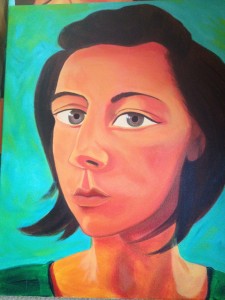
 About a year ago, I was working as an art therapist in private practice and I had a 12-year-old client struggling with anxiety and figuring out who she was in the world. I asked her to create a self-portrait—a great exercise for a girl trying to define herself. At one point I realized I had never made a self-portrait, at least not since grade school. So I went out, bought a canvas, took a “selfie,†and began my own personal process answering, “who am I?â€
I began with a light sketch, trying to see myself from the observer view. Then I started painting, layering first in basic colors to assign shadow and light areas. I have a lot of experience painting, but painting a person is definitely challenging. Faces have complex layers of subtle shadows and highlights. I worked layer after layer. Too dark. Too light. Too dark again …
One night I came home and looked at the painting in process and wondered, “Have I gone too far? I just keep layering and layering, will it ever be finished? This painting is getting overworked.†I paused, contemplating this chosen word. That’s exactly what I had created: “overworked Michelleâ€. Working three jobs and always doing a lot, I was overworked and my self-portrait reflected this state.
[fat_widget_anxiety_right]
This is the beauty of art therapy: even though you’re not trying to do it, your self comes through in the art you create. There I was, “overworked Michelle,†in painting as in life. I didn’t like how she looked … and I didn’t like how it felt to be overworked Michelle, either. At that point, I stopped working on the painting and bought a new, blank canvas of the same size. “Who would I be if I wasn’t overworked Michelle?â€
I challenged myself to make the Michelle I wanted to be, my ideal state of being. To avoid overworking the painting again I limited my work time to two sittings. In the beginning, I did not sketch anything, but started with paint on canvas, finding a portrait through color and strokes. Without a photo to reference I was free to make the face, body, and shading however I wanted. The result was a representation of how it feels to be me on the inside.
A few nights previously I had had a powerful dream about a mountain lion and when the hole in the chest appeared in my painting, I knew I wanted a cougar coming from the darkness. But how would I paint a cougar in such a short amount of time? Actually, I had already cut one out of a magazine and it was just hanging on my bulletin board nearby. Should I put collage in my painting?! I’d never done that before!
 I found freedom in creating this painting. All rules went out the window. I could be whoever I wanted to be! This is the truth of life. We create imaginary confines around ourselves that don’t actually exist. With the focus of actually creating the me I wanted to be, I found myself soft and open, vulnerable and dangerous, with strong roots hanging down, looking for soil.
Art is a powerful medium. It reminds us that we are creators, born to make what we want out of life. Art is an opportunity to ask yourself, who do you really want to be? I practiced what I wanted in this painting, and then my life followed suit. I am no longer “overworked Michelle.†Now I have one job, and it is my passion—the place where I share my heart with others and practice vulnerability and openness. I take care of myself first, every day. I don’t feel overworked, because I love what I do. I continue to draw and paint what I want out of life because, in the very near future, it could all come true.
Michelle Lynn Baker is an art therapist and owner of MBodied Art Studio in Westminster, CO. She teaches art classes to children and adults and runs therapeutic art groups for parents and children. Michelle enjoys the spectrum of art as therapy from learning to healing.
 Children with attention-deficit hyperactivity (ADHD) often experience intense emotions, behavioral challenges, and low self-esteem. As a result of these experiences, children with this diagnosis may find it difficult to express their emotions and to develop the capabilities needed to control their behavior. In the short term, these issues can make it difficult for the child to have positive experiences that reinforce a sense of self-esteem and self-efficacy. Over the long term, this can have significant implications for their well-being, success, and motivation.
While standard approaches to therapy including medication and behavioral supports are integral to improving outcomes, alternative interventions such as art therapy have proven to be highly effective for addressing some of the innate challenges encountered by children with ADHD. Alternative therapies for ADHD are often overlooked by parents and educators, but there is a wealth of emerging research suggesting that these tools can be instrumental in helping children address some of the core challenges they face every day. For this reason, parents, educators, and counselors should be open to the possibility of using alternative therapies to support the needs of children with this diagnosis.
[fat_widget_child_counselor_right]
One of the most notable alternative therapies available for the treatment of ADHD is art therapy. Art therapy works in a number of different ways to lessen the impact of many of the negative consequences of ADHD. For instance, art therapy, which utilizes a number of different approaches for nonverbal creative expression, can help children with ADHD channel their intense emotions without engaging in verbal outbursts. This nonverbal form of expression provides an outlet for the child, which can quell behavioral difficulties. As the behavior of the child improves, the child may experience more positive feedback from educators, counselors, and parents. Over time, this may have a significant effect on the child’s self-esteem. As the child gains confidence, his or her behavior will improve dramatically, further reinforcing positive outcomes in all areas of development.
Art therapy has also been shown to increase attention span for children with ADHD by providing a source of focus. Art is a natural part of play in children’s development, and often children with ADHD are able to select art projects that interest them. With an art project of their choice, children with ADHD are given an outlet upon which to focus. Although the duration of attention to the project may increase over several sessions, the process is one that builds the capability of the child with ADHD to channel energy in a positive way that results in accomplishment. This also has an impact on the child’s self-esteem. Often children with ADHD are punished for their inability to pay attention or focus. By teaching this basic skill to children, art therapy can provide an important bridge for utilizing focus and attention skills in the classroom and at home.
Art therapy can also provide a foundation for the child to explore his or her identity. This can be a powerful process, as children with ADHD are often defined by labels and behaviors. For children with ADHD, labeling and attention to negative behaviors can make it difficult for the child to define himself or herself in a positive context. Art can connect the child to an inner identity that is positive and therapeutic. By providing this connection, the child can overcome much of the negativity that encompasses much of the child’s daily experience. In short, art can make a child feel good about himself or herself. Although it may take several sessions for children to experience this outcome, providing the foundation for this type of growth will be imperative for helping the child to achieve a better sense of self.
Even though art therapy is a helpful support for many children with ADHD, it is often not offered by schools or therapists. If you believe that your child may benefit from art therapy, you should ask about this intervention and see if educators or therapists working with your child can help. While art therapy will not replace more traditional forms of therapy provided to your child, it may be an important supplemental resource to help build vital social and behavioral skills that are difficult to teach in therapy. Having this additional support can help your child overcome some of the most common deficits associated with ADHD.
 “When you wish upon a star,
Makes no difference who you are.
Anything your heart desires
Will come to you.”
“When You Wish Upon a Star” is a song written by Leigh Harline and Ned Washington for Walt Disney’s 1940 adaptation of Pinocchio.
Over the past few years a relatively new tool has changed how people manage their own destinies. The tool, called a vision board, is created to represent in a visual manner what a person wants in life. The practice suggests that visualization can lead to the realization of goals. This is a helpful and therapeutic technique for people as they work on goal-oriented outcomes.
Vision boards are collages of images, photographs, and phrases glued or taped to a surface like a poster board. Your selection of items on your board typically represents the dreams you want to materialize in your life. The idea behind the board stems from the reasonable hypothesis that positive thinking leads to a positive outcome. Positive thinking is one result, but the process of creating an inspiring vision and working toward it creates the energetic vibration to manifest it.
We all can agree that a positive outlook is a precursor to positive results in one’s life, but how exactly can the imagery you choose on your board make things happen? The premise of this increasingly popular tool suggests that if you glue a picture of your favorite house from a magazine onto your vision board, you will enable the dream or fantasy to become a future reality. Your vision can be anything from a house to a new car, or something of a more personal nature like fostering a new relationship. All things on the board are what you want or what you are passionate about.
The vision board speaks to the fundamental principles of the Law of Attraction. The basic tenet offered by the Law of Attraction is that a person can attract anything into their lives by “being†more of the emotional vibration they wish to have. By choosing images or phrases the person can begin igniting their emotions with a passion that will lead inevitably to the manifestation of those things they desire.
[fat_widget_right]When working with clients, this can support them to focus on the positive emotions associated with those images. Therapists will inevitability have opportunities to work with whatever resistances come up and support people to work through them. Emotional Freedom Technique is one such method for working with resistance within the Law of Attraction principles.
The vision board has been popularized in recent years by the enormously successful publication of the book The Secret. The Secret, a best seller from 2006, is a self-help book written by Rhonda Byrne. The book is based on a film of the same name. Both the book and the film promote the Law of Attraction and the power of positive thinking. As the official website of The Secret states on its home page, “Everything is possible, nothing is impossible.†In the actual film, success expert John Assaraf tells his story of using vision boards to realize his dreams.
Its proponents from the self-help field have embraced the tool. Christine Bagley-Jones, a psychologist from Brisbane, sees vision boards as a motivational tool. “It’s not like the vision board itself has some magical properties. But it helps to create a platform for the individual to identify and conceptualize what they most want in life, and through their actions they can then manifest it.â€
The tool has been adopted by a variety of disciplines in the self-help field, including art therapy. Advocates insist vision boards can help people build self-esteem, teach goal setting and prioritizing, and make individuals more proactive.
Carolyn Mehlomakulu, a licensed Marriage and Family Therapist and Registered Art Therapist, states on her Creativity in Therapy blog, “Through the process of choosing my images, I was able to clarify my goals and hopes, think about what I consider truly important in my life, open my mind to the possibility of having the life and business that I want, and inspire myself to keep moving forward.â€
I also have a vision board that I’m always working on. It supports what I believe in, what I want to manifest in my life, and primarily how I want to feel. I also notice that my vision board has things on it that I don’t want on it—things I’m not interested in attracting: reminders, a phone list, a business card, etc. Note to self: keep your vision board clean of distractions! As you grow so will your vision board change and grow with you.
Not everyone is into the joy of creating their own vision boards. There are detractors who see the practice of using boards as counterproductive. Some argue that people who use vision boards spend too much time in the fantasy and not enough time establishing a realistic plan to achieve them. Troubled by the reliance on the cultural forced feedings of positivity, some thinkers see the energy in this area of thought as a waste of time.
Barbara Ehrenreich, a much respected writer, states, “Besides, the constant effort of maintaining optimism in the face of considerable counterevidence is just too damn much work. Optimism training, affirmations, and related forms of self-hypnosis are a burden that we can finally, in good conscience, set down. They won’t make you richer or healthier, and, as we should have learned by now, they can easily put you in harm’s way. The threats that we face, individually and collectively, won’t be solved by wishful thinking but by a clear-eyed commitment to taking action in the world.†Hard work has to be an integral part of the vision. Accepting the possibility of failure is equally important as it teaches significant life lessons.
It is how you use the board that matters. Working with resistances, enjoying the dream, and taking action are all part of the vision board process. It is clear that vision boards are valid tools with therapeutic value to a great many people. Equally apparent are the critics who claim users are only setting themselves up for failure if their vision boards become wallpaper.
The real answer lies more likely somewhere in between the opposing arguments. No one should ever tell anyone not to dream. Just remember there’s always some sweat and tears. The vision board is an expressive tool to support your “being†attractive in attracting the things you most desire.
I’ll leave you with this final quote from Bob Doyle:
“The sooner you can move from ‘trying to be’ to actually ‘being,’ the sooner you will see your desire fulfilled.â€
References:
- Loo, Tristan.How to Use a Vision Board to Activate the Law of Attraction. Retrieved from: http://www.selfgrowth.com/articles/How_to_Use_a_Vision_Board_to_Activate_the_Law_of_Attraction.html. Retrieved on: 19/04/2014.
- Byrne, Rhonda. The Secret. Retrieved from: http://thesecret.tv/. Retrieved on: 22/04/2014.
- Doyle, B. (2011). “Follow Your Passion, Find Your Power.†Charlottesville, VA: Hampton Roads Publishing Company.
- Body and Soul website. Why You Need a Vision Board. http://www.bodyandsoul.com.au/health/health+news/why+you+need+a+vision+board,29981. Retrieved on: 22/04/2014.
- Mehlomakulu, Carolyn. Realizing the Future—Creating a Vision Board. Retrieved from: http://creativityintherapy.blogspot.ca/2013/02/realizing-future-creating-vision-board.html. Retrieved on: 21/04/2014.
 We know that certain functions of the body shut down when a person is faced with a threatening situation. This allows other parts to become more active. Larger sets of muscles receive more blood as heart rate increases, allowing for the well-documented “fight-or-flight†response. While the body tenses and readies to “respond,†some areas of the brain become less active. Hence, the ability to process emotional responses and store memories during a traumatic event can be impaired while pre-programmed survival mechanisms kick in.
Posttraumatic Stress
For some, this will lead to a condition known as PTSD (posttraumatic stress). The intense emotions associated with an unintegrated traumatic memory can impair normal functioning in daily life for those experiencing PTSD. Read more about this here.
[fat_widget_trauma_ptsd_right]
Not everyone experiencing a traumatic event will go on to develop PTSD. However, for those that do, PTSD is treatable. Eventually, there can actually be benefits that result from a well-integrated traumatic event. This is called posttraumatic growth.
Posttraumatic Growth
Many people experience a meaningful improvement in their psychological outlook on life after a traumatic or life-altering event. For example, after a near-death experience, some report a renewed zest for living, an intense wonder at the beauty of the natural world that surrounds them, and a deeply felt sense of purpose not previously recognized.
In one study, Robert James Miller II and David Read Johnson noted an increased capacity for symbolic thinking in a group of 56 Vietnam War veterans who experienced PTSD. From the abstract: “Unexpectedly, subjects with PTSD in comparison to subjects without PTSD showed greater capacity for symbolic representation, and no difference in lexical capacity, raising new questions as to the mechanism by which trauma could increase the capacity for mental imagery.â€
It’s possible that in order to avoid re-experiencing a traumatic event (because memories of the event have not been properly stored), some people unknowingly strengthen their ability to think symbolically as a coping mechanism. Since we know that symbolic thinking is a cornerstone of the creative process, can an unexpected benefit of trauma be an increase in creativity?
Surges in Creativity
There is compelling evidence that suggests surges in creativity could be linked to the experience of trauma. Dr. Marie Forgeard conducted an online study to investigate this idea. An online questionnaire was filled out by participants, whose answers were used to measure posttraumatic growth, rumination related to the event, and growth of creativity. Forgeard used two measures in the study: (1) scores on a measure of posttraumatic growth and depreciation and (2) scores on self-reported measures of creativity in the aftermath of adversity.
She found that “… adversity-induced distress predicted self-reported creative growth and breadth in a sample of online participants. Cognitive processing [intrusive/deliberative rumination] as well as domains of posttraumatic growth/depreciation—in particular, self-reported changes in interpersonal relationships and in the perception of new possibilities for one’s life—mediated the link between self-reported distress and creativity outcomes.â€
It is important to note that intrusive rumination describes a process where the individual is primarily focused on the symptoms of the distress being experienced as opposed to solutions for these symptoms. On the other hand, deliberate rumination is a process by which an individual turns inward and engages in reflection along with contemplation about various problem-solving possibilities.
Creative Therapy and Deliberate Rumination
Given the links between trauma and creativity that are being uncovered, creative therapies such as art therapy or expressive writing, coupled with supported deliberate rumination practice, could be beneficial in the recovery process for individuals wishing to deal with the aftermath of traumatic, life-altering events and/or full-blown PTSD.
References:
- Miller II, Robert James, and Johnson, David Read. Psychological Trauma: Theory, Research, Practice, and Policy. Vol. 4(1), Jan 2012, 112-116. doi: 10.1037/a0021580. Retrieved 3/21/14 from: http://psycnet.apa.org/journals/tra/4/1/112/
- Thompson, Paula. The Traumatized Imagination: Creativity, Trauma, and the Neurobiology of the Resilient Spirit. Retrieved 3/21/14 from: http://www.healingresources.info/article_thomson1.htm
- Forgeard, Marie J. C. Perceiving Benefits after Adversity: The Relationship Between Self-Reported Posttraumatic Growth and Creativity. Psychology of Aesthetics, Creativity, and the Arts. Vol. 7(3), Aug 2013, 245-264. doi: 10.1037/a0031223. Abstract retrieved on 3/21/14.
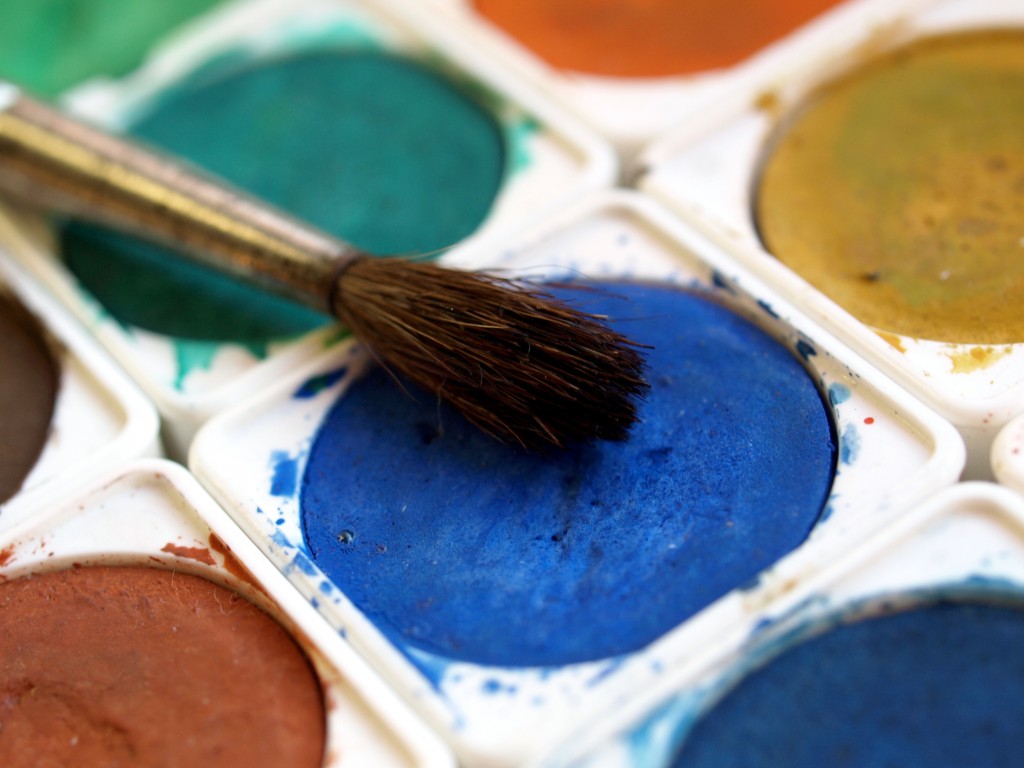 Art therapy is a specialized area of mental health that uses art materials and the creative process to explore emotions, reduce anxiety, increase self-esteem, and resolve other psychological conflicts. The American Art Therapy Association states that art therapy can be an effective mental health treatment for individuals who have experienced depression, trauma, medical illness, and social difficulties. Making art in therapy can be a way to achieve personal insight as well as healing.
There’s more to art therapy than simply “drawing your feelings.†Art therapists are trained to lead people through the creative process in a therapeutic way. Just as your doctor may prescribe a medication or behavioral change to aid your physical healing, your art therapist offers art-based therapy interventions that are tailored to your needs. As with every aspect of therapy, the choice to engage with specific types of materials will ultimately be up to you.
“Art washes from the soul the dust of everyday life.†—Pablo Picasso
In this article, we’ll take a look at some of the top questions people have about art therapy.
Q: Do I need art training or experience to participate in art therapy?
A: No art experience is necessary for you. Your art therapist is highly trained in visual art as well as psychology, and he or she will guide you in the process of creating art using specific types of materials. All you need is a willingness to experiment and explore.
Q: What kind of training should my art therapist have?
A: Art therapy is a profession that requires at least a master’s degree in a program with specific art therapy components.[fat_widget_right]While expressive arts therapists are trained in art therapy, there is also the designation of art therapist whereby the therapist studies only art therapy. There are also associations that offer certification as a supplement to your education, rather than a degree. Many art therapists have an art therapy credential called an ATR that indicates they are registered with the national art therapy credentials board.
Q: What kind of art will I make in art therapy?
A: It depends on your interests as well as the therapeutic benefits of certain types of art for your situation. Art therapy can include a wide range of art materials and processes. Your sessions could potentially include activities such as working with clay, painting, making a mask, creating a visual journal, and assembling a collage. Most often, the focus will be on the process rather than creating a finished art product.
Q: Do I get to keep the artwork that I make in art therapy? Will the art therapist show it to anyone else?
A: Your artwork is your creation and always belongs to you. Some people choose to keep the finished artwork, while others may decide to leave it in the care of the art therapist. Your art therapist will not show your artwork to anyone without your permission. The code of ethics followed by art therapists specifies that an art therapist must safeguard a client’s art creations the same way he/she would protect any other privileged information.
Q: Why are some art materials more appropriate for my situation than others? What does it mean to have an art therapist prescribe an art process for me?
A: Art materials have inherent healing qualities, but some are more appropriate for certain types of situations. For example, there is a therapeutic difference between using colored pencils, which are very dry and controlled, as opposed to watercolor paint, which is extremely wet and difficult to control. Your art therapist has specialized training in assessing which materials to suggest based on the issues you are facing, your frame of mind during the session, and other factors. Art therapists also have an extensive personal background in studio art, making them personally familiar with the use of specific types of art materials so that they can guide you through any difficulties that may arise in the creative process.
Q: Will the art therapist “interpret†my artwork?
A: Art therapists can use a variety of approaches, just as counselors or psychotherapists may utilize different approaches. It is not customary for a therapist to interpret your art. In a humanistic or transpersonal approach to art therapy, the focus will be on the personal meaning that you find within your own creative work, rather than an arbitrary meaning imposed by the therapist. You are the expert on your own artwork and creative process, and the art therapist’s role is to facilitate explorations of your work rather than to analyze or interpret it.
Reference:
Pablo Picasso Quotes—Art as Therapy. (2010, October 10). Retrieved May 6, 2013, from quotes: http://www.arttherapyblog.com/c/art-quotes/#ixzz2SYtZgGua
 “Paradoxically, the ability to be alone is the condition for the ability to love.†– Eric Fromm, The Art of Loving
Self-Nurture through Self-Mirroring
Finding a way to emotionally take care of ourselves when we are alone is an individual process of self-discovery. One way to truthfully see ourselves is through collage therapy. Collage therapy is a simple form of art therapy that does not require drawing or painting. It can help you see your inner life in a fresh way. We all project personal meaning onto everything we see. If we are having trouble verbalizing what we are feeling, we can mirror our emotions through spontaneous collage.
Choosing imagery spontaneously, and then seeing what feelings and ideas arise, can incite new understanding about what you unconsciously believe about yourself and how you feel about your life. Whenever you feel strong feelings that you do not fully understand, take a few moments to spontaneously choose some imagery from an old magazine. Cut out and glue your pictures down without much thought. Then take a few minutes to contemplate what you have chosen.
The Loneliness of Individuation
As we learn to express ourselves more authentically, our particularity asserts itself into our life, and we may begin to feel misunderstood by those around us. Many years ago, I put together a spontaneous collage about loneliness when I was discovering my true life path. At the time, I was discovering new strengths and gifts inside of myself and I excitedly tried to share my newly discovered authenticity with the people in my life. But few at the time seemed to understand what I was going through. I was mistakenly looking outside of myself to be mirrored for my inner truths.
I was not yet devoted to mirroring myself to myself. I was still looking for validation from the outside. I was still looking for other people to help me feel good about myself. Sitting alone with ourselves is not always easy. Difficult emotions that we do not want to feel tend to come into our awareness when we are quiet and alone. We can mistake these uncomfortable feelings as loneliness instead of seeing the emotional awareness that is trying to rise. It is during such times of emotional discomfort that is becomes easy to fall into unhealthy distractions. Thinking we are lonely, we may want to spend time with people in ways that are not healthy or meaningful to divert our attention away from what feels emotionally uncomfortable inside.
Instead of spending time in ways that are merely distracting us from what we feel, we could turn towards our inner strength and creativity during our alone time instead. Being alone is a fruitful time to tend to our emotions in order to understand how we feel on a more truthful level. When we start to see our deeper thoughts and feelings more carefully—in the outer projection of our collage—we realize that we have a distinctiveness that wants to reveal itself. We consider that we may never be able to rely on other people to know the total depths of who we are, but we can choose to know ourselves profoundly. When we realize that we need to do our own inner work, without insisting on validation from others, we may begin to feel lonely.
Strength in Loneliness
As we become more authentically expressive and self-examining of all our feelings, we might find that some of the relationships we have been hiding in no longer support our fullest self-expression. Some people do not leave unhealthy relationships because they fear loneliness more that they fear abuse. If we have felt abandoned, shunned, or ignored for expressing our true feelings as children, the loneliness of true self-expression can be a primal place of fear. The genuine loneliness of authenticity can feel piercing to the core when we have received little validation for how we felt in the past.
Our authentic self-expression can feel like it is the exact place where we have not been loved in the past, yet it is this very place where we need to learn how to love ourselves. As we progressively delve into our uniqueness, however, we grow to understand that we can find self-love and emotional strength in the aloneness of our unique personhood. As we become more honest about expressing the truth of our feelings, the fear of not being loved and accepted can intensify at first. But it is in our most alone places, when we are willing to stay in supportive witness to our arising truths, that we can find the love we crave.
Emotional Self-Connection Heals Loneliness
It is our own emotional self-connection that heals loneliness. We can be surrounded by people, but if we are not authentically expressing who we are, we will feel lonely. When we feel authentically connected to ourselves, we feel connected with others. When we begin to know who we truly are, we can reach out for help in ways that are healing instead of hindering to our emotional growth. We can start to build a support system that can help us further develop into our unique strengths in the world.
We can extend ourselves in healthy ways towards genuine friendships with people on similar life paths. When we are in touch with our deeper truths we will start to gravitate towards people who nurture their own unique personhood and who respect our individuality. As we come to know how to soothe our painful feelings without demanding that other people do it for us, we deepen into a self-nurturance that is kind and mature. We can choose to become deeply present to our emotional life. As we tend to our own emotional needs, we discover the warmth and abiding friendship of the true self.
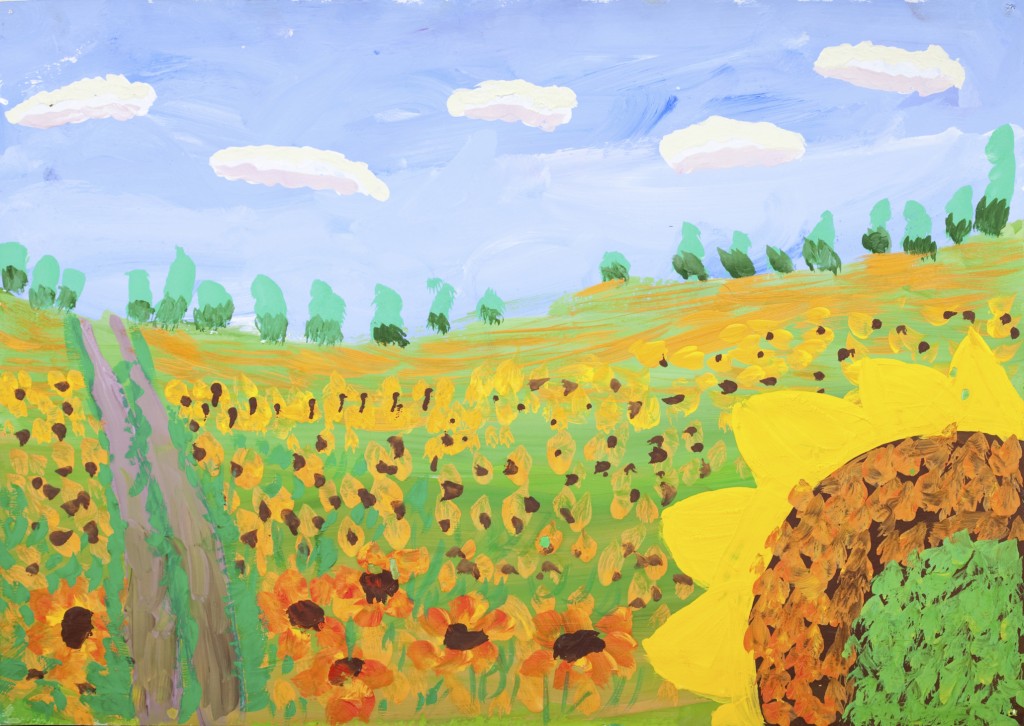 “It is so difficult to put the complexities of the trauma recovery process into words—artwork does this much better!†– Joan Turkus, M.D.
Posttraumatic stress (PTSD) is a condition that is, unfortunately, quite common in modern society. Statistics show that 70% of adults in the United States have experienced some form of traumatic event at some time in their lives and that up to 20% of this population will go on to develop PTSD. If you have undergone trauma, you are not alone. While many forms of therapy continue to emerge to treat those who have experienced trauma, art therapy is one that has been proven by a number of studies to be effective in dealing with the aftereffects of trauma. Whether you are a survivor of abuse, war, natural disaster, or another traumatic event, art therapy will likely be able to help you heal.
[fat_widget_trauma_ptsd_right]
Breaking the Silence
A common occurrence after a person has experienced trauma is a hesitancy or inability to discuss the incident out loud or verbally, even with a professional therapist. Repressing all thoughts and feelings is one reason this can happen. In expressive arts therapy, words are not necessary; much can be achieved without them. Expressive arts therapy moves the client and therapist from the traditional talk therapy roles and into a process that may be less provocative. The medium serves as a bridge between you and the therapist, allowing exploration to occur at a comfortable pace.
Each medium is carefully selected by the therapist to support giving voice to your experience. You don’t have to strain to say the right thing; the medium can speak for you and act as a support for your experience. Some emotions may be better expressed through art than through verbal language anyway. While you may not be able to put what you feel into words, viewing your work in front of you is something else entirely—something that can lead to your healing.
Journey to the Unconscious
Repression, or the brain’s attempt to send difficult thoughts straight into the unconscious, supports clients in handling their trauma. This phenomenon is observed frequently in trauma victims, who claim to have no recollections of the disturbing events. Many experts view art therapy as a way to tap into these unconscious thoughts and memories and bring them to the surface, so that individuals can heal and reconcile them.
You’re probably familiar with the left-brain and right-brain theory, which has been common knowledge among the general public for quite some time now. The act of creative expression utilizes the right-brain hemisphere. What’s interesting is that the right brain is also where visual memories are stored. Many theorize that the two are therefore very closely linked and that this is one of the reasons that art therapy has been so successful at uncovering repressed, unconscious images.
Helping Children Heal
Although art therapy has been proven to be a successful treatment for people of all ages, research shows that it has been particularly effective in the treatment of children. Various developmental theories claim that children do not fully develop verbal skills until adolescence, and it is therefore no surprise that your child may better respond to a creative outlet for self-expression than a chat with a therapist.
Seeking the right treatment for you or your child following a trauma is often frustrating, particularly when you do not know where to turn. While it is important to read about all of your options, if you or your child has experienced any form of trauma, then art therapy may be helpful.
References:
- Art therapy. (2011). Retrieved July 15, 2012, from Trauma Recovery Center: http://www.traumarecoverycenter.com/art_therapy.html
- Art therapy. (n.d.). Retrieved July 15, 2012, from Casa Palmera: http://www.casapalmera.com/articles/art-therapy/
Art therapy what is it? (n.d.). Retrieved July 15, 2012, from CRC Health Group: http://www.crchealth.com/types-of-therapy/what-is-art-therapy/ - Clatch, M. (2012, January 1). Trauma recovery through art and play therapy. Retrieved July 15, 2012, from Courage to Connect Therapeutic Center: http://www.couragetoconnecttherapy.com/trauma-recovery-through-art-and-play-therapy
- Malchiodi, C. (2012, February 22). Art therapy shows promise in treatment of PTSD & trauma. Retrieved July 15, 2012, from Art Therapy: http://www.arttherapyblog.com/ptsd/ptsd-treatment-showing-promise/#more-26
- Malchiodi, C. (2012, March 6). Trauma-informed expressive arts therapy. Retrieved July 15, 2012, from Psychology Today: http://www.psychologytoday.com/blog/the-healing-arts/201203/trauma-informed-expressive-arts-therapy
- Rosenthal, M. (n.d.). PTSD statistics. Retrieved July 15, 2012, from Heal My PTSD: http://healmyptsd.com/education/post-traumatic-stress-disorder-statistics
 Depression can be challenging. If you have experienced it, then you know that the most basic tasks can become excruciating and leave you feeling apathetic and drained of your willpower. Simple tasks like getting out of bed, doing the laundry, and playing with your children may be daunting. While talk therapy and medications may be helpful, they are not the only solutions to relieving symptoms. This is where art therapy comes in. Art therapy has become an effective treatment in supporting, releasing, and integrating the symptoms of depression by supporting you in exploring depression via the senses. Although art might seem less conventional, it can be just as effective as talk therapy because it utilizes the whole body experience and not just the intellect.
[fat_widget_depression_right]
When Words Do Not Speak
It can be difficult to open up to a complete stranger about your deepest and darkest emotions. Sometimes, we are taught to suppress our emotions and put on a blank face, even when experiencing inner turmoil. In art therapy, words are not always necessary. A mere lump of clay or a blank canvas can be far less threatening than giving voice to painful feelings, words, or images. The simple act of a scribble on paper can likely bring light to darkness, ignite conversation, or be a release for a depressing thought. Because something cannot be heard by the human ear does not mean that nothing is being said or revealed. Art therapy supports our process when words are not enough.
The Capacity to Feel Again
In addition to creating a communication bridge between you and your therapist, art therapy can also help you come to terms with what you are actually feeling. Perhaps you have felt numb or distanced and “incapable†of feeling when depressed. Creating art is at the heart of expression and emotion, supporting your capacity to feel again. Once you have created and externalized a part of yourself as something concrete and tangible, it is easier to acknowledge that such an emotion existed in the first place. By creating, you give yourself permission and voice to that which is difficult to speak. You might feel a sense of relief or a movement of your depression once you have transferred it onto your canvas.
Creating One’s Own Happiness
Research shows that when we observe something that we believe to be beautiful, the neurotransmitter dopamine—located in one of our pleasure centers in the brain—is released. Interestingly, the brain activity observed when we look at art is actually comparable to the brain activity representing love! It’s nice to know that in addition to having created your own art, positive feelings increase.
Research proves art therapy is a beneficial method of treating depression across a wide spectrum of personalities. Many even discover a newfound passion for art and are surprised at the talent that emerges once their emotions are channeled into their artwork. Only in this unique field are therapists performing what is considered by traditional psychoanalysts to be the hardest of tasks: getting those with depression to proactively express, manage, and overcome their symptoms … with the end result being something truly beautiful.
References:
- Study shows art may help with depression. (2012, June 6). Retrieved from http://www.arttherapyblog.com/mental-health/study-shows-art-may-help-with-depression/#.T9dlRdUth30
- Bar-Sela, G. (2007, Nov. 16). Art therapy improved depression and influenced fatigue levels in cancer patients on chemotherapy. Retrieved from http://www.ncbi.nlm.nih.gov/pubmed/17351987
- Holm, M. (2011, Aug. 11). Art therapy for depression. Retrieved from http://www.naturaltherapypages.com.au/article/art_therapy_for_depression
- Riley, S. (2001, July). Art therapy with adolescents. Retrieved from http://www.ncbi.nlm.nih.gov/pmc/articles/PMC1071468
- Vann, M. (2012, April 4). 8 Unconventional ways to ease depression. Retrieved from http://www.everydayhealth.com/depression-pictures/unconventional-ways-to-ease-depression.aspx#/slide-3