 In my practice, I meet with a lot of adolescents and teens. Often, parents bring their kids to meet with me when they discover that their child is stuck in an emotional state such as anxiety, depression, or fear. Many of these parents believe their child’s current state of unhappiness began recently. However, many of the kids I see have been unhappy much longer than their parents realize. They’ve been putting on a facade to hide their realities because they want their parents to believe they are happy.
Emotional issues such as anxiety and depression in U.S. school-aged children are common. In fact, according to a recent study, 1 in 6 children are affected by a mental health issue. Along with childhood trauma, brain chemistry, and inherited traits, kids can begin to feel worthlessness from factors such as bullying, school performance, social status, sexual orientation, or family life. These uninherited factors are often kept from parents as the child puts on a facade to pretend that everything is alright.
Why Facades Can Be Dangerous
A facade is a form of personality change that one acts out to fulfill a particular emotion they wish to portray. There are many reasons a child may put up a facade. If their unhappiness is due to bullying or other school issues, a child may put up a facade at home because they may feel ashamed or embarrassed. It is not uncommon for a child to put up a facade for months or years before their parent recognizes there is an issue.
It is not uncommon for a child to put up a facade for months or years before their parent recognizes there is an issue.
Kids may put up a facade at school because they don’t want their peers to know they’re not okay. Putting up a facade can make others think they’re okay, when in reality, they are not. Facades can prevent friends and others from intervening and providing help because they’re unaware that there is an issue.
In extreme cases, facades can make it easy to miss when a child or teen may be contemplating suicide; thus, help does not get provided.
How Parents Can Recognize Facades
Facades are not often easy to recognize, especially if the child has been putting one up for a long time. Since kids and teens often don’t tell their parents they’re experiencing bullying, parents should be aware of a pattern of signs that may indicate bullying or other issues, including:
- Strong dislike for school
- Changes in friends or behavior
- Physical injury
- Changes in eating and/or sleeping habits
- Self-isolating and becoming less talkative
Parents can help encourage a child to not put up a facade by having regular check-ins and quality one-on-one time whenever possible. Parents looking to connect with their kids, address bullying, and resolve other issues may also refer to a framework called The Three E’s (Empathy, Empowerment, and Engagement).
What Parents Can Do When They Discover Their Child Is Struggling
One of the best things a parent can do when a child is struggling is to listen and let your child know you’re listening. After giving your child time to speak their thoughts, you can make sure you understood correctly by summarizing back what you heard.
- Regular engagement and check-ins by a parent or trusted adult can help kids not to feel alone.
- Role-playing and practicing at home can help kids feel more comfortable with trying to resolve issues themselves.
- Journaling can help kids express their feelings and set goals for change.
- I recommend that families make a list of people they can trust and talk to. These trusted adults give you and your child safe places to turn to when you need a listening ear. The reality is that kids need to hear from their parents, but they sometimes need to hear from other trusted adults, too.
Sometimes, a mental health professional may be needed if nothing seems to help your child overcome constant feelings of despair or anxiety. It’s also important to seek immediate professional help if your child talks about hurting themselves or someone else. Therapy can help kids and teens cope and learn new skills to address painful feelings like sadness, anger, stress, worry, and low self-esteem. Find a therapist today.
 Transgender kids face alarming rates of bullying and abuse. GLSEN’s 2017 National School Climate Survey found 83.7% of trans and 69.9% of gender nonconforming (GNC) students experience bullying at school.
Bullying can erode self-esteem, increase isolation, and make it more difficult for a child to assert their gender identity. Some bullied children become depressed and suicidal. Centers for Disease Control and Prevention (CDC) reports that any involvement with bullying—whether as a victim, bully, or both—raises a child’s risk of suicidal behavior.
Parents, educators, and other adults have significant power to reduce bullying and support trans kids at school.
Transphobia Statistics
Transphobia is animus toward transgender people. It can cause bullying, physical aggression, and other forms of abuse.
Research consistently finds that gender-related discrimination is a problem in schools. GLSEN’s annual National School Climate Survey looked at over 23,000 children in grades 6-12. The study found 42.1% of trans and GNC kids are prevented from using their preferred pronouns. Nearly half of these kids (46.5%) are forced to use the wrong bathrooms.
Other research has found high rates of transphobic bullying.
- Research published in 2017 found trans kids are two to three times more likely than their peers to be bullied.
- A 2016 survey of adult transgender individuals found 60% have avoided public restrooms because they feared confrontation and bullying.
- A 2012 survey found 61% of students have heard peers make negative remarks about gender expression. The same survey found 27% of students face physical abuse because of their gender expression.
Creating a Safe Environment for Trans Kids
Many parents and educators worry that there’s nothing they can do to stop transphobic bullying. Yet research consistently finds that creating an inclusive, gender-affirming environment can greatly reduce bullying. Even when kids are bullied in these environments, they may feel more comfortable reaching out to an adult than they would in less inclusive environments.
According to GLSEN, students at inclusive schools with curricula that feature LGBTQ-affirming content are less likely to experience bullying, hear transphobic remarks, or feel unsafe at school. They are also less likely to be forced to use the wrong bathrooms or the wrong pronouns. Inclusive curricula can also raise self-esteem, reduce the risk of depression, and even improve grades.
Some strategies that promote a safe environment for trans kids include:
- Creating a trans-inclusive curricula. Schools can participate in LGBT History Month, feature notable transgender historic figures, and discuss transgender history and civil rights with students.
- Asking students about their preferred pronouns or names and then using them
- Educating teachers, school counselors, and others who work with students about transgender issues.
- Establishing safe spaces, such as counselor’s offices, where students can safely discuss gender issues and bullying.
- Refusing to tolerate any bullying or transphobia, even from teachers or other adults.
Parents who want to support a transgender child should urge their child’s school to promote an inclusive environment that actively works to prevent transgender discrimination. At home, parents can help by allowing children to assert their own gender identity in a safe, judgment-free zone.
It is important to let the child determine what gender means to them. Parents should avoid reinforcing gender stereotypes or rigid gender ideologies. For example, a trans girl does not need to turn her entire wardrobe pink in order to “prove” she is a girl. No toy or clothing should be off limits to anyone solely because of gender.
Parents can also support their trans or GNC children by introducing them to the wider LGBT community. They may read books with their child that feature people of many gender identities and presentations. They may identify trans or GNC role models for kids to learn about. They may also help their children meet other trans kids through support groups, trans camps, and other communities.
Lastly, parents may wish to educate themselves about transgender history and issues. Children pick up on what parents believe, not just what they say. Parents who are uncomfortable with their child’s gender presentation may inadvertently stigmatize their child. Education can help parents reevaluate their own ideas about gender and become better advocates for their children.
Understanding Your Child’s Rights
Federal, state, and local laws determine a student’s legal rights. Trans students in some states have more protections than students in other states. Individual schools may extend additional rights to trans students.
Many courts have ruled that transgender individuals are protected under Title IX. This federal law forbids schools from discriminating against students based on their sex or gender expression. Under Title IX, transgender and GNC students have the right to:
- Be protected from bullying, harassment, and violence.
- Use restrooms and locker rooms that match their gender identity.
- Be called the correct name and pronouns.
- Dress and present themselves according to their gender identity (so long as they follow the general school dress code).
- Access the same educational opportunities and school events as other students.
- Maintain their medical privacy, including the right not to disclose being transgender.
However, not all states share this interpretation of Title IX. According to the American Civil Liberties Union, only 17 states have laws explicitly protecting transgender students from harassment and discrimination. These include Arkansas, California, Colorado, Connecticut, Delaware, Hawaii, Illinois, Iowa, Maine, Maryland, Minnesota, New Jersey, New York, North Carolina, Oregon, Vermont, and Washington. The District of Columbia also has anti-discrimination laws.
Even between these states, the extent of civil protections can vary. For example, only California, Connecticut, and Washington currently allow transgender students to join school sports teams consistent with their gender identity. School districts within a state may also vary in their policies.
The rights of transgender students at school are continually evolving. Parents who worry their child is facing discrimination should consider consulting a lawyer who specializes in educational law or who has experience with transgender issues.
How Therapy Can Help Transgender Kids
Therapy can offer immense support to transgender kids and their families. Family counseling can help a family identify strategies for supporting a child’s gender identity and fighting back against bullying. When family members do not fully understand or accept a child’s trans identity, family therapy can educate them and encourage acceptance.
Individual counseling can help transgender kids who struggle with depression, low self-esteem, and anxiety due to bullying. The right therapist can also affirm a child’s gender identity and point them toward trans role models and literature. In therapy, a child can learn that being trans is not a mental health problem or a weakness, but an important component of a person’s identity that should be respected and celebrated.
You can find a therapist here.
References:
- GLSEN 2017 National School Climate Survey. (2018). Retrieved from https://www.glsen.org/article/2017-national-school-climate-survey-1
- Know your rights: Transgender people and the law. (n.d.) ACLU. Retrieved from https://www.aclu.org/know-your-rights/transgender-people-and-law
- McKay, T., Misra, S., & Lindquist, C. (2017). Violence and LGBTQ+ communities: What do we know, and what do we need to know? RTI International. Retrieved from https://www.rti.org/sites/default/files/rti_violence_and_lgbtq_communities.pdf
- Supporting transgender and gender diverse students in schools [PDF]. (2015). American Psychological Association. Retrieved from https://www.apa.org/pi/lgbt/programs/safe-supportive/lgbt/school-administrators.pdf
- The relationship between bullying and suicide: What we know and what it means for schools [PDF]. (2014). Chamblee: Centers for Disease Control and Prevention. Retrieved from https://www.cdc.gov/violenceprevention/pdf/bullying-suicide-translation-final-a.pdf
- Trotta, D. (2016, December 08). U.S. transgender people harassed in public restrooms: Landmark survey. Reuters. Retrieved from https://www.reuters.com/article/us-usa-lgbt-survey/u-s-transgender-people-harassed-in-public-restrooms-landmark-survey-idUSKBN13X0BK
- What are my rights at school? (n.d.). Retrieved from https://transequality.org/know-your-rights/schools
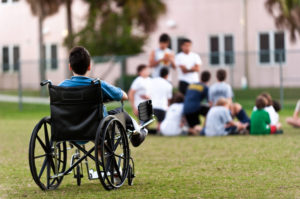 Bullying based on stigma or discrimination can be especially harmful. Bullies may target a child for their weight, religion, disability, or other traits. Â A Developmental Review study says anti-bullying programs are unevenly distributed among sociological categories. The authors say more research on interventions might reduce bullying among specific groups.
Preventing Stigma-Based Bullying
The study screened 8,240 articles published between 2000 and 2015. It included 22 studies addressing 21 different interventions for discriminatory bullying. The study found the number of stigma-based bullying interventions has increased with time. Between 2000 and 2007, only six such programs appeared in peer-reviewed journals. Between 2008 and 2015, researchers published 16 interventions.
[fat_widget_child_counselor_right]
This data suggests investigators are taking the problem more seriously. However, the study found an uneven distribution of programs. Over the last 15 years, programs addressing LGBTQ+ issues have grown more common. Yet the study’s authors located only two programs that directly addressed racism.
Bystander intervention and other generalized anti-bullying approaches have proven successful. Yet programs that target stereotypes might be necessary to fight discriminatory bullying. According to the study authors, they may also help prevent gun violence at schools. Many school shooters have a history of gender-based harassment and/or racial prejudice. Addressing discrimination early on may prevent behaviors from escalating.
Bullying and Mental Health
While some adults treat bullying as a rite of passage, research points to the long-lasting damage the experience can cause. A 2015 study found bullied children were more likely to experience anxiety and depression than survivors of childhood abuse. Research published in 2014 suggests the effects of bullying may extend into adulthood.
According to the Centers for Disease Control and Prevention (CDC), kids who bully are more likely to have:
- harsh parenting
- poor impulse control
- an acceptance of violence
Bullying prevalence estimates vary. The 2015 Youth Behavior Risk Survey found 20% of high schoolers were bullied at school during the previous year. In the same survey, 16% of students said they had been cyberbullied.
References:
- Bullying based on stigma has especially damaging effects. (2018, March 8). ScienceDaily. Retrieved from https://www.sciencedaily.com/releases/2018/03/180308105144.htm
- Earnshaw, V. A., Reisner, S. L., Menino, D. D., Poteat, V. P., Bogart, L. M., Barnes, T. N., & Schuster, M. A. (2018). Stigma-based bullying interventions: A systematic review. Developmental Review. Retrieved from https://www.sciencedirect.com/science/article/pii/S0273229717300138?via%3Dihub
- Prevent bullying. (2017, October 10). Retrieved from https://www.cdc.gov/features/prevent-bullying/index.html
 Maybe there is an increase of bullying in our society. Maybe there is an increase in awareness. Either way, it is getting a lot of attention these days. Teachers and parents are sensitized to the signs of bullying and are becoming more skilled at breaking the cycle and protecting bullied children. But what happens when the bully is not a classmate or a teammate or a neighbor? What happens when the bully is in the victim’s own home? Recent research in Great Britain suggests the effects are severe and long-term.
Since time immemorial, siblings have pried their way under each other’s skin. Arguing and jockeying for position in the family are part of growing up. The problem is that sometimes parents misunderstand what they are witnessing in their children. What they view as sibling rivalry can actually be bullying. There is a simple way to tell the difference.
[fat_widget_right]
When two children are sparring, it is easy to observe that they are both upset and both engaged in the clash. Parents can intervene and set the rules of engagement, teach the value of mutual respect, and offer children templates for managing disagreements at home and with those they may face in the world outside the home. But when one sibling is bullying another, it is only the bully who is engaged and seeming to delight in the taunting. The bullied child is miserable. The only response for parents is to stop the bullying. Period. There is no false equivalency: they are not equally at fault. There is no need for mutual apology. There is only stopping the aggression and offering solace and protection to the victim.
Most sibling bullying takes the form of name-calling and insults, both of which are passive-aggressive behaviors the bully can deny when confronted. “She’s taking it too seriously!†“She started it!†“If she weren’t such a brat, this would not have happened.†It is never the bully’s fault. The bully loves to play the role of victim. And the bully can be very convincing to parents who are too distracted or too exhausted to figure out what is really going on.
Meanwhile, the victim—for the purposes of this article, we’ll use young girls as our examples—feels unsafe in her own home. She returns from school with dread every day, emotionally defended and prepared for a shellacking by her sister, who can be older or younger than she is. She learns that her parents cannot or will not intervene on her behalf. She feels defenseless and begins to doubt her own perception. It is a form of gaslighting: the bully sibling makes the victim wonder whether she really is the nasty, incompetent, bratty person the bully is telling her she is.
The likely victim in sibling bullying is the child who is sensitive and thoughtful. The bully is likely to have problems which the parents do not see. These can be related to being bullied herself at school, for example, or they can be the result of transferring the effects of her own trauma onto someone else. Often in dysfunctional families where a child feels unsupported or ignored, that child will take it out on a sibling because for any number of reasons she fears that going directly at the parent would crash her own fragile world, regardless of how unpleasant it may be.
There are also other, less obvious, explanations for bullying a sibling. Children can have personality conditions, just as adults can. The Diagnostic and Statistical Manual of Mental Disorders (DSM) offers a diagnosis of oppositional defiant disorder to describe children under the age of 18 who exhibit behaviors devoid of compassion and empathy for others. The adult version of this is antisocial personality. This is a potentially serious problem.
It is a daunting situation for a parent to face the possibility that a child might need psychotherapeutic care. Sometimes, it is more than parents can bear to face. They feel ashamed, somehow responsible, for the behavior of their bullying child. Though bullies crop up more often in families with trauma, alcoholism, or other chronic dysfunction, these components are not always in place. Sometimes, with all the best of support and parental supervision, children need help from professionals. Bullies generally are not happy people, as children or as adults.
If you’re a parent, closely monitor your children’s arguing. Be certain that’s actually what you are seeing. If the playing field is not level and one child enjoys the other child’s distress, you are not looking at normal sibling development. You are looking at bullying, and your role as a parent is to stop it immediately.
But there is plenty of material available to parents to help them disarm bullies. My concern here is with the victim. Often, it is the victim who is told by well-meaning parents either to ignore the bully or to fight back. Neither of these approaches feels possible to the typical victim child. And neither is effective, anyway: ignoring a bully is tantamount to goading her, and fighting back is unrealistic advice for a child whose temperament is neither adversarial nor combative.
She is at risk for low self-esteem, depression, and even self-harm as a result of being bullied by a sibling who renders the home an unsafe place. Where is the victim to go? Children have neither the means nor the power to remove themselves from an environment that is so painful. She is stuck enduring the grief until she can manage to leave home for college or move on to the workforce and her own apartment.
But she is insufficiently prepared. She might develop a sarcastic style, for example, which pushes people away from her when she most needs contact with others and trusted friends. She is deeply wounded. She rejects herself the way her bullying sibling rejected her for all those years. She does not feel lovable. She is deeply sad. And she doesn’t understand why. These consequences can go on for a victim’s entire life. She can forever struggle with self-doubt and negative self-talk, taking over the belittling work of the bully long after both have left home.
A sensitive and talented child can remain hobbled if sibling bullying is left unaddressed. It is not unusual for bully and victim roles to continue well into adulthood. If the victim marries and has her own children, and then finally comes to see it is in her best interest to sever relations with her bullying sibling, her own children and family may condemn her for what they do not understand, and which she is unable to adequately explain.
If you’re a parent, closely monitor your children’s arguing. Be certain that’s actually what you are seeing. If the playing field is not level and one child enjoys the other child’s distress, you are not looking at normal sibling development. You are looking at bullying, and your role as a parent is to stop it immediately. This is in the interest of both the victim and the bully.
If you are an adult struggling with the confusing long-term damage of having been bullied at home, supportive counseling can help you understand yourself better. You can address why you were unable to defend yourself as a child (likely because you didn’t understand what was happening) and that it was your parents’ responsibility to intervene and protect you (which they didn’t, for reasons unique to them). You can also unravel the roots of any current problems you may have with confidence and self-worth. Please don’t be surprised if they derive from the way your sibling treated you as a child. And please be alert to the possibility this behavior may be continuing toward you in the present. Counseling can help you identify ongoing toxic relationships in your family of origin and guide you toward setting boundaries in order to stop behaviors that are harmful to you.
It is unlikely you can disarm a sibling who bullied you as a child and who is now an adult. Adult bullies tend to become ever more adept at the plausible deniability inherent in passive-aggressive behavior (“Oh, that’s not what I meant,†for example, when you try, however cautiously, to hold them accountable for poor behavior). This isn’t to say change isn’t possible.
Finally, it is important to remember that no happy person would choose to bully another, regardless of their insistence that they are happy and you are the problem. Compassion you may feel for the bully can only take you so far, however. You must also take steps to guard yourself from the ongoing effects of their continued disrespect toward you.
Reference:
Bowes, L., Wolke, D., Joinson, C., Lereya, S. T., & Lewis, G. (2014, September 8). Sibling bullying and risk of depression, anxiety, and self-harm: A prospective cohort study. Pediatrics. doi:Â 10.1542/peds.2014-0832
 School shooters may feel unable to live up to their school’s masculine norms, according to a study published in the journal Gender Issues. All 29 of the shootings the study identified involved male shooters. Insecurity and family difficulties figured prominently in the shooters’ history.
Some analysts have argued that pressure to conform to a masculine ideal that involves dominance and control plays a role in mass shootings. Dubbed “toxic masculinity,†this phenomenon might explain why the overwhelming majority of spree killers are men. This study found boys who were labeled with feminine epithets and shunned by their peers were more likely to engage in shootings—perhaps in an attempt to regain control or feel more masculine.
The Link Between Gender Role Pressure and School Shootings
The study included data from all identifiable school shootings committed between 1995-2005 in the United States. The data included 29 shootings, and 31 shooters. The study, which highlighted previous research emphasizing the role of masculine norms of violence in school shootings, sought to identify characteristics that school shooters might share. [fat_widget_right]
According to the study, previous research has found that boys who engage in school shootings are more likely to experience emasculating bullying, such as being called gendered or homophobic epithets. They often explore violent themes in their writing and recreational activities, idealize violent figures, are excessively interested in guns, and come from families that own guns. Many told a classmate of a plan to engage in violence. In most cases, at least one adult said the shooter had engaged in aggressive misbehavior such as fighting or threatening another student.
All 31 of the shooters in the study had been the subject of emasculating bullying. They all showed some signs of rejection and marginalization, such as being rejected by a girlfriend or having few friends.
Ten of the shooters had previously been diagnosed with a mental health condition, and 10 others grew up in abusive homes. The other 11 boys had a history of reacting aggressively when they felt humiliated.
School Shootings: A Product of Toxic Masculinity?
In adolescence, conforming to male stereotypes—being tough, heterosexual, and “cool‖is often a major predictor of whether a boy will fit in with his peers. Boys who feel they cannot live up to this standard may react violently. They may also face rejection and seek revenge in a way that confirms their masculine identity.
Stopping School Shootings
Kathryn Farr, the author of the study, believes ongoing discussions about gender and gender role pressure could help prevent school shootings. She also urges schools to work to identify boys struggling with masculinity. Talking to students about school shootings may also be a helpful step, as shooters often tell others of their plans to engage in violence. If students know this, they may be more likely to tell an authority figure about threats of violence.
References:
Farr, K. (2017). Adolescent rampage school shootings: Responses to failing masculinity performances by already-troubled boys. Gender Issues. doi:10.1007/s12147-017-9203-z
 Bullying is described as a behavior marked by two distinct features: the intent to create a power imbalance and the frequency with which it occurs. There are various strategies used to gain and manipulate this power over others, but it’s often the instances of bullying involving physical aggression in school settings that get the most attention. For the purposes of this article, I’d like to shift the focus to a more subtle and common type of bullying: relational aggression.
Relational aggression is defined as a nonphysical form of aggression with the motive to impair the targeted individual’s social standing or reputation. Unlike physical bullying, we have probably all been on the receiving end of relational aggression at some time or another. Because we are social creatures and wired to desire acceptance, this form of bullying can be particularly toxic.
[fat_widget_right]
My hope is to increase awareness about when and how relational aggression occurs so it is more easily identified, and to offer more effective ways of responding. First, let’s look at some examples across various contexts:
- At your local gym, you notice each week the same two or three individuals always stare at you and then begin to whisper.
- You’ve joined a group of friends for lunch. After you’ve shared details of a recent work accomplishment, one of your friends does an eyeroll and says something condescending or sarcastic like, “Oh, wow, look at you, all grown up and adulting finally.â€
- When you arrive to meet your sibling and some mutual friends at a concert, your sibling immediately launches into her go-to criticism that includes making fun of your outfit or hair.
- While discussing finances, your partner teases you about how insignificant your salary contribution is compared to theirs.
- You are attending a holiday dinner and a family member predictably brings up religion or politics, then begins to berate and insult your character for having different opinions.
Most of us might feel uncomfortable, to some degree, in each of these scenarios. And that is exactly the goal of the instigator. Here are some of the common threads: an attempt to declare superiority over another, domination, the inducing of humiliation or shame, belittling, devaluing, rejection, harassment, and the creation of a sense of separateness between you and others.
While a few instances of relational aggression may not seem to be that bothersome, the cumulative effects can result in lowered self-esteem, decreased confidence, depression, anxiety, distrust, and resentment.
Ironically, it’s the frequency with which relational aggression happens that makes it more difficult to detect. We can become desensitized or adopt an attitude of “that’s just the way things are†in response to these emotionally abusive behaviors. Taking on this perspective will inevitably lead to maladaptive ways of responding. While a few instances of relational aggression may not seem to be that bothersome, the cumulative effects can result in lowered self-esteem, decreased confidence, depression, anxiety, trust issues, and resentment. It can take a real emotional toll over time, and consequently be more difficult to heal from.
Countering these acts of verbal and social aggression requires setting boundaries. Otherwise, the power-seeking individual is continually reinforced by a lack of consequences for the unwanted behavior. Remaining calm when responding is important, as the instigator is often made to feel more powerful the more out of control or emotional the target becomes. Of course, it’s certainly easier said than done to remain calm in the face of emotional bullying.
How Mindfulness Can Help
Mindfulness, along with a little rehearsal, can assist you in staying calm and responding with purpose rather than being emotionally reactive:
- Immediately after the triggering comment/interaction, notice how you feel and label the emotion.
- Notice where that emotion shows up in the body.
- Perform a quick grounding technique such as pushing your feet into the floor, taking a few deep breaths, or subtly stretching to get you reconnected to your body.
- Set a boundary using the xyz script if you can think of nothing else: I feel “x†(label emotion) when you “y†(label offensive behavior factually), so I’d appreciate it if in the future if you’d “z†(suggestion to replace offensive behavior).
- Practice, practice, practice! If you have the foresight, and we often do, to know relational aggression is bound to happen based on past experiences, preparation is an invaluable tool for responding in new ways.
Despite our best efforts, sometimes situations and people won’t budge. I urge you to seek professional support for assistance with coping and responding to relational aggression if you feel unable to make changes on your own.
References:
- Crick, N.R., & Grotpeter, J.K. (1995). Relational aggression, gender, and social-psychological adjustment. Child Development, 66:710-722.
- What Is Bullying. (2017, September 28). Retrieved from https://www.stopbullying.gov/what-is-bullying/definition/index.html
 October is National Bullying Prevention Month, a month which lasts all year for many, as bullying is far too common. According to the National Bullying Prevention Center, more than one out of every five students reports being bullied.
There are many reasons bullies tend to target particular individuals, including appearance, race/ethnicity, sexual orientation, or gender identity, but perhaps most motivating of all is the knowledge they can somehow get away with it and that their bullying has the desired effect.
Many people engage in bullying in part to avoid facing their own problems. This is true of children and adults alike. They think that by putting someone down, they will feel better about themselves. They may have difficulty empathizing with their target or be angry about having been bullied themselves. After all, people who have been bullied are more likely to engage in bullying behavior. In many cases, bullying behavior may reflect the insecurities of the person lashing out.
[fat_widget_right]
The potential negative symptoms of being bullied are well-documented. They may include depression, anxiety, suicidal thoughts, loss of expressed interest in activities that used to be fun, health complaints such as headaches and nausea, and a decrease in academic achievement. Children may tend to avoid school or other places where a bully could be present.
What to Do If You’re Being Bullied
If you’re experiencing bullying and are unsure how to respond, start by asking yourself these questions:
- What type of bullying are you experiencing (physical, verbal, psychological, cyber, or a combination)?
- Do you think the person is trying to actually hurt you or just trying to intimidate you?
- How many times has this happened to you? Did it happen only once, does it happen every so often, or is it a daily occurrence?
- Have you tried to ignore this person? If so, did it help?
You have three primary options if you’re being bullied, depending on whether the bullying behavior is violent/aggressive or not: ignore, respond, or tell someone.
If you are being bullied and feel there is no way out, please consider calling the 988 Suicide & Crisis Lifeline (988).
- Ignore: If you notice the bully is just trying to upset you or get a reaction out of you (as opposed to trying to cause physical harm), you can try ignoring the behavior and see if they lose interest. In many cases, the person doing the bullying may just want to feel powerful. Reacting negatively to their behavior may signal to the bully that they are having an effect, propping up their perceived position of power.
- Respond: If you choose to respond to a bully, be mindful of what you say or do, as your response to bullying behavior could lead to you being disciplined or getting into a dangerous situation. Assuming you do not feel unsafe or physically threatened, you may choose to take an assertive stance; talk in a firm manner; and look the bully straight in the eyes and tell them enough is enough. People who bully tend to pick on certain people because they don’t think they’ll be called on it. Do you see bullies pick on people who show no fear? Eye contact, posture, and tone of voice are important. Think about how you would react to someone who spoke to you in an assertive tone. Look at role models you believe are assertive and try to learn from their body language. Just remember that some bullies can use more than just words, so never put yourself in a situation where you may be in physical danger.
- Tell someone: If you feel you are unsafe or that you could get hurt (or even hurt yourself) because of what is happening, talk to someone immediately. If you are a child, talk to an adult—parent, teacher, friend, or school counselor—you can trust. Remember, bullying is so common that the person you talk to likely has gone through this or knows someone who has. More importantly, they can help you identify ways to do something about it.
Five of a group of 37 studies analyzed by Yale School of Medicine researchers reported children who had been bullied were up to nine times more likely to express thoughts of suicide than children who had not experienced bullying. If you are being bullied and feel there is no way out, please consider calling the 988 Suicide & Crisis Lifeline (988). Additionally, these websites may provide helpful resources:
- StompOutBullying.org
- StopBullying.gov
- Pacer.org
Conclusion
The good news is bullying eventually stops, even though you might think it doesn’t. How you respond (or don’t) to bullying may affect how quickly that happens. Remember that you are not the problem; the issues are with the person who is doing the bullying, not with you. You are not alone, and help is always available.
References:
- Bullying statistics. (2016, December 8). Pacer’s National Bullying Prevention Center. Retrieved from http://www.pacer.org/bullying/resources/stats.asp
- Bullying-suicide link explored in new study by researchers at Yale. (2008, July 16). International Journal of Adolescent Medicine and Health, 20(2). Retrieved from https://news.yale.edu/2008/07/16/bullying-suicide-link-explored-new-study-researchers-yale
- Who is likely to become a bully, victim, or both? (2010, July 8). American Psychological Association. Retrieved from http://www.apa.org/news/press/releases/2010/07/bully-victim.aspx
 13 Reasons Why is a runaway hit with teens and tweens. Here’s what you need to know and how to discuss the controversial topics it introduces (and doesn’t always handle responsibly) with your kids.
Netflix’s 13 Reasons Why glamorizes suicide to a vulnerable audience. It sends the troublesome message that if you are not able to find your voice in life but are thoughtful about planning your death, you can bring about justice and have the last word from beyond.
What a way to stick it to the people who contributed to your decision to end your life.
[fat_widget_right]
The teen years are fraught with challenges. Unfortunately, bullying, sexual objectification, and unstable relationships are some of the issues adolescent girls often face. The show’s protagonist, Hannah Baker, experienced a series of heinous assaults—on her character and her body—at the hands of her peers.
Parents, classmates, and school faculty were not there for her, as she needed them to be. She handled her pain by ending her life at age 17. She was a bright girl with a dark sense of humor and unknown potential.
Instead of seeking help, she spent the last week of her life crafting an elaborate scavenger hunt as a legacy to teach the people who had hurt her a lesson. She channeled energy that could have saved her life into planning her death and the events that would follow.
I see teens in my private therapy practice. Many of them are watching this show, which makes suicide dangerously relatable and depicts it as a form of self-expression. I fear we are going to see a surge in teen suicidality.
Suicide is the second-leading cause of death among young people ages 15 to 24. More than 5,000 people in that age group die by suicide every year in the United States. Graphic depictions of suicide have been shown to exacerbate suicidal ideation in already troubled teens, particularly if the act is portrayed as imaginative and brave. Adolescents who think everyone paid attention to the pretty, misunderstood girl from 13 Reasons Why may be tempted to follow her lead.
The show shines a light on the damaging “butterfly effect†the self-serving actions of insecure high school students jockeying for social status can cause. It opens up an important conversation about “slut-shaming†and sexual assault. But it fails to let teens know suicide is not an appropriate response to tragic circumstances.
As it is, too many teens struggle with depression and suicidality made worse by the cruel politics of high school. This show gives them an out of sorts, painting suicide as an opportunity to be immortalized in death.
Her suffering makes her a heroine—maybe even a modern-day martyr. But is that really the message we want our kids to take away? That if they are clever enough about the way in which they plan their untimely death, they will make an impact in a way that would never have been possible if they had struggled through it and lived?
What does this show teach kids about the value of their lives?
Hannah Baker made audiotapes and began a chain, arranging to have them delivered to each person she holds responsible for contributing to her suicide. She declares each one guilty in a posthumous trial, shaming them among their peers and riddling them with fear of social, academic, and legal consequences if word gets out about what they did.
She lives on as a narrator, almost as if she is watching her classmates’ lives unravel in response to the information she disseminates among the group. She is the “star” of the show.
Teens need to understand if they end their lives, they are not going to be watching anything unfold, and they are not going to be the star of any show. That’s it. Game over. Pain over but also opportunity over. No witty voiceover or indie soundtrack. Life over. Once she decided to end her life, it seems Hannah took more pains to plan for events after her death than to seek a reason to live.
High school can be vicious. At this treacherous developmental stage, fitting in can seem like life and death. Kids betray friends to avoid humiliation, impress peers, and secure their place in the social hierarchy. Add to that the rapid changes occurring in the body and brain, the pressures of navigating dating and sexuality, worries about grades, extracurricular activities, college, and family issues, and it’s a perfect storm of stress.
Teens need to understand if they end their lives, they are not going to be watching anything unfold and they are not going to be the star of any show. That’s it. Game over. Pain over but also opportunity over. No witty voiceover or indie soundtrack. Life over.
But the answer is not to opt out. And this needs to be made clear to a population susceptible to self-doubt and impulsivity. Adolescents’ developing brains cannot fully grasp the impact of their actions, rendering them prone to ill-conceived decisions.
Most choices can be remedied and may serve as valuable lessons. But utilizing one’s suicide as an intricate revenge fantasy? Teens need to recognize this irreversible act will not bring the satisfaction they imagine. Despite her voiceover implying otherwise, Hannah Baker did not live to see the impact of her tapes.
The teen years can be agonizing. One out of six high school students seriously considers suicide. The message needs to be made clear. Once you take your life, there is no coming back. There is no chance to use your pain to create something beautiful, to use your empathy to offer people friendship or hope, or to triumph over those insecure, self-important kids who stepped on you to prop themselves up.
There is no realizing they cross your mind less and less as you find contentment, fulfillment, and connection with people who are not fixated on their own image, or that there are no more cool kids—life after high school is about finding your passions and people who uplift you.
With many teens viewing media on their personal devices, it is challenging to stay on top of what your kids are seeing, but it’s important to know what is influencing them. None of the teens’ parents in the show have a real sense of what is going on in their lives while they make savage, illegal, and, in Hannah’s case, fatal decisions.
Teens don’t tell their parents everything. It’s stage-appropriate for them to reject their parents’ ideas and carve out their own identities, but you have a responsibility to engage with your kids and know their friends. Encourage them to share their goals and setbacks with you.
Pay attention.
There are clues when something is wrong, but you have to look for them. How are their grades? What do they do with their free time? Which activities are they involved in? What are their interests? How is their mood? Who are their friends?
13 Reasons Why raises a lot of serious issues worth discussing, but it dangerously romanticizes suicide and elevates it to a heroic act. Though Netflix does not release ratings data, it is the most-tweeted-about television show of 2017, making it clear this is a cultural phenomenon.
Since your kids may have watched it already, use it to talk to them about bullying, depression, feelings of isolation, and suicidality. Ask them what they think about choosing to end one’s life and what they would do if they felt hopeless. Offer them counseling, whether it’s the guidance counselor at school, a community counseling center, a private practice therapist, or a teen group.
Frame it as a resource to be utilized when they struggle and remind them they can come to you, no matter how concerned they may be about your reaction. Let them know you love them unconditionally and are there to help in any way you can. Ask how they are doing if they appear to be hurting. They may not share with you because they think you aren’t interested or you’ll criticize or worry.
Create a climate that lets them know you care and want to support them without passing judgment or trying to live their lives for them. Talk to your kids and let them know it gets better and help is available.
Sometimes the most difficult choice is to struggle on, but all emotions are time-limited. Just as there were joyful moments in the past, there will again be moments that make life worthwhile. Hardships provide us contrast with which to appreciate them and with the tools to grow resilient.
If you are feeling suicidal, or know someone in crisis, please reach out for help. The 988 Suicide & Crisis Lifeline is 988.
References:
- Gould, M. S., & Lake, A. M. (2013, February 6). The contagion of suicidal behavior. Contagion of violence: Workshop summary. Retrieved from https://www.ncbi.nlm.nih.gov/books/NBK207262
- Holmes, L. (2017, July 18). Netflix shows are sparking conversation about mental health. But is it helping? Huffpost. Retrieved from http://www.huffingtonpost.com/entry/netflix-mental-health_us_5968f080e4b03389bb16f500?utm_content=buffereed8d&utm_medium=social&utm_source=twitter.com&utm_campaign=buffer
- Koebler, J. (2013, May 21). Study: Suicidal thoughts are ‘contagious’ in teens. U.S. News. Retrieved from https://www.usnews.com/news/articles/2013/05/21/study-suicidal-thoughts-are-contagious-in-teens
- Statistics about youth suicide. (n.d.). Youth suicide prevention program. Retrieved from https://yspp.org/about_suicide/statistics.htm
- Stoek, A. V., McCauley, E., Flynn, C., & Stone, A. (2010, December 1). Thoughts of death and suicide in early adolescence. Suicide and life-threatening behavior. Retrieved from https://www.ncbi.nlm.nih.gov/pmc/articles/PMC2819538
 Establishing and maintaining healthy friendships is one of the most important tasks adolescents, especially girls, face in their daily lives. Many girls spend a large portion of their day either engaging with their friends or thinking about their friendships. Navigating this world can at times be likened to an elaborate game of chess, where each move is thought out and methodical, and strategies change based on the moves of others. For many girls, mood and self-esteem are inextricably linked to the outcome of these moves—the status of their friendships with others.
The social world of adolescent girls is often defined by a “survival of the fittest” mindset. In trying to survive, girls often employ strategies that can be harmful to others, even those they consider their closest friends. The use of these strategies is called relational aggression.
Identifying Relational Aggression
In order to begin to address relational aggression, one must first recognize what it looks like. This behavior (which may often be used by adolescent girls but is not necessarily specific to girls) can be defined as actions intended to cause harm to another person by damaging their relationships with others. This type of behavior is often covert, unlike outright physical aggression, and has the intent of damaging a girl’s self-esteem and social relationships. Relational aggression can be proactive—used as a means to an end—or reactive—occurring as a retaliatory response.
[fat_widget_right]
Examples of relational aggression include:
- Ignoring: One girl or a group of girls may participate in ignoring behavior. Sometimes the “reason” is clear (an intentional or inadvertent offense, for example), but other times, the target may have no idea why she is being ignored. Ignoring can cause significant stress on the target. In fact, girls who are ignored will spend most of their day trying to figure out the reason behind a friend(s)’s anger and will often be overwhelmed with worry and anxiety. Sometimes the target will even lash out at those ignoring them and attempt to retaliate, often making the situation worse.
- Sharing personal information: This often happens when a girl confides in a friend and that friend then goes and shares the confidential information with others. This can be especially harmful when the information is about a third peer, as that relationship is also likely to be damaged.
- Teasing and put-downs: Teasing and put-downs are used frequently, even in friendships. Often these are subtle and used under the guise that “real friends tell their friends the truth, even if it hurts.†When a girl stands up for herself, she may be labeled as sensitive and told to “lighten up.” Teasing and put-downs damage a girl’s self-esteem, however, and this may be especially true when the hurtful comment comes from someone who is supposed to be a friend.
- Rumors and gossip: Rumors and gossip spread like wildfire in middle and high schools. Gossip, often used as a tool to destroy the reputation of someone a girl is mad at or doesn’t like, may be about something a girl did or said (or is purported to have done or said) but might also be used to instigate a fight between two girls with rumors that one girl wants to fight the other. Rumors and gossip are destructive and can impact friendships and self-esteem significantly.
- Exclusion: Girls use exclusion as a way to both maintain social status and keep others from obtaining social status. Girls within a friendship group can also exclude their own friends. These alliances within a friendship group can change from week to week and sometimes, day to day. In some cases, a girl may never really know where she stands in her group, and this uncertainty can cause stress and anxiety.
- Cyberbullying: Cyberbullying is pervasive. Girls can no longer go home after school to seek refuge from drama. Relational aggression is present constantly, and many more people might be included. Girls might post harmful and untrue statements about someone else or send angry, rude, and vulgar messages directed at one person to an entire group. Some also pretend to be someone else in order to elicit certain information that is later shared with others.
What Can Be Done About Relational Aggression?
For adults:
Adults can be a great support for girls who are experiencing relational aggression within their friend groups. Parents and other adult role models can also help girls find more effective ways to maintain healthy relationships by:
- Teaching empathy. Help girls understand the impact of their behavior on others to help them make better choices and have greater empathy for others. Using their own experiences to remind them of what it feels like to be on the other side of relational aggression can help them gain some perspective.
- Teaching communication and problem-solving skills: Adolescents are still learning how to best communicate and solve their own problems. Teaching them basic skills can help them learn how to better manage challenging social situations.
- Modeling behavior: When adults model patterns of positive interaction and behavior, teenagers may be better able to learn how to develop and maintain healthy relationships through exposure. Help girls understand the impact of their behavior on others to help them make better choices and have greater empathy for others. Using their own experiences to remind them of what it feels like to be on the other side of relational aggression can help them gain some perspective.
For girls:
The following skills may be helpful for girls attempting to survive the adolescent social world and thrive in environments where relational aggression flourishes.
- Be assertive: Learning how to stand up for yourself while being conscious of how your behavior can impact others can help you develop healthy relationships.
- Know your values: Explore what qualities are important to you in a friend relationship. The knowledge of what is important can help you determine which friendships are healthy and which are toxic. You do not have to stay in an unhealthy friendship. Find ways to limit contact with toxic friends and seek out relationships that make you feel happy and good about yourself.
- Strengthen your self-esteem: Work on ways to feel confident about who you are, no matter what others say about you.
- Develop coping skills: Explore healthy coping skills that can help you deal with difficult social situations. Participate in activities outside of school, or find recreational activities you enjoy.
- Talk to someone:Â The adolescent social world can be difficult and pose any number of challenges. Find an adult you trust and feel comfortable talking to. Whether you would simply like a space to vent or you want advice on how to deal with difficult situations, getting that support can be extremely beneficial. A therapist is a great resource for this, but your school counselor might also be a helpful adult to seek out.
References:
- Mean girls-Realities of relational aggression. (n.d.). Retrieved from http://www.d11.org/pip/Parents/Mean%20Girls.pdf
- The Ophelia Project. (2010). It has a name: Relational aggression: Shaping healthy peer relationships for today’s girls and young women. Erie, PA.
 Sexual harassment is common in middle school, according to research published in the journal Children and Youth Services Review. Although 43% of middle schoolers reported experiencing verbal sexual harassment, few bullying programs address this highly prevalent form of bullying.
According to the U.S. Department of Health and Human Services (DHS), 28% of adolescents in grades 6-12 experience bullying, suggesting sexual harassment may be more common than traditional bullying.
Sexual Harassment in Middle School
The study followed 1,300 children in Illinois for five years, beginning in middle school. Verbal sexual harassment was the most prevalent form of harassment in the group. Twenty-one percent of students reported experiencing physical forms of sexual harassment, including sexual assault. Fourteen percent of students were victims of sexual rumors, and 9% had been the subject of sexual graffiti in locker rooms and bathrooms.
Sixteen percent of students reported homophobic harassment such as name-calling and jokes, and 5% said they frequently experienced this form of harassment.
[fat_widget_right]An open-ended portion of the survey asked students to report their most upsetting experiences with sexual harassment. Many students minimized the seriousness of their experiences, with 14% saying the bullying was “not really sexual harassment.†Many claimed the perpetrators were just joking. Despite this dismissiveness, students still reported finding their experiences very upsetting.
Sexual Harassment and Bullying
Boys were significantly more likely to be sexual harassers, whether their targets were male or female. Boys who experienced sexual harassment often reported that the perpetrators were close friends. Harassment was most common in school hallways. Classrooms, locker rooms, gym class, and lunch rooms were also common sexual harassment locations.
African-American students often reported harassment from older students and romantic partners. White students experienced more victimization at the hands of their friends and same-age peers.
The study highlights the role of sexual harassment in bullying, while pointing to the dearth of anti-sexual harassment training in most anti-bullying programs. The study’s authors say the dismissive attitude many students have toward sexual harassment is especially troubling and should be addressed by anti-bullying initiatives.
References:
- Espelage, D. L., Hong, J. S., Rinehart, S., & Doshi, N. (2016). Understanding types, locations, & perpetrators of peer-to-peer sexual harassment in U.S. middle schools: A focus on sex, racial, and grade differences. Children and Youth Services Review, 71, 174-183. doi:10.1016/j.childyouth.2016.11.010
- Facts about bullying. (n.d.). Retrieved from https://www.stopbullying.gov/news/media/facts/#listing
- Sexual harassment common among middle school children, study finds. (2016, December 9). Retrieved from https://www.sciencedaily.com/releases/2016/12/161209184825.htm