
I used to think that closure and healing were the same. I was wrong. Finding closure is not an easy thing to come by. Most of the time, finding closure is harder to attain than healing. You can heal and move forward without ever receiving closure from another person.
Finding closure does not come from an outside source. It comes from realizing what took place, leaving it there, and choosing not to carry it with you.
|
What Finding Closure Really Means
Finding closure is not synonymous with healing, and it is not something another person can hand to you. Whether you are processing the end of a relationship, a loss, or a painful experience, the search for closure after a breakup or any significant chapter can feel elusive and out of reach.
Closure does not come from an outside source. It comes from realizing what took place, leaving it there, and choosing not to carry it with you. That is not an easy thing to do. But it is possible.
|
“ This is the closure: The lack of respect was the closure. The lack of apology was the closure. The lack of care was closure. The lack of accountability was the closure. The lack of honesty was the closure. |
Forgiveness, Healing, and Finding Closure
Forgiveness is a change of heart. Healing is an internal recovery. And closure is the ability to move on. Sometimes you can forgive, but that does not mean forgetting is always an option. It just means that you choose not to become bitter.
Healing is what happens when forgiveness takes place. But closure takes time. If you choose not to forgive, it breeds resentment and vitriol, which leads to bitterness. Letting go of that resentment and learning how to forgive is a significant step toward healing. Research from the American Psychological Association confirms that practicing forgiveness is linked to lower anxiety, less depression, and greater emotional well-being.
|
Key Insight Healing is what happens when forgiveness takes place. But finding closure goes one step further. Closure is the choice to stop perseverating on the past and to begin moving forward, on your own terms. |

Is Closure Really a Myth?
Sometimes people wait for the clouds to part and the light to shine on them, for everything to become butterflies and rainbows, before they allow themselves to feel closure. But closure is simply the ability to move past what was and to begin living again. It does not require a perfect ending.
I came across a quote that challenged me deeply:
|
“ Closure is a myth. The way people leave you, the way they exit your life, the way they leave their relationship or connection with you, is all the closure you need. Find clarity in actions, not words. |
This was hard to fully agree with at first. I felt like it was saying that words did not matter, like “sticks and stones.” But what this quote is really saying is that you get the closure from witnessing their actions, their true self. And when you realize that, finding closure becomes less about what they say and more about what you choose to see.
Turning the Page: Finding Closure as a Choice
Realizing that has given me the understanding that finding closure is the choice to stop perseverating on the past, coupled with the choice to move forward. Just like reading a book: each chapter has a different issue, a different problem, a different dynamic. And once that chapter is over, the reader must turn the page.
It is the ending of a chapter, not the end of the story. Your life is the book. What was is the past. And what will be is yet to be read.
What Finding Closure Gives You
I can say that I have forgiven it. I can say that I have healed. And now, I can say that I have closure.
Does this mean I will forget it? No. Does this mean there is no scar? No. Does this mean that because the chapter is over it never happened? No.
It means that because I will remember, because I have scars, and because I experienced that chapter, I have more wisdom moving forward. Working on forgiving to help yourself heal is not about erasing what happened. It is about choosing what you carry forward. The American Psychological Association notes that processing grief and loss is an active journey, one that requires making meaning of what happened rather than simply waiting for the pain to pass.
I now have the ability to not see the world through a tainted, broken, distorted lens of pain, sadness, and grief. It means I can move forward and embark on a new chapter, looking forward to what comes next, instead of dreading it.
Closure to me is not just the ability to move on.
Closure is finding peace.
|
Ready to Work Through It with a Therapist? A licensed therapist can help you navigate the journey of healing, forgiveness, and finding closure at your own pace. |
|

Josiah Dicken MA, LPCC |
About the Author Licensed Professional Clinical Counselor Wayfinder Counseling & Coaching, LLC · Colorado Springs, CO Josiah Dicken, MA, LPCC, is a licensed professional clinical counselor and founder of Wayfinder Counseling & Coaching, LLC in Colorado Springs, Colorado. He specializes in helping individuals, couples, and families navigate life’s challenges using a personalized, evidence-based approach. Josiah is known for creating a safe, non-judgmental space where clients feel heard, validated, and empowered to heal, grow, and move forward. |

The exponential improvement and integration of AI into our personal and professional lives has been almost startling. Like the cell phone, the Internet, and ATM cards, AI is here to stay.
The Wall Street Journal (Bindley & Blunt, 2024) reports that companies now assess AI fluency during hiring, and annual reviews increasingly factor in how well employees use AI to increase productivity and cut costs. Some organizations even award bonuses to those who help others work smarter.
When I recently rescheduled a medical appointment with an AI agent, efficient, courteous, and surprisingly “human,†I wasn’t put off at all. That moment clarified something important: the question is no longer whether AI will change your life. It already has.
|
1 in 3
workers report anxiety about being replaced by AI
|
85%
of companies factor AI fluency into performance reviews
|
∞
new roles being created for those who adapt to AI
|
AI as a Perceived Threat to My Job and Personal Life
Many people understandably perceive AI as a threat to their jobs and way of life. But how a person responds to a perceived threat matters enormously. Rational Emotive Behavior Therapy (REBT) offers a clear lens: you can react in a healthy, self-enhancing way or an unhealthy, self-defeating one.
AI is a tool like a scalpel. Either you learn how to use it, or you will get cut by it.
— REBT Perspective
We are not stopping this wave. The goal is to manage your emotional reaction to the profound changes AI will introduce, so you don’t get left behind.
Feeling overwhelmed by rapid change? A therapist trained in cognitive behavioral approaches can help you build the flexibility to adapt. Find a therapist near you.
How to Turn AI Anxiety into Healthy Concern
REBT distinguishes between healthy concern, which motivates us to cope, and unhealthy anxiety, which leads to avoidance and retreat. When the stakes are high, it is easy to slip from concern into anxiety, especially when we hold rigid attitudes toward change.
Four Common AI Anxiety Traps and How REBT Reframes Them
Below are four rigid attitudes that fuel AI anxiety, each paired with a healthy, flexible alternative.
The inner critic can amplify AI anxiety. Learning to quiet rigid self-talk is a powerful skill. Read: Silencing the Inner Critic: The Power of Self-Compassion

A 3-Step REBT Reset for AI Anxiety
When anxious thoughts about AI arise, use this simple process to shift from rigid fear to flexible action.
Ways to Use AI Effectively
Below are some of the ever-expanding ways you can put AI to work in your professional and personal life, generated with the assistance of ChatGPT to illustrate the practical range of AI applications (OpenAI, 2023).
Productivity and Knowledge Work
|
Research Summarize articles, suggest sources, and generate bibliographies in seconds. |
Drafting & Editing Draft emails, reports, or essays, then refine for clarity and style. |
Learning & Tutoring Explain complex concepts and offer personalized feedback in any subject. |
|
Data Analysis Analyze datasets, identify trends, and visualize information for professional projects. |
Time Management Optimize calendars, set reminders, and automate routine tasks. |
Emotional Support AI chatbots offer empathetic conversation for those seeking nonjudgmental interaction. |
Creative and Visual Work
AI is reshaping creative fields in profound ways. Tools like DALL·E, Midjourney, and Stable Diffusion open new possibilities for anyone willing to engage with them.
|
Image Generation Create original visuals from text descriptions using DALL·E, Midjourney, or Stable Diffusion. |
✨ Style Transfers Apply artistic styles to photos, upscale low-resolution images, or restore old photographs with AI tools. |
|
Design Assistance Generate logos, concept art, and visual mockups that speed up the creative design process significantly. |
Creative Brainstorming Artists increasingly use AI as an ideation partner to explore new visual concepts before committing to final work. |
A Practical Checklist: Using AI Responsibly
★ Key Insight
By leveraging AI, adaptive individuals can increase productivity, enhance creativity, improve a wide range of skills, and make more informed decisions.
Adopt flexible, non-extreme attitudes toward the changes AI will bring. Nothing is constant but change.
Looking for support in navigating change? A therapist can help you build the psychological flexibility to adapt and thrive. Learn how to find the right therapist.
Frequently Asked Questions
Common questions about AI anxiety and how to cope with it.
Q: Is it normal to feel anxious about AI?
A: Yes. AI anxiety is a widely reported response to rapid technological change. REBT and other evidence-based approaches can help you shift from rigid, extreme reactions to flexible, adaptive ones.
Q: Will AI really take my job?
A: AI is changing roles across many industries but also creating new ones. People who learn to work with AI are more likely to stay relevant. The biggest risk is avoidance, not AI itself.
Q: What is REBT and how does it help with AI anxiety?
A: REBT helps people identify and challenge rigid beliefs that cause emotional distress. Applied to AI anxiety, it replaces catastrophic thinking with flexible attitudes: “This is challenging, but I can adapt and thrive.â€
Q: What are practical first steps to overcome AI anxiety?
A: Start small. Spend 15 minutes a day exploring an AI tool like ChatGPT. Curiosity is the antidote to fear. The more you engage, the less threatening AI becomes.
Q: When should I seek professional support for technology-related anxiety?
A: If anxiety about AI is interfering with your work, relationships, or daily life, speaking with a therapist can help. Find a therapist near you.
Resources
| NIMH: Anxiety Disorders Overview | → | |
| APA: Anxiety – What You Need to Know | → | |
| APA: Building Your Resilience | → | |
| GoodTherapy: Silencing the Inner Critic with Self-Compassion | → | |
| GoodTherapy: How to Find the Right Therapist | → |

References:
Bindley, K., & Blunt, K. (2026, Feb. 24). Tech Firms Aren’t Just Encouraging Their Workers to Use AI. They’re Enforcing It. The Wall Street Journal.
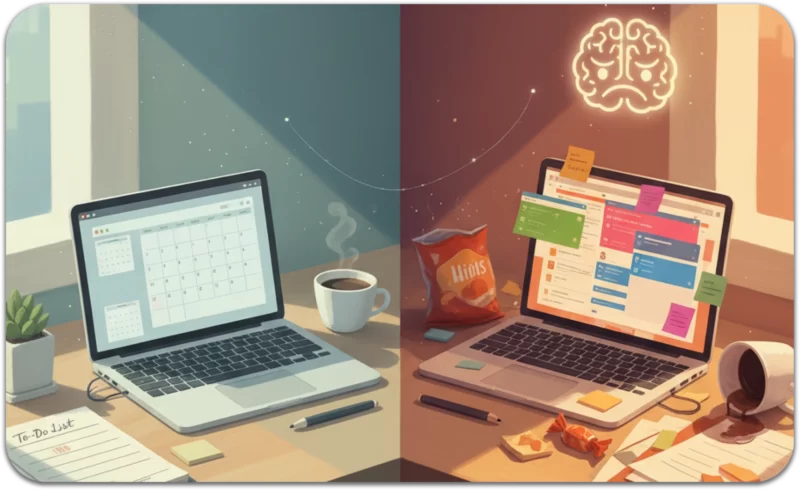
In our hyperconnected, always-on world, it’s become almost trendy to joke about being “bad at adulting.” If you’re struggling to remember to pay bills on time, keep your apartment clean, or be on time despite your best intentions, you might just tell yourself “you’re bad at adulting,†but there could be more to it.
What if these struggles aren’t character flaws or generational quirks? They could be signs of something more significant, like ADHD.
Attention-Deficit/Hyperactivity Disorder (ADHD) affects an estimated 7 million children and 6% of adults in the United States, according to the Centers for Disease Control and Prevention (CDC). Yet, countless adults remain undiagnosed, attributing their daily struggles to personal shortcomings rather than recognizing the signs of a condition that’s both treatable and manageable.
Below, we break down common misconceptions and easy-to-spot signs of ADHD and point you towards solutions. With intentionality and support from medication or therapists, like those from GoodTherapy, you can tackle your ADHD and thrive in your day-to-day life without feeling stifled. Â
Adult ADHD vs. Childhood ADHD: Key Differences to Know
When most people think of ADHD, they picture a young child bouncing off classroom walls, unable to sit still or focus. This stereotype has done significant damage to public understanding of the condition, particularly for women and adults who don’t fit this narrow profile.
Key Insight: The reality is that ADHD presents differently across individuals, genders, and life stages. While hyperactivity might be the most visible symptom in some children, many people with ADHD are primarily inattentive, appearing spacey, forgetful, or disorganized rather than disruptive.
Women and girls are particularly likely to be overlooked because they often internalize their symptoms. Instead of acting out, they might daydream, struggle with self-esteem, or develop anxiety as a secondary condition. In fact, recent research found that girls with ADHD are significantly more likely to be diagnosed later in life, if at all.
Adult ADHD rarely involves running around a classroom. Instead, it might manifest in much more covert and counterintuitive ways, such as:
Common Adult ADHD Manifestations:
-
Chronic procrastination and difficulty starting tasks
-
Time management challenges and chronic lateness
-
Difficulty maintaining organizational systems
-
Hyperfocus on interesting tasks while neglecting important ones
-
Emotional dysregulation and rejection sensitivity
-
Relationship difficulties due to forgetfulness or inattentiveness
Many adults discover they have ADHD only when their child is diagnosed, or when life demands exceed their coping mechanisms. Major life transitions such as starting college, beginning a career, or having children can overwhelm existing coping strategies and reveal underlying ADHD symptoms.
Understanding the signs of ADHD and challenging common stereotypes can provide you with answers to the questions you might be asking about yourself or your child. It can also encourage healthy conversations around ADHD in the space and encourage individuals to seek professional help for this treatable condition.
Debunking Common ADHD Myths
Despite decades of research, misconceptions about ADHD persist. Let’s address some of the most harmful myths so you can remain knowledgeable, informed, and confident that you might not just be “bad at adulting†but actually dealing with something more:
Myth: “ADHD is caused by bad parenting or lack of discipline.”
Fact: ADHD is a neurodevelopmental disorder with strong genetic components. Brain imaging studies show structural and functional differences in the brains of people with ADHD, particularly in areas responsible for executive function, attention, and impulse control.
Myth: “People with ADHD can’t focus on anything.”
Fact: People with ADHD often experience hyperfocus, which is intense concentration on tasks they find engaging. The challenge lies in directing attention to less stimulating but necessary tasks.
Myth: “ADHD medication turns people into zombies.”
Fact: When properly prescribed and monitored, ADHD medications can help normalize brain function rather than suppress personality. Many people report feeling “more like themselves” when their symptoms are well managed.
Myth: “Everyone has a little ADHD.”
Fact: While everyone occasionally struggles with attention or organization, ADHD symptoms are persistent, pervasive, and significantly impair daily functioning across multiple life domains.

How The Modern Digital Age Worsens Adult ADHD Symptoms
Our modern environment presents unique challenges for people with ADHD. The constant ping of notifications, the pressure to multitask, and the overwhelming amount of information we process daily can exacerbate ADHD symptoms or mask them entirely.
Being aware of the elements that can worsen or actually hide ADHD in yourself or others is key to addressing the condition at its core. Consider these modern stressors:
Information Overload
The average person consumes the equivalent of 174 newspapers’ worth of information daily.
Decision Fatigue
From choosing what to watch on streaming platforms to navigating endless product options online, we make thousands of decisions daily.
Always-On Culture
The expectation of immediate responses to emails, texts, and social media creates constant pressure and interruption.
While it can be hard to avoid an influx of information in our day-to-day, there are strategies for minimizing this overload and avoiding burnout, whether that’s by minimizing doomscrolling, taking breaks from social media, or talking to a licensed therapist from GoodTherapy.
3 Real-Life Adult ADHD Examples: Do Any Sound Familiar?
It’s important to talk with an expert before diagnosing yourself with ADHD. Still, recognizing common symptoms of ADHD is crucial for both recognizing you’re probably not “bad at adulting†and also finding the help you need. Consider these adult ADHD examples:
â€â€â€ The Overwhelmed Parent
Parents with ADHD are ones who probably always considered themselves “scattered” but managed well enough until having children. Now, managing schedules, activities, and household responsibilities feels impossible, and they’re constantly forgetting important items, running late, and feeling like they’re failing.
The Underachieving Professional
These adults are intelligent and creative but struggle to complete projects on time. They procrastinate until the last minute, then work frantically to meet deadlines. Despite their talents, they’re viewed as unreliable and may be passed over for promotions.
The Chronic Self-Critic
These individuals have always attributed struggles with organization and time management to laziness or lack of willpower. They’ve likely developed anxiety and depression, never realizing that difficulties might stem from ADHD, rather than not being equipped to be an adult.
Next Steps: How to Get Help for Suspected Adult ADHD
If you recognize yourself in these descriptions, approach the possibility of ADHD with curiosity rather than judgment. Having ADHD is nothing to be afraid of, and it doesn’t mean you’re broken or flawed: it means your brain works differently, and you may benefit from different strategies and support. Take the following next steps to set yourself up for success and discover the sides of ADHD you might not know:
Your ADHD Action Plan
Educate yourself:
Learn about ADHD from reputable sources like the National Institute of Mental Health or CHADD (Children and Adults with Attention-Deficit/Hyperactivity Disorder).
Track your symptoms:
Keep a journal of daily challenges and patterns. Note when you struggle most and what strategies help.
Seek professional evaluation:
A qualified GoodTherapy professional can conduct a comprehensive assessment and help you understand your symptoms in context.
Connect with others:
Online communities and support groups can provide valuable insights and reduce feelings of isolation.
Getting Adult ADHD Support: You Deserve Better Than “Just Trying Harder”
The narrative that you’re just “bad at adulting” is not only unhelpful but also potentially harmful if it prevents you from getting the support you need. Your struggles are real, and you deserve compassion, especially from yourself. Remember, recognizing ADHD is about understanding your brain so you can work with it rather than against it. With proper support, strategies, and sometimes medication, people with ADHD can thrive in all areas of life.
If you’re struggling with symptoms that might be related to ADHD, don’t hesitate to reach out to a mental health professional. Getting answers can be the first step toward a more manageable and fulfilling life where you can complete that to-do list, make decisions, navigate relationships, and more with ease.
Resources:
- Centers for Disease Control and Prevention: Data and Statistics on ADHD
- Centers for Disease Control and Prevention: Attention-Deficit/Hyperactivity Disorder Diagnosis
- Duke Psychiatry and Behavioral Sciences: Duke Center for Girls and Women With ADHD
- The Telegraph: Welcome to the information age — 174 newspapers a day
- National Institute of Mental Health
- Children and Adults with Attention-Deficit/Hyperactivity Disorder

Between high inflation rates, hiring freezes, tax rates, health complications, and more, life throws plenty of financial stressors at us, and it can be hard to make ends meet or save money. While managing your finances is important for your economic stability, it is also important for your overall well-being, as significant financial stress can negatively impact your mental health.
While many studies highlight the varying degrees and types of financial stress that different genders, ages, and income levels experience, there’s no denying that chronic or long-term stress can impact your mental and physical health. If money stressors negatively impact your well-being, you’re part of the 47% of Americans who feel the same.
Below, we break down what might be contributing to money stressors in your life and what you can do about them. Luckily, professionals at GoodTherapy are prepared to support you as you navigate the complicated world of finances.Â
Causes of Financial Anxiety
Identifying the source of your money-related stress is the first step in managing your financial and personal health. Everyone’s financial anxiety comes from a different set of sources, but there are a few common ones that might resonate with you:
- Job loss or reduced hours
- Caring for dependents
- Lack of financial literacy or education
- Lack of savings
- Debt or student loans
- Healthcare costs or other unexpected emergencies
- Separation or divorce
- Taxes, inflation, and economic recessions
- Food or housing insecurityÂ
When you’re experiencing financial stress, you may not realize the emotional or physical impacts it has on your well-being. By understanding the relationship between economic anxiety and mental health, you can take the first step in prioritizing your own wellness for your current and future self.Â
The Link Between Financial Stress and Mental Health
The relationship between financial and mental health is layered, but understanding their connections helps you prioritize both. Based on recent research, consider these key takeaways:
- Certain types of debt, like medical debt, tend to have the biggest impact on people’s mental health
- Financial stress can fuel anxiety, depression, and low self-esteem since struggling to meet financial goals can trigger feelings of shame, guilt, or inadequacy
- When someone is experiencing money-related stress, they are more likely to neglect their physical and mental health needs
- Money worries can impact physical functioning, like sleep quality and motivation
- Financial strain often influences relationships, leading to conflicts with partners or family and increasing feelings of isolation
Whether we want our finances and our mental health to be connected or not, the truth is this: understanding their relationship helps you have greater compassion for yourself and identify the best coping strategies.  Â
Why Comparing Yourself on Social Media Can Worsen Financial Stress & How to Stop
In this day in age, social media influences nearly every aspect of our lives — including our financial health. Many individuals scroll on social media apps to connect, shop, consume news, entertainment, and share information. Many also feel pressure to “keep up†with others on social media and overspend on items and experiences as a result. This social urge to not “fall behind†and consequently spend money can negatively impact your finances, economic stability, and overall mental health.
If you find yourself overscrolling and overspending on too many or low-quality products thanks to social media, the following are some tips to keep in mind so you and your wallet are happier:
- Financial products: Do you research on any brand that is promoting or selling financial products, and make sure they are legit and effective
- Get-rich-quick and ‘hacks’ for debt: Be wary of any fast wealth or miracle debt reduction schemes, as these are often scams
- Guaranteed results: Some products can promise a guaranteed result, but not many. Be careful not to over-trust products that promise a flawless reward and no potential losses.
How to Manage Money Anxiety
Everyone’s financial situation is different, by knowing some standard best practices for economic stability can help you feel more in control and manage your emotional well-being, too. Below are a few tips for staying afloat during stressful financial times:
- Identify what you can control regarding discretionary spending
- Seek ways to earn more money, whether that’s side jobs, asking for a raise, or selling some items
- Try to save money, even when funds are tight
- Seek support from financial and mental health experts
- Set realistic goals by breaking down big issues (like paying off debt or saving for a trip) into smaller, manageable steps
- Create and stick to a simple budget: track your income and expenses using an app or spreadsheet to give yourself a clearer picture of your finances
- Identify your financial triggers and avoid them, such as taking a break from social media or filtering your subscriptions to financial marketing noise
- Educate yourself about personal finance through articles, podcasts, courses, books, and more
When economic hardship occurs, there’s no one way to handle it. However, understanding your options will help you feel more comfortable with your economic state and protect your mental well-being — at the same time.

Tackle Your Financial Stress Today With Our Budgeting Template
Step 1: Evaluate Your Money Stress
- On a scale from 1 (low) to 5 (high), how would you rate your current financial stress?
- What’s causing you the most stress financially right now? (Examples: job loss, debt, bills, family needs, inflation, social media)
Step 2: Simple Monthly Budget Worksheet
| Category | Estimated Cost | Actual Cost | Notes/Feelings (stress triggers, successes, worries) |
|---|---|---|---|
| Income | |||
| Housing (rent, mortgage) | |||
| Utilities | |||
| Groceries/food | |||
| Transportation | |||
| Insurance/health | |||
| Debt payments | |||
| Savings | |||
| Other essentials | |||
| Discretionary fun | |||
| TOTALS: |
Step 3: Take Your First Action
- What’s one small change you can make this month to improve your finances or reduce stress? (Example: Cancel a subscription, set a spending limit, ask for support, take a social media break)
Step 4: Check In With Your Mental Health
- How is your financial situation making you feel emotionally or physically?
- Are you experiencing sleep problems, anxiety, or trouble focusing?
- What support or coping strategy could help you feel better? (Example: talking to a friend, seeing a therapist, practicing mindfulness)
Remember, this template is a starting point. Small steps can lead to big changes for your wallet and your well-being. If you’re feeling overwhelmed, GoodTherapy’s network of professionals is here to help.
Finding Affordable Support With GoodTherapy
When life’s stressors start to take a toll, sometimes tips and tricks aren’t quite enough. Seeking professional help from an experienced, licensed therapist can help you address your emotional needs and work through your financial issues.Â
Therapy is important, but to some, it may feel inaccessible due to costs. GoodTherapy’s cost resource helps you estimate how you can work therapy into your budget depending on factors like insurance, appointment regularity, and more. GoodTherapy makes it easy to find an in-network professional who works for you.
Plus, there are many options for federal funding opportunities that can ease your financial burden for therapy. For many federal funding options, therapy can be free or low-cost, but it depends on insurance, the specific program, location, and your eligibility. For example, the Substance Abuse and Mental Health Services Administration (SAMHSA) provides substance use and mental health services to people in need. Its Community Mental Health Services Block Grant (MHBG) provides funding to all U.S. states to provide community mental health services.Â
In truth, when it comes to economic stability, prioritizing your mental health is an important part of the puzzle. Managing stress requires a compassionate approach, and now is the perfect time to care for yourself so you can care for your money.
Read More: Ready to Get Support? Find a TherapistÂ
Resources:
Most Americans Are Significantly Stressed About Money — Here’s How it Varies by Demographic
Financial Stress: What Causes It and How to Cope
Understanding the Mental-Financial Health Connection
7 Ways to Manage Stress During Trying Times
How Social Media Affects Our Financial Health – The Good, Bad and Ugly
SAMSHA: Community Mental Health Services Block Grant

Emotions in college can be overwhelming and hard to navigate. College students face unprecedented pressures in today’s academic environment. Research from Frontiers in Psychology shows that academic stress may be a dominant stressor affecting college students’ mental well-being, while 37.1% of college students in the U.S. have been diagnosed with or treated for stress, with 31.1% experiencing anxiety. Whether you’re dealing with academic demands, social challenges, uncertainty about the future, or separation from family, it’s no wonder that big emotions like anxiety, anger, sadness, or stress can hit hard and fast.
Key takeaway: Learning effective college emotional regulation isn’t just helpful, it’s essential for academic success and long-term mental health. The good news? These skills can be learned and practiced.
Understanding College Emotional Regulation
College emotional regulation refers to your ability to recognize, understand, and effectively manage intense emotions during your academic journey. It’s important to keep in mind that feeling big emotions isn’t a sign of weakness, it’s a sign that you’re human! Unfortunately, if you don’t have healthy and constructive ways of managing those emotions, they can easily become overwhelming.
Recent studies point to an increase in psychological distress among graduate students, making it more crucial than ever to develop these essential life skills. According to research published in Trends in Psychology, mindfulness-based interventions can significantly improve emotion regulation and reduce perceived stress in students. Here are six evidence-based strategies for coping with overwhelming feelings, without bottling them up or letting them completely take over.
Step 1: Label the Emotions You Feel in College
When emotions feel huge, the first step in college emotional regulation is simply to name them. Ask yourself: Am I angry? Anxious? Overwhelmed? Lonely? Research shows that labeling emotions is the first step to help manage emotional discomfort, and it’s important to become familiar with different types of emotions.
A lot of times, just identifying what you’re feeling can start to bring clarity. You might also check in with your body, are you experiencing a tight chest, clenched fists, or racing thoughts? These physical sensations can offer clues.
Try saying: “I notice I’m feeling really anxious right now.” This separates you from the emotion and gives you space to respond. The more you practice this habit of naming your emotion, the more naturally it comes, and over time you start to understand yourself better and gain insight into your feelings.
Take Action: Ready to develop better self-awareness? Explore our comprehensive guide to identifying emotions for college students.
Step 2: Calm Your Body and Mind with Grounding Techniques
Regulating your nervous system when you start to notice a strong emotion can help prevent overreacting or mental spiraling. This is how you help your body and mind feel safe again.
To feel more grounded and calm, you can try:
- Breathing Exercises: Try breathing in for 4, holding for 7, and exhaling for 8
- Cold temperatures: Run cold water over your hands, put a cold washcloth on your forehead, or hold an ice cube for as long as you can
- Move your body: Stretch, walk, dance, anything to release the tension. Visualize the emotion working its way out of your body
You don’t have to fix the emotion, just slow it down and focus on your physical experience. Research indicates that students can learn various coping mechanisms through the adoption of healthy academic habits including emotional regulation.
Step 3: Express Emotions in College Instead of Bottling Them Up
Ignoring big emotions can sometimes make them even bigger. Instead of bottling them up, try releasing the feeling in healthy ways such as:
- Journaling what you’re feeling without censoring yourself
- Talking to someone you trust, a friend, counselor, or mentor
- Creating art that expresses your feelings
- Letting yourself cry if you need to
Emotions are energy. They need expression, not suppression. Understanding healthy emotional expression can be transformative for college students struggling with overwhelming feelings.
Take Action: Open a notes app and type what you’re feeling; no filter, just flow.
Step 4: Be Curious, Not Judgmental About Your Emotions
Sometimes when you feel a big emotion, you might be tempted to judge yourself by thinking “I’m too emotional!” Or judge the emotion by thinking “I hate feeling this way!” It’s important to acknowledge that all emotions, even uncomfortable ones, are messengers. Judging them or ourselves can leave us feeling much worse and make the emotion last longer.
Instead of judging, try getting curious and asking yourself:
- What triggered this feeling?
- What is this emotion trying to tell me?
- What do I need right now?
For example:
- Anger might mean your boundaries were crossed or that you feel something is unfair
- Anxiety might point to uncertainty or overestimating the possibility that something will go wrong
- Sadness could signal a loss or unmet need
Understanding your emotions helps you respond wisely instead of reacting impulsively. Research shows that emotional regulation is the foundation of who we are, how we think, and how we relate to the world around us.
Step 5: Build a Toolbox for Managing Emotions in College
Everyone should have a personal set of tools for emotional first aid. These are go-to strategies you can turn to when you’re feeling overwhelmed.
Some examples include:
- Listen to a calming playlist
- Doodle or color for 10 minutes
- Cuddle with a pet or a weighted blanket
- Go for a 15-minute mindfulness walk in nature and pay more attention to your surroundings than your thoughts (focus on the 5 senses)
- Repeat an affirmation: “This will pass. I’ve survived before; I can do it again.”
Write yours down and keep them visible, on your phone, wall, or notebook. Consider sharing this list with a friend or trusted person in your life who can help remind you of what works best for you.
Learn more about developing effective coping mechanisms that research shows can improve mental and emotional well-being.
Take Action: Write down 3 tools that help you when you’re stressed, save them in your phone or planner.

Step 6: Know When to Ask for Help
Sometimes emotions feel too heavy to deal with alone, and that’s okay. Asking for support isn’t a failure; it’s a sign of strength and resilience. Research estimates that 10% of university students experience significant social anxiety, and many more struggle with various emotional challenges.
You may have compassionate friends or family members, but it can also be helpful to get support from a mental health professional who is trained to know exactly how to help.
If you feel stuck or overwhelmed, you may want to talk to:
- A therapist
- The college counseling center
- A support group
- A helpline or online mental health service
There are lots of resources out there, you don’t have to go through this alone.
Ready to Take the Next Step? Find qualified mental health professionals who specialize in college student issues through our verified therapist network.
FAQ: College Emotional Regulation
What is emotional regulation and why is it important for coping with emotions in college?
College emotional regulation refers to the ability to recognize, understand, and manage intense emotions effectively during your academic journey. It’s crucial because unmanaged emotions can impact academic performance, relationships, and mental health. Research shows that students with better emotional regulation skills experience less anxiety and depression.
How do I know if my emotions are normal or if I need professional help?
It’s normal to experience a wide range of emotions in college. However, seek professional help if emotions consistently interfere with daily activities, academic performance, relationships, or if you’re having thoughts of self-harm. Persistent feelings of hopelessness, inability to function, or overwhelming anxiety warrant professional support.
What are the most effective grounding techniques for dealing with emotions in college?
Evidence-based grounding techniques include: 4-7-8 breathing exercises, progressive muscle relaxation, cold water therapy, mindful walking, and the 5-4-3-2-1 sensory technique (5 things you see, 4 you hear, 3 you touch, 2 you smell, 1 you taste). These help regulate your nervous system quickly.
How long does it take to develop better emotional regulation skills?
Developing emotional regulation skills is an ongoing process. Many students notice improvements in 2-4 weeks with consistent practice, but mastery can take several months. The key is regular practice and patience with yourself as you learn these new skills.
Can college counseling centers really help with emotional regulation?
Yes, college counseling centers are specifically equipped to help students with emotional regulation. They offer individual therapy, group sessions, workshops, and crisis support. Many centers also provide specialized programs for common college issues like anxiety, depression, and stress management.
What should I do if my emotions are affecting my academic performance?
First, implement the six steps outlined above. If problems persist, contact your college counseling center, speak with academic advisors about accommodations, consider therapy, and don’t hesitate to reach out to professors for support. Many colleges have resources specifically designed to help students balance emotional well-being with academic success.
Final Thoughts on Mastering College Emotional Regulation
Big emotions are normal, they come and go, just like waves. The goal isn’t to never feel them; it’s to learn how to ride the wave without being pulled under or overwhelmed by it. Research consistently shows that students who develop effective stress management and emotional regulation skills have better academic outcomes and mental health.
Next time your feelings feel “too much,” come back to this process: Label it. Calm yourself. Express it. Get curious. Cope. Get support.
Remember: developing college emotional regulation is a skill that will serve you far beyond your academic years. These techniques become the foundation for lifelong emotional wellness and resilience.
Ready to start your journey toward better emotional health? Our network of qualified therapists specializes in helping college students develop these essential skills. Find a therapist near you today.
References
Linehan, M. M. (2015). DBT skills training manual (2nd ed.). New York, NY: Guilford Press.
External Research Sources:
- Frontiers in Psychology. (2022). Academic Stress and Mental Well-Being in College Students: Correlations, Affected Groups, and COVID-19
- Research.com. (2025). 50 Current Student Stress Statistics: 2025 Data, Analysis & Predictions
- Trends in Psychology. (2021). Emotion Regulation, Stress, and Well-Being in Academic Education: Analyzing the Effect of Mindfulness-Based Intervention

Let’s be real: tuning into the latest headlines or scrolling your feed during this political moment can feel like a punch to the gut. If you’ve noticed your stress levels rising, your mood dipping, or a persistent knot in your stomach from the political climate, you’re definitely not alone. Across the country, people are grappling with anxiety, worry, and even grief.
Here’s the truth: feeling overwhelmed right now is entirely normal. The nonstop stream of heated debates, policy shifts, and divisive rhetoric can wear on anyone. It can start to feel like it’s shaping your identity, safety, and sense of hope. That’s why it’s so important to create space for resilience, not to ignore what’s happening, but to protect your mental health so it doesn’t spiral under the weight of it all.
This blog is here to do more than just validate your emotions, it’s a resource to empower you, especially if you’re part of an underrepresented group struggling to find resilience amid the noise. Below, you’ll find practical ways to protect your peace, nurture your well-being, and tap into culturally competent GoodTherapy experts who understand exactly where you’re coming from.
Current Events Causing Widespread Political Stress
Trying to keep up with the U.S. political scene right now can feel like running a marathon with no finish line in sight. No matter where you fall on the spectrum, the back-and-forth and the real-world changes behind the headlines are hitting home in ways many of us can’t ignore
If you’re feeling anxious, overwhelmed, or emotionally drained, it’s a completely valid response. The mounting list of policy shifts isn’t just political jargon; it’s reshaping lives in real, often painful ways, especially for marginalized communities. Here’s just a snapshot of the realities many are navigating right now:
- Natural Disasters Drive Stress Higher: Catastrophic events like the recent floods in southern Texas have caused loss of life, widespread damage, and lasting mental health impacts. They also expose political tensions, as underfunded infrastructure and delayed emergency responses leave some communities feeling neglected or targeted.
- A Spike in Hate, Discrimination, and Violence: No matter where you land on the political spectrum, most people can agree that slurs and targeted violence are not okay. However, recent increases in hate crimes, racial slurs, and other violence against groups like Muslims, Jewish people, and other minority groups are taking a toll.
- Underrepresented Communities Are Losing Support: Recent U.S. Department of Agriculture (USDA) program cuts and tariffs are placing Black farmers under new pressures, and federal funding for Black-led non-profits continues to shrink.
- LGBTQ+ and Other Groups Are Seeing Critical Funding Dry Up: When the NIH halted funding for LGBTQ+ health, gender identity, and research, it didn’t just cut programs, it left entire communities facing uncertainty and frustration.
- Women’s Health Is in the Crosshairs: New laws restricting reproductive services, contraceptives, and even routine health screenings are making it more challenging for women to get the care they need, fueling anxiety and frustration.
- Immigrants Face Uncertain, Harsher Realities: Recent crackdowns and shifting policies have left many immigrants, including those with clean records and proper documentation, feeling unsettled, questioning what “home†really means right now.
Widespread worry is evident, and the shared stress many feel isn’t imaginary: it’s a natural response to real, lived experiences in a climate that often feels unsteady. Because of this, acknowledging the mental and emotional weight so many carry is key for the healing, support, and care you need.
2025: The Year of Political Anxiety
There’s no denying that experiencing discrimination and a tense political climate can take a serious toll on your mental health. The stress, anxiety, and even grief many people are feeling right now isn’t just “in your headâ€: it’s a real, lived experience. But political burnout isn’t exclusive to any one group: recent numbers show nearly half of Gen Z, Millennials, and Baby Boomer populations are feeling it, too.
Maybe you’ve noticed your mind racing, a sense of restlessness, or an energy crash that makes even simple tasks feel impossible. Below are some anxiety and depression symptoms you might be experiencing:
- Excessive worry
- Restlessness
- Feeling on edge
- Fatigue
- Difficulty concentrating
- Other physical symptoms like dizziness, headaches, and digestive issues
If this list feels a little too familiar, you’re not alone and you’re not powerless. Naming political anxiety is a key first step toward caring for your mind and body. From there, support and effective strategies are within reach.
Strategies for Coping With Political Anxiety
While the recent political landscape has been triggering and upsetting for many people, there is hope: learning practical coping strategies to combatl grief and stress is critical for your emotional well-being. Try the following:
- Acknowledge your distress and don’t ignore your feelings
- Set realistic goals around news consumption so you can better understand your personal limits and avoid becoming overwhelmed
- Limit media time, and try to avoid doomscrolling in an unproductive way
- Lean on your community, chances are, friends, family, and others are navigating the same mental health challenges
- Find and create moments of joy: while it’s good to acknowledge negative feelings, making sure you make time to recognize happy moments can give you new perspectives
These coping strategies are great tools to use when you’re feeling overwhelmed. Still, professional help from culturally competent therapists can give you an added level of support and guidance so you can be resilient in the face of political stress.Â

The Value of Culturally Competent Therapy Today
Political anxiety doesn’t exist in a vacuum. It’s deeply shaped by your unique experiences, identity, and how the world responds. The emotional toll of today’s climate can be heavy, especially for those navigating discrimination, marginalization, or the chronic stress of feeling unsafe or unseen. That’s why finding the right therapist matters.
If you’ve ever felt like your identity was misunderstood, minimized, or overlooked in a therapy session, it may be a sign the support wasn’t truly aligned with your lived experience. Culturally responsive therapists are trained to understand the nuances of race, culture, gender, sexuality, religion, and more, all the factors that shape how you experience the world.
Here’s why that kind of care is so essential right now:
- You feel genuinely heard and safe, which is foundational to healing.
- You can unpack the complex impact of systemic issues and discrimination without having to educate your therapist first.
- You get support that’s tailored to your life, not a one-size-fits-all approach.
In a political landscape that often feels unpredictable or hostile, having someone who truly understands your reality can be the difference between feeling alone and feeling empowered. If you’re ready to connect with a therapist who truly sees you, start with the GoodTherapy Help Me Find Care quiz. It asks a few key questions about your needs, preferences, and insurance to help match you with the right provider.
Navigate Political Stress With GoodTherapy
The U.S. political climate can feel relentless, especially for those facing discrimination or systemic barriers. From funding cuts and limited healthcare access to changes in immigration policy, the constant stream of difficult news can take an emotional toll.
But support is available. Culturally competent therapists and supportive communities like GoodTherapy can help you process what you’re feeling and build resilience. Prioritizing your mental health is one of the most powerful forms of self-care. Why wait to find support?
Read More: Want to Learn More About How Therapy Can Help? Explore More
Resources:
Capital B News: Black Farmers Brace for Trump’s Tariffs While Navigating USDA Office Closures
The Observer: Black-Led Organizations Vital to Economic Growth But Remain Underfunded: Report
The Association of American Universities: New Brief Finds NIH has Canceled $1.9 Billion in Grants
KFF Health News: Major Federal and State Funding Cuts Facing Planned Parenthood
Pew Research Center: Americans’ Views of Deportations
Forbes: Election Anxiety: 61% Say Presidential Election’s Impact on Mental Health Is Negative
Medium: Managing Political Anxiety: Simple Strategies for Coping

We all carry stories, internal messages about who we are, what we deserve, and what’s possible for us. Many of these beliefs were formed long before we had the language to challenge them. They were shaped by early experiences, family patterns, cultural expectations, and sometimes, trauma.
These stories become core beliefs, deep, automatic assumptions that influence how we see ourselves, others, and the world. Some core beliefs empower us. Others limit us. But regardless of their origin, they significantly affect our emotional health, relationships, and ability to respond to life’s challenges.
This article explores how core beliefs develop, how they impact well-being, and how five resilience-building principles can help individuals identify, challenge, and rewrite these deeply rooted narratives.
What Are Core Beliefs?
Core beliefs are foundational thoughts that guide how we interpret situations and respond to stress. They can be conscious or unconscious, helpful or harmful. Research in cognitive behavioral therapy shows that these deeply held assumptions significantly influence our emotional responses and behavioral patterns.
Common limiting core beliefs may include:
- “I’m not good enough.”
- “If I fail, I am a failure.”
- “People always leave.”
- “It’s not safe to show emotion.”
- “I have to put everyone else’s needs before mine.”
Often, these beliefs originate from environments where emotional needs were unmet, where survival, shame, or silence took priority over affirmation, safety, and expression. While these beliefs may have once been protective, they often become barriers in adulthood.
How Core Beliefs Affect Mental Health
Negative or rigid core beliefs can silently sabotage well-being by shaping behaviors, decisions, and interpretations of events. They show up in ways like:
- Anxiety: “I have to stay in control or something bad will happen.”
- Depression: “I’m unlovable. Nothing will ever get better.”
- Relationship struggles: “If I let people get close, I’ll get hurt.”
- Burnout: “My worth is based on how much I do for others.”
- Avoidance: “It’s better to be alone than risk being rejected.”
These beliefs distort reality and often go unchallenged. But they can be rewritten, through intentional self-reflection, connection, and growth. Core beliefs research demonstrates that identifying and modifying these deep-seated assumptions is crucial for therapeutic success.
Using the 5 Resilience Principles to Shift Core Beliefs
1. Self-Awareness & Emotional Regulation
“Name it to tame it.”
The first step is recognizing when a core belief is at play. Heightened emotions, shame, fear, rage, hopelessness, often signal an internal story is activated.
Ask:
- “What am I telling myself right now?”
- “Is this belief true, or just familiar?”
- “Where did I learn this, and is it still serving me?”
Practices like deep breathing, journaling, or mindful pauses help bring space between emotion and reaction. When we understand the “why” behind our emotional patterns, we create space for more empowered responses.
Self-regulation is fundamental to building emotional resilience and breaking free from automatic patterns that no longer serve us.
 Take Action: Start a daily emotion check-in. Set a phone reminder for three times daily and ask yourself: “What am I feeling right now?” and “What story am I telling myself about this situation?” This simple practice builds the self-awareness needed to recognize core beliefs in action.
2. Adaptive Thinking & Problem-Solving
“Challenge the thought. Change the outcome.”
Once aware of a limiting belief, explore alternatives:
- “Is there evidence this belief isn’t entirely true?”
- “Have I ever experienced something that contradicts it?”
- “What would a more balanced or compassionate belief sound like?”
For example, “I always mess up” might shift to “I’ve made mistakes, but I’m learning and growing.”
This process, often called cognitive restructuring, replaces harsh inner narratives with more realistic, supportive ones. Rational Emotive Behavioral Therapy (REBT) specifically focuses on identifying and reshaping these core beliefs that drive emotional distress.
📝 Try This Exercise: Choose one limiting belief you’ve identified about yourself. Write it at the top of a page, then create three columns: “Evidence For,” “Evidence Against,” and “Balanced Alternative.” Spend 10 minutes filling out each column. Often, you’ll discover the evidence against far outweighs the evidence for your limiting belief.
3. Connection & Support Systems
“You don’t have to do this alone.”
Many limiting beliefs are born in isolation or invalidation. Healing often happens in relationships that feel emotionally safe.
- Sharing vulnerably with a trusted friend
- Participating in support groups or community spaces
- Working with a therapist or mentor
- Being around people who reflect back your value and worth
Relational connection helps counter the belief that we are unworthy, alone, or “too much.” It reinforces that healing doesn’t happen in a vacuum, it happens when we are seen, heard, and accepted.
Building resilience through connection is one of the most powerful ways to challenge beliefs rooted in early experiences of disconnection or trauma.
Connection Challenge: This week, reach out to one person who makes you feel valued and accepted. Share something vulnerable, perhaps a struggle you’re facing or a belief you’re questioning. Notice how being truly seen and supported challenges any beliefs about being “too much” or unworthy of care.
4. Health Routines & Self-Care
“Your habits reflect your beliefs.”
Daily habits often mirror our deepest assumptions. If rest feels indulgent, perhaps there’s a belief that “my worth depends on productivity.” If boundaries feel selfish, perhaps the message is “my needs don’t matter.”
Rewriting core beliefs isn’t just mental, it’s behavioral. Every time we:
- Rest when tired
- Say no to something overwhelming
- Eat nourishing food
- Move our bodies kindly
- Seek joy without guilt
…we send a new message to our nervous system and inner world: “I matter. I am enough. I am allowed to take care of myself.”
Over time, these small acts rewire old scripts and build a foundation of sustainable well-being. Emotional intelligence plays a crucial role in recognizing and responding to our authentic needs.
Weekly Self-Care Audit: Each Sunday, review the past week and identify three moments when you honored your needs (or could have). Ask: “What belief drove my choice to care for myself or neglect myself?” Then plan one specific self-care action for the coming week that challenges any limiting beliefs about your worthiness.
5. Purpose, Meaning & Future Vision
“You are not your past. You are what you choose to believe next.”
Core beliefs are not destiny, they’re stories. And stories can be edited.
Begin asking:
- “What kind of person do I want to become?”
- “What beliefs would support that version of me?”
- “What actions can I take today to live into that new belief?”
If the goal is to believe “I am capable,” consider trying something new, even if small. If the desired belief is “I’m worthy of love,” start with allowing someone to care for you or asking for what you need.
Each step moves you closer to a new narrative, one rooted in truth rather than fear or survival. Values clarification can be particularly helpful in identifying what truly matters to you beyond old belief systems.
Future Self Visualization: Spend 15 minutes writing about the person you want to become in one year. What would they believe about themselves? How would they treat themselves and others? What actions would they take daily? Then identify one small action you can take today that aligns with this future version of yourself.

The Science Behind Core Belief Change
Recent advances in cognitive behavioral therapy research have shown that core beliefs can be effectively modified through structured therapeutic interventions. Studies demonstrate that when individuals learn to identify and challenge their automatic thoughts and underlying beliefs, they experience significant improvements in mood, anxiety, and overall psychological well-being.
The key is understanding that these beliefs, while deeply rooted, are not fixed. They developed through experience and can be changed through new experiences, insights, and intentional practice.
Your Beliefs Can Change, And So Can You
No one chooses the messages they’re given as a child. But every person has the power to choose which beliefs they carry into the future.
Core beliefs are powerful, but not permanent. With awareness, support, and consistent action, you can shift the internal script from one of limitation to one of possibility.
Start by noticing. Then by challenging. Then by choosing something new.
And remember: rewriting the story doesn’t mean the old story didn’t matter, it means you’ve decided you matter more.
Ready to Transform Your Core Beliefs? If you’re feeling overwhelmed by limiting beliefs or want professional guidance in rewriting your inner narrative, consider working with a qualified therapist. Find a therapist near you who specializes in cognitive approaches and core belief work. You don’t have to navigate this journey alone.
Key Takeaways
- Core beliefs are changeable: Despite their deep roots, these fundamental assumptions can be identified and modified with the right approach
- Emotional regulation is foundational: Learning to recognize when beliefs are activated creates space for conscious choice
- Connection accelerates healing: Supportive relationships provide the safety needed to challenge long-held assumptions
- Small actions create big changes: Daily habits that align with new beliefs gradually rewire old patterns
- Professional support helps: Therapists trained in cognitive approaches can guide the process of core belief transformation
If you’re struggling with limiting core beliefs that impact your daily life, consider reaching out to a qualified mental health professional. Finding good therapy that focuses on your individual needs can provide the support and tools necessary for lasting change.
📞 Take the Next Step: Ready to work with a professional? Visit GoodTherapy.org’s therapist directory to find qualified mental health professionals in your area who specialize in cognitive behavioral therapy, core belief work, and resilience building. Many offer initial consultations to help you find the right fit.
 Absorbing the constant stream of startling headlines, news sources, political tensions, and global issues can feel overwhelming some days –– but we often can’t look away. If this sounds like you, you’re not alone. Most people (83% of adults) today experience stress about the future of the U.S. and news overload. If your mental and overall health are feeling impacted by the modern age’s constant information flow, this guide helps you recognize your doomscrolling habits and protect your well-being.
What Is Doomscrolling?
Do you find yourself scrolling through headline after news clip after social post that highlights distressing news, even when you know you’re tired or overwhelmed? Many people make doomscrolling a part of their daily life, but it’s taking a toll on our mental health as a society. Defined as constantly consuming distressing news, “doomscrolling†happens because upsetting news triggers your brain’s tendency to scan for danger and remain hypervigilant, even when your mental health is hurting.
You might already have a bad doomscrolling habit and feel its mental effects, but there are ways you can recognize and combat this behavior and better cope with news-related anxiety. As local, national, and global political and cultural landscapes continue to experience tensions and distress, protecting your mental health becomes that much more important.
News Overwhelm: The Mental Health Effects of Doomscrolling
Our self-preservation instinct to absorb more and more news is natural, but that doesn’t mean it isn’t unhealthy if left unchecked. Doomscrolling has proven impacts on society’s mental health, and this issue is growing year by year. A recent American Psychiatric Association study found that in 2024, 43% of adults felt more anxious than they did in both 2023 and 2022.
After doomscrolling, you probably feel anxious, but you might also experience other negative impacts. The following are just a few examples of ways your body reacts when you constantly consume distressing news on social media, television, and other publications:
- Sleep Procrastination: Doomscrolling in the evening can prevent you from getting enough healthy sleep as the scrolling becomes more and more unproductive and upsetting. Your mood and cognitive function might be impacted the next day.
- Worsened Social Connections: Spending significant time and energy scrolling through upsetting news can deplete your mental load, so you have less energy to recharge with friends and family.
- Less Exercise and Sunshine: When you doomscroll inside for hours on end, your body is often sedentary and does not get the exercise and vitamin D it deserves — which can impact your mood and mental well-being.
Staying informed on current events and the news is indeed important, and you might find great value in connecting with others and joining meaningful conversations on social media. Yet, we know that finding the balance between harmful habits and productive change can be challenging. If you are educated on the mental health impacts of scrolling, news coverage myths, and healthy habits for media consumption, you can prevent the negative effects of doomscrolling before they snowball.
Read More: Want to Learn More About the News Cycle and Mental Health? Read Our Guide
Myths About News Consumption and Mental Health: What to Know
You might not be able to completely escape the news, but you can be educated on how to absorb information in a productive, healthy way. As you work to stay informed about current events, keep in mind these three common myths about news consumption:
- Myth 1: Staying Informed Requires Constant Attention: You don’t have to continually consume all media to remain educated. In fact, you can be smart and thoughtful about how and when you take in the news.
- Myth 2: All News Is Complete: News headlines, articles, and stories don’t paint a complete picture. Absorb different perspectives and sources, but know that no piece of news has all the information.
- Myth 3: You Can’t Take Breaks: While it might feel like you have to be in the thick of the news each day, protect your well-being by giving yourself time to learn, space to absorb, and time to reset so you stay healthy.
With these tools, you can balance staying engaged in current events and prioritizing your mental health.
Tips for Managing News Anxiety
A stressful news event might affect you differently than it does someone else. Whether it’s wars, high gas prices, changing healthcare regulations, stories of racism and discrimination, or general violence, the news cycle can trigger different responses in different people. When you’re reading and watching news, keep these general guidelines in mind so you can protect your well-being while you stay informed:
- Be Aware of Your Limits: Taking breaks, muting news, or unfollowing distressing accounts can all help you pace yourself.
- Participate in Your Community: Make an impact by investing time, money, or resources into others for a meaningful cause.
- Use Your Voice: Speak up and act on injustices and distressing events in the world.
- Don’t Neglect Your Feelings: Learn healthy coping mechanisms for managing your feelings, and explore therapy when you need extra support.
- Protect Your Health: You can’t be the best version of yourself without prioritizing your physical, mental, spiritual, and psychological health. Find ways to foster these different components in your life.
Sometimes, news anxiety and overwhelm can feel especially personal and triggering. If you’re seeking support from someone who understands your unique experiences, identities, and feelings, GoodTherapy has a handful of culturally competent professionals prepared to help you navigate mental health challenges related to intersectional identities.
How Therapy Professionals Can HelpÂ
As news and information continue to circulate, you might need the tools to balance being informed with staying mentally healthy. By recognizing the dangers of doomscrolling, keeping general tips in mind, and seeking professional help, you can limit doomscrolling and spend more time making a difference.Â
GoodTherapy’s trusted, patient-centered therapists are prepared to help you navigate through whatever mental health needs you have, including achieving a doomscrolling detox. Find the right therapist for you through GoodTherapy and know that you are not alone: there is help for you.
External Sources:
American Psychological AssociationÂ
 Learning how to manage stress effectively becomes essential as we navigate life’s constant changes. This gentle stress management approach through self-compassion offers a sustainable path forward.
As the gift of nature and renewal surrounds us, there’s something comforting about its predictability amidst change. The coolness of the mornings, gentle unfurling of leaves, the first brave blooms pushing through soil—these reliable transformations offer reassurance even as everything shifts.
I’ve been reflecting on how we might find similar comfort in new situations that arise, especially during stressful moments or times in our lives. When uncertainty feels overwhelming, where can we discover that same sense of grounding?
This contemplation has drawn me deeper into exploring our inner worlds. Don’t you find that sometimes our minds also crave that same sense of renewal?
Understanding Stress as a Universal Human Experience
As life happens and we begin to feel the feels, it’s a time to begin to be honest about something we all navigate in our own unique ways: Stress.
Even though stress can feel so intensely personal – that knot in your stomach, the racing thoughts that keep you up at night – it’s also something that connects us all. We might not always see it in each other, but stress is a shared part of the human experience.
Instead of chasing an idea of a completely stress-free life (which can feel like another thing to stress about!), let’s explore a different path together. What if we learned to relate to stress management in a new way?
How to Manage Stress and Shift Your Perspective on it
SHIFT YOUR PERSPECTIVE:
- Talk to ourselves with more kindness: Gently shifting those harsh inner critiques.
- Really listen to what our emotions are telling us: Honoring our needs authentically.
- Build an inner strength and move through stressful times: Learning to live alongside stress with more ease.
At the heart of it, we’re all figuring this out as we go.
Self-Compassion Techniques for Stress Relief
Have you ever noticed how our minds can sometimes be our own toughest critics when we’re feeling stressed? It’s like that inner voice can get really loud and, at times, not very helpful.
Gently reframing your negative thoughts can be empowering and supportive to manage stress and build self-compassion.
For those facing particularly challenging times, these crisis management strategies can provide additional support alongside self-compassion practices.
Practical Examples of Self-Compassionate Inner Dialogue
For instance, if you catch yourself thinking: “I can’t just can’t handle all of this.”
Maybe you can try shifting that to something like: “This is a really challenging time, and I’m feeling it. But I also know I have inner strength and I’ll find a way through.”
Or when those tough days feel overwhelming and you think: “This is absolutely the worst day ever.”
Perhaps you can also acknowledge: “This is a really difficult moment, and it’s okay to feel this way. Even in tough times, there might be small things I can still appreciate.”
The Balance of Gentle and Fierce Self-Compassion
It’s not about pretending everything is perfect. It’s about taking a glimpse at living as if and finding a slightly different, more self-compassionate lens to look through. Self-compassion for anxiety and stress isn’t just about being gentle with ourselves when things are tough; it also is about a deeper inner strength.
That gentle part is about acknowledging when we’re feeling drained or overwhelmed, allowing ourselves to feel it without judgment. It’s about giving ourselves permission to rest and recharge, rather than pushing through until we burn out.
But then there’s that fierce side – the courage to set boundaries, to say “no” to things that aren’t serving us, to really honor our own needs and protect our well-being.
Why Self-Compassion Works for Stress Management
Self-compassion isn’t a magic wand that makes stress disappear. Self-compassion is an act of real self-care that helps us navigate the challenges of life with a little more grace and a lot more inner strength. It lightens the load and reminds us that we’re worthy of kindness.
Embracing a Compassionate Approach to Mental Wellness
As we embrace this season of growth and renewal, I truly hope you’ll join me in exploring what a compassionate approach to stress might look like for you.
It’s about nurturing well-being from the inside out, acknowledging the very real challenges we all face, and remembering that we deserve our own understanding and care along the way.
Explore More Resources:
- How stress management leads to stress reduction techniques
- Knowing your stress threshold and limits
- Working with your inner critic to reduce anxiety
- Research shows that chronic stress can impact both physical and mental health.
- Studies on self-compassion demonstrate its effectiveness for emotional well-being.
- Various stress management techniques for better health.
 Frustration. A feeling we often view as something to flee from! While frustration can be an uncomfortable feeling, it is also an important one. It can motivate us . . . to work harder, practice longer, and go after our goals. The downside? It doesn’t feel good. Extreme cases of frustration can even make us feel the need to “give-up†or “shut downâ€. What picture comes to mind when you think of frustration? A cartoon with smoke coming out of its ears? A sad emoji face? Did you know that there are actually MANY faces of frustration?! Take a moment and think about what you may look like when you’re feeling frustrated. How about your spouse or child . . . do you all have the same “lookâ€, or is it different?
Feelings of Frustration
Just as we may LOOK different when we feel frustrated, we also FEEL differently. To understand how your child is feeling, take a look at the emotions that may arise for them (tip – consider which of these come up for you): Anger Sadness Helplessness Panic Annoyance Anxiety We are all human. We all get frustrated. Recognizing these frustrations and using strategies creates an opportunity for you to model positive coping skills for your child. Believe it or not, they are looking at us and watching our reactions all the time! Take a moment to reflect: â— How do you cope with your child’s frustrated feelings and reactions? â— Do you tend to catastrophize or/and over empathize with your child’s problem? â— Are you able to control your own reactions? Remember, children are incredibly perceptive. If you have difficulty holding their frustrated feelings, they will too! Help your child manage their frustrations by talking about what it looks like and feels like for them. Share what you notice when they are frustrated . . . does their reaction come in the form of a shut-down, outburst, avoidance? Help them put a name to their feelings and then explore the strategies that can help them feel more calm and grounded in the moment.
Coping Strategies
So what are some coping strategies to model? Here are a few simple, developmentally appropriate tools that you can use to support your child (and yourself) to handle day-to-day challenges. â— Take a deep breath (soup breath & belly breath are popular with my kiddos) â— Walk away â— Run a lap â— Name it to Tame it! – Dr. Daniel Siegel â— Drink water or eat a snack â— Approach situations with a growth mindset (Changing “I can’t do this!†to “I can’t do this, yetâ€) â— Support your child to consider the worst-case scenario AND how likely (or unlikely) that is to happen.
Practice, Practice, Practice
To help your child use these strategies when they need them most, they will need to practice them (during non-stressful times). You wouldn’t run a race without training first. Similarly, to help your child access calming strategies when they need them most, they will need to strengthen their emotional muscle memory! Remember, frustration is not the enemy or something to eradicate. It is part of what makes us human. When frustration rears its head for your child (or you ;)) just remember to notice, name and soothe.