 I remember being a teen in counseling. I remember crossing my arms and sitting on the couch in silence for three sessions, listening to the therapist talk at me and ask questions. Eventually the provider conceded that he was probably not the right fit for me, and I was released from the requirement of attending counseling.
As with most teens, I was brought to therapy without choice. I was expected to divulge my internal processes to a stranger at a stage of life where I truly believed all I needed was to handle problems myself and get advice from friends I trusted.
This is a common scenario for teens; it is developmentally appropriate for people in this age range to pose some resistance to talking with a therapist. Maybe talking isn’t always the right answer for teens. Just outside the realm of talk-based therapies are the expressive arts therapies, which can engage teens utilizing their developmental needs and level of independence to address a variety of issues in counseling.
Teens in Therapy: Why Resistance Occurs
Youth ages 12 to 19 are in a unique stage of development: the “Who am I?†and “What can I become?†phase of life. Erikson labeled this stage identity versus role confusion, and it contains the primary tasks of self-discovery and launching independently into adulthood. During this time, teens experience both internal and external developmental transitions that reach all areas of life: social, emotional, relational, physical and in self-identity. It is in the stretch from middle school to after high school that teens pull away from dependence on adults and begin figuring things out for themselves.
Though an important process, this individuation can pose a natural challenge for teens entering counseling. Teens might appear resistant to talking with an adult and may not be inclined to seek help. Also, teens are generally not voluntary clients; they are brought in by caregivers, court, teachers, or other authority figures. And once in counseling, teens may view the provider as just another adult getting in the way of their attempts at autonomy.
Whether it is part of the resistance process or other factors, teens can also present patterns of overall denial of their current feelings and/or circumstances. When asked how they are feeling, a common response might be, “I’m fine†or “I don’t knowâ€. Denial-based resistance shows up while counseling teens for many reasons, including:
- Lack of trust in provider
- Limited insight due to age and brain development
- No perceived benefit for sharing and emotional avoidance
What Are the Expressive Arts Therapies?
The expressive arts therapies introduce action and imagination into counseling and psychotherapy (McNiff, 1981; Malchiodi, 2005). The “action†introduced can come from a variety of creative sources, including art, dance and movement, music, poetry and writing, drama, or any combination of these.
Used in conjunction with or apart from talk-based counseling, the expressive arts therapies offer teens a variety of ways to engage in counseling while meeting their developmental needs and honoring their ways of interacting with the world.
Used in conjunction with or apart from talk-based counseling, the expressive arts therapies offer teens a variety of ways to engage in counseling while meeting their developmental needs and honoring their ways of interacting with the world.
Expressive arts therapies are founded on the belief that engaging in creativity is not only healing, but provides avenues for processing feelings, solving problems, increasing insight, coping with emotions and thoughts, gaining self awareness, and connecting with others directly or indirectly. They focus on an integrative approach, working with and acknowledging all parts of a person: physical, social, emotional, cognitive and spiritual (Malchiodi, 2005). The expressive arts therapies are also accessible to all, requiring no formal arts training or experience.
Facilitated by specially trained, certified, and licensed therapists, the expressive arts therapies include:
- Dance/movement therapy
- Art therapy
- Music therapy
- Drama therapy and psychodrama
- Poetry therapy
- Intermodal expressive arts therapy
How Expressive Arts Therapies Can Help Reach Teens
The expressive arts therapies are adaptable to all needs and age ranges but may be especially appropriate for teens due to their life stage. As teens experience changes as they grow, one of the main goals of expressive arts therapies is to assist with integration of social, emotional, physical, and cognitive aspects of being while offering support in coping and expressing feelings.
Additionally, the expressive arts therapies work in action-orientated modalities which invite the teen client to participate actively rather than passively. This is a contrast to traditional talk-based therapies—the teen will be offered the act of doing rather than listening to a therapist talk or being expected to answer questions for an hour. The action of completing something, whether it be art, music, dramatic action, or writing, can help a teen feel accomplished and empowered in a counseling session.
Engaging in the expressive arts therapies also speaks to teens biological need for independence. Expressive arts therapies can be done independently or with others. For teens seeking freedom to work through troubles without adult assistance, the expressive arts offer teens a compromise.
Working with art in therapy can give teens a safe distance from the therapist, especially in a newly established relationship. The chosen medium can act as a bridge between teen client and therapist and may allow the teen to reveal or communicate more thoughts and feelings in a way that feels safe. Because there is no wrong or right way to engage in expressive arts therapies, teens have autonomy to choose the amount of effort and engagement they put into the session.
Since teens have a newly developed capacity for abstract thought, working through the expressive arts may speak highly to this age range. Day-to-day communication for teens can include images, music, quotes, and personal expression through fashion and emojis. The expressive arts therapies are built on working in the creative space and utilizing metaphor to express feelings, problem solve, gain insight, and manage emotions. A teen may feel more connected to the work happening in therapy if it speaks to their daily experiences and ways of communicating with the world.
Lastly, expressive arts therapies offer a space for teens to learn skills, without overt teaching or instruction. While teens engage in processing feelings, exploring identity, and problem solving through the expressive arts, they are simultaneously learning self-regulation, emotional naming, self-awareness, and coping skills (and all without worksheets!).
The expressive arts therapies are highly adaptable forms of treatment that can meet the variety needs and symptoms presented by teens. Start here to search for an expressive arts therapist in your area.
References:
- Erikson, E. (1950). Childhood and society. New York, NY: Norton.
- Malchiodi, C. A. (2005). Expressive therapies. New York, NY: Guilford Press.
- McNiff, S. (1981). The arts and psychotherapy. Springfield, IL: Thomas.
 Through my years as a therapist, I have been amazed at how frequently people who come to see me for therapy write poetry. Yet, this should not be surprising. As Hoffman and Granger (2015) wrote, “Before there was psychotherapy, there was poetry, which can be recognized as one of the oldest healing arts that has been utilized across many different cultures throughout history†(p. 16).
As long as people suffer, there will be poetry. But why are people drawn to poetry when they hurt? As I will discuss, there are many ways poetry parallels traditional therapy. Even if you have never written poetry before or do not feel you are a good poet, you may find there are healing and growth benefits from engaging in this practice.
[fat_widget_right]
Release
One of the reasons therapy is effective is it provides an emotional release. When emotions are held in, they do not go away and may impact individuals more than they realize. It is common to hear people report feeling relief or even a lightness after a therapy session. Much of this has to do with the release.
Poetry is often written during times when people are feeling intense emotions. In fact, the emotions often drive the poetry. Much like a good conversation or therapy session, poetry can provide a release. It is important, though, to not mistake an emotional release with solving the problem. While the release may help get to a place where the problem can be seen and experienced differently, the release rarely solves the problem.
Processing Emotions
Therapists love to talk about “processing emotions,†yet even therapists often struggle to explain what they mean by this. The master therapist James Bugental (1987) described processing as involving going in and out of the emotional experience while connecting this to meaning, or making sense from the emotions. In this conception, there are two parts of processing emotions. First, it is important to feel or experience the emotion. Second, it is important to think about the emotions and make meaning of the emotional experience.
This, too, closely parallels the experience of many people who write poetry, especially when the poem begins with an experience of suffering. Poems often emerge in the midst of strong emotions. While part of what the poem does is describe the painful experience vividly and creatively, there is often a component of trying to make sense of the experience through understanding it more fully or through finding meaning in the suffering. When this second component is part of the writing process or the reflections on the poem, it closely parallels therapy.
There are therapists who specialize in what is called poetry therapy, which is one avenue to use poetry toward healing. However, even if poetry is not the primary focus of therapy, it can be incorporated into the process if the therapist is open to this.
Awareness and Insight
Processing emotions often leads to greater self-awareness and new insights. There are many ways poetry can bring new insights. For example, when I write a poem from a strong emotional experience, I generally try to lay it aside for at least a day or two and then return to it. Often, when I return to it, I discover new elements of the poem that I had not originally considered. For example, I might reflect more on a word choice or a symbol that emerged naturally in the creative process. Through this, I might consider new meanings in my experience.
Similarly, sharing a poem with a close friend or therapist may lead to feedback that fosters new insights. When sharing a poem written for healing purposes, it is not about seeking feedback on the artistic or writing quality; rather, it is about exploring the meaning and significance of the poem in one’s life.
Using Poetry for Healing and Growth
There are many ways individuals can use poetry intentionally for healing and growth. There are therapists who specialize in what is called poetry therapy, which is one avenue to use poetry toward healing. However, even if poetry is not the primary focus of therapy, it can be incorporated into the process if the therapist is open to this.
Poetry also can be used toward healing and growth on one’s own. Here are a few suggestions for those who want to be more intentional about using poetry for healing and growth:
- Do not worry about the quality of the poem. If your focus is on creating a great poem, this may interfere with the healing quality of the poem.
- Try to deeply engage your emotions when you begin writing the poem. Let the poem emerge from the emotional space. This can be a beautiful way of inviting your emotions to be more present in your life without any judgment of the emotions.
- Try writing different styles of poetry. You can try out different books of poetry for healing and experiment with the varied styles of poems you find in these books.
- Explore your expressions with others. You may share your poems with a trusted friend or your therapist, inviting their reflections on the meaning or significance of the poem.
- Write and rewrite a poem over time. If you keep the different versions, you can compare them and see how they reflect different places in your journey with the issue you are struggling with.
References:
- Bugental, J. F. T. (1987). The art of the psychotherapist: How to develop the skills that take psychotherapy beyond science. New York, NY: Norton & Company.
- Hoffman, L., & Granger, N., Jr. (2015). Introduction. In L. Hoffman, & N. Granger, Jr. (Eds.), Stay awhile: Poetic narratives and multiculturalism and diversity (9-17). Colorado Springs, CO: University Professors Press.
 “When you wish upon a star,
Makes no difference who you are.
Anything your heart desires
Will come to you.”
“When You Wish Upon a Star” is a song written by Leigh Harline and Ned Washington for Walt Disney’s 1940 adaptation of Pinocchio.
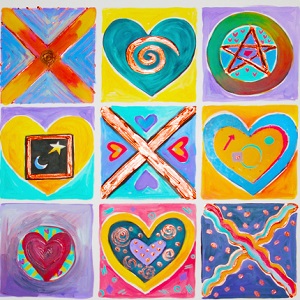
Over the past few years a relatively new tool has changed how people manage their own destinies. The tool, called a vision board, is created to represent in a visual manner what a person wants in life. The practice suggests that visualization can lead to the realization of goals. This is a helpful and therapeutic technique for people as they work on goal-oriented outcomes.
Vision boards are collages of images, photographs, and phrases glued or taped to a surface like a poster board. Your selection of items on your board typically represents the dreams you want to materialize in your life. The idea behind the board stems from the reasonable hypothesis that positive thinking leads to a positive outcome. Positive thinking is one result, but the process of creating an inspiring vision and working toward it creates the energetic vibration to manifest it.
We all can agree that a positive outlook is a precursor to positive results in one’s life, but how exactly can the imagery you choose on your board make things happen? The premise of this increasingly popular tool suggests that if you glue a picture of your favorite house from a magazine onto your vision board, you will enable the dream or fantasy to become a future reality. Your vision can be anything from a house to a new car, or something of a more personal nature like fostering a new relationship. All things on the board are what you want or what you are passionate about.
The vision board speaks to the fundamental principles of the Law of Attraction. The basic tenet offered by the Law of Attraction is that a person can attract anything into their lives by “being†more of the emotional vibration they wish to have. By choosing images or phrases the person can begin igniting their emotions with a passion that will lead inevitably to the manifestation of those things they desire.
[fat_widget_right]When working with clients, this can support them to focus on the positive emotions associated with those images. Therapists will inevitability have opportunities to work with whatever resistances come up and support people to work through them. Emotional Freedom Technique is one such method for working with resistance within the Law of Attraction principles.
The vision board has been popularized in recent years by the enormously successful publication of the book The Secret. The Secret, a best seller from 2006, is a self-help book written by Rhonda Byrne. The book is based on a film of the same name. Both the book and the film promote the Law of Attraction and the power of positive thinking. As the official website of The Secret states on its home page, “Everything is possible, nothing is impossible.†In the actual film, success expert John Assaraf tells his story of using vision boards to realize his dreams.
Its proponents from the self-help field have embraced the tool. Christine Bagley-Jones, a psychologist from Brisbane, sees vision boards as a motivational tool. “It’s not like the vision board itself has some magical properties. But it helps to create a platform for the individual to identify and conceptualize what they most want in life, and through their actions they can then manifest it.â€
The tool has been adopted by a variety of disciplines in the self-help field, including art therapy. Advocates insist vision boards can help people build self-esteem, teach goal setting and prioritizing, and make individuals more proactive.
Carolyn Mehlomakulu, a licensed Marriage and Family Therapist and Registered Art Therapist, states on her Creativity in Therapy blog, “Through the process of choosing my images, I was able to clarify my goals and hopes, think about what I consider truly important in my life, open my mind to the possibility of having the life and business that I want, and inspire myself to keep moving forward.â€
I also have a vision board that I’m always working on. It supports what I believe in, what I want to manifest in my life, and primarily how I want to feel. I also notice that my vision board has things on it that I don’t want on it—things I’m not interested in attracting: reminders, a phone list, a business card, etc. Note to self: keep your vision board clean of distractions! As you grow so will your vision board change and grow with you.
Not everyone is into the joy of creating their own vision boards. There are detractors who see the practice of using boards as counterproductive. Some argue that people who use vision boards spend too much time in the fantasy and not enough time establishing a realistic plan to achieve them. Troubled by the reliance on the cultural forced feedings of positivity, some thinkers see the energy in this area of thought as a waste of time.
Barbara Ehrenreich, a much respected writer, states, “Besides, the constant effort of maintaining optimism in the face of considerable counterevidence is just too damn much work. Optimism training, affirmations, and related forms of self-hypnosis are a burden that we can finally, in good conscience, set down. They won’t make you richer or healthier, and, as we should have learned by now, they can easily put you in harm’s way. The threats that we face, individually and collectively, won’t be solved by wishful thinking but by a clear-eyed commitment to taking action in the world.†Hard work has to be an integral part of the vision. Accepting the possibility of failure is equally important as it teaches significant life lessons.
It is how you use the board that matters. Working with resistances, enjoying the dream, and taking action are all part of the vision board process. It is clear that vision boards are valid tools with therapeutic value to a great many people. Equally apparent are the critics who claim users are only setting themselves up for failure if their vision boards become wallpaper.
The real answer lies more likely somewhere in between the opposing arguments. No one should ever tell anyone not to dream. Just remember there’s always some sweat and tears. The vision board is an expressive tool to support your “being†attractive in attracting the things you most desire.
I’ll leave you with this final quote from Bob Doyle:
“The sooner you can move from ‘trying to be’ to actually ‘being,’ the sooner you will see your desire fulfilled.â€
References:
- Loo, Tristan.How to Use a Vision Board to Activate the Law of Attraction. Retrieved from: http://www.selfgrowth.com/articles/How_to_Use_a_Vision_Board_to_Activate_the_Law_of_Attraction.html. Retrieved on: 19/04/2014.
- Byrne, Rhonda. The Secret. Retrieved from: http://thesecret.tv/. Retrieved on: 22/04/2014.
- Doyle, B. (2011). “Follow Your Passion, Find Your Power.†Charlottesville, VA: Hampton Roads Publishing Company.
- Body and Soul website. Why You Need a Vision Board. http://www.bodyandsoul.com.au/health/health+news/why+you+need+a+vision+board,29981. Retrieved on: 22/04/2014.
- Mehlomakulu, Carolyn. Realizing the Future—Creating a Vision Board. Retrieved from: http://creativityintherapy.blogspot.ca/2013/02/realizing-future-creating-vision-board.html. Retrieved on: 21/04/2014.
 We know that certain functions of the body shut down when a person is faced with a threatening situation. This allows other parts to become more active. Larger sets of muscles receive more blood as heart rate increases, allowing for the well-documented “fight-or-flight†response. While the body tenses and readies to “respond,†some areas of the brain become less active. Hence, the ability to process emotional responses and store memories during a traumatic event can be impaired while pre-programmed survival mechanisms kick in.
Posttraumatic Stress
For some, this will lead to a condition known as PTSD (posttraumatic stress). The intense emotions associated with an unintegrated traumatic memory can impair normal functioning in daily life for those experiencing PTSD. Read more about this here.
[fat_widget_trauma_ptsd_right]
Not everyone experiencing a traumatic event will go on to develop PTSD. However, for those that do, PTSD is treatable. Eventually, there can actually be benefits that result from a well-integrated traumatic event. This is called posttraumatic growth.
Posttraumatic Growth
Many people experience a meaningful improvement in their psychological outlook on life after a traumatic or life-altering event. For example, after a near-death experience, some report a renewed zest for living, an intense wonder at the beauty of the natural world that surrounds them, and a deeply felt sense of purpose not previously recognized.
In one study, Robert James Miller II and David Read Johnson noted an increased capacity for symbolic thinking in a group of 56 Vietnam War veterans who experienced PTSD. From the abstract: “Unexpectedly, subjects with PTSD in comparison to subjects without PTSD showed greater capacity for symbolic representation, and no difference in lexical capacity, raising new questions as to the mechanism by which trauma could increase the capacity for mental imagery.â€
It’s possible that in order to avoid re-experiencing a traumatic event (because memories of the event have not been properly stored), some people unknowingly strengthen their ability to think symbolically as a coping mechanism. Since we know that symbolic thinking is a cornerstone of the creative process, can an unexpected benefit of trauma be an increase in creativity?
Surges in Creativity
There is compelling evidence that suggests surges in creativity could be linked to the experience of trauma. Dr. Marie Forgeard conducted an online study to investigate this idea. An online questionnaire was filled out by participants, whose answers were used to measure posttraumatic growth, rumination related to the event, and growth of creativity. Forgeard used two measures in the study: (1) scores on a measure of posttraumatic growth and depreciation and (2) scores on self-reported measures of creativity in the aftermath of adversity.
She found that “… adversity-induced distress predicted self-reported creative growth and breadth in a sample of online participants. Cognitive processing [intrusive/deliberative rumination] as well as domains of posttraumatic growth/depreciation—in particular, self-reported changes in interpersonal relationships and in the perception of new possibilities for one’s life—mediated the link between self-reported distress and creativity outcomes.â€
It is important to note that intrusive rumination describes a process where the individual is primarily focused on the symptoms of the distress being experienced as opposed to solutions for these symptoms. On the other hand, deliberate rumination is a process by which an individual turns inward and engages in reflection along with contemplation about various problem-solving possibilities.
Creative Therapy and Deliberate Rumination
Given the links between trauma and creativity that are being uncovered, creative therapies such as art therapy or expressive writing, coupled with supported deliberate rumination practice, could be beneficial in the recovery process for individuals wishing to deal with the aftermath of traumatic, life-altering events and/or full-blown PTSD.
References:
- Miller II, Robert James, and Johnson, David Read. Psychological Trauma: Theory, Research, Practice, and Policy. Vol. 4(1), Jan 2012, 112-116. doi: 10.1037/a0021580. Retrieved 3/21/14 from: http://psycnet.apa.org/journals/tra/4/1/112/
- Thompson, Paula. The Traumatized Imagination: Creativity, Trauma, and the Neurobiology of the Resilient Spirit. Retrieved 3/21/14 from: http://www.healingresources.info/article_thomson1.htm
- Forgeard, Marie J. C. Perceiving Benefits after Adversity: The Relationship Between Self-Reported Posttraumatic Growth and Creativity. Psychology of Aesthetics, Creativity, and the Arts. Vol. 7(3), Aug 2013, 245-264. doi: 10.1037/a0031223. Abstract retrieved on 3/21/14.
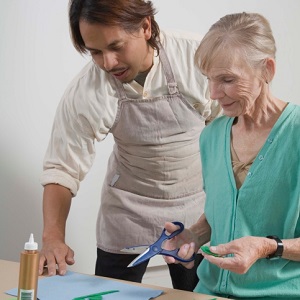 I recently had the honor and privilege of attending a workshop with renowned art therapists Cathy Malchiodi and Kate Webb in San Diego, CA, entitled Trauma-Informed Art Therapy and Positive Psychology. To say I was inspired, confirmed, validated, and energized by the experience is truly an understatement.
As a licensed clinical social worker, I often have drawn from the expressive arts as a means of helping my clients work through grief, loss, and trauma in psychotherapy. Art making, whether via collage, painting, drawing, sculpting, dancing, making music, and drama, has the potential to help individuals heal through very traumatic circumstances. The workshop focused on the evidence-based use of art making interventions and the intersection with neurobiology and somatic experiencing to help clients work through trying life challenges.
In my 20+ years of psychotherapy practice, I have called upon art intervention with the following populations: child witnesses of domestic violence, abuse survivors, hospice patients and their families, preschool children who witnessed L.A. riots, bereavement support groups, students struggling in academic settings, children of incarcerated parents, and mothers experiencing perinatal depression.
Art allowed clients to transcend their emotional pain, create a narrative through image of their trauma/loss, and subsequently “master†the trauma, thereby releasing the painful memory from its grip in the brain. Art continues to be transformative in my practice with clients and also in my own personal life.
[fat_widget_trauma_ptsd_right]As Malchiodi and Webb stated in their conference, we as humans all experience traumas across the lifespan. These incidents can be as “minor†as a traffic jam to as life-changing as the death of a family member. All traumas, no matter how seemingly big or small, are encoded in the brain’s amygdala where they are registered as potential alarm bells. The hippocampus then takes on the role of organizing these traumatic images, but struggles to encode them in such a way that makes sense to the cognitive (higher thinking/verbal) areas of the brain.
Art making taps into the lower-level (somatic/limbic) areas of the brain and also allows the client to release trauma in a somatic (physically manifested/preverbal) manner. Some individuals are rendered speechless in moments of trauma. As researchers have indicated, Broca’s Area in the brain has the potential to shut down verbalization of trauma, as an individual is in a hyper-alert state of fight or flight.
Art making accesses the somatic elements of the brain, enabling a client to express emotion which at times cannot be verbalized initially. Art making creates containment, safety, encouragement, validation, and an opportunity to narrate the traumatic experience in such a way that the trauma is then organized in the brain so that the individual’s somatic experiencing of the trauma is reduced.
Relaxation exercises coupled with art making bring about great relief for many clients. Playing music that matches a resting heartbeat has been proven to induce a state of calmness in many trauma survivors. Some clients are compelled to also engage in other forms of expression, such as drum playing and dancing. Discharging the trauma physically (exercise, music making, etc.) and through the use of creativity in art allows the client to move through the experience with a sense of self-compassion, mastery of the trauma, and a restored sense of trust in one’s surroundings.
To summarize the workshop I attended in a small article would not lend justice to all the incredible learning experienced. Suffice it to say my education of expressive arts is ongoing, and continues to be a driving force in the work I am honored to provide along the people who come to see me for therapy. Truly, belief that the client has the power of self-determination and the awareness and knowledge within to interpret their own art making is essential in nonjudgmentally supporting the client.
Ongoing training in the cutting edge juxtaposition of art and science in expressive arts and neurobiology is incredibly exciting and groundbreaking. Mindfulness and positive psychology also weave their way into the expressive arts as a form of healing which empowers clients to transcend trauma and loss and evolve to a place of healing and wellness.
The following is a list of titles I have found to be inspiring and helpful for psychotherapists wishing to learn more on the path of incorporating expressive arts in their work with clients:
- Malchiodi, Cathy. (2002)The Soul’s Pallete: Drawing on Art’s Transformative Powers, Shambhala Publications
- Malchiodi, Cathy. (2006)The Art Therapy Sourcebook, McGraw-Hill
- Allen, Pat . (1995) Art is a Way of Knowing,Shambala Publications
- McNiff, Shaun (2004). Art Heals: How Creativity Cures the Soul, Shambhala Publications
- McNiff, Shaun (1992). Art as Medicine: Creating a Therapy of the Imagination, Shambhala Publications
 Transpersonal therapy can be a powerful framework for using the expressive arts, such as music, drama, and visual art. But many people are unfamiliar with transpersonal therapy. You may be wondering what this term means and how it relates to expressive arts processes. Here’s what you need to know about transpersonal psychology and how it connects with expressive therapies.
What Is Transpersonal Therapy?
You have probably heard of the so-called “three forces of psychologyâ€: behavioral, psychoanalytic, and humanistic. The classic examples that come to mind are Pavlov and his dog (behavioral); Freud’s dream interpretations (psychoanalytic); and Carl Rogers’ use of “unconditional positive regard†(humanistic). These examples are the stereotype of each of these psychological orientations. In truth, most therapists these days are influenced by more than one of the “three forces.â€
And now, introducing transpersonal therapy (circa 1960s)—the fourth wave of psychology. The word “transpersonal†literally means “beyond the personalâ€â€”what Ken Wilber has described as “personal plus.†That is, it includes all of the personal and individual aspects of our experience, including our thoughts, physical sensations, and emotions, but it also moves beyond this personal framework to address our spiritual experience. Naropa University’s transpersonal counseling program clarifies this by including “mystical or religious experiences, intuition, different states of consciousness, creativity, and contemplative practice.â€
Transpersonal psychology is also unique in its focus on wellness rather than pathology. A key idea in transpersonal therapy is the belief that all humans, under the right circumstances, will move naturally toward a state of wellness and wholeness. The role of the therapist is to guide the individual in this move toward wholeness by acting as a facilitator and not an expert.
Expressive Arts in Transpersonal Therapy
The expressive arts and transpersonal therapy make a great team because they are both focused on exploring a wider range of possibility outside traditional talk therapy. Expressive arts therapies can include:
- Art therapy
- Movement or dance therapy
- Drama therapy or psychodrama
- Music therapy
- Sand tray therapy
- Journaling or poetry therapy
Your specific experience in doing expressive arts with a transpersonal therapist will vary depending on your own creative interests, the therapist’s background and training, and the problems for which you are seeking help. In some cases, one expressive process might blend with another. For example, you might sculpt and paint a series of masks showing the different aspects of your personality, then create a skit in which you use the masks to act out a scene. You might then also write a journal entry or poem describing your experience of producing the skit. All of these actions would be undertaken with the guidance and support of your therapist. And, of course, any creative processes that you engage within transpersonal therapy will be handled with care by your therapist. Your therapist will assist you in exploring the emotional, intellectual, and spiritual meanings that you find in these processes.
In many instances, your therapist may encourage you to engage in imaginal processes. This term refers to an ability to relate to your own artwork, music, or writing as if it is a messenger. For example, using an imaginal process with visual art might mean that after you’ve painted a dragon-like creature, your therapist will help you to create a dramatic or written dialogue in which the dragon itself is given a voice.
Another common technique in transpersonal expressive therapies is to explore archetypes, evocative symbols that are found throughout human history. Some basic archetypes include the magician, the wise old woman, the hero, and the trickster. These symbols and their relationship to your own situation can be explored with various expressive arts practices such as journaling, visual art, drama, or sand tray therapy.
While some of you might prefer a more direct approach that is planned and structured with clear homework assignments, such as cognitive behavioral therapy, others might prefer the looseness of a more organic process that lends itself to the transpersonal realm. If you are lucky, you might even find a therapist who is skilled at applying an eclectic approach, combining different therapies for a dynamic outcome.
 A baby first focuses on the faces of those around them. Hard-wired to recognize our caregivers, at a primal level, we all understand the human face communicates information. Understanding the messages others are sending us can even be essential to survival. Cover a face and the transformation can be mildly unnerving, terrifying, or even extremely funny. A face that is covered denies us access to the signals we are used to seeing and sends out new signals or messages for us to interpret.
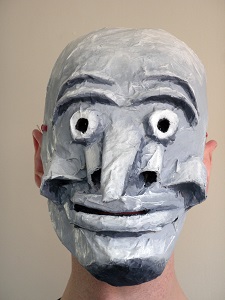
A mask-making session can afford fertile ground in an expressive therapy setting for both client and therapist. Making a mask invites the creator to explore various aspects of his or her own persona. The activity can be revealing because it takes the mask maker out of the realm of words and employs imagination and nonverbal action.
Exploiting the Mind-Body Connection
One mask-making technique involves molding clay into facial features and then applying materials such as paper mache, celluclay, or various molding cloths over the top of the sculpted mask face. The tactile process of modeling clay with hands, fingers, and palms can provide a powerful connection to deep-rooted feelings through the tactile, nonverbal (somatic) experience of working physically with the clay. The body can hold all kinds of memories from the past, and by engaging in this nonverbal activity the imagination of the mask maker may find new ways to communicate hidden thoughts, feelings, and memories through the creation of meaningful symbols that are shaped into the clay as the mask evolves.
During the process, through verbal or nonverbal communication, the therapist may help the client to experience and consciously come to terms with these previously locked up and hidden memories. This can happen as the feelings or memories emerge during the mask-making session or sometimes in later sessions when the mask, made by the client, is used in other ways.
Finding Joy Through Creativity
Many memories and the feelings associated with them are difficult and painful, but it’s also true that the result may well be the reclamation of joyful creativity. When we are children, we play with abandon; it’s part of the learning process. The ability to playfully explore the world within as well as the environment that surrounds is often lost as we age into adulthood. It becomes prey to many cultural pressures and sometimes to misinterpreted parental reprimands.
A parent may react strongly to a child playfully exploring a shiny object such as a sharp knife. The child may then interpret the reprimand as being connected to their natural interest and creative exploration process and assume that this is a “wrong behavior.†A little bit of their creative energy then gets locked up with some repressed feelings and lost joyfulness. We all want to be loved and protected by our parents; when we are children, our survival depends on it.
Mask making and working with masks in a therapeutic situation can help unlock that playfulness and sense of creative adventure through the process of remembering moments, such as the one just described, and revisiting the feelings that accompany such memories.
Out of the Nowhere and into the Here
Besides being a therapeutic tool, mask making can be a simple pleasure on its own. Adults engaged in busy and demanding lives don’t often have or take time to engage in a hands-on creative process. By simply indulging in the mask-making process, the participant can reopen doors and creative pathways long ago forgotten. There’s an age-old nursery rhyme that goes:
Where did you come from, baby dear?
Out of the nowhere, and into the here.
Our creations are like our babies. The simple act of bringing an object, in this case a mask, “out of the nowhere and into the here†can be a liberating process in and of itself.
The Rich Tradition of Mask Making
For more than 12,000 years, human beings have been making and using masks. We find the earliest evidence of this on the walls of caves around the world. At the Trois-Frères (“three brothersâ€) site in France, a figure considered to be a male shaman is depicted on the wall of the cave, wearing a large, antlered stag’s head. The headpiece mask has the face of an owl superimposed over the facial area with wolf-like ears and a long goat’s beard.
Masks can capture a state of mind. They evoke, memorialize, reveal, and conceal all at the same time. Even the most simply constructed masks can powerfully transform the face. The inanimate mask comes to life when worn. It becomes charged with a life force from within the wearer. Shamans and healers around the globe today, as well as the shamans of the ancient world depicted on caves so long ago, all understand the magic of making and using masks.
We can heal and be healed through integration by using our innate gift of imagination and our ability to create. Masks are a powerful tool in the process of healing and the journey toward wholeness.
References:
- Science Magazine (July 6, 2001): Vol. 293 no. 5527 pp. 51-52. DOI: 10.1126/science.1062331. Artistic Creativity and the Brain: Zeki, Semir.
- Sivin, Carole, (1986). Maskmaking. Worcester, Massachusetts: Davis Publications, Inc.
- Quest Magazine (January – February 2004): Spirit and Art: and the Puzzles of Paradox. James, Van. Retrieved July 20, 2013 from: http://www.theosophical.org/publications/1238.
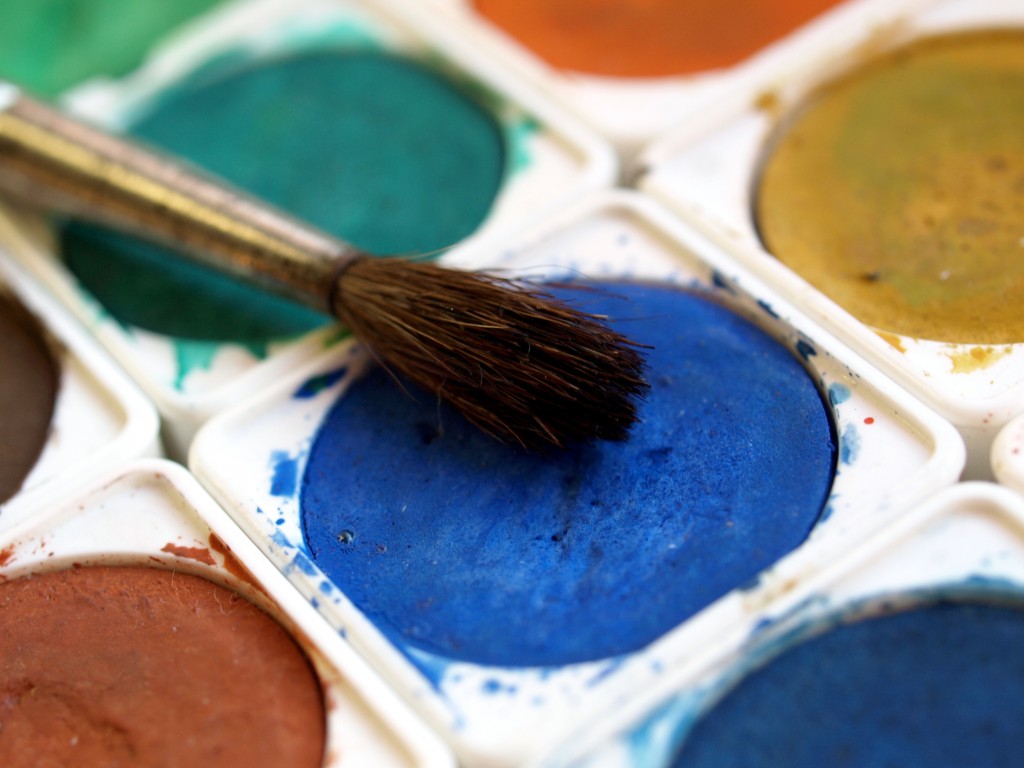 Art therapy is a specialized area of mental health that uses art materials and the creative process to explore emotions, reduce anxiety, increase self-esteem, and resolve other psychological conflicts. The American Art Therapy Association states that art therapy can be an effective mental health treatment for individuals who have experienced depression, trauma, medical illness, and social difficulties. Making art in therapy can be a way to achieve personal insight as well as healing.
There’s more to art therapy than simply “drawing your feelings.†Art therapists are trained to lead people through the creative process in a therapeutic way. Just as your doctor may prescribe a medication or behavioral change to aid your physical healing, your art therapist offers art-based therapy interventions that are tailored to your needs. As with every aspect of therapy, the choice to engage with specific types of materials will ultimately be up to you.
“Art washes from the soul the dust of everyday life.†—Pablo Picasso
In this article, we’ll take a look at some of the top questions people have about art therapy.
Q: Do I need art training or experience to participate in art therapy?
A: No art experience is necessary for you. Your art therapist is highly trained in visual art as well as psychology, and he or she will guide you in the process of creating art using specific types of materials. All you need is a willingness to experiment and explore.
Q: What kind of training should my art therapist have?
A: Art therapy is a profession that requires at least a master’s degree in a program with specific art therapy components.[fat_widget_right]While expressive arts therapists are trained in art therapy, there is also the designation of art therapist whereby the therapist studies only art therapy. There are also associations that offer certification as a supplement to your education, rather than a degree. Many art therapists have an art therapy credential called an ATR that indicates they are registered with the national art therapy credentials board.
Q: What kind of art will I make in art therapy?
A: It depends on your interests as well as the therapeutic benefits of certain types of art for your situation. Art therapy can include a wide range of art materials and processes. Your sessions could potentially include activities such as working with clay, painting, making a mask, creating a visual journal, and assembling a collage. Most often, the focus will be on the process rather than creating a finished art product.
Q: Do I get to keep the artwork that I make in art therapy? Will the art therapist show it to anyone else?
A: Your artwork is your creation and always belongs to you. Some people choose to keep the finished artwork, while others may decide to leave it in the care of the art therapist. Your art therapist will not show your artwork to anyone without your permission. The code of ethics followed by art therapists specifies that an art therapist must safeguard a client’s art creations the same way he/she would protect any other privileged information.
Q: Why are some art materials more appropriate for my situation than others? What does it mean to have an art therapist prescribe an art process for me?
A: Art materials have inherent healing qualities, but some are more appropriate for certain types of situations. For example, there is a therapeutic difference between using colored pencils, which are very dry and controlled, as opposed to watercolor paint, which is extremely wet and difficult to control. Your art therapist has specialized training in assessing which materials to suggest based on the issues you are facing, your frame of mind during the session, and other factors. Art therapists also have an extensive personal background in studio art, making them personally familiar with the use of specific types of art materials so that they can guide you through any difficulties that may arise in the creative process.
Q: Will the art therapist “interpret†my artwork?
A: Art therapists can use a variety of approaches, just as counselors or psychotherapists may utilize different approaches. It is not customary for a therapist to interpret your art. In a humanistic or transpersonal approach to art therapy, the focus will be on the personal meaning that you find within your own creative work, rather than an arbitrary meaning imposed by the therapist. You are the expert on your own artwork and creative process, and the art therapist’s role is to facilitate explorations of your work rather than to analyze or interpret it.
Reference:
Pablo Picasso Quotes—Art as Therapy. (2010, October 10). Retrieved May 6, 2013, from quotes: http://www.arttherapyblog.com/c/art-quotes/#ixzz2SYtZgGua
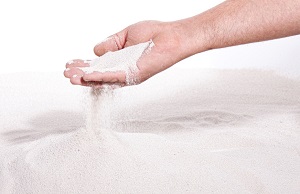 Many people associate a sandbox with children’s play. However, there is a special type of expressive therapy in which a tray of sand is used to create and explore imaginary worlds. This modality, called sand tray therapy, can be appropriate for people of any age. Many adult clients enjoy sand tray therapy as a way to bypass the logical and intellectual parts of themselves in order to access a deeper, creative aspect.
Sand tray therapy has been in use since the 1940s. It emerged in the form of Jungian sandplay, a type of psychoanalytic expressive therapy in which clients were asked to “create a world†in the sand. In current times, sand tray therapy has evolved to be used by therapists from a variety of backgrounds, including humanistic or transpersonal.
How It Works
The sand tray that is used in therapy with adults and adolescents is a rectangular, wooden tray, several inches deep and painted blue on the inside. Typically, the tray is placed on a wheeled table that is about regular table height. The tray is filled about two-thirds full with clean, white sand.
In the same room, there is an open shelf containing a broad variety of small toys or figurines. These usually include human figures of different types, as well as animals, plants, buildings, vehicles, and other types of things that are commonly seen in everyday experience. Any of these figurines can be placed within the sand tray to create a small, imaginary world. In addition, the sand in the tray can be shifted to make an evocative landscape. Sand can be piled up to show a hill or mountain, or it can be scraped away from the bottom of the tray to show the blue interior in order to represent water.
How It Helps
Sand tray therapy can be used with adults when success with verbal therapies is stifled, or when a therapeutic modality that allows more access to innate creativity is desired. An excellent use for the sand tray can be with grief or trauma, when words are difficult to utter or fully process. When clients touch the sand, it can be very soothing to the psyche, offering a healing beyond what we can visibly understand.
“When the beginnings of self-destruction enter the heart, it seems no bigger than a grain of sand.†—John Cheever
There are several components of sand tray therapy that make it effective for many people, including:
- The design of the sand tray environment is a safe, contained world that is fully controlled by the client, and can be manipulated or changed by adding, subtracting, or moving figurines within the scene.
- It does not require any artistic skill to have a satisfying sand tray experience—only selecting and placing objects.
- Physically moving representational objects within the sand tray container has a beneficial effect on the body, especially in people who have undergone traumatic experiences—more so than simply talking about memories or ideas.
What to Expect
In a session using sand tray therapy, the therapist will typically begin by encouraging the client to explore the sensory experience of the sand tray itself. Many clients may spend a few minutes just experiencing the cool, smooth sand on their fingers.
The client can leave the sand smooth and flat or create a landscape by shifting the sand in the tray. Then the therapist will explain how to choose figurines in order to create a world or scene in the sand tray. The therapist will instruct the client to choose several figurines that elicit a strong reaction, either positive or negative, and reassure the client that it’s OK not to “know†what each figure represents. Then the client will decide where to place each object in the sand landscape. The scene may be static, or it may evolve over the course of the session. The therapist will encourage the client to observe what has happened in the world of the sand tray and discuss the meaning that the client sees in this experience. A photograph of the scene may be taken in order to keep a record of the session.
My Experience
Having sand trays in therapy rooms can provoke a client’s curiosity. I recall a non-sand tray client in the sand tray room stroking the sand as he was talking to me. I called his attention to this and he remarked, “It’s soothing.†Just having the sand tray nearby to touch supported his ability to relax in the room. Another example is when I was working with a couple. After a turbulent session with his wife, the man took the opportunity before he left the therapy room to put a shark head down in the sand—a visual and nonverbal communication about his feelings.
As I allow each and every client to have his or her own experience, I find the benefits of sand tray therapy useful. It allows clients to have experiences they may not if they were to use only language.
Reference:
The Columbia World of Quotations (1996), Columbia University Press. Retrieved April 11, 2013, from http://quotes.dictionary.com/search/sand_?page=3
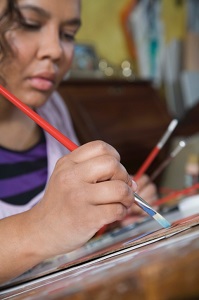 “Art washes away from the soul the dust of everyday life.†—Pablo Picasso
I am privileged to work with new moms in my private practice. It is tremendously gratifying to help women and their families move through what can be one of the most challenging life transitions—that of parenthood. In my work with mothers, I see many women who experience perinatal mood/anxiety issues (PMADs), perinatal loss (miscarriage), fertility challenges, and traumatic birth situations (see prior articles on these subjects on my GoodTherapy.org profile page). Most often, interventions with moms are a combination of evidence-based cognitive behavioral work and interpersonal approach to assist the client in full recovery. I have also found great benefit in the use of expressive arts to assist this population in healing.
Expressive arts therapies are defined as the use of creative arts (art, dance, music, writing, drama) as a form of psychotherapy. The process of art making is emphasized versus the final product. In my practice, I employ the use of visual arts and crafts as a powerful intervention with clients of all ages. Although I am not an art therapist, I believe the use of art intervention is incredibly meaningful and assists in recovery from PMADs.
The American Art Therapy Association defines art therapy as a practice as “the therapeutic use of art making, within a professional relationship, by people who experience illness, trauma, or challenges in living, and by people who seek personal development.†Art therapy itself is considered a specific subspecialty in the field of psychology/counseling and requires an intensive registration and education process. With either expressive arts intervention or art therapy, the client does not need to have prior art training and need not feel pressured to produce a masterpiece. Again, the focus of the intervention is the process, not necessarily the product outcome.
I was initially exposed to the power of art to heal trauma in the drawings of child survivors of domestic violence in a San Diego shelter when I first began my career in clinical social work 20 years ago. In graduate school, I worked with a registered art therapist in a hospice setting, counseling children and families who experienced the loss of a loved one due to terminal illness. Art intervention was the primary modality in individual, group, and family work.
Moving forward through my career, most every setting I have been employed in involved the use of art as an intervention and source of healing. School and clinic-based settings provided ample opportunity to continue to bring art and creativity to the therapy process for children and adults managing depression, anxiety, trauma recovery, loss, life transitions, divorce, social skills issues, and medical traumas.
Art intervention is incredibly helpful for trauma survivors and those recovering from life challenges (including for clients feeling a sense of PTSD from perinatal depression). Art allows the right brain to be balanced and integrated with the rational, logical left brain. The bilateral movement of the hand moving across the page (mimicking the back-and-forth motion of EMDR) in turn assists in releasing trauma and integrating the experience in the brain.
Typically I will invite my client to participate in an art intervention at a point in her healing process in which she is beginning to feel the first glimpses of recovery. Sleep is beginning to be restored, mood is lifting, and anxiety is starting containment. Prior to art intervention, I will have helped to stabilize any crisis, link my client with other helping professionals and extended support networks (psychiatrists, lactation consultants, doulas, support groups, family support), and work with her to attain a level of recovery in which her focus and concentration are improving, along with her mood health. She may begin an exercise regimen; she may have hired a doula (caregiver) or enlisted the assistance of her extended family with baby care. She is beginning to feel biochemical relief, perhaps with the assistance of an SSRI, improving her nutrition with omega-3 fish oils, and she is sleeping for at least five consecutive hours (a full sleep cycle which restores serotonin).
Art interventions which I find particularly helpful for new moms contending with PMADs (which can also be adapted to other populations) can be created in individual or group modalities. Significant others of new moms may also participate in a couple/family session. The following are suggestions for use with new moms recovering from PMADs:
- Treasure Map; A Compass to Guide Me
Materials needed: colored pencils/markers, large poster paper.
Have client draw images of symbols which represent the wishes she hopes to manifest (for example, “good health/vitality†may be a sunshine image); encourage client to add powerful affirmation to the page (“I am reclaiming the best of my health and vitalityâ€) and label each image. Invite client to post “treasure map†in a prominent location in her house to be reminded of the goals she is setting for herself in active manifestation.
Purpose: a visual guide to affirm client’s goals and provide reassurance.
- Magazine Photo Collage; A Lantern to Light the Way
Materials needed: magazines with a variety of images, large butcher/poster paper.
Have client select images from magazines which represent her new identity transformation as a mother, or use theme in intervention above to guide client in goal attainment for self-care and balance as a new mom. Discuss images and invite client to verbalize how the images are important and meaningful to her.
Purpose: validation and support with role transition to new motherhood.
- Masks; Outside/Inside Worlds
Materials needed: preformed paper/cardboard face masks (available in craft supply stores), feathers, colored markers, beads, yarn.
Ask client to create one mask which demonstrates how she presents to the “outside world.†The second mask will reflect how she feels “inside†as a new mom. Discuss how masks are similar and different and why. What is the purpose of each emotional mask?
Purpose: identifying how feelings inside often do not match what we show to the outside world.
- Sculpy Figurines; Talismans of Strength and Courage
Materials needed: sculpy clay, paint, paintbrushes.
Invite client to create image out of sculpy clay (that which can be baked and hardened at a later time, then painted). The image can be a symbol of new motherhood, an image of mother/baby, or an object representing courage and healing (perhaps a bead for a charm bracelet or necklace). Once completed, client gets to keep the object in a special place as a reminder of her strength and courage in her healing process.
Purpose: a transitional object/symbol of the work the client is doing in psychotherapy and a tangible representation of her inner strength and courage.
- Journals; Drawing Out My Feelings
Materials needed: art journal, colored pencils/markers/paint/paintbrushes.
Many clients prefer to draw feelings in lieu of writing about feelings. Invite client to create image of her birth experience using vibrant color of her choice, and to narrate her story of the experience. This exercise is especially helpful in working with survivors of birth trauma. It is also helpful to add second exercise of an image in which client creates a symbol on paper representing healing and recovery.
Purpose: Recording emotions (written or drawn/painted) allows a container for the client to “place†her feelings so she is less overwhelmed. She is able to “master†any traumas by telling her story and her experience.
- Beaded Jewelry (Bracelet, Necklace); Embrace Motherhood Beads
Materials needed: array of bead supplies (beads, bracelet/necklace wires, etc.).
Invite client to create jewelry representing her new identity as a mother, her connection with her child.
Purpose: affirmation of new role and connection/attachment to new baby.
- New Mom Memory Box/Book; The New Me
Materials needed: shoebox, construction paper, markers/pens/paints, any supply to decorate a box or album.
Assist client with decorating a special box to hold keepsakes (photos, poems, cards, etc.) as she becomes a new mother. A scrapbook can be a similar project. Discuss her identity transformation and the joys/positives of this new life role.
Purpose: recording the most transformational journey a woman can ever go through and celebrating it.
- Mandala Drawing; Drawing the Soul
Materials needed: paper, pastels, paints, pencils/pens.
Mandalas are circular images from ancient cultures and religions which represent the power of one’s healing process (see Mandala book). Invite client to create a mandala with the materials of her choice.
Purpose: for client to enjoy process (versus product) of art making and generating an image which represents healing and recovery; practicing self-care through creativity flow.
- Dream Catcher; Rest for the Weary
Materials needed: paper plate, yarn, beads, feather, single-hole punch, scotch tape.
Assist client in constructing a native American dreamcatcher, which can symbolically protect her from nightmares and scary, intrusive thoughts at night. Discuss the dreamcatcher as symbol of nighttime inner peace and tranquility.
Purpose: Most moms with PMADs have horrible sleep initially and need comfort at night. This craft is a great visual to calm the nerves and assuage the soul. Add some lavender- and vanilla-scented oil to the dreamcatcher, and invite client to place above her bed.
- Worry Dolls; A Place to Leave My Worry
Materials needed: clothespin, yarn, tongue depressors, colored pens, fabric scraps.
Invite client to create a Guatemalan worry doll which can hold her worries before she goes to sleep at night or when she begins her day (see The Kid’s Multicultural Art Book).
Purpose: Women with PMADs are anxious. They need a “container†in which to place their worries and fears; worry doll may represent transitional object of the therapist in between sessions.
“The aim of art is not to represent the outward appearance of things, but their inner significance.†—Aristotle, 384-322 B.C.
The following are books and websites which have been, and continue to be, a source of inspiration and enlightenment:
- Allen, Pat (1995). Art Is a Way of Knowing, Shambala.
- England, Pam (1998). Birthing from Within: The Extraordinary Guide to Childbirth Preparation,Partera Press.
- Fincher, Susanne (2009). The Mandala Workbook: A Creative Guide for Self-Exploration, Balance, and Well-Being.
- Malchiodi, Cathy (2006). The Art Therapy Sourcebook, McGraw-Hill.
- Malchiodi, Cathy (2006). The Soul’s Palette: Drawing on Art’s Transformative Power,Shambala.
- McNiff, Shaun (1992). Art as Medicine,Shambala.
- Terzian, Alexandria (1993). The Kid’s Multicultural Art Book: Art and Craft Experiences from Around the World,Williamson Publishing Company.
- Arttherapy.org:Â American Art Therapy Association.
- Atwb.org : Art Therapy Without Borders: Promoting international art therapy initiatives in mental health, health care, and education worldwide.