
I used to think that closure and healing were the same. I was wrong. Finding closure is not an easy thing to come by. Most of the time, finding closure is harder to attain than healing. You can heal and move forward without ever receiving closure from another person.
Finding closure does not come from an outside source. It comes from realizing what took place, leaving it there, and choosing not to carry it with you.
|
What Finding Closure Really Means
Finding closure is not synonymous with healing, and it is not something another person can hand to you. Whether you are processing the end of a relationship, a loss, or a painful experience, the search for closure after a breakup or any significant chapter can feel elusive and out of reach.
Closure does not come from an outside source. It comes from realizing what took place, leaving it there, and choosing not to carry it with you. That is not an easy thing to do. But it is possible.
|
“ This is the closure: The lack of respect was the closure. The lack of apology was the closure. The lack of care was closure. The lack of accountability was the closure. The lack of honesty was the closure. |
Forgiveness, Healing, and Finding Closure
Forgiveness is a change of heart. Healing is an internal recovery. And closure is the ability to move on. Sometimes you can forgive, but that does not mean forgetting is always an option. It just means that you choose not to become bitter.
Healing is what happens when forgiveness takes place. But closure takes time. If you choose not to forgive, it breeds resentment and vitriol, which leads to bitterness. Letting go of that resentment and learning how to forgive is a significant step toward healing. Research from the American Psychological Association confirms that practicing forgiveness is linked to lower anxiety, less depression, and greater emotional well-being.
|
Key Insight Healing is what happens when forgiveness takes place. But finding closure goes one step further. Closure is the choice to stop perseverating on the past and to begin moving forward, on your own terms. |

Is Closure Really a Myth?
Sometimes people wait for the clouds to part and the light to shine on them, for everything to become butterflies and rainbows, before they allow themselves to feel closure. But closure is simply the ability to move past what was and to begin living again. It does not require a perfect ending.
I came across a quote that challenged me deeply:
|
“ Closure is a myth. The way people leave you, the way they exit your life, the way they leave their relationship or connection with you, is all the closure you need. Find clarity in actions, not words. |
This was hard to fully agree with at first. I felt like it was saying that words did not matter, like “sticks and stones.” But what this quote is really saying is that you get the closure from witnessing their actions, their true self. And when you realize that, finding closure becomes less about what they say and more about what you choose to see.
Turning the Page: Finding Closure as a Choice
Realizing that has given me the understanding that finding closure is the choice to stop perseverating on the past, coupled with the choice to move forward. Just like reading a book: each chapter has a different issue, a different problem, a different dynamic. And once that chapter is over, the reader must turn the page.
It is the ending of a chapter, not the end of the story. Your life is the book. What was is the past. And what will be is yet to be read.
What Finding Closure Gives You
I can say that I have forgiven it. I can say that I have healed. And now, I can say that I have closure.
Does this mean I will forget it? No. Does this mean there is no scar? No. Does this mean that because the chapter is over it never happened? No.
It means that because I will remember, because I have scars, and because I experienced that chapter, I have more wisdom moving forward. Working on forgiving to help yourself heal is not about erasing what happened. It is about choosing what you carry forward. The American Psychological Association notes that processing grief and loss is an active journey, one that requires making meaning of what happened rather than simply waiting for the pain to pass.
I now have the ability to not see the world through a tainted, broken, distorted lens of pain, sadness, and grief. It means I can move forward and embark on a new chapter, looking forward to what comes next, instead of dreading it.
Closure to me is not just the ability to move on.
Closure is finding peace.
|
Ready to Work Through It with a Therapist? A licensed therapist can help you navigate the journey of healing, forgiveness, and finding closure at your own pace. |
|

Josiah Dicken MA, LPCC |
About the Author Licensed Professional Clinical Counselor Wayfinder Counseling & Coaching, LLC · Colorado Springs, CO Josiah Dicken, MA, LPCC, is a licensed professional clinical counselor and founder of Wayfinder Counseling & Coaching, LLC in Colorado Springs, Colorado. He specializes in helping individuals, couples, and families navigate life’s challenges using a personalized, evidence-based approach. Josiah is known for creating a safe, non-judgmental space where clients feel heard, validated, and empowered to heal, grow, and move forward. |
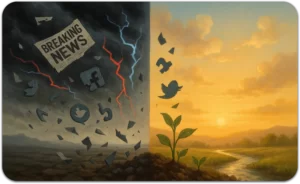
Let’s be real: tuning into the latest headlines or scrolling your feed during this political moment can feel like a punch to the gut. If you’ve noticed your stress levels rising, your mood dipping, or a persistent knot in your stomach from the political climate, you’re definitely not alone. Across the country, people are grappling with anxiety, worry, and even grief.
Here’s the truth: feeling overwhelmed right now is entirely normal. The nonstop stream of heated debates, policy shifts, and divisive rhetoric can wear on anyone. It can start to feel like it’s shaping your identity, safety, and sense of hope. That’s why it’s so important to create space for resilience, not to ignore what’s happening, but to protect your mental health so it doesn’t spiral under the weight of it all.
This blog is here to do more than just validate your emotions, it’s a resource to empower you, especially if you’re part of an underrepresented group struggling to find resilience amid the noise. Below, you’ll find practical ways to protect your peace, nurture your well-being, and tap into culturally competent GoodTherapy experts who understand exactly where you’re coming from.
Current Events Causing Widespread Political Stress
Trying to keep up with the U.S. political scene right now can feel like running a marathon with no finish line in sight. No matter where you fall on the spectrum, the back-and-forth and the real-world changes behind the headlines are hitting home in ways many of us can’t ignore
If you’re feeling anxious, overwhelmed, or emotionally drained, it’s a completely valid response. The mounting list of policy shifts isn’t just political jargon; it’s reshaping lives in real, often painful ways, especially for marginalized communities. Here’s just a snapshot of the realities many are navigating right now:
- Natural Disasters Drive Stress Higher: Catastrophic events like the recent floods in southern Texas have caused loss of life, widespread damage, and lasting mental health impacts. They also expose political tensions, as underfunded infrastructure and delayed emergency responses leave some communities feeling neglected or targeted.
- A Spike in Hate, Discrimination, and Violence: No matter where you land on the political spectrum, most people can agree that slurs and targeted violence are not okay. However, recent increases in hate crimes, racial slurs, and other violence against groups like Muslims, Jewish people, and other minority groups are taking a toll.
- Underrepresented Communities Are Losing Support: Recent U.S. Department of Agriculture (USDA) program cuts and tariffs are placing Black farmers under new pressures, and federal funding for Black-led non-profits continues to shrink.
- LGBTQ+ and Other Groups Are Seeing Critical Funding Dry Up: When the NIH halted funding for LGBTQ+ health, gender identity, and research, it didn’t just cut programs, it left entire communities facing uncertainty and frustration.
- Women’s Health Is in the Crosshairs: New laws restricting reproductive services, contraceptives, and even routine health screenings are making it more challenging for women to get the care they need, fueling anxiety and frustration.
- Immigrants Face Uncertain, Harsher Realities: Recent crackdowns and shifting policies have left many immigrants, including those with clean records and proper documentation, feeling unsettled, questioning what “home†really means right now.
Widespread worry is evident, and the shared stress many feel isn’t imaginary: it’s a natural response to real, lived experiences in a climate that often feels unsteady. Because of this, acknowledging the mental and emotional weight so many carry is key for the healing, support, and care you need.
2025: The Year of Political Anxiety
There’s no denying that experiencing discrimination and a tense political climate can take a serious toll on your mental health. The stress, anxiety, and even grief many people are feeling right now isn’t just “in your headâ€: it’s a real, lived experience. But political burnout isn’t exclusive to any one group: recent numbers show nearly half of Gen Z, Millennials, and Baby Boomer populations are feeling it, too.
Maybe you’ve noticed your mind racing, a sense of restlessness, or an energy crash that makes even simple tasks feel impossible. Below are some anxiety and depression symptoms you might be experiencing:
- Excessive worry
- Restlessness
- Feeling on edge
- Fatigue
- Difficulty concentrating
- Other physical symptoms like dizziness, headaches, and digestive issues
If this list feels a little too familiar, you’re not alone and you’re not powerless. Naming political anxiety is a key first step toward caring for your mind and body. From there, support and effective strategies are within reach.
Strategies for Coping With Political Anxiety
While the recent political landscape has been triggering and upsetting for many people, there is hope: learning practical coping strategies to combatl grief and stress is critical for your emotional well-being. Try the following:
- Acknowledge your distress and don’t ignore your feelings
- Set realistic goals around news consumption so you can better understand your personal limits and avoid becoming overwhelmed
- Limit media time, and try to avoid doomscrolling in an unproductive way
- Lean on your community, chances are, friends, family, and others are navigating the same mental health challenges
- Find and create moments of joy: while it’s good to acknowledge negative feelings, making sure you make time to recognize happy moments can give you new perspectives
These coping strategies are great tools to use when you’re feeling overwhelmed. Still, professional help from culturally competent therapists can give you an added level of support and guidance so you can be resilient in the face of political stress.Â

The Value of Culturally Competent Therapy Today
Political anxiety doesn’t exist in a vacuum. It’s deeply shaped by your unique experiences, identity, and how the world responds. The emotional toll of today’s climate can be heavy, especially for those navigating discrimination, marginalization, or the chronic stress of feeling unsafe or unseen. That’s why finding the right therapist matters.
If you’ve ever felt like your identity was misunderstood, minimized, or overlooked in a therapy session, it may be a sign the support wasn’t truly aligned with your lived experience. Culturally responsive therapists are trained to understand the nuances of race, culture, gender, sexuality, religion, and more, all the factors that shape how you experience the world.
Here’s why that kind of care is so essential right now:
- You feel genuinely heard and safe, which is foundational to healing.
- You can unpack the complex impact of systemic issues and discrimination without having to educate your therapist first.
- You get support that’s tailored to your life, not a one-size-fits-all approach.
In a political landscape that often feels unpredictable or hostile, having someone who truly understands your reality can be the difference between feeling alone and feeling empowered. If you’re ready to connect with a therapist who truly sees you, start with the GoodTherapy Help Me Find Care quiz. It asks a few key questions about your needs, preferences, and insurance to help match you with the right provider.
Navigate Political Stress With GoodTherapy
The U.S. political climate can feel relentless, especially for those facing discrimination or systemic barriers. From funding cuts and limited healthcare access to changes in immigration policy, the constant stream of difficult news can take an emotional toll.
But support is available. Culturally competent therapists and supportive communities like GoodTherapy can help you process what you’re feeling and build resilience. Prioritizing your mental health is one of the most powerful forms of self-care. Why wait to find support?
Read More: Want to Learn More About How Therapy Can Help? Explore More
Resources:
Capital B News: Black Farmers Brace for Trump’s Tariffs While Navigating USDA Office Closures
The Observer: Black-Led Organizations Vital to Economic Growth But Remain Underfunded: Report
The Association of American Universities: New Brief Finds NIH has Canceled $1.9 Billion in Grants
KFF Health News: Major Federal and State Funding Cuts Facing Planned Parenthood
Pew Research Center: Americans’ Views of Deportations
Forbes: Election Anxiety: 61% Say Presidential Election’s Impact on Mental Health Is Negative
Medium: Managing Political Anxiety: Simple Strategies for Coping

What does it mean to be a therapist?
What happens when someone discloses about killing someone in therapy? Has that happened to you yet? Talk about getting out of my comfort zone! As therapists, we hold a sacred career; we are holders of deep dark secrets and keepers of some of the most untold stories in the world. We carry the power to love people through some of the hardest times of their lives and help them through some horrendous shame and pain.Â
I truly believe people are good at the core of themselves, but the world really knows how to be cruel to mankind. There is so much pain, fear and hurt in this world caused by other broken and unhealed people and as therapists we get the privilege to be there to help those that are wounded and broken to open up and get free of some of that bondage. I genuinely love my job, even though sometimes it can be heavy and difficult to hold the pain of others at times.Â
The Transformative Power of Therapy
Over the years of practicing as a therapist, I have learned that people are not their behaviors and at the core, they are good. I’ve also learned that people are separate from their behaviors and if I can just get clients to see that, then half the battle is over. As children, we embody a beautiful innocence, purity, and joy that is truly contagious. So, believing that depression, anxiety, or fear defines us, or that our past behaviors determine our identity, is not aligned with who we are truly meant to be. I approach therapy this way and always strive to never judge my clients and instead help them to disassociate from the negative behaviors that they hate about themselves so that we can both as a team judge the behaviors and then decide if they are serving them or not. Some behaviors that others may judge as dysfunctional are actually serving a purpose of survival in that person’s life, or at least they use to when they were a child, or perhaps when they were in a bad relationship. However, in most cases, as adults those bad behaviors that we picked up as children to self-protect are now no longer needed and are just being used in our lives to self-sabotage, not realizing that we are all grown up now and have the ability to change those behaviors because we are no longer powerless like we were when we were children.Â
Can people be evil?
It’s important to remember that when we see people’s actions that seem reprehensible or unforgivable; to take a step back and ponder why and wonder if those actions are coming from some deep unprocessed pain, unmet need, or trauma. Choosing to see from this perspective of compassion and love doesn’t mean we justify bad behavior, but instead; we can understand it and empathize with how one could use actions that could seem horrendous to an outsider. While killing someone is never right; knowing the deep dark secrets and pain that lead to that point can create a lens to embrace understanding as to why someone could get to that point. Can people be evil? Yes, some people can choose to live in pain and never look for healing and it can lead down to a dark path at time, so understand that I know there is another perspective to what I’m writing about.Â
Healing is our responsibility.
In a world with so much evil it can become easy to let ourselves fall into cynicism, criticalness and despair. However, by allowing our love and compassion to come into the parts of a person that’s hidden and living in shame, we empower that person to decide to embrace a higher reality of who they truly are. We can create an environment that allows a person to fight for a greater identity and value system and let go of the old identity that holds those behaviors that are no longer serving them.Â
 Not to be dramatic, but some of us are the “chosen ones†in our family. We are the ones who have been chosen to take the challenging (and perhaps less traveled) path towards healthy mental and emotional wellbeing. If you find that you are experiencing emotional discomfort, that you are challenging some of your default thinking, that there is an increased awareness of wanting to do things differently, you just may be chosen.
When my son was about four years old, I called him from the other room. Instead of responding promptly, and running towards me to address my need at that moment, he took his time to stroll into the living room where I was sitting. The visceral reaction was immediate. I felt my body tense up as I held my breath. Immediately, the thoughts that flooded my brain were “How dare he not respond more quickly? How dare he be disrespectful to his mother!†As I wrestled with my thoughts and feelings sitting there on the couch, I recognized that I had inherited the same authoritarian lens that my parents had with me as a child. And as a child, I did not have permission to “lolligag†or to put my needs above others, especially not my parents.
It is in these moments that we recognize a need to heal, and a need to change. To be fair to our parents, and to our parents’ parents, they were doing the best that they could with the tools that they had at their disposal. However, there are many times in which the ways of thinking and behaving have been passed on, and it is up to us to make the necessary changes for a healthy generational future (whether or not you have children).
Keep in mind that as a part of the healing journey, we recognize that we only have control over our own behaviors and we do not have the ability to change others. We can only hope that through our own changes, we inspire others to join in starting their own healing journey. Here are a few ways in which your therapist can help you heal some intergenerational wounds.
1. Develop an Understanding of Your Family of Origin.
Your therapist will take a culturally sensitive approach to get a sense of your family’s history. They will aim to recognize the impact of historical and cultural factors on family dynamics.
2. Shed feelings of Shame that are rooted in Stigma
We recognize that some of what keeps generational issues cyclical is the reluctance to acknowledge and address issues that are rooted in shame. Your therapist will provide a safe space, allowing for the validation of your and your family’s experiences.
3. Celebrate Strengths & Resilience
Despite dysfunctions, traumas and wounds, you are a product of strengths and resilience that has emerged through generations. Your therapist will help you tap into and celebrate those strengths, recognizing that some of these skills may or may not serve you as you move forward.
4. Validate Experiences while fostering Forgiveness.
A key part of healing requires forgiveness – to our past selves who had to survive unhealthy environments, and to family members who may have caused harm. In therapy, your therapist will validate your emotions while letting go through forgiveness.
5. Develop Self-Compassion.
Healing is not a destination, but a journey. And in order for us to be successful, we must develop room for self-compassion. Your therapist will challenge some of the harmful thinking patterns and help you replace them with loving and compassionate self-talk.
Using online directories, you can find therapists who are equipped to address some of these intergenerational issues. Therapists who have had cultural competency training or with trauma backgrounds may be a good fit. Ultimately, it may be best to schedule a consultation call with a potential therapist so that you can assess if there is a good connection so that you feel comfortable diving into the sometimes challenging road to healing.

by Bren Michelle Chasse, Licensed Marriage and Family Therapist
Healing from Trauma Does Not Hinge on a Survivor’s Ability to Forgive
Forgiveness is an evolutionary phenomenon that, historically, has been a necessary part to building and sustaining community (Tooby & Cosmides, 2005)). In early times, it allowed groups to minimize conflict and helped support, foster, and preserve cooperation so that groups could function effectively, thrive, and achieve the goals necessary for their survival. In short, group members needed each other, a fact which didn’t change when a wrong had been done. They had to learn to deal with wrongs and stay alive. Over time, the concept of forgiveness has transformed into a modern-day virtue. Many consider forgiveness to be the moral high ground. There are even mental health providers who believe forgiveness to be the holy grail of healing, identifying it as a necessary therapeutic objective or clinical goal (Luskin, 2003). I am not one of them.Â
A Deeper Look at Forgiveness and Trauma
Research has shown that, in general, people practice forgiveness more readily within their tribe or primary support group, while more likely to withhold forgiveness from those outside their group (McAuliffe & Dunham, 2016). However, this research depends on an assumption of high-functioning group dynamics. Not every relationship we experience in our lives (or even within our own family systems) falls into this category. It is simply inappropriate to generalize and apply a forgiveness model evenly across the board to all relationships. Relationships, by definition, are nuanced and very complex—and so is the experience of trauma. Â
Additionally, not all transgressions are created equal. For example, I may be able to forgive a close friend who lied to me but find myself unwilling or unable to forgive the same friend if they were to assault me. A one-size-fits-all approach to healing simply doesn’t work! More specifically, the forgiveness model, when applied equally across domains, is fundamentally flawed. It fails to account for context, attachment style, cultural implications, personal moral values, organic individual differences, past experiences (including prior trauma exposure), and the depth and breadth of the transgression. Â
Force-Fed Forgiveness?
Unfortunately, I’ve found in my practice that many clients have a history of being force-fed (through various sources) the value and importance of always forgiving. Consider the Lord’s Prayer, which requires we stand humbly before God and ask, “Forgive our trespasses…†and challenges us to “…forgive those that trespass against us.†The pressure to forgive is often applied by those we hold in high regard. When family members, advisors, mentors, close friends, or spiritual leaders insist on this, many clients feeling gaslit, shamed, and forced to betray themselves by placing the needs of their perpetrator above their own.Â
Healing from trauma requires a focus on the self — not on the needs of another. When we claim that forgiveness is a necessary component of healing, we tell survivors that they cannot be whole again unless they extend forgiveness even to those who have committed the most physically and psychologically violent acts imaginable.Â
Making Change Happen
As a society and as therapists, we must begin to change the language and conversation around forgiveness. If we don’t, we maintain the status quo and risk becoming part of the problem. The language we use, especially when we are in a position of power, really matters.Â
We have to change the way we think about this topic as well. An unwillingness to forgive does not directly translate to anger, aggression, seeking revenge, or a refusal to move on, nor does it necessarily equate to a dysfunctional response to trauma. In many cases, survivors simply don’t relate to the concept of forgiveness. The healing journey focuses on creating and enforcing healthy boundaries, refusing to hold toxic secrets, learning to prioritize their own physical and emotional needs, and healing the younger parts of themselves that still feel stuck in the trauma of their past. If forgiveness isn’t part of a survivor’s healing journey, it doesn’t mean there’s something wrong.Â
Be True to Yourself as You Heal
Let me be clear — for those that find forgiveness to be a healing part of your journey, I encourage you to embrace it. If you don’t relate to that, or if you feel forgiveness is a barrier to your healing, I encourage you to honor that. What I am arguing is that not everyone who experiences trauma will benefit from sharing physical, emotional, or psychological space with the person who has harmed them. Forgiveness is not necessarily a required stop along the path toward healing. Simply put, how you heal is up to you!
References
Luskin, F. (2003).  Forgive for good: A proven prescription for health and happiness. Harper One.
McAuliffe, K. & Dunham, Y. (2016). Group bias in cooperative norm enforcement. Philosophical Transactions of The Royal Society B Biological Sciences, 371(1686). doi https://doi.org/10.1111/j.1467-9221.2008.00688.x
Tooby, J. & Cosmides, L. (2005). Conceptual foundations of evolutionary psychology, in Handbook of Evolutionary Psychology, ed. Buss, D. M. Wiley, 5-67.

By Kendall Coffman, Licensed Marriage and Family Therapist
Overcoming Heartbreak: 7 Stages of Healing
Heartbreak can leave us with a hollow and cold feeling as well as a loss of a sense of self. No one is immune to this most human experience of all – the loss of love. It can expose your most vulnerable parts, keep you in a negative emotional loop, and leave you with feelings of hopelessness. However, it is crucial that you know that you are not alone in this. You are not broken or “damaged goods,” but instead, you are a collection of all the difficult and beautiful experiences that have gotten you to this very point.Â
7 Steps to Overcoming Heartbreak
The healing process varies from person to person, but self-help expert and psychotherapist Gael Lindenfield, in her book Your Pocket Self-Esteem Guide: Increase Your Confidence; Transform Your Life (2021), outlines seven steps to healing that you can use as a guide along your particular journey to emotional recovery:Â
- Exploration
- Expression
- Comfort
- Compensation
- PerspectiveÂ
- Channeling
- ForgivenessÂ
Keep in mind that there is no “quick-fix” to heartbreak and loss. Still, understanding where you are in your own healing journey may help you make a few empowering steps towards your own happy ending. Â
Exploration
As Lindenfield (2021) points out, the first task in any healing journey is to explore the nature of your hurt and acknowledge what we perceive to have happened. At this stage, you don’t want to spend time and energy devoted to blaming or pain-numbing. Instead, you want to truly explore the core emotional response occurring within you. It might be helpful to remind yourself that you are merely trying to explore your own perceptions of events and memories, and not necessarily the truth of an event. For example, notice if your response to a breakup centers on negative self-talk and shaming language (e.g., “I am not attractive enough” or “I don’t deserve to be happy”).Â
Expression
Once you have explored your perception of your pain, you may naturally flow into the expression stage on your own. At this stage, the key is to slowly allow yourself to feel the pain or emotion connected to the event or heartbreak. Allow yourself to listen to that sad song in the bathtub or reminisce about old memories as long as you don’t find yourself taking an active role in shame or self-blame. Express your broken heart; feel your feelings.Â
Comfort
At this point in the healing process, it is crucial that you reach out for help to a friend, family member, or therapist. You may only need someone to hear you tell your story and be present with you, while others may need a few words of encouragement to feel comfort. In some circumstances, you may need your friend to help you begin to trim the branches that your ex-partner grew into your life. Guy Winch said in his 2017 TedTalk entitled “How to fix a broken heart” that it is crucial that we not glorify or make our former partners into idealized heroes. Instead, we should reflect on why they were not a good partner and why they may not have brought happiness into your future. It is time to delete those photos off your phone.Â
Compensation
It is now time to start “making up” for all of the pain and hurt you have received or experienced up until this point. It is important to allow yourself to engage in a little self-indulgence. You are allowed to enjoy things. Give yourself permission to find some light. Here are a few examples that some of my clients have incorporated at the compensation stage:
- Listening to “feel good” musicÂ
- Taking a long bath with candles or essential oils
- Going for a walk in the parkÂ
- Sharing a bottle of wine with a friend or group of friendsÂ
- Taking yourself on a solo-date and treat yourself
- Planning a tripÂ
PerspectiveÂ
At this point, you may find yourself well on your way to a mended heart. You may also be ready to start putting the heartbreaking events in perspective and allowing yourself to write a new ending to the story. Here are a few questions you could ask yourself:
- Have I been thinking about the event(s) as though it was more or less significant than it actually was?
- How do I want to re-negotiate relationships in the future?
- Have I given myself the same level of compassion and grace as I would give to someone I love?Â
- Do I need to spend more time at any of the earlier stages?
ChannelingÂ
As Lindenfield (2021) explains, the objective of channeling is to find constructive ways to apply the positive benefits you have gained as a result of the emotional pain you have experienced. Some examples include
- Implementing new relational boundariesÂ
- Giving back to your community or engagement in a group you joined
- Writing a blog about your experience to help others
Forgiveness
Although you may have made it to the final stage, that does not mean you have to force a fake or inauthentic act of forgiveness. This stage is not only about forgiving those who have emotionally hurt you but equally about forgiving yourself for whatever negative thoughts you have harbored towards yourself. Forgiveness does not require that you verbally make amends with other people; you can do this step alone in your own private sacred space.
Special Notes
Use these steps as a running guide and spend time processing them independently or with a therapist. Healing is a messy journey and has no timeline, so trust your gut. In the words of Brene Brown, “you are imperfect, you are wired for struggle, but you are worthy of love and belonging.”
If you’re feeling overwhelmed by your grief in this moment of heartbreak, or if you’re feeling stuck in the healing process and unable to complete it, it may be time to reach out to a therapist. Click here to search for therapists in your area who can help.
References:
Brown, B. (2010). The power of vulnerability. Link:Â https://www.ted.com/talks/brene_brown_the_power_of_vulnerability?language=en
Lindenfield, G. (2021). Your pocket self-esteem guide: Increase your confidence; transform your life. HarperCollins Publishers.
Winch, G. (2017). How to fix a broken heart. Link:Â https://www.ted.com/talks/guy_winch_how_to_fix_a_broken_heart?language=en
 Fear is something all of us have experienced at some point in our lives. Everyone is scared of something. In fact, there are so many times when fear keeps us from doing what we want. At times, it’s a fear of what others might think. And at other times, it can be a fear of something that we are not willing to face.
There is nothing wrong with being scared; as humans, feeling scared is natural.
Fear is the body’s natural response to a stimulus. A stimulus can be anything that your mind perceives as a threat. Your body prepares itself to deal with fear by activating fight-or-flight response. No matter how much you deny fear, it is part of your survival kit. It is inevitable.
Fear is not just a feeling, but a form of energy. Any energy that is accumulated will require an outlet at some point.
4 Steps to Breaking Free from Fear
1. Face your fears
If you do not address your fears, they can accumulate with time. Fear is not just a feeling, but a form of energy. Any energy that is accumulated will require an outlet at some point. No energy can be contained for too long. When you don’t allow fear to get released, it starts expressing itself as struggle and pain.
In order to liberate yourself from your fears, you may need to put in some effort. It is not easy, but it is not impossible either. It is essential to liberate yourself from the fears that are holding you back.
2. Acknowledge your fears
Most people like to pretend that nothing happened after a frightful experience. They think that by trying to forget or ignore the fact that they felt scared, the fear will disappear. In reality, this is not the case. Whenever you feel sacred, you should acknowledge the emotion and face it. Instead of running away, you should tell yourself that it is okay to experience fear.
3. Communicate with your fears
Whenever you experience fear, learn to communicate with it. Seek to understand what your fear is trying to tell you. In order to communicate with your fear, first observe where exactly the fearful energy has accumulated in your body. Sometimes you may feel tightness in your heart, an uneasy feeling in your stomach, or tension in your limbs. Once you are successful in finding the crux of this energy, you can then communicate with it.
Ask questions like:
- What is my fear trying to tell me?
- What does it want me to do to support its release?
A dialogue with your fear can reveal some useful and important pieces of information. You will be able to understand the origin of fear and how to make yourself feel safe.
4. Find a way to release fear
A duck flutters its wings intensely after a quarrel to release the energy of fear. Similarly, you can find ways that help you release negative energy. It can be crying, screaming, shouting, or any vigorous physical movement.
Focus on the part of the body where you feel fear has accumulated and understand what kind of movement your body wants. Once you understand, all you need to do is surrender to the movement, amplify it, and repeat until it comes to an end.
4 Tips for Emotional Healing
Most people today may deal with damaged emotions. Many have been through one thing or another that has left them emotionally devastated. In some cases, people suffer so much that they’re scared if they open up about it, others might see them differently. Some people are scared their emotions will be misjudged. Others are scared that they won’t be able to live up to what is expected of them.
In order to start healing yourself emotionally and liberate yourself from your fears, follow the tips below:
1. Be yourself
It’s important to be yourself and be able to do what you like without being afraid of what anyone thinks. Be your own first priority, and try not to let others tell you how you should be.
2. Invent yourself
All of us mold ourselves according to the environment we live in. Give yourself a break and think about how you can reduce the emotional distress you’re feeling. Become a person you think can handle the distress better. Invent yourself with characteristics that were missing earlier.
3. Love and be loved
It is essential to love yourself and allow yourself to be loved. Try not to look down on yourself. You should feel worthy of love, your own and others’.
4. Flip the anxiety switch off
Promise yourself you will continue to work on addressing fears that contribute to unwanted worry or anxiety.
It can take much emotional strength to liberate yourself from fear. Facing and fighting fear can require courage, which can often come with the ability to emotionally regulate. For support as you work to build courage or face your fears, reach out to a trained and empathetic mental health professional in your area.
 When children experience abuse, abandonment, or other deep hurts, the adults in their lives may not know how to help them. Many people believe topics like psychological healing only belong to the professionals. But “professionals,†however helpful they may be, do not have enough time to impact children in the same way as those who are involved with them daily.
This article is meant to help parents and caregivers support the children, adolescents, and even adults in their lives who are overcoming the damage caused by an abusive relationship or other types of trauma.
1. Teach Your Child to Talk
It is important to remember two words when working with anyone experiencing trauma and hurt: “hope†and “encouragement.†This isn’t about telling someone they should paint over all their problems with happy thoughts. Instead, it is about offering a way out from the despair left over from trauma.
Talk to your child about what happened. There is no way to manage trauma without at least acknowledging that it happened. Most people are raised in homes where no one talks about “the elephant in the room.†But if you want to help a person heal from any type of hurt or trauma, it is important to discuss it.
Once you begin talking about difficult subjects, you give your child permission to as well. You are teaching them it is okay to talk about these things. [fat_widget_right]
2. The ‘Trauma Narrative’
One useful tool for healing is the “trauma narrative.†It is a book created by a child, sometimes with the help of an adult, that tells the story of what happened. Each page shows a scene in the “drama,†with the climax being where the worst part of the trauma occurred. If the child has complex trauma involving many different types of abuse, including emotional abuse, the story could be written without a climax but include different pieces of what happened.
Once you begin talking about difficult subjects, you give your child permission to as well. You are teaching them it is okay to talk about these things.
Helping a child create their trauma narrative by drawing different pictures and writing about the steps leading up to significant events can be very therapeutic. Once the book is complete, sitting down with the child and reading it helps them continue to process through feelings associated with the events and helps them overcome the effects of the trauma.
3. Teach Your Child to Trust Themselves
Children are often impressionable. It is so easy to teach a child that they cannot trust themselves. Particularly in abusive homes, children are taught not to feel or to think on their own. They are usually taught to do what their parent says without question and to overlook their own experiences.
Teaching a child to trust their intuition is not overly difficult, though it often takes time. Start by having a discussion with your child about how important it is to trust one’s own inner voice, or conscience. Continue asking your child how they feel about certain experiences. This act will help your child learn that to look inside is an important aspect of life.
4. Show Your Child How to Grieve
Most children (and really, most adults) are not taught how to grieve. Most people are taught “Don’t cry,†“Keep difficult emotions to yourself,†“Be strong,†“Move on,†and other similar methods of coping with loss. When working with emotionally injured children, you can best help them by not only teaching them how to talk about their feelings, but also about how to grieve.
How do you do this? There are a couple of ways:
- One is through personal example. Here, you demonstrate your own grief about something.
- Another is when you ask your child questions, such as, “What do you miss about so-and-so?†Or, “If you could talk to so-and-so, what would you say?†Try to ask open-ended questions that generate feelings.
Grieving involves processing through feelings until they are complete. Children need not analyze this concept. They just need permission to talk, cry, be angry, and express their emotions until they are done. Grief is finished when it’s finished. There is no timeline for grief, and everyone processes emotions on their own schedule. Talk to your child about these concepts and give them permission to “process†through any feelings at their own pace.
5. Teach Your Child About Boundaries
One important topic you can introduce to your child is the concept of boundaries. Boundaries can be physical and emotional. Physical boundaries include a person’s body and physical space. Emotional boundaries include how a person is treated emotionally, mentally, and psychologically.
Art is one effective intervention for teaching children this concept. You can draw a picture of a line, wall, or some type of boundary indicator. On one side of the line, write down attributes of healthy boundaries, such as, “respect,†or “does not touch me in a way that is unsafe.†On the “boundary violation†side of the barrier, write a list of unhealthy boundary violators, such as “name calling,†or “yelling.†You and your child can create this drawing together.
Of course, you will need to use age-appropriate language. The main concern is to teach your child emotional intelligence and about how to protect themselves from unsafe relationships.
6. Identify the ‘Hurt Self’ and the ‘Strong Self’
Teach your child that it is okay to talk about difficult memories. Explain that they have a “hurt self†that needs to be healed. In addition, let your child know they aren’t only hurt, but that they also have a “healthy self†or “strong self†capable of overcoming hard things. The strong self will help heal the hurt self.
When working with emotionally injured children, it helps to not only teach them how to talk about their feelings, but to teach them how to grieve.
To help your child identify what is hurt, you can ask questions about thoughts, fears, feelings, and dreams. See if your child can identify how they experience the pain from the trauma they have endured. If your child is not interested in going that deep, just talk to them. Say, “I know you are hurt. Here are some suggestions for helping yourself heal.â€
It is helpful for parents and other significant leaders in a child’s life to learn how to teach them important life lessons, especially those involving emotions. Since most people generally do not understand emotional health, this can prove challenging—mainly, because most people haven’t been taught themselves.
I recommend drawing two pictures for your child: one a hurt child, and one a healthy child. The hurt child could look sad and have tears. The strong child could look steadfast and concerned. Teach your child that these two “parts of self†exist within them, and that their job is to learn how to nurture and heal the hurt part of the self.
7. Identify Hurting Beliefs and Healing Beliefs
Help your child identify things they tell themselves about life or personal identity. Beliefs children often have when hurt tend to be very personalized; beliefs such as, “I am unlovable,†“The world is not safe,†or “I will never be happy again.†Any type of negative, devaluing belief can be ingrained in a child’s head for years, decades, or even a lifetime. It is beneficial to help your child identify these beliefs early on.
Have your child write down a list of unhealthy beliefs. Some include thoughts such as, “If I were a better child, my mother would not be on drugs,†“If I were thinner, my friend would not have rejected me,†or “I need to be a perfect student to have a good life.†If your child is old enough, work with them to identify unhealthy beliefs.
Once these unhealthy thoughts have been identified, make a list of helpful, healing beliefs for your child to replace the unhealthy thoughts. After this, remind your child to replace the unhealthy beliefs with the healthy beliefs. Make sure they understand this process is building an essential inner recovery “muscle†and will require practice to develop.
References:
- Chara, K. A., & Chara, P. J. (2006). A safe place for Caleb. London, England: Jessica Kingsley Publishers.
- James, J. (2017). The grief recovery handbook, 20th anniversary expanded ed.: The action program for moving beyond death, divorce, and other losses including health, career, and faith. New York, NY: Harper-Collins.
- Trauma narratives. (n.d.). Retrieved from: https://www.therapistaid.com/therapy-guide/trauma-narratives