 Do you have strong interpersonal skills and a passion for helping students navigate the world of education? If so, you could excel as a school counselor. School counselors provide resources for students who want to learn how to pursue their academic and professional futures, and they also work with students who have learning difficulties or mood issues that interfere with their success in school. Whether providing K-12 education support, helping undergraduates navigate the world of higher education, or getting students to the next step in graduate school, thousands of opportunities for school counselors exist.
Like many health-related fields, specific requirements for becoming a school counselor can vary from state to state, so check with the American School Counseling Association for details. Otherwise, read on to find out how you can get started.
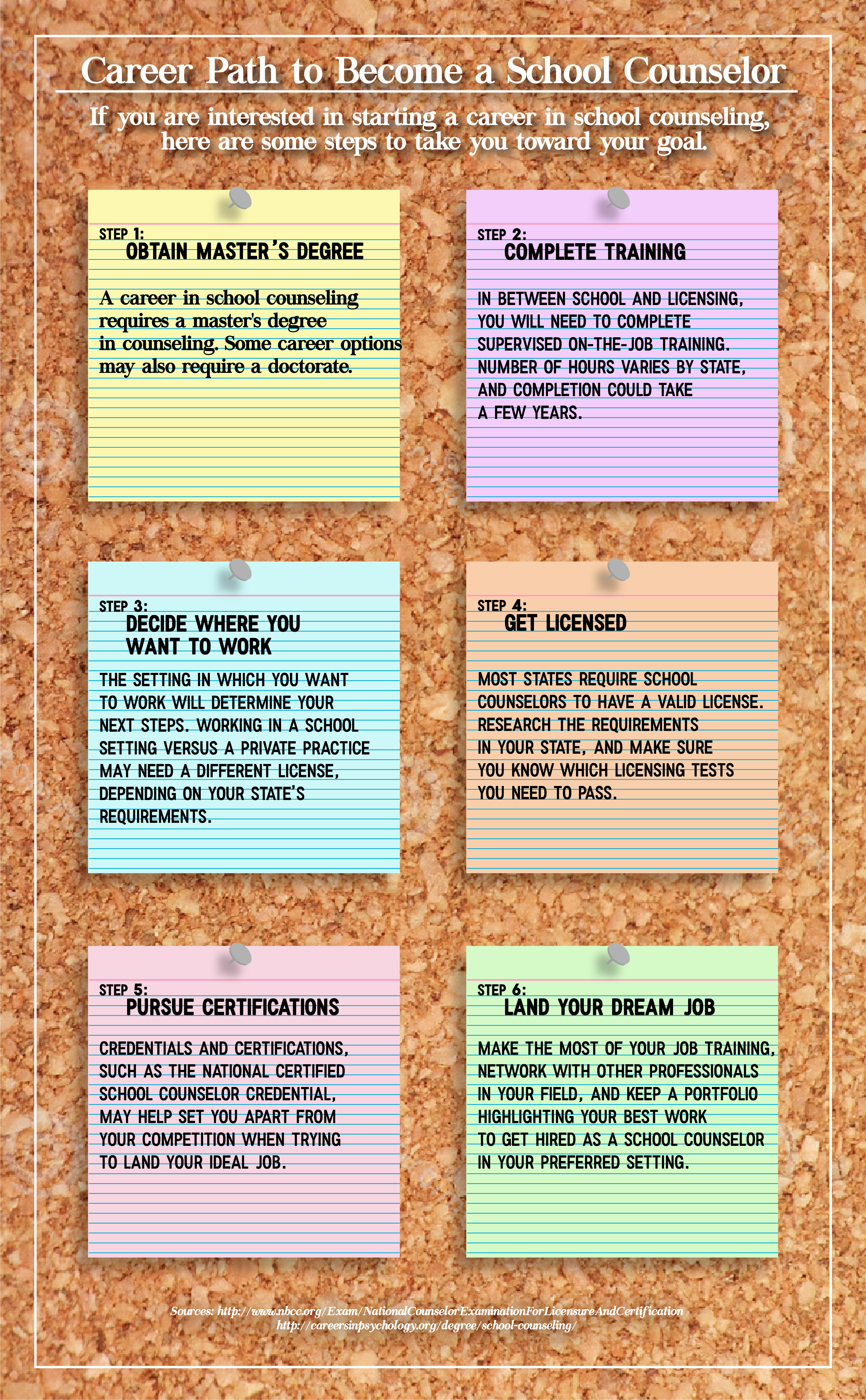
1. Lay the Foundation with Undergraduate Studies
As with similar fields of study, people intending to become school counselors will need a substantial academic background. Your first step is to decide where you want to go to college and apply. Depending on your current level of education, this could mean applying for an undergraduate or graduate program. While your undergraduate degree is not typically required to be in education or counseling, it is often helpful to choose a major that reflects knowledge and understanding of the theories and practices required for counseling. Students who major in subjects such as psychology, sociology, or counseling may find they have acquired a feel for the work involved with becoming a school counselor, and as an extension, are well prepared for their graduate studies. [fat_widget_right]
2. Get Your Master’s Degree in School Counseling
Depending on your program, receiving a master’s degree means learning counseling and guidance techniques for multiple age groups and ability levels. During this process, which may take 1-2 years, you can explore areas of specialization, such as K-12 education, behavior issues, or education for children with developmental delays. According to US News & World Report, some of the top-rated counseling programs in the country are at University of Maryland, College Park, and University of North Carolina, Greensboro. However, there are many worthwhile programs across the country depending on your preferred home base.
 Infographic by Hannah Johnson
3. Work Under Supervision After Graduation
During or after your study program, you can intern or complete a practicum as part of your course requirements. Many programs set a certain number of these hours for you to complete, either as a graduation requirement or part of your future doctorate studies, if you decide to pursue that course. For example, one school counselor program might require 100 practicum hours, 40 of which are in direct contact with K-12 students. Additionally, to take the licensing exam to become a school counselor, you must have completed hundreds of hours of practicum or internship work.
Get familiar with the day-to-day workings of your site and don’t be afraid to ask your supervisor for any tips or important things to know while working there—it is better to ask more questions than less, especially when you are still in a learning environment.
During your school counseling internship or practicum, you will get hands-on experience in the field, generally at a school site you have chosen. You will perform most of the duties associated with your field under the direct supervision of both an on-site supervisor and your instructor or supervisor on campus. Get familiar with the day-to-day workings of your site, and don’t be afraid to ask your supervisor for any tips or important things to know while working there—it is better to ask more questions than not enough, especially when you are still in a learning environment.
4. Get Licensed as a School Counselor
After completing your educational and working hour requirements, it is time to become a board certified school counselor. First, you will need to know your state’s requirements, as they vary. The National Counselor Examination (NCE) is a 200-item exam you might sit for, as it is required to become licensed in most states. It may also be required for a national license or any potential military work you are interested in doing. The NCE website lists all the requirements for the exam and provides information on where to take it in your state. It’s a good idea to study and prepare for this exam like you would for other important, long-term tests. Find example questions from past exams and consider borrowing or ordering an NCE test prep book, which will contain helpful strategies and tips for passing your NCE successfully.
5. Optional Credentials for School Counselors
Before hiring you, most schools will prefer that you have one to two years of hands-on classroom experience. You may also need to get a teaching certificate or license. Research your state’s teaching certificate requirements, as these can differ depending on the education system. Additionally, you can pursue specializations such as career counseling or an emphasis in students experiencing addiction.
6. Get Hired as a School Counselor
The field of school counseling has many opportunities and benefits: more than 200,000 school counselors are employed every year as of 2014, and the profession has a median salary of $50,000 a year. Most educational institutions, whether K-12 schools or colleges, need counselors. Openings for these positions are generally posted through school districts or university careers sites for internal positions. You might begin your job search by researching where you would like to work and begin looking for school counseling postings in that location or ask your own college counselor for help finding a placement. Sometimes the connections you make during your internship or practicum hours can lead to future employment opportunities.
References:
- Danzinger, P. & Newman, H. (2011). School counseling concentration practicum/internship handbook. William Patterson University College of Education. Retrieved from https://www.wpunj.edu/dotAsset/315254.pdf
- National counselor examination for licensure and certification. (n.d.). National Board for Certified Counselors. Retrieved from http://www.nbcc.org/Exams/NCE
- School and career counselors: Summary. (2017, October 24). Bureau of Labor Statistics. Retrieved from http://www.bls.gov/ooh/community-and-social-service/school-and-career-counselors.htm#tab-1
- School counseling degree programs & schools. (n.d.). Retrieved from http://careersinpsychology.org/degree/school-counseling
- State certification requirements. (n.d.). American School Counselor Association. Retrieved from https://www.schoolcounselor.org/school-counselors-members/careers-roles/state-certification-requirements
 As therapists, we know the importance of addressing invisible issues such as stress, depression, and anxiety. But what about dyslexia? Let’s add this one to the list. Did you know that more than 40 million American adults have dyslexia—yet only 2 million know it? It’s likely that 1 in 10 of the people you work with in therapy will have it.
To illustrate why this matters, I’d like to share my story.
As I was growing up, my family never talked about my dyslexia. Although I got help in a public elementary school by means of a tutor named Mary, no one (including myself) understood how this was impacting my life and relationships.
While my school had a plan for me, home was a very different story. My parents separated when I was 6 months old and got a divorce when I was 6 years old. I lived with my mom and sister, who were very close and talked to each other about everything. I didn’t fit in well in our family of three. And unfortunately, no one took the time to try to understand my experience. As a result, I felt quite alone growing up.
[fat_widget_right]
My mother and sister were fast talkers, so their conversations flew right by me. With my unrecognized dyslexia, their joyful ritual of reading and discussing the newspaper each morning at breakfast felt like a tedious chore to me. I went off to school each morning already feeling disconnected. Family dinner conversations also felt strained and out of sync. I couldn’t remember many of the details of my day, so it was hard for me to participate and share entertaining stories the way my sister did. My mother seemed enraptured by everything my sister said. I sat silently at the table and let her do most of the talking. Each day was repetitive and lonely. Somehow my grades were always passable and I never got in trouble, so my mom seemed to think everything was fine with me. We lived in the house together like two ships passing in the night.

I had no real academic problems until I went away to Grinnell College in Iowa, far from where I grew up in Cambridge, Massachusetts. Over time, I began to feel like I was drowning … barely able to keep afloat under the pressure of my classes and sinking grades. Each semester became an endurance battle, an experience that left me feeling depleted and insecure. My mom would get my grades in the mail and immediately question my work ethic. Her mantra to me became, “Please just try, Sarah. For one semester, just try.†I was furious, seething with anger at her, because little did she know—I really was trying. It just wasn’t going very well.
And we still never talked about my dyslexia.
Even after those difficult college years were behind us, the tension persisted between my mother and me. We were not close. I felt angry and misunderstood. My mom wanted to feel connected and reassured. She needed reassurance in order to feel like everything was going to turn out all right in the end. I refused to give her any degree of satisfaction. We were stuck in the quagmire of our mutual misunderstanding.
Eventually, she suggested we see a therapist.
We met several times with an experienced counselor. We talked with him about our fights and frustrations, but we never really delved into the root of the problem. At the time, I still didn’t understand my dyslexia. While I received academic support throughout elementary school, no one ever talked to me about how this processing difference was playing out in my everyday life. In fact, to the best of my recollection the term “dyslexia†was never used. I knew I had a “learning disability†of some kind or other, but this sounded vague, and it wasn’t clear what this actually meant. Adding to that, I didn’t get any support in college, and nobody had ever suggested I needed any. I had this grave misunderstanding that whatever learning difficulty I had, maybe I had grown out of it.
So while we talked with this therapist about all sorts of topics that dealt with the stressors in our relationship, we missed the elephant in the room—namely, the legacy of dyslexia and attention-deficit hyperactivity (better known as ADHD) in our family. Here was this unique moment in time, where my mom and I chose to work on our relationship, and no one knew to talk about learning differences. What a lost opportunity!
My hope and intention is to bring more awareness and consciousness to the therapy community. Just as unrecognized addiction issues can make therapy less effective, I strongly believe that unrecognized learning differences can make therapy a superficial experience—or at the very least incomplete.
Eventually I ended up at the Simmons College School of Social Work in Boston. While I was getting my master’s degree, I visited one of the people I was helping at her home. It was like walking into my grandmother’s house. I saw total disorganization. Papers were strewn everywhere. She had trouble finding necessary everyday things—her purse, wallet, house keys. For me, that was a light-bulb moment. Whatever was troubling her was the same thing my grandmother had. It was ADHD.
Shortly thereafter, I ran into my elementary school tutor, Mary, and asked about our time together. I said to her, “I know I didn’t have dyslexia because I didn’t reverse my letters … so why did we meet?†She looked at me and said, “Oh, but Sarah, you do have dyslexia.†This was another watershed moment. I had dyslexia then, and I still have dyslexia now. It doesn’t go away. At 29 years old, I was finally beginning to understand my family and myself with clarity.
So why am I telling you this story? Realizing that many families must share multigenerational struggles with dyslexia, ADHD, and other learning challenges, I decided to make a film about my efforts to get my family to better understand dyslexia and to look at themselves as well. The result is my award-winning documentary, Read Me Differently. In addition to the film, I have put together a comprehensive viewing guide that provides detailed suggestions about how therapists can best use the film with the people they work with in therapy.
Unfortunately, for me, it wasn’t through therapy that I found insight, information, or relief. Instead, I figured it out though my own almost accidental detective work. Understanding dyslexia doesn’t have to be such an anonymous quest.
My hope and intention is to bring more awareness and consciousness to the therapy community. Just as unrecognized addiction issues can make therapy less effective, I strongly believe that unrecognized learning differences can make therapy a superficial experience—or at the very least incomplete. With more tools and information readily available, therapists can become better informed about addressing these invisible learning differences.
Dyslexia Awareness: Tips for Helping Professionals
Become more informed:
- Talk to your friends and colleagues to learn more about their experiences with dyslexia, ADHD, executive functioning, etc.
- Check out websites such as: understood.org, www.parentseducationnetwork.org, and www.eyetoeyenational.org.
- Watch films such as mine (Read Me Differently) or Being You
- Read books: too many to list!
Keep in mind that the people you work with in therapy may not know if they have learning and/or processing challenges. You may need to take the initiative to help them discover their learning difference.
Conduct a thorough intake of new clients, realizing that not all will be comfortable with filling out a written form. Note: this is a red flag! Go through a written history with the person. Ask questions:
- “Have you ever been identified with a learning difference (dyslexia, ADHD, executive function, etc.)?â€
- “Is there a family history of diagnosed or undiagnosed learning differences?†Follow-up questions: “Do you or anyone in your family have trouble with reading, spelling, written communication, tracking information (i.e., working memory … remembering details, sequencing information in the right order)?â€
- Ask about their school experience. “Did you ever receive extra assistance? Was school easy or hard? Did you get in trouble a lot or fly under the radar?†Explore these responses.
- “Did anyone in your family have trouble staying in school or drop out?â€
- “What can you tell me about your family’s expectations for performance? How did that play out in your family? How did you compare to your siblings or friends? Do you feel like you have met your own expectations (in school, work, family, etc.)?â€
- “Do you use or abuse drugs or alcohol? Is there a family history of drug use/abuse?†(This can be a coping mechanism.)
- “Is there a family history of anxiety, depression, or avoidance?â€
- “How would you rate your self-esteem on a scale of 1 to 10?†(Often, self-esteem is a significant issue for this population.)
- Ask about the person’s work history. “Has there been a lot of stability on the job or have you experienced employment disruptions? What type of work do you do? Is this your top choice or do you feel like an underachiever?†(These are all ways to determine if learning differences are impacting daily life.)
- “How would you rate your communication with friends, family, and coworkers?†(ADHD, working memory, and executive functioning can impact relationships.)
October is Dyslexia Awareness Month. Let’s #saydyslexia and bring visibility to this invisible difference.
Reference:
Conolly, A. (2015). Dyslexia facts and statistics. Retrieved from http://www.austinlearningsolutions.com/blog/38-dyslexia-facts-and-statistics.html
 Older adults may be better than young people at correcting mistakes, according to a study published in Psychological Science. The research contradicts common stereotypes about learning, including the notion that older people are less able to learn than young people.
Does Age Aid Learning?
Researchers wanted to look at both brain activity measures and behavioral components of learning. They recruited 44 young adults around age 24 and 45 older adults around age 74. None of the participants had a history of neurological or psychiatric issues.
Researchers fitted the participants with an electroencephalogram (EEG) cap, then presented them with a series of general knowledge questions (for example, “Which ancient city was home to the Hanging Gardens?â€). The investigators encouraged participants to guess when they were unsure, but saying “I don’t know†was also an option. Each participant rated their confidence in each answer on a 7-point scale. Researchers then gave them the correct answer while measuring brain activity.
The trial continued until each participant had made at least 40 errors—20 on high-confidence answers and 20 on low-confidence answers. Older adults needed an average of 244 questions to reach this threshold, while younger adults needed about 230.
In a second trial, researchers removed the EEG cap and retested the participants by asking them 20 questions that produced high-confidence errors, 20 questions that produced low-confidence errors, and 20 unanswered questions.
[fat_widget_right]Older adults got 41% of the questions correct, and younger adults answered 26% correctly. Both groups reported greater confidence in the answers they got right, but older adults reported higher overall confidence in their answers. Older adults also corrected more of their errors in the second trial, suggesting the older age group may be more likely to learn from previous mistakes.
Age, Learning, and the Brain
EEG results showed larger quantities of a P3a component—a brain wave associated with attentive processing—for both age groups when receiving feedback on high-confidence errors compared to low-confidence errors. When receiving feedback on low-confidence errors, older adults produced larger P3a relative to their younger counterparts.
The research team says these findings suggest younger and older adults may display different attention patterns, but older adults may focus more on correcting mistakes. Older adults may also be less susceptible to the hypercorrection effect—a previous finding that says high-confidence errors are more likely to be corrected than low-confidence errors.
In total, older adults corrected more of their mistakes than younger adults, suggesting they may be more adept at updating their existing knowledge with new information than the stereotype about older adults’ cognitive abilities implies.
References:
- Older beats younger when it comes to correcting mistakes. (n.d.). Retrieved from http://www.psychologicalscience.org/index.php/news/releases/older-beats-younger-when-it-comes-to-correcting-mistakes.html
- Older people better at correcting their mistakes. (2015, October 29). Retrieved from http://www.ndtv.com/world-news/older-people-better-at-correcting-their-mistakes-1237735
 Meow! I am a cat therapist. No, I don’t have the fancy degree and years of experience like my human does—but like other pets in animal-assisted therapy settings, I collaborate with my human to help in the therapy process.
 So what is it like to work with a therapy cat? First of all, I’ll introduce myself and welcome you in to the office. Therapy cats are here to make you comfortable; we’re pretty laid back and we like to go with the flow. Therapy cats are used to being handled and being around humans big and small, as well as other animals.
Nervous about going to therapy? Studies show the presence of a therapy cat will lower your anxiety as well as your stress level. Go ahead—pet us. We lower your blood pressure and help your brain release feel-good endorphins like oxytocin. This might help you talk more openly with our humans.
 Now, have a seat—I’ve already warmed it up for you.
There are many of us—probably in therapy offices all over the world! Consider us a perk of therapy if we happen to be in the room to accompany you in your journey to better mental health.
My human and I know that working through therapy can be hard. Therapy cats see a lot of people who are in pain, but we can help comfort them in hard times. We’re here for you, just like our human is.
[fat_widget_right]
 I can help people of all ages learn and grow while working through mental health issues. Humans have proven that cats like me can even help children with learning difficulties. Some kids read to me. I love the stories of faraway places, but the ones about dogs can be a bit ruff!
I can also lend an ear to someone working out language difficulties or someone experiencing problems with social interaction or anxiety. See, in our many lives we develop many talents!
 People like visiting my office—excuse me, my human’s office—because both of us can listen to you without judgment. As for the paperwork? We’ll leave that up to the humans.
Research has shown that people with attention deficit hyperactivity (ADHD) have cognitive and functioning deficits. They often have high levels of impulsivity and low levels of task attention. These deficits can result in social, personal, and academic difficulties. In the study of ADHD, numerous strategies have been tested to improve attention and decrease impulsivity. Among them are behavioral and cognitive approaches, some of which have been shown to be successful.
But an existing theory at the core of ADHD research is that of reward motivation, which suggests that people with ADHD respond better and demonstrate less impulsivity and more attention when rewarded compared to when there is no reward for a task. To test this theory further, Ivo Marx of the Department of Psychiatry and Psychotherapy at the University of Rostock in Germany recently recruited 38 adults with ADHD and 40 without ADHD for a controlled experiment. In the experiment, the participants underwent a battery of cognitive tests with and without rewards. The response times, false positives, impulsivity rates, and overall performances were measured and compared.
Marx found that the individuals with ADHD exhibited higher levels of impulsivity and lower levels of attention when there was no reward present. However, when a reward was offered, they were less impulsive and their outcomes had fewer false positives. In other words, their performance was better and far improved in the presence of a reward. In fact, the participants with ADHD performed similarly to those without ADHD when they were motivated by a reward.
Marx believes that these findings, which are in line with existing research, underscore the importance of reward motivation for people who tend to be impulsive. The results suggest that perhaps being motivated by a reward encourages individuals with ADHD to slow down their reaction times and engage a “stop-and-think” strategy. Additionally, these results show the importance of such a strategy for improving outcomes for cognitive tasks. This could be extremely useful at helping ADHD individuals improve their cognitive outcomes in various settings, including personal, academic and professional arenas. Marx added, “Taken together, our results support the existence of both cognitive and motivational mechanisms for the disorder, which is in line with current models of ADHD.â€
Reference:
Marx, I., Höpcke, C., Berger, C., Wandschneider, R., Herpertz, S.C. (2013). The impact of financial reward contingencies on cognitive function profiles in adult ADHD. PLoS ONE 8(6): e67002. doi:10.1371/journal.pone.0067002
Contextual information surrounding memories is crucial to memory encoding, storage, and retrieval. When a person experiences an event that is marked by vivid emotional reactions, they often are able to remember specific contextual facts related to that event. For example, a particularly joyous moment could be recalled with the exact details of where a person was when it happened and exactly when the moment occurred in life. However, this source discrimination of being able to isolate when and where appears to be diminished in people with attention deficit hyperactivity (ADHD).
According to a recent study by Anselm B.M. Fuermaier of the Department of Clinical and Developmental Neuropsychology at the University of Groningen in the Netherlands, people with ADHD show deficits in some areas of memory processing, but not in others. Fuermaier used a word paradigm to test memory induction, storage, and retrieval in a sample of 77 participants, 37 of whom had ADHD. The participants were assessed for memory encoding, memory retention, and memory recall with source discrimination.
Fuermaier discovered that although memory encoding, learning of new material, and memory recall or retrieval of information were equal between the ADHD and non-ADHD participants, source discrimination was not. Specifically, the participants with ADHD had much lower levels of source discrimination than the controls. In other words, they were less able to describe when and where a prior autobiographical event had occurred and were unclear about the context of their memories.
This finding is extremely relevant, as it shows that people with ADHD have impairment attaching contextual meaning to memories. Fuermaier said, “Inefficient source discrimination in adults with ADHD can affect daily functioning by limiting biographic awareness and disturbing general cognitive processes.†Identifying these deficits and empowering individuals with ADHD by teaching them effective memory retrieval techniques could improve overall functioning and increase well-being in all domains of life.
Reference:
Fuermaier, A.B.M., Tucha, L., Koerts, J., Aschenbrenner, S., Weisbrod, M., et al. (2013). Source Discrimination in adults with attention deficit hyperactivity disorder. PLoS ONE 8(5): e65134. doi:10.1371/journal.pone.0065134
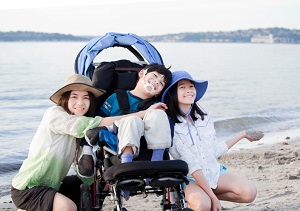 With the magnitude of demands placed on special needs families, siblings of special needs children can often feel overlooked and in need of emotional support. A “special needs child†is defined as having a medical, developmental, or neurological challenges, or another type of disability which impacts the entire family system, thereby requiring special supports (i.e. medical, educational, etc.). In many families where such challenges are present, it’s inevitable that the added stress impacts not only parents and the child in question, but also typically developing siblings. In fact, rates of depression, anxiety, and chronic stress are higher for the special needs family. But with adequate supports, such impediments can be reduced. Special needs disabilities can run the gamut from severely disabling conditions, such as cerebral palsy, in which a child is wheelchair bound and cannot speak, to a high-functioning child with an “invisible†disability, such as attention deficit (ADHD) or dyslexia.
Special needs siblings may feel the following:
- guilt about being a “typically†developing youngster;
- embarrassment about a sibling’s behavior in front of friends;
- frustration that the sibling may not be able to relate or play at the same level;
- worries about the health and survival of the sibling, and the impact of responsibility placed upon the sibling once parents become elderly;
- resentment that attention/services are diverted to the special needs sibling;
- loneliness, or a feeling that peers may not understand what they are going through;
- parentification in caretaking role of sibling, should parents not have adequate support/resources or emotional attunement to the sibling. It would make sense that special needs siblings might be at higher risk for depression and anxiety if they do not have support and resources available.
Your child may benefit from a referral to a competent and compassionate psychotherapist who specializes in special needs family therapy. It is of vital importance to special needs parents is to look for the following symptoms in siblings of special needs children:
- feelings of hopelessness, marked depressed or anxious mood for more days than not, isolation and withdrawal from peers, or a drop in grades or absence from school;
- marked increase in irritability;
- insomnia, appetite changes, panic attacks, and any clear behavioral/mood change that is in sharp contrast to the child’s typical baseline mood/behavior.
Likewise, if any parent/caregiver exhibits the above symptoms, I recommend seeing a family psychotherapist as soon as possible.
There are also many benefits and unique experiences for siblings of special needs children, however. They have the opportunity to learn caregiving and sensitivity that many of their peers may not experience.
Special needs siblings may also feel the following:
- higher level of maturity than peers, given the opportunities to practice empathy and patience with the special needs sibling;
- ability to embrace cultural diversity as relates to special needs and families that are not “typicalâ€;
- protectiveness of the sibling, should he or she be in a position of bullying;
- pride in milestones accomplished by the special needs sibling;
- tolerance of people’s differences;
- increased emotional intelligence and insight to the human condition;
- opportunities to be involved in a strong family unit that focuses time and attention on all family members;
- loyalty to and cohesiveness with the family unit;
- gratitude for health and vitality;
- appreciation for siblings’ gifts/strengths, in light of any challenges;
- social adeptness: the sibling often is quite gifted in reading social cues and relating to people, having had much practice “translating†the world to the special needs sibling;
- resilience: they have also had much practice in managing adversity; they are often well-prepared for the real world, having had to problem-solve and endure challenge as a young person;
- creativity and resourcefulness: Siblings often must creatively problem solve strategies to help special needs families work around the special needs child (i.e. researching wheelchair friendly restaurants, creating a music CD for a blind sibling, etc.)
- mindfulness, focus, and gratitude: many siblings have found a peaceful emotional state as they accept the challenges and advantages that accompany a special needs family.
It is true that there are an equal or greater number of positives and opportunities for the special needs sibling, when given the appropriate support and resources. Several websites and references are listed at the end of this article to support the special needs sibling in acquiring appropriate support to thrive and embrace being a special needs family member. The following objectives are also of great importance for special needs parents, in an effort to ameliorate the stress involved with being a member of a special needs family:
- Provide ample one-on-one attention to all children in the family, not just the special needs child.
- Maintain high standards and expectations for all children, and, as much as possible, an expectation for all children in the household to abide by the same rules, consequences, and privileges.
- Be able to describe the special needs child’s disability to your “typical†child in a developmentally sensitive manner. Allow your child to ask questions about medical/educational/etc. interventions, course of treatment, what to expect long-term, etc. Be aware that preschool-age and younger may have a difficult time understanding and may need play/art therapy with a trained professional to assist in understanding the disability and answering any questions the child has. Older children (school-age) may wonder if the disability is contagious, and may need reassurance that they can’t “catch†the disability. Teens may need help with their mixed feelings of loyalty and embarrassment, as peer relationships become increasingly more important. Children of all ages may wrestle with guilt that they do not struggle with the same challenge as their siblings, and may even feel a pressure to achieve greater accomplishments to compensate for any “deficits†in their sibling.
- Reassure your typically developing child that his/her sibling is receiving the services he/she needs to develop optimally, that it is not their fault that their sibling has a disability, and that it is paramount to be a unique individual with her/his own unique dreams and gifts. Take the pressure off siblings and practice stress management activities like deep breathing, journaling, family discussions, and family fun.
- Family fun is really important. Find ways the entire family can bond together and laugh, whether you do something like swimming, hiking, singing, Pictionary, or whatever common-ground activity brings smiles, laughter, and family unity.
- Connect your typically developing child with a support group for special needs siblings to reduce isolation, increase validation, and reduce stress (see #5 in Resources, below).
- Acknowledge any concerns siblings may feel or demonstrate in behavior, and do not hesitate to enroll your child/family in a supportive psychotherapy program for the entire family.
- Model self-care as a parent; get your own psychotherapy, self-care regimen, and support, engage in stress-reduction activities, and include your family or designate a quiet time where everyone practices meditation, deep breathing, yoga, listening to music, etc.
- Allow typically developing siblings to have their own activities, which are specific to their talents and interests. Help them to flourish by attending sporting events, cheering them on, and encouraging friends and family to do the same. Honor each family member with rewards for unique gifts and talents (winning a spelling bee, scoring a goal in soccer, etc.). Pay attention to each family member and celebrate everyone’s successes and triumphs.
Most importantly, keep communication open with regular family meetings to problem solve about communication issues, chores, etc. Then take the opportunity to play a family game, laugh, dance, sing, and bond. As parents, keep a positive spin on being a special needs family; your situation does not have to be one of drudgery.
On the contrary, with the right resources and supports in place, life can be deeply meaningful, full of purpose, and imbued with unconditional love. Gifts and talents not detected before are discovered and embraced. Life can actually be beautiful. It is up to the parent to set the tone, to take the “emotional read†on the family, and link the family up with resources and supports, which make a world of difference in supporting the emotional health of the special needs family.
Resources for special needs siblings:
- Siblingsupport.org: for a listing of support groups for special needs siblings and how to get a group up and running in your community
- Thearc.org: sibling support network
- med.umich.edu/yourchild/topics/specneed.htm: University of Michigan link for special needs families
- friendshipcircle.org/blog/2013/04/25/the-importance-of-parental-support-and-guidance-for-special-needs-siblings/: Article with resources for sibling support The Friendship Circle website
- nytimes.com/2001/03/06/health/06SIBL.html: Article from New York Times (2001) in support of special needs siblings
- Meyer, Donald and Vadasy, Patricia. (2008). Sibshops: Workshops for Siblings of Children with Special Needs (Revised Edition), Brookes Publishing Co.
- Meyer Donald. (1997). Views from Our Shoes: Growing Up with a Brother or Sister with Special Needs, Woodbine House.
- Meyer, Donald. (2005). The Sibling Slam Book: What it’s Really Like to have a Brother or Sister with Special Needs, Woodbine House.
- Bleach, Fiona. (2002). Everybody is Different: A Book for Young People Who Have Brothers or Sisters with Autism
- Gordon, Michael. (1992). My Brother is a World-Class Pain: A Sibling’s Guide to ADHD-Hyperactivity
- Stuve-Bodeen, Stephanie and Devito, Pam. (1998). We’ll Paint the Octopus Red
- Choldenko, Gennifer. (2004). Al Capone Does My Shirts
- The Sibling Information Network Newsletter: for quarterly support for special needs families
There is a growing body of research that suggests that mood influences our ability to learn. Specifically, the theory behind this research supports the idea that being in a sad mood creates a narrower focus of attention, thus providing an individual with an enhanced ability to implicitly acquire and retain information. Implicit learning is unintended and is required to function. For instance, people must learn how to disseminate various sensory cues such as smells and sights and how to identify pertinent embedded information. The latter example was the focus of a recent study designed to test this theory.
Julie Bertels of the Centre for Research in Cognition and Neurosciences at the Free University of Brussels in Belgium chose to assess how well 128 college students were able to acquire and retain information on a statistical learning (SL) task and how their mood affected this ability. SL is similar to implicit learning and involves being able to identify numbers or letters embedded in other cues. The participants were required to complete the task while they listened to a sad or neutral story. They were assessed before and after the experiment. Some were put into a delayed group and assessed 20 minutes after completion to ensure mood states had returned to baseline levels. These delayed participants, along with the other participants, were asked to consciously retrieve the information they learned during the experiment. In total, three check-in points were used to assess SL skills and mood: immediately after the experiment, 20 minutes later (for delayed group), and 20 minutes further (for same delayed group).
The results revealed that mood definitely impacted the ability to consciously retrieve information. Even though Bertels found that the neutral and sad groups both performed equally during the tasks and immediately after, the confidence they reported pertaining to their performance was quite different. In fact, the sad group reported more confidence and indeed was better able to consciously retrieve the statistical information they acquired during the experiment. Regardless of whether sad/neutral participants were also part of the delayed group, the results remained the same. These findings demonstrate that although negative mood states can impair some cognitive capacities, the narrowing of focus appears to enhance statistical and implicit learning. Bertels added, “Further studies should systematically investigate the possibility that negative words induce an analytic processing style promoting conscious processing and, consequently, higher levels of performance in recall.â€
Reference:
Bertels J, Demoulin C, Franco A, Destrebecqz A. (2013). Side effects of being blue: Influence of sad mood on visual statistical learning. PLoS ONE 8(3): e59832. doi:10.1371/journal.pone.0059832
 I was convinced that Joe Smith—not his real name, of course—wrote his letter V’s wrong in the second grade, and I thought it helpful to inform him of such. After all, he needed all the help he could get, and I thought, as a precocious 7-year-old girl, I had a monopoly on how to craft the most beautiful V on paper—how clueless could Joe be, after all?
Much has been written in recent times about how learning styles are different, neurologically, between girls and boys. As a mother of two boys, this subject matter has come to the forefront in my own household and, in fact, smacked me in the face on occasion (metaphorically speaking). Eons past, I recall being able to sit (with ease and no second thought), criss-cross-apple-sauce, and keep my hands to myself during circle time. What was the problem with these darned, squirrely boys who just couldn’t sit still and wiggled and squirmed, waiting with bated breath for recess?
Well, fast-forward 35 years and enter my life as a mother of two boys. What a wake-up call it’s been! What an honor, privilege, and learning process it has been, and continues to be, to nurture, guide, and educate my precious boys. I am so sorry to Joe Smith and for my judgment of his V’s! Humor me with the following, if you are reading this, dear Joe.
Our culture at large needs to do more to support boys and their unique hardwiring in educational settings. Although my sons have the advantage of great teachers and a nationally respected school district, the structure of our educational system does not favor boys’ unique learning styles. For those with financial and geographical barriers to accessing educational support services (tutoring, etc.), the circumstances are much more grim. We, as a nation, are failing our young men in the area of educational support. And we need to change that.
Studies utilizing PET scans and MRIs show that boys learn very differently than girls. One of the pioneers studying gender learning-style differences, Michael Gurian, reports several key factors differentiating girl/boy learning:
- Boys show more areas in the brain dedicated to spatial-mechanical strengths, whereas girls generally demonstrate a focus on verbal-emotive processing.
- Girls are generally hardwired to be less impulsive, enabling them to sit still, focus, read, and write at an earlier age than boys.
- Boys are often misdiagnosed with learning disabilities and attention-deficit issues when educators are not aware of the delicate neurology of the male developing brain.
- Boys’ brains need more rest times during a day of learning. When bored, boys tend to “zone out†more than girls and require rest periods before reengaging in learning.
- Boys are hardwired to be single-task focused, whereas girls’ hardwiring demonstrates strength in multitasking. Transitions are more difficult for boys due to this lateralization of the brain versus typical female cross-communication of brain hemispheres.
- Less oxytocin in the brain of males leads to more aggression and playful rough-housing. Girls, on the other hand, are more predisposed to cooperative negotiation, have a much easier time with impulse control, and can sit “criss-cross-apple-sauce†in the reading circle with ease. Many boys have a difficult time sitting still to hear the teacher’s story, as they are movement-driven (kinesthetic) in their learning process (research and findings cited from Gurian, 2006).
It is no surprise that in one study by Gurian (2005), 75% of students in a special education classroom were boys. The vast majority of special education student populations are, in fact, boys. This finding is curious in that it highlights the following: Boys are diagnosed with learning disabilities at a much higher rate than girls due to possibly 1) educational settings that do not support boy-friendly learning environments, 2) boys’ neurochemistry is different and more vulnerable than that of girls, thus indicating the need for adequate educational support for both boys’ and girls’ learning styles, and 3) evidence of hyperactive behavior is more prevalent in boys, thus, perhaps, a bias more toward referral to special education for boys (Hallahan and Kauffman, 2003).
Taking into consideration the many variables that affect learning style, including culture, family environment, resilience, and temperament as it relates to motivation, genetics, and uterine environment during gestation, among other factors, researchers recommend the following tips for ensuring a boy-friendly educational environment:
- Boys are energized and motivated by movement. Teaching styles that encourage the experiential/kinesthetic learning modality support boys’ natural biochemistry, helping them to stay engaged and focused. My son’s magnificent teacher sings with her class and plays guitar; she discovers earthworms and creates ice castles with her students. She is amazing. I only wish all boys could have Mrs. Overstreet as their teacher.
- Spatial-visual tools (pictures/graphics) assist with boys’ neurological needs in achieving literacy. Storyboards depicting images a boy is imagining can assist with translating story into words.
- “Boys do their best work when teachers establish authentic purpose and meaningful, real-life connections.†(Gurian, 2006). Topics of learning particularly interesting to boys include ideas they can directly apply to their lives (science projects involving the germination of a seed, etc.).
- Single-gender groupings for projects can be beneficial. Girls tend to verbalize during problem solving via cooperation and interactive learning. Boys are single-task driven neurologically, and enjoy a gentle banter that may include a camaraderie of innocuous, aggressive male bonding in the form of sarcastic (but innocent) put-downs and/or rough-housing (kinesthetic bonding not unlike playing football or karate).
- Allow boys to choose topics in reading that appeal to them (superheroes, nonfiction works, etc.).
- Ensure the presence of positive male role models (teachers, parents, extended family, tutors, community leaders, etc.) who emphasize the importance of education.
- Parental assistance with homework accountability. Help your son stay organized by overseeing weekly assignments and highlighting the importance of a designated homework time after allowing for kinesthetic movement and discharging of school-day stresses.
The above suggestions are by no means exhaustive but are applicable in educational settings, meriting further consideration to support boys in their journey toward self-confidence, purpose, and authentic contribution to society.
As a mother of two boys, I am both honored and obligated to ensure that my sons have the most appropriate supports to guide and engage them in their formal education. Much change is needed to help our future generations of boys to emerge from grades K-12 with confidence as they follow their dreams into adulthood.
For more on boys’ learning styles, please see:
- Gurian, M. & Stevens, K. (2005). The Minds of Boys: Saving Our Sons from Falling Behind in School and Life. San Francisco: Jossey-Bass.
- Gurian, M. (2006). The Wonder of Boys. New York: Tarcher-Putnam.
- James, Abigail Norfleet (2007).Teaching the Male Brain: How Boys Think, Feel, and Learn in School.
Housing options for low-income families are limited. Research has shown that disadvantaged communities can contribute to emotional and behavioral challenges for children. But few studies have looked at the quality and kind of housing affects the developmental trajectory of children. Rebekah Levine Coley of the Applied Developmental and Educational Psychology Department at Boston College decided to explore this issue in a recent study. Coley looked at housing contexts including stability, housing quality, renting versus owning, and subsidized housing. She examined how these factors affected well-being in both the children and the parents.
Coley used data from over 2,400 participants ranging in age from 2 to 21 years old. The data was collected over a 6 year period and was used to determine how cognitive, behavioral and emotional well-being was affected by housing. The study revealed that several aspects of housing affected childhood development. Coley said, “Within the four characteristics of housing considered in this research, poor quality housing was the most consistently and strongly predictive of children’s well-being across the span of childhood.†Poor housing quality affected the emotional and behavioral development of the younger participants the most and had a strong negative impact on adolescents’ reading and math skills. Stress from living in poor conditions also contributed to negative outcomes. Coley believes that parental stress from inadequate living resources, as well as stress from neighborhood factors, including crime, violence, and drugs, could culminate to decrease parental emotional availability. Combined with the stress of the child, the result could be decreased coping skills and higher levels of internalizing and externalizing behaviors.
Housing stability was examined and revealed mixed results. For instance, multiple moves led to more externalizing and internalizing. But a move within the prior year led to lower maladaptive coping and better reading skills. This could be the result of moving to a better home or better community. Although Coley didn’t fully examine the details of the stability, these contradictory findings should be explored in future research. Finally, the developmental differences of children who rented versus owned, or who lived in subsidized versus non-subsidized housing, were minimal. The cost to own a home may put a financial burden on families that outweighs the benefits of owning. And aside from the environment in which subsidized housing is located, private versus subsidized renting did not directly affect developmental outcomes. Coley hopes that future research will further examine the impact of the home, in all its contexts, on overall development and well-being in children from all socioeconomic classes.
Reference:
Coley, R. L., Leventhal, T., Lynch, A. D., and Kull, M. (2012). Relations between housing characteristics and the well-being of low-income children and adolescents. Developmental Psychology. Advance online publication. doi: 10.1037/a0031033