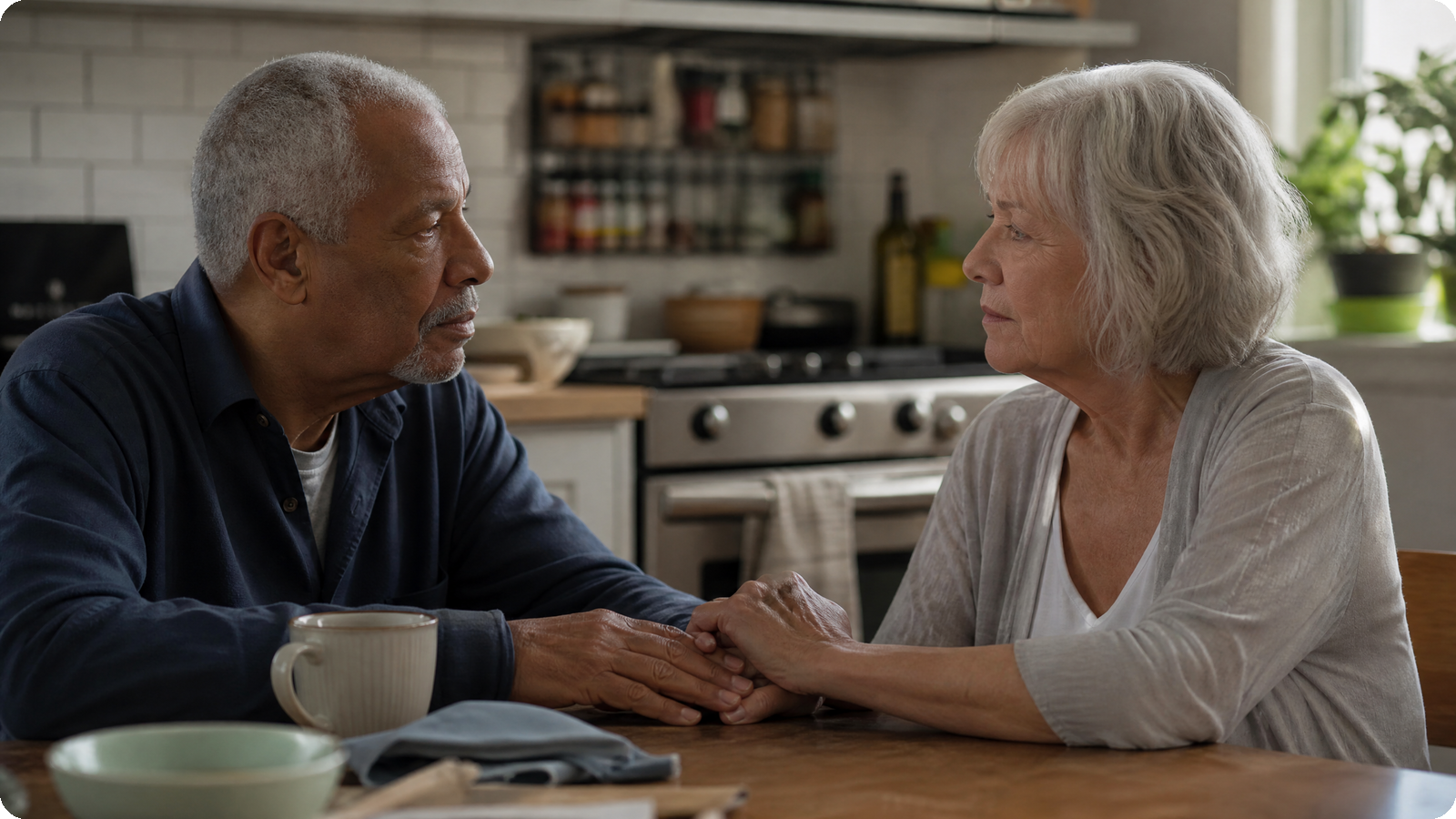
Couples therapy after 70 is not “too late” work. In my experience, it can be some of the most meaningful work we do. I was surprised when a longtime colleague once told me she no longer took clients over age 70 because, in her view, people were too rigid, too set in their ways, and carrying too many decades of unresolved issues to truly change. I have never experienced older couples that way.
Love and repair
Later-life intimacy
Long-term marriage
In this blog
Key insight
The couples who reach out in their seventies are not giving up. They are leaning in. They are demonstrating commitment, courage, and a desire for healing, even in later life.
Why couples therapy after 70 is not too late
I recently opted out of taking Medicare insurance because of low reimbursement rates. It was a difficult decision. But it never occurred to me to turn away couples in long-term marriages, partners who have spent 30, 40, or even 50 years together and are now seeking more intimacy, better communication, or support through life’s transitions.
Personally, I welcome these couples. Couples of all ages come to therapy for similar reasons. They feel disconnected. The romance has faded. They have the same argument on repeat. They feel lonely, misunderstood, or unappreciated. They may be navigating financial stress, parenting differences, or a longing for deeper emotional or physical intimacy. Most of all, they want to feel seen, heard, and valued.
At 70 and beyond, those desires do not disappear. Additional layers often enter the picture, but the longing for connection remains human. GoodTherapy has written about how partners can grow together or grow apart while aging. Couples therapy after 70 can support the choice to keep growing together.
When therapy may help
If you and your partner keep returning to the same painful conversation, a couples therapist can help slow the pattern down. You can search for support through GoodTherapy’s Find a Therapist directory.
Changes in physical and mental health
Health concerns frequently become part of the relational dynamic in later life. Chronic pain, illness, mobility limitations, depression, anxiety, or cognitive changes can shift the balance in a relationship. One partner may take on a caregiving role, altering the sense of equality and partnership. Medications can affect mood, energy, sleep, and sexual functioning.
Couples who once moved through life as equals may now struggle to maintain dignity, connection, and even romance in the face of very real practical challenges. The National Institute of Mental Health notes that later-life changes, including illness and loss, can affect mental health. In a marriage, those changes rarely affect only one person. They enter the way partners speak, listen, plan, and reach for each other.
Later-life layers that may enter couples therapy
| Health changes can alter roles, independence, energy, patience, and each partner’s sense of being desired. | |
| Retirement can reduce structure and increase time together, bringing old patterns closer to the surface. | |
| Losses may include friends, siblings, homes, routines, health, or a previous version of the marriage. | |
| Adult children and extended family can affect decisions about care, housing, money, boundaries, and time. |
Retirement, loss, and family dynamics
Retirement
Retirement can be a gift or a stressor. For some couples, it opens the door to travel, hobbies, and meaningful shared time. For others, it means spending more time together than ever before. When work no longer provides structure or distance, unresolved tensions can surface. Partners who once coped by immersing themselves in their careers may now need new ways of relating and managing conflict.
Loss
By their seventies, most people have experienced significant loss: parents, siblings, friends, homes, routines, health, or the future they expected. Grief enters a relationship in complex ways. Because partners often grieve differently, one seeking connection and the other withdrawing, disconnection can happen at the very moment they need each other most.
The National Academies report available through NCBI Bookshelf describes social isolation and loneliness as important health concerns for older adults. That does not mean a spouse should become someone’s only support. It does mean the emotional safety of a long-term partnership can matter deeply in later life.

I recently worked with a couple who returned to therapy after losing their longtime home to a fire. While still displaced, the wife received a cancer diagnosis. They were navigating layered stress: housing instability, health concerns, differing coping styles, and a sense of responsibility to their adult children.
One partner wanted to talk and process. The other coped by staying busy. Both loved each other deeply, yet felt alone. Our work was not about solving the external problems. It was about helping them slow down, regulate their nervous systems, and access the vulnerability beneath their coping strategies. When they were able to say, “I’m scared,” “I miss you,” and “I need you,” something shifted.
They reached for each other. In the midst of uncertainty, their relationship became a source of comfort rather than strain. This is what is possible in later life, not the elimination of hardship, but a transformation in how partners face it together.
Family dynamics
Later life often brings increased involvement from adult children and extended family. Decisions about housing, finances, lifestyle, caregiving, and medical choices can become points of tension. At the same time, couples are often more aware that time is finite. Many want to be intentional about how they spend the years ahead, resolving old conflicts, offering forgiveness, and creating a sense of peace and companionship.
A gentler next conversation
If conversations about retirement, caregiving, or adult children keep escalating, start with one shared goal: “I want us to feel like a team while we talk about this.” GoodTherapy’s guide to communication skills for couples offers simple practices that can support this kind of shift.
Sexuality and intimacy after 70
Cultural myths suggest that sexuality fades with age. In reality, many older couples still long for touch, closeness, affection, and connection. What changes is not always the need for intimacy, but its expression. Research on sexual aging and older adults continues to examine how sexuality and sexual health remain part of later-life well-being.
Therapy offers space to expand sexuality beyond performance and toward presence, tenderness, and emotional connection. Some couples need help talking about changing bodies without embarrassment or blame. Others need help rebuilding emotional safety before physical closeness can feel possible. The goal is not to prescribe one kind of sexual relationship. The goal is to help partners speak respectfully about affection, desire, comfort, boundaries, and care.
Try this now: a repair pause
| 1 | Pause before repeating the familiar argument. Take one breath and notice what you are protecting. |
| 2 | Name one feeling without making it your partner’s fault: “I feel scared,” “I feel alone,” or “I feel overwhelmed.” |
| 3 | Ask for one small reachable response: “Could you sit with me for a minute?” or “Could we talk about this after dinner?” |
Long-standing patterns and new possibilities
Of course, long-standing patterns exist. A pursuer-withdrawer dynamic that has lasted for decades does not disappear overnight. A partner who has defended, criticized, shut down, or kept peace for years may not immediately know another way.
But longevity also brings strengths: shared history, resilience, humor, loyalty, and a deep understanding of each other’s inner worlds. These couples are not starting from scratch. They are revising a long and meaningful story. Studies on marital quality and well-being among older adults also point to why the quality of later-life relationships deserves attention.
So, is it too late to change? In my experience, it is not. Therapy with couples in their seventies can be some of the most powerful and moving work we do. There is often a clarity of purpose, a willingness to take responsibility, and a deep desire to feel seen and appreciated by the person who has witnessed their entire adult life.
This is not too late work
This is essential work. Couples therapy after 70 can help partners make room for old pain, current stress, and renewed connection.
When there is still time for love
Rather than rigidity, I often encounter courage. Rather than resistance, I see urgency. Time, after all, is precious. The couples who pick up the phone in their seventies are not demonstrating rigidity. They are saying, “We don’t want to live the rest of our lives disconnected.” That is not pathology. That is motivation.
Yes, they bring decades of history. But those decades also hold shared memories, resilience, humor, loyalty, and deep familiarity with one another’s wounds and longings. When we help them slow down, regulate, and truly listen, sometimes for the first time in years, the shifts can be profound.
I have seen couples in their seventies learn to apologize in ways they never had before. I have watched partners soften long-held defenses and rediscover tenderness. I have witnessed emotional and physical intimacy deepen in ways that feel more meaningful than earlier stages of life. I have seen forgiveness emerge when each partner finally understands the loneliness the other has been carrying.
Development does not stop at midlife. The later decades invite us into integration, meaning making, connection, and peace. Couples therapy can be a powerful vehicle for that process. As long as partners are willing to reach for each other, repair is possible. And as long as there is time, even a little time, there is time for love.
Finding support for couples therapy after 70
A later-life relationship may include old disappointments, deep loyalty, exhaustion, gratitude, regret, and hope at the same time. Couples therapy after 70 honors that complexity. It does not assume partners are too old to change. It assumes that the need to be understood remains profoundly human.
If you are considering therapy, you might begin by looking for someone who respects older adults, understands long-term relationship patterns, and can help both partners feel heard. You may also find it useful to read about ways couples counseling can help.
Frequently Asked Questions
Common questions about couples therapy after 70 and later-life relationship repair.
Support is available at any age
Whether you are facing old patterns or new losses, you do not have to sort through relationship pain alone.
 |
About the Author Mary Kay CocharoLicensed Marriage and Family Therapist Mary Kay Cocharo is a Los Angeles licensed marriage and family therapist who works with individuals and couples seeking deeper connection, emotional safety, and healthier communication. Her practice centers on relationship repair, intimacy, premarital counseling, long-term partnership, and the patterns that shape how partners reach for or withdraw from each other. She is trained and certified in Imago Relationship Therapy and is a master-level practitioner of Encounter-centered Couples Therapy, integrating relationship theory, dialogue skills, and current understanding of connection and the nervous system. Along with weekly and intensive couples work, she offers workshops and retreats for engaged and married couples and trains other therapists in couples therapy. |

Key Takeaway: Falling out of love isn’t just emotional, it’s biological. When dopamine fades and stress hormones rise, relationships suffer. But here’s the hopeful part: through neuroplasticity and couples therapy, your brain can literally rewire itself to feel love again. This article explores the science behind why we fall out of love and the proven therapeutic approaches that can help you reconnect.
Ah, love, that magical mix of butterflies, late-night texts, and pretending you actually like their favorite band. At first, everything feels cinematic. But somewhere between “I can’t stop thinking about you” and “Why do you breathe so loud?” something shifts. You might find yourself falling out of love, and it can feel confusing and painful.
It’s not that you suddenly stop caring, it’s that your brain chemistry changes. Falling out of love isn’t just an emotional story; it’s also a biological one rooted in neuroscience and attachment patterns.
The Brain on Love: Nature’s Most Addictive Drug
When you first fall in love, your brain throws a full-blown chemical party. Dopamine (the “pleasure” chemical) lights up your reward system every time you see or hear from your partner. Add a dash of norepinephrine (the excitement hormone) and a heavy pour of oxytocin (the cuddle chemical), and suddenly you’re in the throes of what scientists call “romantic love”, and what your friends call “being obsessed.”
Research published in the journal Brain Sciences confirms that the coordination of oxytocinergic and vasopressinergic pathways, coupled with the dopaminergic reward system, contribute to the formation and maintenance of both maternal and passionate love. Basically, early love is the brain’s version of a chemical binge, all thrill, no chill.
The Science Behind the Spark
The ventral tegmental area (VTA) and nucleus accumbens; key regions in your brain’s reward circuit, become hyperactive during early love. Georgetown University neuroscience research shows this activation is similar to what happens with highly rewarding stimuli, explaining why new love feels so intoxicating.
The Come-Down: When the High Wears Off and You Start Falling Out of Love
Unfortunately, the brain can’t keep partying forever. Over time, it adapts, dopamine receptors stop firing at full blast, and that rush of excitement begins to fade. This is called hedonic adaptation, which is science’s polite way of saying, “you got used to it.”
What once made your heart skip now just… exists. You start noticing little annoyances (why do they breathe so loud again?) because your brain isn’t running on pure dopamine anymore. This biological shift is a primary reason why people experience falling out of love, even when they still care deeply about their partner.
Feeling emotionally disconnected from your partner? Learn effective strategies with our article on what couples who stay together do every day to maintain emotional connection.
Stress Enters the Chat: Cortisol Crashes the Party
As the honeymoon glow fades, real life rolls in, bills, chores, emotional baggage, and along with it comes cortisol, the stress hormone. When stress rises, oxytocin (your bonding hormone) drops. The brain’s alarm system, the amygdala, becomes more active, and suddenly your partner’s quirks start feeling like personal attacks.
This isn’t because love disappeared, it’s because stress hijacked the chemistry that keeps you connected. Studies suggest that chronic stress (via cortisol) may disrupt oxytocin and bonding pathways, weakening emotional closeness.
Serotonin and the End of Obsession
When you first fall in love, serotonin levels drop, making you think about your partner constantly. (Yes, love makes you a little obsessive, it’s biology, not madness.) But as the relationship settles, serotonin balances out. The fixation fades, and you start noticing other things: your needs, your goals, your sleep schedule.
That shift can feel like falling out of love, but in many cases, it’s your brain just finding balance again. Understanding this biological reality can help couples normalize what they’re experiencing rather than interpreting it as relationship failure.
Quick Science Fact:
A study by Marazziti et al. found that people in early romantic love had reduced platelet serotonin transporter density, levels similar to those seen in unmedicated OCD patients
Withdrawal: When Love Ends (and It Feels Like You’re Dying)
Breakups, or even emotional distance, can feel physically painful because your brain goes through withdrawal. Those same dopamine and oxytocin pathways that once fired with joy suddenly go quiet. It’s why we crave contact, even when we know it’s not healthy.
But here’s the hopeful part: your brain heals. Through neuroplasticity, the brain’s ability to rewire, new sources of connection and joy eventually form. Research on neuroplasticity demonstrates that you really can feel that spark again, sometimes even with the same person.

How Therapy Can Help When You’re Falling Out of Love
Here’s the part many people don’t realize: therapy isn’t just for breakups, it’s for makeups. When you’re experiencing falling out of love, professional support can be transformative.
A good couples therapist can act like a guide for your nervous systems, helping you both learn to connect again instead of defaulting to old defenses. Emotionally Focused Therapy (EFT), which is grounded in attachment theory, has been shown to be highly effective for couples experiencing emotional disconnection.
How Therapy Rewires Your Brain for Love
-
Creates emotional safety: When you feel heard instead of blamed, the brain naturally shifts from defense mode to connection mode
-
Reduces cortisol (stress): Learning better communication and emotional regulation skills lowers stress hormones
-
Boosts oxytocin: Small moments of eye contact, shared laughter, or vulnerability can reignite bonding hormones
-
Activates neuroplasticity: Therapeutic relationships can help form new neural pathways over time, as shown in neuroimaging studies of psychotherapy.
In therapy, partners experience emotional safety, and that’s when oxytocin (the bonding hormone) starts flowing again. Therapy also helps reduce cortisol (stress) by teaching better communication and emotional regulation skills. Small moments of eye contact, shared laughter, or even vulnerability can reignite dopamine, reminding your brain why you fell in love in the first place.
The Role of Attachment in Falling Out of Love
Research shows that early caregiving experiences shape adult romantic attachment styles (secure, anxious, avoidant, disorganized), which influence how people think, feel, and relate in relationships.
Therapy helps couples move from insecure attachment patterns toward earned secure attachment, where both partners feel safe expressing vulnerability and responding to each other’s needs. This transformation doesn’t just improve feelings, it literally changes brain structure through repeated positive interactions.
The Takeaway: Falling Out of Love Doesn’t Mean Failure
Falling out of love doesn’t mean you’ve failed, it means your brain is doing what it’s designed to do: adapt and seek balance. But just as the brain can unlearn closeness, it can relearn it, too.
With care, curiosity, and sometimes the guidance of a good therapist, the chemistry of love can evolve, not back to the dizzying early rush, but toward something deeper, calmer, and more real. Couples counseling offers multiple pathways to rebuild connection, from improving communication to addressing underlying trauma.
Signs You Might Benefit from Couples Therapy:
-
You feel emotionally disconnected from your partner
-
Arguments escalate quickly or lead nowhere
-
You’re considering separation but still have hope
-
Life stressors are straining your relationship
-
You want to prevent small issues from becoming major problems
-
You’re ready to invest in your relationship’s future
Because love isn’t just a feeling, it’s a relationship between two nervous systems learning to feel safe again. And with the right support, that safety can be rebuilt, one moment of connection at a time.
Ready to Reconnect and Rebuild Your Love?
You don’t have to navigate falling out of love alone. Professional couples therapy can help you understand the neuroscience behind your disconnection and provide practical strategies to rebuild emotional intimacy.

Building a happy healthy marriage is one of life’s most rewarding journeys, yet it requires intentional effort, understanding, and commitment. With approximately 40-50% of first marriages ending in divorce according to the American Psychological Association, understanding what creates lasting marital satisfaction has never been more important. This comprehensive guide explores evidence-based strategies for creating and maintaining a thriving, life-long partnership based on recent research and expert insights.
Understanding Current Marriage Statistics and Trends
Before diving into how to create a happy healthy marriage, it’s important to understand the current landscape of marriage in America. According to data from the U.S. Bureau of Labor Statistics (2024), approximately 46% of first marriages end in divorce by age 55, with 46% of those who had married experiencing divorce. However, this statistic doesn’t tell the complete story. Statistics from the CDC Â shows that divorce rates have actually been declining since the 1990s, particularly among younger couples.
The average age at first marriage has risen significantly over recent decades. The median age at first marriage has risen to roughly 30.2 (men) and 28.4 (women) in 2023, compared to significantly younger ages in previous generations. This shift toward later marriage appears to correlate with more stable unions, though age is just one factor among many that influence marital success.
For Those Not Yet Married: Timing and Partner Selection
1. Consider Waiting Until Your Late Twenties or Early Thirties
Analyses from the Institute for Family Studies suggest the lowest divorce risk often appears for marriages begun in the late 20s to early 30s; results vary by cohort and data source.†Data analyzed by Dr. Nicholas Wolfinger shows that couples who marry between ages 28-32 show lower divorce rates compared to those who marry either significantly younger or older.
Why does age matter? Several factors contribute to this pattern. By your late twenties, you’ve typically completed your education, established career foundations, and developed a more stable sense of identity. Financial stability significantly impacts marital success, according to research published in divorce statistics analysis, a greater economic stability is generally linked to lower divorce risk
Your personality continues developing through your twenties. Marrying after age 27 increases the likelihood that your core values, interests, and life goals will remain relatively stable throughout your marriage. Many couples who marry in their early twenties report divorcing due to “growing apart” as they mature into different people than they were at the altar.
2. Choose Someone Dependable and Reliable
A happy healthy marriage requires partnership with someone who consistently follows through on commitments. Marriage involves navigating countless demands, from daily household responsibilities to major life decisions. You need confidence that your partner will be there when it matters most.
Dependability manifests in both significant moments and everyday interactions. Does your potential partner show up when they say they will? Do they honor their promises? Can you trust them to contribute equally to your shared life? These qualities form the foundation of a partnership that can weather life’s inevitable challenges.
Expert Insight
According to research published at Birmingham Young University, financial disagreements are among the top predictors of divorce across all socioeconomic levels. Marrying someone financially responsible and willing to communicate openly about money significantly increases your chances of long-term marital satisfaction.
3. Marry Your Best Friend and Biggest Advocate
The most successful marriages are built on deep friendship. Your life partner should be someone who genuinely has your back, not just during good times, but especially when challenges arise. Look for someone who has repeatedly demonstrated their support and loyalty through actions, not just words.
Research emphasizes that couples who maintain strong friendship foundations, characterized by mutual respect, admiration, and turning toward each other rather than away, experience significantly higher relationship satisfaction (Gottman & Silver, 1999). Your spouse should be someone you actually enjoy spending time with, someone whose company enriches your life.
Components of a Happy Healthy Marriage
Psychologist Robert Sternberg’s triangular theory of love identifies three fundamental components that, when combined, create what he calls “consummate love”, the most complete and satisfying form of romantic relationship. Published in Psychological Review, this theory has become one of the most influential frameworks for understanding romantic relationships. Understanding and actively cultivating each component is essential for maintaining a happy healthy marriage over time.
4. Intimacy: Building Emotional Connection
Intimacy encompasses the feelings of closeness, connectedness, and emotional bonding that develop in loving relationships. This component creates the warmth and security that characterize deep partnerships. Intimacy in a happy healthy marriage requires deliberate cultivation through several key practices.
Active listening forms the cornerstone of emotional intimacy. This means fully engaging when your partner speaks, putting away your phone, turning off the television, and giving your complete attention. Listen not just to respond, but to understand. Ask thoughtful questions that demonstrate genuine curiosity about your partner’s thoughts, feelings, and experiences.
Communication Tips for Building Intimacy
- Practice asking open-ended questions that encourage deeper sharing
- Reflect back what you hear to ensure understanding
- Share your own feelings and experiences authentically
- Create regular rituals for meaningful conversation (morning coffee, evening walks)
- Avoid immediately offering solutions, sometimes your partner needs validation more than advice
5. Passion: Maintaining Romantic and Physical Connection
Passion includes the drives leading to romance, physical attraction, sexual consummation, and related phenomena in loving relationships. While passion often peaks during a relationship’s early stages, maintaining it requires conscious effort as partnerships mature.
Creating a happy healthy marriage means committing to being an engaging, affectionate partner even after years together. Touch and physical affection remain crucial, daily kisses, hugs, and casual physical contact maintain connection and trigger release of oxytocin, often called the “bonding hormone.”
Verbal expression of attraction matters tremendously. Tell your partner you find them attractive. Express appreciation for specific qualities. Compliment them genuinely and regularly. These expressions of desire and admiration help sustain the romantic feelings that brought you together initially.
Prioritizing physical intimacy, when mutually desired, strengthens marital bonds. Studies show that open sexual communication and mutual satisfaction predict higher relationship quality (Mallory et al.). This doesn’t mean forcing physical connection, but rather creating environments where both partners feel desired, respected, and comfortable expressing their sexuality within the relationship.
6. Commitment: Choosing Love Daily
Commitment represents both the initial decision to love someone and the ongoing choice to maintain that love through all circumstances. This component distinguishes temporary infatuation from lasting partnership. In a happy healthy marriage, commitment means showing up consistently, even, and especially, when feelings fluctuate.
Many people enter marriage with unrealistic expectations about what married life entails. Popular culture often portrays relationships as effortlessly perfect when you’ve found “the one.” Reality differs significantly. All marriages face challenges: financial stress, health issues, disagreements about parenting, evolving individual needs, and countless other obstacles.
The difference between marriages that endure and those that dissolve often comes down to commitment. Committed partners view challenges as problems to solve together rather than reasons to exit the relationship. They understand that periods of lower satisfaction don’t necessarily indicate an incompatible match, they indicate a need for renewed effort and possibly professional support.
Important Check:
Remarriages are generally less stable than first marriages, with divorce rates ranging from about 30–60% depending on age and cohort (BLS data review). This statistic highlights that relationship problems often stem from unrealistic expectations and poor relationship skills rather than simply choosing the “wrong” partner. Working on yourself and your approach to relationships matters more than finding someone “perfect.”
Research on relationship commitment shows that committed partners are more likely to inhibit destructive responses and choose constructive ones during conflict (Rusbult et al., 1991). When both individuals are committed to the relationship’s success, they’re more likely to approach disagreements as “we” problems rather than “me versus you” battles.

Understanding Realistic Expectations for Marriage
One of the most damaging factors in modern marriages is the gap between expectations and reality. Many couples enter marriage believing it should consistently feel effortless and blissful if they’ve chosen the right partner. When inevitable challenges arise, they interpret difficulties as signs they’ve made a mistake rather than normal aspects of partnership.
A happy healthy marriage doesn’t mean conflict-free or always passionate. Research from couples therapy experts consistently shows that all relationships experience periods of disconnection, frustration, and even questioning. What distinguishes successful marriages is how couples respond during these challenging periods.
Gottman’s research shows that around 69% of couple conflicts are “perpetualâ€, issues to be managed rather than solved. Successful couples learn to dialogue about these perpetual issues with humor and affection rather than allowing them to create gridlock.
The Danger of the “Grass is Greener” Mentality
When facing marital difficulties, some people assume divorcing and finding a “better match” will solve their problems. However, unless you address underlying expectations, communication patterns, and relationship skills, similar issues tend to resurface in subsequent relationships.
This doesn’t mean staying in genuinely harmful relationships. Abuse, chronic infidelity, active addiction without willingness to seek treatment, and other serious issues sometimes necessitate ending a marriage. However, many divorces occur over resolvable differences that couples could work through with proper tools, realistic expectations, and professional support.
The Impact of Financial Issues on Marriage
Money represents one of the most significant stressors in marriage and a leading predictor of divorce. Research from Kansas State University (Britt et al., 2013) found that arguments about money are the top predictor of divorce, regardless of income level, net worth, or debt amount. The study, published in Family Relations, found financial disagreements tend to be more intense and take longer to recover from than arguments about any other topic.
Research found that financial strain and stress are strongly associated with lower relationship satisfaction and higher likelihood of marital dissolution. A Ramsey Solutions survey (2018) found that 86% of couples married five years or less started their marriage in debt, compared to 43% of couples married 25+ years. Nearly half of couples with $50,000 or more in debt say money is their top source of arguments.
Why Financial Stress Damages Relationships
Financial problems in a happy healthy marriage create multiple layers of stress. Debt limits couples’ ability to reach goals like homeownership, retirement savings, or family vacations. When partners have different spending philosophies, one being a saver, the other a spender, conflicts arise over how to allocate limited resources.
Money arguments often represent deeper conflicts about values, power dynamics, and trust. Financial infidelity, hiding purchases, secret accounts, or undisclosed debt, erodes the fundamental trust marriages require. Research from the National Debt Relief organization found that 54% of respondents believe having a partner in debt is a major reason to consider divorce.
Creating Financial Harmony
Couples who maintain happy healthy marriages despite financial challenges share several key practices. They communicate openly and regularly about money, discussing both short-term budgets and long-term financial goals. According to the Ramsey Solutions study (2018), 94% of respondents who described their marriage as “great” discuss their money dreams with their spouse.
Successful couples understand their different money personalities and work to find compromises. They create systems, whether combined accounts, separate accounts, or hybrid approaches, that work for their unique relationship. Most importantly, they view financial challenges as problems to solve together rather than opportunities to blame each other.
Financial Communication Starter Questions
- What are our top three financial priorities for the next year?
- How do we each feel about our current debt situation?
- What financial fears or anxieties do we each have?
- How were finances handled in our families growing up, and how does that influence us now?
- What does financial success look like to each of us?
When to Seek Professional Support
Even the strongest marriages benefit from professional guidance at various points. Marriage counseling isn’t only for couples in crisis, it’s also valuable for preventing problems, navigating transitions, or simply strengthening an already good relationship.
Couples who seek counseling early, before resentment becomes entrenched, experience better outcomes than those who wait until considering divorce.
Ready to Create Your Happy Healthy Marriage?
Whether you’re preparing for marriage, working to strengthen your current relationship, or navigating challenges, professional support can provide you with evidence-based tools and personalized guidance to build the lasting partnership you desire.
Conclusion: Commitment to Growth Creates Lasting Love
Creating a happy healthy marriage isn’t about finding a perfect partner or experiencing effortless bliss. It’s about choosing someone dependable whom you genuinely enjoy, then consistently choosing to cultivate intimacy, passion, and commitment throughout your partnership’s evolution.
The research is clear: successful marriages require realistic expectations, strong communication skills, financial transparency, emotional support, physical affection, and willingness to seek help when needed. Studies and numerous academic researchers consistently show that couples who actively work on these essential components significantly increase their chances of building lasting, satisfying partnerships.
Remember that all marriages face challenges. The difference between relationships that thrive and those that dissolve often comes down to commitment, the daily decision to show up, work through difficulties, and invest in your partnership’s growth. With the right tools, realistic expectations, and mutual dedication, you can create a marriage that brings joy, support, and fulfillment for decades to come.
 If you’ve tried active listening, “I” statements, and communication workshops but still struggle with your partner, you’re not alone. Many couples discover that communication skills alone can’t fix deeper relationship issues.
While the belief that “communication is the key to a successful relationship” is widely accepted, this view oversimplifies the complexity of romantic partnerships. Poor communication is often a symptom of deeper, unresolved issues such as insecure attachment styles, unmet emotional needs, trauma, and misaligned values.
This article argues that focusing solely on communication techniques can mislead couples and therapists alike. Instead, the foundation of healthy relationships lies in emotional safety, value alignment, and mutual trust. Drawing on empirical research, attachment theory, and clinical insights, this article explores the underlying dynamics that frequently masquerade as communication problems.
The Communication Myth: Why “Better Talking” Doesn’t Always Work
Dr. John Gottman’s decades of research into marital stability challenges the notion that poor communication is the leading cause of divorce. Gottman and Silver (1999) found that many couples who ultimately divorce actually communicate in similar patterns to those who stay together. What separates the two is not how well they speak, but how deeply they remain emotionally connected.
Effective communication is often seen as the cure-all for relationship conflict. But communication devoid of emotional safety or trust becomes performative rather than healing. When partners feel disconnected, threatened, or unseen, even skillful dialogue can result in misunderstanding or defensiveness.
Moreover, it’s possible to communicate “well” while still engaging in harmful dynamics like manipulation, gaslighting, or passive aggression. Thus, the content of communication matters far less than the emotional intent and context in which it occurs.
The Real Root Causes of Relationship Problems
Attachment Wounds: How Your Past Shapes Your Present
Attachment theory, developed by Bowlby (1982) and extended to adult relationships by Hazan and Shaver (1987), provides a valuable lens for understanding relational conflict. People with different attachment styles express needs and process emotions in vastly different ways.
For example, individuals with an anxious attachment style may engage in protest behavior—over-texting, emotional outbursts, or accusations—not because they are poor communicators, but because they fear abandonment. Conversely, avoidantly attached individuals may withdraw or shut down during emotional conversations, not due to a lack of interest, but due to fear of engulfment.
Simpson and Rholes (2015) assert that insecure attachment styles are a leading cause of communication breakdowns in romantic relationships. The words used may be clear, but the intent and emotion behind them are filtered through layers of personal insecurity and unresolved wounds.
In this context, improving communication skills without addressing attachment needs is like repainting a house with a cracked foundation—it may look better temporarily, but the underlying problems will resurface.
Unmet Emotional Needs: The Hidden Language of Conflict
All human beings have core emotional needs: to feel loved, respected, secure, and significant. In romantic relationships, these needs often become amplified. When partners do not feel their needs are acknowledged or met, frustration builds—and is frequently expressed as a communication issue.
For instance, a partner may say, “You never spend time with me,” when what they mean is, “I feel lonely and unimportant.” Without understanding the emotional layer beneath the words, the receiving partner may respond defensively, triggering a cycle of argument rather than connection.
Johnson (2008), in her development of Emotionally Focused Therapy (EFT), emphasizes that emotional responsiveness is more important than verbal clarity. She argues that the goal of healthy communication is not merely the exchange of information, but the reassurance of emotional connection.
Values and Belief Systems: The Hidden Divide
Even when couples are emotionally attuned and capable of effective conversation, persistent conflict may arise from fundamental differences in values. Topics like parenting, religion, career ambition, and finances reflect deeply held beliefs that are not easily negotiated.
Perel (2006) points out that many couples clash not because they cannot talk to one another, but because they are “speaking different dialects”—shaped by culture, upbringing, and personal philosophy. For example, a partner raised in a family that prized individual success may struggle to connect with a partner raised in a communal, family-centered environment.
When partners’ values are misaligned, communication becomes strained—not because of delivery, but because of conflicting worldviews. No amount of communication technique can reconcile opposing core values without mutual understanding, compromise, or acceptance.
Emotional Safety: The Foundation for Real Dialogue
One of the most under-discussed but critical factors in communication is emotional safety—the sense that one can speak openly without fear of judgment, punishment, or ridicule. Emotional safety enables vulnerability, which is essential for intimacy and conflict resolution.
Zilcha-Mano and Errázuriz (2020) found that emotional safety is a better predictor of relationship satisfaction than communication frequency or skill. Partners who feel safe are more likely to speak openly, listen non-defensively, and repair conflict effectively.
Without emotional safety, even well-intentioned messages are often misinterpreted as attacks. Safety allows space for mistakes, learning, and emotional risk-taking. Communication thrives in its presence and deteriorates in its absence.
When Communication Problems Are Really Symptoms
From a clinical perspective, what presents as a communication problem is often rooted in:
- Unprocessed trauma: Unhealed past wounds that color current interactions
- Power struggles: Efforts to control, dominate, or resist perceived control
- Resentment: Built-up emotional pain from unmet expectations
- Fear of vulnerability: Avoidance of emotional openness due to fear of rejection or hurt
Therapists often observe that once these core issues are addressed, communication naturally improves—even without explicit training. In this way, communication is not a primary intervention but a byproduct of relational healing.
A Better Approach: Therapy That Goes Deeper
What Effective Couples Therapy Actually Does
Therapists should resist the temptation to begin treatment with communication skills training. While helpful, such skills can be superficial if not grounded in emotional attunement and psychological safety.
Instead, the therapeutic process should include:
- Attachment repair: Understanding how each partner’s attachment history shapes their behavior
- Emotional attunement: Teaching partners to recognize and respond to one another’s core emotional states
- Trauma-informed care: Addressing past relational wounds that impair present-day connection
- Values clarification: Exploring compatibility around life goals and beliefs
Only after this foundation is laid should traditional communication techniques—such as reflective listening or structured dialogue—be introduced.
The EFT Difference
Emotionally Focused Therapy has shown remarkable success because it addresses the emotional bonds that drive communication patterns. Research shows that 70-75% of couples move from distress to recovery using EFT, with 90% showing significant improvements.
EFT works by helping couples:
- Identify negative interaction cycles
- Access underlying emotions and attachment needs
- Create new positive interactions based on emotional connection
- Consolidate new patterns of bonding
5 Signs Your Relationship Problems Run Deeper Than Communication
- You’ve tried communication techniques but keep having the same fights
- One partner shuts down or becomes defensive when difficult topics arise
- Past hurts keep resurfacing despite “talking them through”
- You feel like you’re speaking different languages even when using the same words
- There’s an underlying feeling of emotional unsafety or walking on eggshells
If these patterns sound familiar, it may be time to look beyond communication skills and address the deeper emotional dynamics at play. If you and your partner feel stuck in recurring arguments, consider exploring the emotional roots of your communication. Find a qualified couples therapist near you on GoodTherapy.
Frequently Asked Questions
Is communication important in relationships?
Yes, communication is important, but it’s not the root cause of most relationship problems. Effective communication naturally improves when underlying issues like attachment wounds, emotional safety, and value misalignment are addressed first.
What are the real causes of relationship problems?
The deeper causes include insecure attachment styles, unprocessed trauma, lack of emotional safety, conflicting core values, and unmet emotional needs that manifest as communication difficulties.
How can therapy help beyond communication skills?
Effective therapy addresses attachment repair, emotional attunement, trauma-informed care, and values clarification before introducing traditional communication techniques. This creates lasting change rather than surface-level improvements.
When should couples seek professional help?
Consider therapy when communication techniques haven’t worked, when the same conflicts keep recurring, or when there’s emotional withdrawal, defensiveness, or a sense of walking on eggshells in the relationship.
Can relationships improve without focusing on communication?
Absolutely. When couples address emotional safety, attachment needs, and core compatibility issues, communication often improves naturally as a byproduct of deeper healing and connection.
Key Takeaways: Beyond Communication to Real Connection
Communication plays a vital role in relationships, but it is not the most important element. Focusing on communication without addressing emotional safety, attachment dynamics, trauma, and values can be both misleading and ineffective. These deeper forces often drive what appears on the surface as a communication breakdown.
For lasting relational health, individuals and couples must look beneath the words and examine the emotional frameworks that shape them. When emotional connection, mutual respect, and personal healing are prioritized, communication naturally becomes clearer, more honest, and more effective.
The bottom line: If you’re struggling with relationship communication, the problem likely runs deeper than speaking and listening skills. Consider working with a therapist trained in attachment-based approaches like EFT to address the root causes of your relationship distress.
Additional Resources
- Find a Couples Therapist Near You
- Learn More About Emotionally Focused Therapy
- Understanding Attachment Issues
- How Trauma Impacts Relationships
References
Bowlby, J. (1982). Attachment and loss: Vol. 1. Attachment (2nd ed.). Basic Books.
Gottman, J. M., & Silver, N. (1999). The seven principles for making marriage work. Crown Publishers.
Hazan, C., & Shaver, P. R. (1987). Romantic love conceptualized as an attachment process. Journal of Personality and Social Psychology, 52(3), 511–524. https://doi.org/10.1037/0022-3514.52.3.511
Johnson, S. M. (2008). Hold me tight: Seven conversations for a lifetime of love. Little, Brown and Company.
Perel, E. (2006). Mating in captivity: Unlocking erotic intelligence. Harper.
Simpson, J. A., & Rholes, W. S. (2015). Attachment theory and research: New directions and emerging themes. Guilford Press.
Zilcha-Mano, S., & Errázuriz, P. (2020). Emotional safety in romantic relationships: How it predicts relationship outcomes. Couple and Family Psychology: Research and Practice, 9(1), 21–34. https://doi.org/10.1037/cfp0000125
 Strong marriages don’t just happen, they require intentional effort. These expert-backed marriage tips help build lasting emotional intimacy and commitment. As a licensed marriage and family therapist with 17 years of experience, I’ve witnessed countless couples transform their relationships using these ten foundational principles.
1. Prioritize Emotional Intimacy as Your Foundation
Emotional intimacy serves as the building block for everlasting love. This friendship component of romantic partnerships involves becoming an active listener who stays engaged during conversations. One of the most powerful marriage tips is to practice active listening without judgment. Practice asking curious, probing questions while refraining from immediately offering advice. This approach keeps your partner seeking your closeness and companionship.
Research shows that emotional connection significantly impacts relationship longevity. Studies by Dr. John Gottman demonstrate that couples who maintain emotional intimacy have better relationship outcomes, while the American Psychological Association reports that first marriages have significant divorce rates. When partners feel emotionally safe and understood, they’re more likely to maintain their bond through challenges.
2. Commitment forms the backbone of successful marriages.
True commitment manifests in multiple ways:
- Prioritizing your relationship’s needs
- Following through with your promises
- Treating your partner with respect, even during conflicts
- Putting consistent effort into pursuing your partner
- Speaking positively about your partner to others
- Actively working toward strengthening your future together
- Focusing on your partner’s positive qualities over their flaws
- Making time for fun and shared experiences
3. Keep Passion Alive Through Intentional Action
Passion often feels strongest during relationships’ early stages but tends to fade without conscious effort. Maintain healthy passion levels by making a deliberate commitment to being an engaging, affectionate partner.
Touch and kiss daily, verbally express your attraction, and prioritize physical intimacy when mutually desired. This closeness creates lasting feelings of love and affection that sustain your partnership.
4. Handle Conflict Constructively
Conflict is inevitable in healthy relationships, what matters is how you navigate disagreements. Among the most essential marriage tips is learning to handle disagreements constructively. Follow these evidence-based strategies:
- Practice empathy to understand your partner’s perspective
- Pay attention to nonverbal communication, as body language often conveys more than words
- Always take time to repair by taking accountability, acknowledging growth areas, apologizing sincerely, and reconnecting physically
5. Establish Strong Communication Patterns
Communication serves as the cornerstone of thriving marriages. Make daily check-ins a priority using the T.E.A.M. framework:
- T: Start with Touch (sit close, hold hands, hug)
- E: Educate each other about something learned that day
- A: Appreciate your partner with affirming words
- M: Provide Mutual feedback on personal and relational growth opportunities
This structured approach, as marriage tips, ensures consistent communication that deepens understanding and connection.
6. Maintain Healthy Perspective
Before reacting emotionally, ask yourself: “Will this matter in five years?” Most issues that trigger immediate reactions won’t have lasting significance. Consider whether the conflict is worth potentially damaging your marriage.
Many couples seek therapy after arguments they can’t even remember starting. Learning to take perspective before reacting to triggers helps you let go of minor issues that don’t deserve major energy.
7. Live Proactively, Not Reactively
Proactive living means addressing relationship needs before they become problems. Touch base about upcoming days the night before to align expectations and stay connected.
Proactive strategies include:
- Making grocery runs before you’re out of food
- Filling gas tanks before they’re empty
- Paying bills in advance
- Planning enjoyable activities together monthly
- Anticipating and meeting relationship needs before conflicts arise
8. Practice the “Give to Receive” Principle
Often, couples remain stuck in conflict because neither partner wants to be first to offer the closeness they’re craving. When you feel angry about unmet needs, try giving that exact need to your partner first.
This approach helps you practice self-satisfaction while creating space for your partner to reciprocate naturally. It breaks negative cycles and promotes positive relationship dynamics.
9. Support Individual Growth and Evolution
For love to last forever, you must allow space for your partner’s personal development. Support new interests, encourage trying different experiences, and embrace who your partner becomes at each life stage.
Blocking your partner’s evolution will ultimately block their love for you. Healthy relationships require both individual growth and couple development.
10. Pray for Your Partner (If Aligned with Your Beliefs)
Spiritual practices can strengthen emotional bonds when they align with your values. Taking moments to focus positive intentions on your partner’s health, happiness, growth, stability, peace, and mental clarity can enhance both your feelings toward them and their overall well-being.
This practice works regardless of specific religious beliefs, the key is channeling loving, supportive energy toward your partner’s highest good. Studies show that couples who engage in shared spiritual or mindful practices together report higher relationship satisfaction and better conflict resolution skills.
show that couples who engage in spiritual practices together report 23% higher relationship satisfaction and better conflict resolution skills.
Start Building Your Thriving Marriage Today
These ten principles provide a roadmap for creating the lasting, fulfilling marriage you desire. Remember that building emotional intimacy, maintaining commitment, and practicing conscious communication require ongoing effort from both partners.
If you’re struggling to implement these strategies or need additional support, consider working with a qualified marriage counselor who can provide personalized guidance for your unique situation. Find a licensed marriage counselor near you.
Ready to strengthen your relationship? Start with one principle today and gradually incorporate others as new habits develop!
Related Resources
- 6 Essential Elements of a Strong Marriage
- Communication Skills Every Couple Should Develop
- Understanding Emotional Connection
- How to Fix a Relationship in 5 Steps