 Almost every industry is impacted by technological innovations – including the therapy space. As therapists and counselors, adapting to these evolving tools means you have more ways to provide care and can cut down on time-consuming administrative tasks. If you’re not sure how to navigate this space with your private practice, just keep this in mind: those who balance therapy’s standard of care with the expanding technologies will be best prepared to lead the future of therapy and strengthen practice and care delivery.
Technology Makes Therapy More Accessible Than EverÂ
With demand for mental health services on the rise, access to therapy professionals has never been more critical. Luckily, modern technologies are making therapy more manageable for professionals and accessible to patients. If you’re curious how to implement these tools to make your practice more effective, the following systems are great places to start:
Telehealth PlatformsÂ
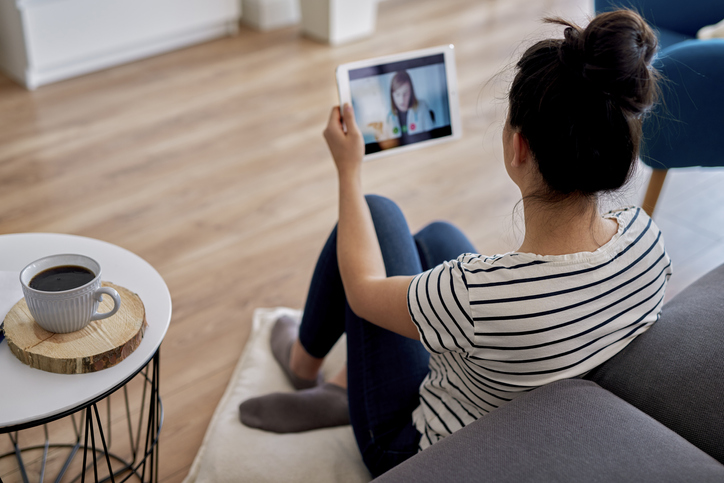
Try GoogleMeets, Zoom, or other online meeting platforms for telehealth services so you can meet with more clients and patients don’t have to travel long distances for in-person sessions – a win-win!
Scheduling SoftwareÂ
A number of scheduling softwares exist, but their goal remains the same: when patients can set up appointments based on mutual availability, both you and your clients can reduce missed or moved appointments. Plus, this software eliminates back-and-forth emails that can delay treatment for the client or take up more admin time for the therapist. FrontDesk is one such tool that makes online appointment scheduling easier.
Appointment Reminder SystemsÂ
We all have too many things to remember on a given day, but appointment reminder systems help both you and your patients be ready and on time for meetings. This technology can also reduce no-shows and no calls, which makes your time management easier and means one less email you have to manually send.
Patient PortalsÂ
Patients can access all their information in one place through a patient portal. They can also set up automatic payments and message you with questions – reducing communication channels and admin tasks on your end.Â
Intake FormsÂ
Rather than collecting relevant information on your clients yourself, intake form technologies can gather helpful data on clients so you can understand their needs sooner
Understanding the tools you have at your disposal not only helps you streamline your practice. With this knowledge, you can also better support patients so they can gain the effective and timely care they need. For example, a tool called TherapyPartner is an all-around practice management tool that improves everything from scheduling to billing to revenue tracking.Â
Read More: Interested in Online Therapy? Explore Its Benefits Further.
Benefits Abound for Therapy TechnologyÂ
As a therapist or counselor, you can do more than just familiarize yourself with the technologies at your disposal. Below is a deeper dive into the benefits of these tools on patient care and your private practice. Telehealth platforms, scheduling software, appointment reminder systems, patient portals, and intake forms support the following:
- Expanded care to more people and populations, thanks to virtual meeting tools
- Less wasted time on administrative tasks like scheduling, billing, data collection, and meeting reminders
- More organization for you and your clients, with all your important information in one portal space
No patient is the same, which means having a variety of tools at your fingertips ensures your practice is flexible and versatile. Learning to harness technology’s positive opportunities will keep your practice sharp and your time freed of administrative to-dos.
Great Technological Power Means Greater Responsibility
Expanded technology means more options, but also bigger safety and ethical considerations. Managing patient data and safety has taken center stage given growing data technologies. Remaining abreast of relevant laws and regulations, like the American Counseling Association (ACA) 2024 Code of Ethics and Health Insurance Portability and Accountability Act (HIPPA) regulations, is critical to keeping your practice in good standing. Â
In addition to protecting your practice, your clients will thank you for your commitment to ethics and responsibility. Offer them peace of mind that you are protecting their information and not using these tools negatively.
Read More: Concerned About the AI Movement? Don’t Worry: AI Is Not TherapyÂ
Use Modern Tools to Improve Your PracticeÂ
 Experts debate the pros and cons of digital technologies, but one fact is clear: the therapy space can greatly benefit from modern tools and innovations. These systems help expand access to care, streamline administrative tasks, and improve organization. Spending more time with clients and less time on management responsibilities frees up your schedule and headspace so you can better support clients and prevent burnout.
Thankfully, we have tools to help you protect your well-being. Through GoodTherapy’s Resources for Mental Health Professionals, you can find tips on marketing, business management, software technology, professional development, and more. Â
As a therapist, you have tremendous power to help clients break down barriers and build bridges. Want to help more patients? Easily connect with potential clients through a trusted, established platform via GoodTherapy’s therapist directory.
By Dr. Victoria Raymond, Licensed Marriage and Family Therapist
5 Tips to Help You Get the Most Out of Your Virtual Therapy Session
Virtual therapy sessions are the new normal. Our lives have changed profoundly in the past few months. As we continue to process the impacts of this pandemic, I believe we might be developing a new normal in the field of psychology: virtual therapy. (It’s got a lot of synonyms, including online therapy, telehealth therapy, telemental health, and teletherapy.)
I have been offering virtual therapy appointments to clients for years. My clients are professionals, parents, couples, and students. They prefer virtual sessions for a variety of reasons, including flexibility in scheduling and the convenience of connecting from their own home, completely cutting out commute time.
The concept of privacy is especially important in therapy, as the therapeutic relationship between client and therapist relies on the principles of confidentiality. Many of my clients are physicians, attorneys, entrepreneurs, and executives who are well-known in the local community. These clients often prefer virtual sessions, as it eliminates the risk of seeing patients or clients of their own in a therapist’s office. The ability to choose this option for telehealth therapy increases their privacy.Â
If you are thinking about beginning virtual therapy or want more out of your telehealth sessions, here are some tips to help you fully benefit from your sessions.Â
 1. Find a Private Space
Sometimes you may need to get creative – especially if you have a partner or roommate also working from home, little ones running around, or are in the office – in order to find a place to be alone. Your car parked somewhere private, can be a great option. Other clients like to sit on their balcony or patio or take walks while we speak. It is important to find a space where you feel free to express yourself authentically, without fear of being overheard or seen. Some of my clients schedule our appointments on their shared calendars as a recurring meeting and therefore can avoid any questions from colleagues or family.
2. Set The Scene…and Yourself
Take a few moments before each session to center yourself. Oftentimes, when attending in-person therapy sessions, clients will sit in the waiting room for a few minutes, sipping tea and gathering their thoughts before the session begins. With virtual sessions, it is helpful to give yourself a few minutes prior to the appointment to prepare. I suggest that clients set a reminder for 5-10 minutes before their appointment time; this way they can set up a comfortable space, get themselves some water or tea, and take a few calming breaths. This is also a useful time to review any notes you may have taken between sessions.Â
 3. Check Your Connectivity
Try to figure out where you have the strongest internet connection. If WiFi is acting up, switch over to data. If neither one is working, switch to the phone. One thing this pandemic is teaching us: Flexibility is key. It is helpful to keep your devices (including headphones) charged so you can approach your session with mindfulness and be fully present- and not worrying about whether your phone battery is too low.Â
 4. Give Feedback
Please tell your therapist if you cannot see or hear, if the connection is bad, or if your dog barking in the background is distracting you. We want to make this the best possible experience for you; so please be honest.Â
 5. Be Yourself
One of the best parts of virtual therapy is that it allows clients to feel comfortable in their surroundings: Wear your most comfy sweats, wrap up in your favorite blanket, stay in your sweaty gym clothes, have your furry friends close by (I love meeting my clients’ pets!). We are more likely to be open and authentic – and to talk about things we really need to talk about – when we feel most comfortable. Telemental health offers a unique opportunity to lean into this – take advantage of it!
To start your search for a therapist who offers virtual therapy, click here to search your area and then filter your results by the Type of Service “Telehealth.”
 Romantic relationships demand a lot: each partner must find a way to support and nurture the other’s needs while identifying and asserting their own needs.
When one person in a couple experiences stress, that stress can affect their partner and the relationship. Factor in kids, jobs, and financial entanglement, and it’s easy to see why so many people struggle in their relationships.
There’s no right way to be part of a couple. No matter what challenges your relationship faces, therapy can help you identify your needs. In couples counseling, you’ll work with your therapist to manage relationship challenges and address your needs in a way that’s consistent with your values.
Sometimes face-to-face therapy is not available or easy to access. Online couples therapy offers similar benefits to in-person therapy, with the added convenience and privacy of getting support at home. Here’s what you can expect from online counseling.
What is Online Couples Counseling?
Online couples counseling offers the same benefits of in-person counseling, but over the internet. You’ll use a secure platform to talk with your therapist—by video, in most cases. Couples usually meet with their therapist together, from the same location. However, online counseling can also be a good option for couples who live apart, or who are separated by military deployment, long-term hospitalization, or other barriers.
People who choose online therapy report similar levels of satisfaction with their treatment to those who choose in-person counseling.People who choose online therapy report similar levels of satisfaction with their treatment to those who choose in-person counseling. For some couples, online therapy may even mean the difference between accessing therapy to heal the relationship and getting no help at all.
Telemental health may be especially beneficial for:
- Couples with busy schedules.
- People who live in geographically isolated areas.
- People who find driving or going out in public stressful.
- Couples who do not want someone else to see them at a therapist’s office.
- Couples in which one or both partner has a disability that makes it more challenging to attend in-person therapy.
Does Online Couples Therapy Work?
Romantic relationships are a source of love and comfort. Many people rely on their partners to fill the role of best friend, mentor, financial partner, and co-parent. So when a relationship is struggling, many people feel as if their entire world has been upended. It’s easy to feel hopeless about couples therapy, especially if you feel like you’ve tried everything. But the research shows that couples therapy works. According to a 2015 analysis, couples therapy is most effective when therapists identify the goals of couples therapy; use standardized tools to assess progress; and systematically monitor both the progress of therapy and the quality of the therapeutic alliance.
Online therapy follows a similar model to traditional counseling. In fact, therapists can do nearly everything online that they can in person. It may take a little more time to get comfortable with one another, especially when there are technical difficulties. Quality online therapy on a good platform works well, and even allows the therapist to read subtle cues such as tone of voice and body language.
When to Avoid Online Couples Therapy
Online couples therapy is not for everyone. When there is domestic violence, most experts advise that the couple avoid joint therapy. That’s because therapy treats the partners as equals, each of whom has valid concerns. When there is violence, the partners do not contribute equally to the problems in the marriage, and the abusive partner may even use therapy to justify their violence. Moreover, traditional couples therapy aims to keep the couple together, and some therapists may even ask the couples to commit to a certain number of therapy sessions. This may cause a victim to remain in an abusive relationship longer, potentially endangering their life. The online context may make it easier to conceal abuse, intensifying the risk.
Some other signs online therapy may not be a good fit include:
- The couple can’t access the internet or only has very old computers or tablets, making it difficult to see or hear the therapist.
- One or both members of the couple distrusts technology and feels anxious about distance counseling.
- One or both members of the couple feel stressed or anxious in the family home, and prefer the environment of a therapy office.
Questions to Ask About Online Relationship Counseling
When searching for a couples therapist, it’s important to find someone who can offer specific details about their treatment philosophy. You can ask potential counselors the questions such as the following to see if they are a good fit for you:
- What therapeutic philosophy do you use? Can you show us research indicating this approach works?
- What is the goal of therapy? Are we working to decide whether to stay together, or is the goal to improve the relationship?
- How will we know therapy is working?
- What do we need to do outside of therapy sessions to improve our relationship?
- How long does therapy typically take?
- How much do you charge?
- Do you accept insurance or offer a superbill so we can seek insurance reimbursement?
- What do you do to ensure our privacy? Do you use an encrypted therapy platform?
- Will we share our ideas about what constitutes a healthy relationship?
What to Expect from Online Relationship Therapy
Most online counseling uses video so that you can talk, read one another’s body language, and create an experience similar to traditional counseling. During the first few sessions, you will work with your therapist to identify treatment goals, share the history of the relationship, and cultivate a sense of trust.
As therapy progresses, you’ll each talk about your issues in the relationship, then work to identify strategies to manage these issues. Your therapist may give you homework, ask you to notice specific feelings or behaviors in between therapy sessions, or encourage you to come to therapy prepared to talk about a recent dispute. In some cases, the therapist may recommend individual counseling to deal with issues such as depression, trauma, and anxiety.
Your therapist should gently challenge each of you. If therapy is going well, you’ll be encouraged to confront unhealthy thoughts and feelings. Your therapist should also validate your emotions, and should not take sides—though they might offer insight on various conflicts, or help you identify unreasonable expectations. You should feel comfortable giving your therapist feedback, and the therapist should regularly assess and revisit treatment goals.
Finding the right therapist is key to seeing improvements in your relationship. A good therapist listens to your goals, helps you identify practical solutions, and helps both partners feel safe. Begin your search for a licensed therapist here.
Are you a therapist? Join GoodTherapy’s community today! We offer a secure telehealth platform for therapists powered by iSalus. Members also get access to our wide range of continuing education webinars and are listed in our popular online therapist directory.Â
References:
- Halford, W. K., Pepping, C. A., & Petch, J. (2015). The gap between couple therapy research efficacy and practice effectiveness. Journal of Marital and Family Therapy, 42(1), 32–44. Retrieved from https://onlinelibrary.wiley.com/doi/abs/10.1111/jmft.12120
- Huffine, C. (1999). 12 reasons why couples counseling is not recommended when domestic violence is present. [PDF]. Retrieved from https://www.dhs.state.or.us/caf/dv/desktools/couples_counseling_12_reaso.pdf
- Rickwood, D., Wallace, A., Kennedy, V., O’Sullivan, S., Telford, N., & Leicester, S. (2019). Young people’s satisfaction with the online mental health service eheadspace: development and implementation of a service satisfaction measure. JMIR Mental Health, 6(4). Retrieved from https://www.ncbi.nlm.nih.gov/pmc/articles/PMC6492057/