 In 2013, former CIA employee and government contractor Edward Snowden released classified documents revealing the broad scope of U.S. government surveillance. Suddenly, fears that once seemed paranoid were decidedly rooted in reality. Paranoia and anxiety are common. They can be part of the typical range of human experience or signs of a serious mental health diagnosis.
Drawing the line between normal fears, anxiety, and paranoia can be difficult. That’s especially true when a person’s apparently paranoid fears turn out to be true—as was the case for activists targeted by programs such as COINTELPRO, and for Ernest Hemingway, who really did have an FBI file. Knowing where to draw that line, and how to decide whether a fear is reasonable or not, can help people seek appropriate mental health care.
What Is Paranoia?
Paranoia is persistent anxiety about a specific fear. Paranoid anxieties often center around persecution, being watched, or being treated unjustly. The hallmark of paranoia is that it is rooted in a false belief. People with paranoid thoughts may also have false beliefs about their own power or importance. For example, a person who does not occupy a political position or engage in activism might believe in an international conspiracy to monitor and torture them. In some cases, exposure to trauma or severe stress can make people more likely to experience paranoia.
People experiencing paranoid thoughts are often preoccupied by these thoughts. They may be fixated on getting other people to accept their beliefs as true. They may make unusual choices designed to protect themselves from the sources of their anxiety.
Fleeting moments of paranoia are common and don’t necessarily mean a person has a mental health condition. Paranoia is also distinct from anxiety in that:
- Paranoia is focused on a specific source of anxiety.
- People who experience paranoia often have false beliefs about themselves, the world, or people they know.
- A person with paranoid thoughts may experience perceptual issues. A 2008 study that compared social anxiety to paranoia found that people with unusual perceptions, including hallucinations, were more likely to experience paranoia.
Delusional vs. Reasonable Paranoia
Delusional paranoia is paranoia due to a false belief. While often a hallmark of schizophrenia, it can also be due to other mental health diagnoses. When a person’s fears are rooted in reality or reasonable, they’re not paranoid. The challenge is determining which beliefs are reasonable and which are not.
A lawyer working with detained immigrants might worry that they are being monitored by the government. A doctor working with infectious diseases may be concerned about becoming infected or spreading the disease. Even if the fear does not come to fruition, it is rooted in reality.
It’s important for mental health providers to critically examine why a person has a specific fear and how their social bubble, occupation, culture, and other factors may affect that fear. For instance, young black Americans may be fearful of the police. To someone who has never had a negative interaction with police, this fear might seem unreasonable, even paranoid. To a person exposed to police violence against young black people, the fear seems reasonable and is unlikely to be due to a mental health diagnosis. Dismissing a person’s reasonable fears can be very harmful, especially when it happens in therapy.
It’s important for mental health providers to critically examine why a person has a specific fear and how their social bubble, occupation, culture, and other factors may affect that fear.
One way to assess whether a person’s anxiety is reasonable or not is to assess how they respond to conflicting evidence. People with schizophrenia, for example, may continue to endorse false beliefs even when given evidence to the contrary. The conflicting evidence may even be viewed as a sign of a larger conspiracy, or as a reason to distrust a mental health provider. A person without schizophrenia who learns their false belief is untrue may be relieved rather than defensive.
People who think someone they love may have schizophrenia should not spend time arguing about false or paranoid beliefs. This can harm the relationship, making it difficult for the person to feel understood or loved. Arguing about false beliefs may inadvertently stigmatize the person or make them feel judged.
Schizophrenia Symptoms: The Link to Paranoia and Anxiety
A person who has paranoid thoughts may have schizophrenia or a related condition. Only a mental health professional can treat and diagnose this condition, so it’s important to seek expert insight.
Schizophrenia usually begins in adolescence or early adulthood. Someone who develops paranoid thoughts later in life might have another mental health condition, such as dementia.
Some schizophrenia symptoms to watch for include:
- Loss of touch with reality. Schizophrenia can cause people to see or hear things that others can’t.
- Thoughts and beliefs that others perceive as strange or unusual.
- Changes in affect. A person with schizophrenia may have an affect that seems flat, presenting few emotions and seeming very detached.
- Trouble with memory, especially working memory.
- Executive function difficulties that make it difficult to concentrate or stay on task.
- Trouble starting or sticking with new hobbies or activities.
- Not talking much.
- Behavior related to false beliefs. A person with schizophrenia might try to contact a celebrity to warn them of a threat or reach out to a lawyer to report government surveillance that doesn’t seem to be happening.
When to Seek Treatment for Anxiety About Being Watched
Mental health treatment can help anyone experiencing anxiety, whether their anxiety is rooted in a real source or the product of a mental health diagnosis. Activists such as lawyers or protest leaders who have reasonable fears about being monitored may find therapy helps them manage their anxiety, deal with the effects of those fears on their relationships, and separate reasonable fears from unreasonable ones.
People who have a condition linked to unreasonable paranoia may also find immense relief in therapy. Therapy can help a person understand their anxiety, confront false beliefs, and assess the effects that false beliefs have on their life. People with diagnoses linked to delusions often struggle at work, school, and in their relationships. Therapy can help with developing better communication skills and dealing with the challenges of schizophrenia and other diagnoses linked to delusions.
References:
- Freeman, D., Gittins, M., Pugh, K., Antley, A., Slater, M., & Dunn, G. (2008). What makes one person paranoid and another person anxious? The differential prediction of social anxiety and persecutory ideation in an experimental situation. Psychological Medicine, 8(38), 1121-1132. doi:Â 10.1017/S0033291708003589
- Schizophrenia. (2016, February). Retrieved from https://www.nimh.nih.gov/health/topics/schizophrenia/index.shtml
- Shakeel, M. K., & Docherty, N. M. (2015). Confabulations in schizophrenia. Cognitive Neuropsychiatry, 1(20), 1-13. doi:Â 10.1080/13546805.2014.940886
Dear GoodTherapy.org,
I grew up in a dysfunctional family. I know every family is a little dysfunctional, but my parents were a special case. They were always trying to catch each other cheating. Back before cell phones were a thing, Dad would sneak down into the basement and listen on our house’s landline. Mom would hide a camera in Dad’s office. It was like a bad spy movie.
As an only child, getting caught up in their spy war was inevitable. When I started doing normal teen stuff like sneaking a boy into my room, my parents would magically “know,†even if they were fast asleep at the time. They would parrot back private stuff I said to my friends over the phone, then laugh when I freaked out. After years of gaslighting, I seriously thought I was losing my mind.
[fat_widget_right]
I know now that my parents were the messed-up ones, not me. But I still have all the habits I learned as a kid. I don’t talk about anything that could be used against me. I have a phone, but I’m leery about using it unless it’s an emergency.
I know this kind of paranoia isn’t healthy. I want to change. Coworkers and friends have told me to see a therapist, but telling somebody my darkest secrets sounds like my worst nightmare. The only reason I’m emailing you is because I know this is anonymous (and because I’m using my throwaway email).
I know deep down that most therapists would not blackmail me. But when I think about contacting one, I freak out and start thinking, “What if this is a bad one? What if they have hidden cameras in their office?â€
Trust isn’t a switch I can just turn on. I have barely any faith in my own memory some days, much less in a person I don’t know. Is there a way I can get help without throwing myself into a panic attack? —Cautiously Pessimistic
Dear Cautious,
I am so deeply appreciative that you took the risk to write in with this question and share so much of yourself. Even with the anonymity and “throwaway email,†I imagine sharing the details of your life is quite unsettling for you.
Human beings are remarkably adaptable. When children grow up in unhealthy environments, they typically adapt to those environments by developing various ways of being. These include behaviors, emotional regulation, communication styles, and relational approaches. While these ways of being help children survive the unhealthy environments they’re in, they become problematic outside of said environment. As children move on to adolescence and eventually adulthood, these ways of being either lead them to find other unhealthy environments or they find that in healthier environments, their ways of being create discord.
It sounds like this is where you find yourself now. You learned not to trust, not to share, and to be cautious about what, where, and how you communicated. The good news is it sounds like you have found some healthier environments; you mention friends and coworkers who care enough about you to suggest getting help. Unfortunately, I imagine you are finding that the ways of being you developed as child are now getting in the way. Therapy is, of course, an excellent forum for dealing with this. But because not trusting and not sharing were central to your adaptation, it is terrifying to think about trusting a therapist enough to share your “darkest secrets.â€
Give yourself some time to develop a sense of trust in your therapist before you disclose anything that feels too private. Also, as you move through the process, don’t be afraid to continue talking about any feeling you might have around trust between you and your therapist.
The question then becomes, how can you engage in the therapeutic process when trust is so difficult? First, I would suggest you look around at local therapists’ profiles and websites. Read a little about them and see if there are some you feel drawn to. Ask some of the friends and coworkers who have suggested therapy to you if they know of any therapists they would feel confident recommending. Once you gather a list of potential therapists, call them and spend a few minutes speaking to each. Then you can schedule appointments with a few you feel comfortable with and from those initial sessions decide who you’d like to work with.
Once you select a therapist, rather than diving right into the meat of the work, take some time to allow the therapeutic relationship to be established. You raise the question of how you can “get help without throwing (yourself) into a panic attack.†Perhaps you could begin your work by talking about the anxiety you feel about starting therapy and the fears you have about trusting a therapist. Maybe you could even work on learning some techniques to help you manage your anxiety. Give yourself some time to develop a sense of trust in your therapist before you disclose anything that feels too private. Also, as you move through the process, don’t be afraid to continue talking about any feeling you might have around trust between you and your therapist.
Finally, I just want to say that I applaud you for pushing beyond your comfort zone to consider getting help. Understandably, you have some deep-seated trust issues. And while that makes the process of seeking out and engaging in therapy challenging, it will be well worth it if you walk away from the process with a sense of healing and the ability to enrich your life with strong, trusting relationships. You deserve that.
Best wishes,
Thank you very much for writing to me specifically, even though you don’t trust me. I think it takes great courage to reach out and describe one’s uncomfortable life situation to someone who is a stranger. You may be skeptical, but you have come forward and made contact. That means something. I hope you go one step further.
[fat_widget_right]
Given that I did respond, you seem to conclude I just want you to come see me and pay me—that I’m in it for the money. It’s true I need to make money and pay the bills, just as everyone does, but the unvarnished truth is I’m answering your letter because it’s my job. What you do next is entirely up to you.
Without spending time with you and getting to the root of your feelings, I can’t offer a guess as to why you think the way you do, but I can readily see you’re unhappy with your life and worried that just about everyone you know is out to get you, in one way or another. You say the only people you can trust are your parents, and that you have no friends. You have a girlfriend, but you’re afraid she will leave you for someone else. It makes sense that you’d be unhappy.
You don’t have to live this way. These thoughts, accurate or not, are harmful in and of themselves because the stresses and discomfort they cause affect you both physically and emotionally.
You describe that you are living in constant fear that someone will take advantage of you and cause you harm. You don’t have to live this way. These thoughts, accurate or not, are harmful in and of themselves because the stresses and discomfort they cause affect you both physically and emotionally. You may know that stress can cause a multitude of physical and emotional reactions that may be detrimental to your health.
It always helps to discuss and bounce around your ideas with another person. Psychotherapy might be very useful to you. You’ve written a clear account of an aching life ruled by skepticism, mistrust, and suspicion. You name your feelings and define your life situation with great clarity. Clear self-expression goes with clear thinking. You might find a therapist who includes journal work as part of a treatment plan. Or you might prefer talk therapy. Sometimes you have to try a few different things, or even therapists, to find the right fit. But if you believe nothing else, please believe help is out there. Perhaps the hardest part for you will be trusting in that, and making the initial call.
While you and a therapist identify ways to alleviate your painful feelings, the therapist can help evaluate their accuracy. Especially if you don’t have many people you’re close to, or that you trust, a fresh and objective perspective from someone who knows what to look for can be useful. Fear responses and trust issues are often based on things that happened in the past, and uncovering what those things might be is an important part of finding healing solutions in the present.
The kind of therapy or treatment you seek and find helpful may depend to some extent on your tastes, but I strongly advise you to make the effort. With some work, guidance, and reflection, you may find that your life (and perhaps your blood pressure) is better for it.
Take care,
Lynn
 Pop quiz: What do the moon landings, the JFK assassination, and the 9/11 terrorist attacks have in common?
Give up?
While each event touched the lives of millions of people and left indelible marks on American history, there is a third similarity: these events were all staged … or so some people who believe in conspiracy theories may argue.
Conspiracy theories posit that people, groups, organizations, or governments deliberately withhold or cover up the truth surrounding events and situations. While conspiracy theories typically lack the concrete evidence of more conventional explanations, they nevertheless exist and are upheld within a percentage of the population. Perhaps you’re not losing sleep over an alleged alien spacecraft hidden somewhere near Roswell, New Mexico or deadly diseases supposedly manufactured as a means of population control, but some people are convinced that those in authority are working together to conceal the truth surrounding certain events.
For some, there might be comfort in thinking they know something most people don’t, but that doesn’t mean the fringe is a comfortable place to be. For people who believe in explanations that differ from the mainstream or the historical record, their mental health may be called into question.
[fat_widget_right]
Mistrust Isn’t Always Misplaced
There is a rich history of conspiracy theories in the United States, partly because its democratic society allows for free speech, partly because of its robust and shadowy intelligence community, and partly because, well, conspiracies in America have been uncovered before.
During the Cold War, for example, the Central Intelligence Agency (CIA) conducted illegal scientific research to see if it could control people’s minds. The CIA used LSD, hypnosis, and biological agents on people, often without their knowledge, to study how it affected their behavior. The program was conducted over two decades, enlisted the help of top researchers at more than 30 universities, and cost American taxpayers more than $20 million.
While to many people that may sound like a far-fetched idea cooked up on a conspiracy theory website, the program was called Project MK-ULTRA and was uncovered by an investigation headed by Senator Frank Church and Vice President Nelson Rockefeller in 1975.
People who are believers in conspiracy theories are correct in their assertion that things are not always as they seem.
Conspiracies and Public Perception
Conspiracy theories are often assumed to be the paranoid delusions of a troubled minority. However, a national survey published in April 2013 by Public Policy Polling shows that as many as 21% of Americans believe that an alien spaceship crashed in Roswell, and that the government covered it up.
Some other results from the poll include:
- 5% of voters believe that Paul McCartney died in 1966
- 7% of voters believe the moon landing was faked
- 9% of voters believe the government adds fluoride to the water supply for sinister reasons
- 15% of voters believe that new diseases are invented by the medical and pharmaceutical industries for profit
- 20% of voters believe there is a link between childhood vaccines and autism
Although it can be assumed that some people who believe in conspiracy theories have mental health conditions that factor into their perceptions of reality, many people who can think rationally and whose mental health has never been compromised hold tight to conspiracy theories.
Why is that?
Cass Sunstein, a law professor at Harvard, former administrator of the White House Office of Information and Regulatory Affairs, and author of Conspiracy Theories and Other Dangerous Ideas, said in an interview with U.S. News & World Report: “Under conditions of fear or anger, as for example following a bad event, people want to find a cause, and they also want to resolve their own uncertainty. So if you’ve seen an assassination, or a terrible economic downturn or a missing plane, there may be an inclination to posit an agent who’s behind it.â€
Many conspiracy theories are created simply to explain things that may seem unexplainable. Some researchers believe they fulfill important social functions or psychological needs. They may give believers higher self-esteem by making them feel superior to others who think differently; they offer people perceived power over events in which they have no influence; and they can help believers make sense of trauma, tragedy, and catastrophe.
Conspiracy theories tend to stick in society and popular culture because they are much harder to disprove than they are to introduce, especially in cases where the facts are redacted or withheld from the public.
Conspiracy theories tend to stick in society and popular culture because they are much harder to disprove than they are to introduce, especially in cases where the facts are redacted or withheld from the public. Also, it’s easier than ever to find people who share your views; conspiracy theories tend to spread easily on the Internet among like-minded populations that readily accept them. They can perpetuate good, bad, or indifference, depending on who receives them.
Building the Belief: Is It All a Conspiracy?
While many people tend to keep an open mind about major world events, someone who is labeled a “conspiracy theorist†may construct and maintain a worldview that is defined by conspiracies. He or she may display what psychologists refer to as a “monological belief system†wherein unexplained events are perceived as being part of a master plan. Alternative explanations are typically rejected outright. For some, conspiracies are seen everywhere, in anything and everything. In fact, one of the greatest predictors of whether someone will believe a conspiracy theory is if he or she already believes other conspiracy theories.
A study by Wood et al. (2011) illustrates that some who believe in conspiracy theories can even reconcile contradicting theories if there is coherence with a strongly held worldview. For example, the study showed that the more people believed Osama bin Laden was already dead when he was found by U.S. troops, the more they believed he is still alive. While the theories clearly contradict each other, both are consistent with the basic worldview that officialdom is fundamentally deceptive.
Studies have found that conspiracy theories are difficult to shed. If evidence to the contrary is presented, people who believe in conspiracy theories typically reason that the evidence was planted or invented to placate skeptics.
Skepticism is often warranted—in fact, it’s the foundation of the media’s role as a government watchdog. But when distrust of that media runs rampant, skepticism is compounded. When the facts are in doubt, people may be inclined to develop beliefs that fit self-serving narratives.
Calling someone a conspiracy theorist can serve as a social mechanism to discredit or exclude that person’s viewpoint. It is sometimes easier to call a person a conspiracy theorist than it is to address his or her questions and concerns, which may further isolate someone who believes in a conspiracy theory.
The Bottom Line
Although people who believe in conspiracy theories may be dismissed or derided by some people as “crazy,†the prevalence of conspiracy theories in American culture and the rest of the world suggests that most people who believe in conspiracy theories are not experiencing some kind of psychopathology. For its part, the Diagnostic and Statistical Manual of Mental Disorders draws no direct link between belief in conspiracy theories and mental health issues. However, some people who believe intensely or even casually in conspiracy theories may also be experiencing mental health issues such as paranoia, schizophrenia, narcissism, delusions, anxiety, or trust issues that affect their everyday lives. Some of these issues have been found to be more prevalent among people who believe in conspiracy theories.
Most people who believe in conspiracy theories are harmless participants in a widespread social phenomenon, but how they act (or don’t act) on their beliefs can have far-reaching social consequences. For example, research shows that some populations who believe in conspiracy theories are less likely to use condoms, seek HIV treatment, take action against climate change, and vaccinate their children.
If mental health conditions are present that make it difficult to distinguish reality from fears and unsettling thoughts, therapy—perhaps in combination with medication—may help. If you or someone you know is experiencing troublesome thoughts beyond what you believe to be healthy, seeking the help of a mental health professional can be a great place to start. Therapy can help a person identify factors that may have contributed to his or her worldview, for better or for worse, as well as what type of treatment and support may be best for addressing any related conditions.
Labeling any person as “crazy”—regardless of his or her thoughts or beliefs—can result in negative effects. For example, calling someone crazy may cause emotional or psychological pain, contribute to the marginalization or dehumanization of certain individuals or groups, or exacerbate stigma surrounding mental health conditions.
References:
- Douglas, K. M., Sutton, R. M., and Wood, M. J. (2011). Dead and alive: Beliefs in contradictory conspiracy theories. Social Psychology and Personality Science, 3(6), 767-773.
- Morella, M. (2014, April 21). The Normal Life of Crazy Conspiracy Theories. S. News & World Report. Retrieved from http://www.usnews.com/opinion/articles/2014/04/21/cass-sunstein-explains-why-people-believe-conspiracy-theories
- Project MKULTRA, The CIA’s Program of Research in Behavioral Modification. 95th 1 (1977).
- Rawlings, N. (2010, August). Top 10 Weird Government Secrets. Retrieved from http://content.time.com/time/specials/packages/article/0,28804,2008962_2008964_2008992,00.html.
- Swami, V., & Coles, R. (2010). The truth is out there. The Psychologist, 23(7), 560-563.
Having paranoid thoughts does not mean you are crazy. Some people have these thoughts as a result of feeling anxious or stressed. So you have company; other people have feelings like these too. Nevertheless, paranoid feelings are tough to live with and there are ways to help.
First off, you have support from your community. You are lucky that people are standing behind you. I see from your letter that your friends are trying to be helpful and reassuring, and that your family tells you that you are safe. Even though you believe them on the one hand, on the other hand you’re not always sure that they should be believed and you’re still scared. Your folks are telling you that “everything is OK,†but that doesn’t necessarily make it so. People want to make things OK for their loved ones, but reassurance often doesn’t work. It’s like someone is telling you there are no monsters, when they don’t believe in monsters but you do and you know better than they do. What they have to say may not be entirely credible to you, just as you are not entirely credible to them. You might let them know that you are grateful that they want to help, but that telling you everything is OK actually doesn’t work that well. If they truly want to help, they can start by believing that you are having upsetting experiences and that things are not at all OK, as far as you’re concerned. The top way for them to help would be to encourage you to get medical advice, perhaps by accompanying you to the doctor.
[fat_widget_left]
The best course of action is for you to get checked out by a medical doctor who will give you a thorough physical examination to determine if, for example, you have high blood pressure, which can cause many different types of unpleasant thoughts and feelings, as can various types of seizure disorders. Certain substances and recreational drugs can also cause feelings of intense fear and suspicion, so if you do use marijuana, hash, meth, LSD, cocaine, alcohol to excess, etc., be aware that this is a possible side effect of drug use and tell your doctor.
You write that these experiences first began about three years ago, and I wonder if you associate this time to any other events in your life. This is a question that your doctor should ask you. You should be completely open and frank in all your responses to help find out what is going on.
Perhaps your doctor will refer you to someone who specializes in understanding experiences such as yours; that person might determine if you in fact are having paranoid thoughts, and what you might do next. A psychiatrist, if you decide to see one, might prescribe a medication that will help control your anxiety, and/or you might be referred to a psychologist or mental health counselor who will engage in talk therapy with you. The therapist will try to understand the meanings of your experiences.
Often people are frightened of seeing a practitioner who specializes in these kinds of issues, perhaps because of feelings of shame or because they don’t really know what happens in a psychiatrist’s or psychologist’s office. Some folks are afraid that if they are prescribed medication, the medicine will somehow make them different in a way that they don’t want, as though the medicine will take them over, as they also fear the doctor might. People are afraid of losing control, or a sense of themselves.
There is a lot of prejudice and misinformation about emotional issues—we tend to see things as though we are living in a movie, maybe a scary one, but not trying to find out what is going on with oneself is much scarier. Please see a doctor and let me know what happens.
Here are some things people sometimes fear about psychiatry:
- They will think I am “crazy†and lock me up.
- They will give me medicine that will make me a zombie.
- They will take control of my life.
- People will find out and look down on me.
- It will affect my work life.
- It will affect my love life.
- Movies and video games make this whole subject really scary.
People are scared because they don’t know what actually happens in a doctor’s office. In fact, first you will see your regular doctor who will give you a thorough physical checkup. If the doctor decides it is warranted, you will be referred to a psychiatrist or psychologist or mental health worker. The psychiatrist might prescribe medication. The psychologist or mental health worker will talk with you, and then, working together with you, try to find out the meanings behind your fears and what to do about them.
Thanks for writing. I wish you success!
All my best,
Lynn
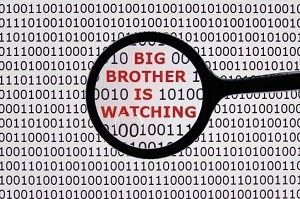 You’re not paranoid if they really are out to get you. More than 50 years after Ernest Hemingway committed suicide, we know that Hemingway was being tracked and hounded by the FBI, but this revelation seems less significant in a culture dominated by surveillance.
Edward Snowden’s recent revelations about NSA spying have sparked a vigorous public debate, and employers routinely spy on their employees by tracking their email, logging their chats, and checking their Facebooks. Walk down any street or enter any convenience store and the odds are good that there’s a camera filming you. The line between public and private behavior is increasingly blurred. Some people are willing to sacrifice a bit of privacy to feel safer, but what about the psychological effects of all this surveillance?
Decreased Trust in Government
It makes sense that people might feel more afraid of their government when they think they’re being watched, but the effects go deeper. One study found that when people identified with a leader, their trust in that leader actually decreased when they found out they were being watched. Another study found that people’s willingness to put up with surveillance decreases when they realize that they are the ones being watched instead of a mysterious bad guy.
Increased Stress
A sense of privacy can play a significant role in the control people feel over their lives. We all have private thoughts and behaviors that we’d rather keep under wraps, but mass surveillance makes this much more challenging. A hastily typed email message or unfortunate Facebook update can suddenly become public knowledge. As far back as 1996, researchers found that people felt a loss of control when they knew they were being watched.
The mental health effects don’t end there, though. Researchers have found that as surveillance increases, so does anxiety. Anxiety can lead to a host of health conditions, including high blood pressure, obesity, respiratory problems, gastrointestinal problems, and even cancer.
Effects on Relationships
Social networking, email, and text messaging play major roles in helping to maintain relationships with friends and family, especially across geographic distances. When people know they’re being watched, though, they tend to be more circumspect with their communications. What was once a sarcastic inside joke might become something that, taken out of context, reads like a threat. As the zone of privacy around a relationship diminishes, so too might people’s willingness to foster real intimacy and shared understandings.
Conformity
Researchers have known for decades that people tend to conform to what observers expect. In the 1960s, Stanley Milgram demonstrated that research subjects would willingly shock another person—even to the point of putting the person’s life in danger—if told to do so by an authority figure. When people know they’re being watched, they may subtly alter their behavior and communication to meet the expectations of the watcher. For an office worker, this might mean avoiding creative problem-solving. In political life, though, the effects can be even more damaging. The surveillance efforts of dictatorships have traditionally inhibited public involvement in government and shut down opposition. It may be that even in a democracy, surveillance limits dissent.
References:
- Anxiety and physical illness. (2012, July). Harvard Health Publications. Retrieved from http://www.health.harvard.edu/newsletters/Harvard_Womens_Health_Watch/2008/July/Anxiety_and_physical_illness
- Anxious people more likely to develop aggressive cancer, study finds. (2012, April 26). Metro. Retrieved from http://metro.co.uk/2012/04/26/anxious-people-more-likely-to-develop-aggressive-cancer-study-finds-404181/
- Beaumont, P. (n.d.). Fresh claim over role the FBI played in suicide of Ernest Hemingway. The Guardian. Retrieved from http://www.theguardian.com/books/2011/jul/03/fbi-and-ernest-hemingway
- Borland, J. (2007, August 08). Maybe surveillance is bad, after all. Wired.com. Retrieved from http://www.wired.com/threatlevel/2007/08/maybe-surveilla/
- Smith, M. (1992). Employee stress and health complaints in jobs with and without electronic performance monitoring. Applied Ergonomics, 23(1), 17-27. doi: 10.1016/0003-6870(92)90006-H
- Stanton, J. M., & Barnes-Farrell, J. L. (1996). Effects of electronic performance monitoring on personal control, task satisfaction, and task performance. Journal of Applied Psychology, 81(6), 738-745. doi: 10.1037//0021-9010.81.6.738
- SubaÅ¡ić, E., Reynolds, K. J., Turner, J. C., Veenstra, K. E., & Haslam, S. A. (2011). Leadership, power and the use of surveillance: Implications of shared social identity for leaders’ capacity to influence. The Leadership Quarterly, 22(1), 170-181. doi: 10.1016/j.leaqua.2010.12.014
- York, J. C. (2013, June 25). The chilling effects of surveillance. AlJazeera. Retrieved from http://www.aljazeera.com/indepth/opinion/2013/06/201362574347243214.html
 Since the beginning of recorded history, people have been forecasting the end of the world. In biblical times, many people believed that Jesus would return in a few short years, and religions throughout the world have cautioned people to repent and prepare for the end of days for as long as there have been religions.
In modern times, with science gaining popular acceptance and doomsday scenarios falling outside the mainstream, such beliefs can seem highly unorthodox. But the Daily Mail reports that 22% of Americans believe the world will end in their lifetime, and the belief that a religious figure will return to “save†a chosen few is still commonplace. The National Geographic Channel has dedicated a popular television series to people who believe the world may soon end: Doomsday Preppers follows individuals—sometimes referred to as survivalists—and their families as they plan and prepare for the end of civilization.
Psychology can offer some insight into this phenomenon.
Risk and Preparedness
We live in an increasingly complex and often frightening world. Massive tsunamis can kill thousands, and electrical outages can cripple a city, state, or country. The threat of nuclear war is omnipresent, and protests around the world can make government and order seem increasingly unstable. Many people actively fear the prospect of terrorist attacks, pandemics, fuel shortages, and societal or economic collapse.
Most people prepare to some degree for “what-if†scenarios. People buy flood insurance, swarm the grocery store before a storm, and buy generators to ensure their businesses can keep running if there’s a power outage. The difference between those who take it to the extreme—such as doomsday preppers—and those who simply plan for a rainy day may simply be a matter of degree.
Trauma and Experience
People who believe in conspiracies and doomsday scenarios likely would caution that, if they’re right, they don’t look so strange after all. And when a person’s experiences are taken into account, their worries may even seem justified. A person who has experienced war might be more frightened that war could end the world, while trauma victims and people with posttraumatic stress may have more difficulty assessing risk.
Belief Systems
People tend to accept evidence that supports their belief systems and ignore evidence that doesn’t—a phenomenon called confirmation bias. In some cases, people may believe conspiracy theories because these theories support their most fundamental or earliest-established beliefs. A person whose mother claims to have been kidnapped by aliens might, for example, fervently cling to a belief in aliens because believing in aliens allows him to believe his mother. A highly religious person who believes she experienced a prophecy that the world will soon end is unlikely to abandon such a belief because doing so undermines her religious experience.
Once a doomsday scenario or conspiracy theory becomes part of a person’s belief system, he or she is unlikely to abandon it even in the face of conflicting evidence. This isn’t unique to doomsday preppers. We all have things we believe without evidence, sometimes even in the face of contradictory evidence.
Mental Health Conditions
Some people who believe in conspiracy theories and end-of-days scenarios may be experiencing a mental health issue. Conditions that can contribute to such beliefs include:
- Schizophrenia, which can result in delusions and hallucinations that could convince a person the end of the world is near or that an entity is out to get him or her.
- Paranoid personality disorder, which manifests as constant suspicion, often in the form of fear of the government.
- Persecutory delusion, which may cause a person to believe that another person or entity is out to get him or her and will not stop until harm is done.
References:
- Cruz, N. (2012, April 3). National Geographic’s troubling, addictive show about survivalists. Slate. Retrieved from http://www.slate.com/blogs/browbeat/2012/04/03/doomsday_preppers_on_national_geographic_is_the_survivalist_reality_show_exploitative_.html
- Guyatt, N. (2007). Have a nice doomsday: Why millions of Americans are looking forward to the end of the world. New York, NY: Harper Perennial.
- Hanlon, C. (2012, May 2). 22% of Americans believe world will end in their lifetime (and 10% think the apocalypse is coming this year). Mail Online. Retrieved from http://www.dailymail.co.uk/news/article-2138449/The-end-nigh–Americans-think-world-end-year.html
Professor Paul Bebbington, head of the Department of Mental Health Sciences at the University College London, told the Congress of the Royal College of Psychiatrists 2011, that children who are abused or engage in non-consensual sexual intercourse are at a significantly increased risk for the development of schizophrenia. In a recent article, Bebbington explained that when this type of abuse is experienced before the age of 16, it contributes to more than 15 percent of all psychotic problems, including schizophrenia. “The worse the abuse, the more it increases the risk of developing psychosis. Someone who has experienced non-consensual sexual intercourse before the age of 16 is 10 times more likely to develop the mental disorder,†Bebbington told the Congress. He added, “This is especially significant because sexual abuse is common in childhood. Eight in every 100 people have experienced molestation while one per cent of men and three per cent of women report having had non-consensual sexual intercourse under the age of 16. It is possible to calculate that if childhood sexual abuse ceased, there might be as much as a 17 per cent reduction in people suffering from schizophrenia.â€
Bebbington was is senior author of new research which has shown that this type of abuse is linked to psychosis. The research also revealed that sexual molestation and even unwelcome sexual talk, was also linked to the development of mental health problems. Bebbington said, “The increased risk of psychosis may be linked to the intrusive nature of childhood sexual abuse and having no control over what is happening to you. It has disastrous effects on self-esteem and psychological well-being, and is linked to paranoia and suspiciousness – even in people who don’t go on to develop psychosis.†Bebbington added that services should be made available to all victims of this type of abuse in order to prevent the mental health problems associated with these traumas from developing.