 My journey from the disciplined ranks of a US Army combat engineer to a bastion of support for those battling internal wars has been both enlightening and deeply personal. This path, paved with both my own experiences and those of the individuals I’ve had the honor to help, underscores a critical yet often overlooked side of veteran care: the silent, unseen wounds of PTSD and complex trauma. Through this article, I aim to delve into the transformative potential of trauma-informed care, advocating for a shift from merely enduring survival to embracing a thriving existence, especially for veterans confronting the specter of suicidal ideation.Â
Unveiling PTSD and Complex TraumaÂ
PTSD and complex trauma are more than clinical terms; they are lived realities for countless veterans, embodying the enduring aftermath of combat and service. Unlike physical injuries, which are visible and quantifiable, these mental health challenges lurk unseen, their symptoms echoing the tumult of past traumas. Veterans may find themselves in the grip of intense flashbacks, plagued by insomnia, or wrestling with an incessant sense of alertness that transforms even the most mundane environments into potential threats. Such manifestations are not merely remnants of their service but pervasive influences that color every side of their daily lives.Â
The journey of understanding these conditions is akin to navigating a labyrinth, where each turn reveals new challenges and complexities. PTSD, traditionally associated with a singular traumatic event, can sometimes overshadow the nuanced and compounded nature of complex trauma, which arises from prolonged exposure to distressing experiences. This distinction is crucial in tailoring interventions and support systems that acknowledge the depth and breadth of the trauma experienced by veterans.Â
The Silent Battle Within: A Closer LookÂ
Beyond the clinical symptoms lies a more profound struggle—a battle for identity, meaning, and connection. Many veterans, accustomed to the camaraderie and purpose found within the military, find themselves adrift in civilian life, where their experiences seem alien and incomprehensible to those around them. This disconnection fosters a sense of isolation, worsening the symptoms of PTSD and complex trauma and, tragically, steering some toward suicidal ideation.Â
The story of “John” (a pseudonym to protect confidentiality) is illustrative of this struggle. A veteran of multiple deployments, John’s return home was marked not by peace but by a relentless battle with his memories and a pervasive sense of dislocation. In our sessions, it became clear that John’s journey to healing needed more than just coping strategies; it demanded a redefinition of his relationship with his past and a rekindling of hope for his future. Through a concerted approach grounded in trauma-informed care, we embarked on this journey together, navigating the intricacies of his experiences with empathy and patience.Â
Trauma-Informed Care: A Beacon of HopeÂ
The essence of trauma-informed care lies in its acknowledgment of trauma as a pervasive element that influences the physical, emotional, and psychological well-being of individuals. This approach shifts the paradigm from pathology to understanding, emphasizing the need for safety, choice, collaboration, trustworthiness, and empowerment in the therapeutic process. It challenges us to see beyond the symptoms, to recognize the person grappling with the trauma, and to tailor our interventions in a manner that is respectful, informed, and healing centered.Â
For veterans like John, and indeed for many others, trauma-informed care offers a pathway out of the darkness. It is not a quick fix but a journey—a process of rebuilding trust, redefining self-worth, and rediscovering purpose. By integrating principles of safety and empowerment, we create a therapeutic environment where veterans can explore their traumas without fear of judgment, where their stories are heard and validated, and where healing begins with understanding.Â
Expanding the Narrative: Education, Advocacy, and Community EngagementÂ
The journey from service to support does not end with individual therapy; it extends into the realms of education, advocacy, and community engagement. It is about broadening the narrative around veterans’ mental health, challenging stigmas, and fostering a society that recognizes the sacrifices of its veterans not just in words but in actions. By educating healthcare professionals, policymakers, and the public about the realities of PTSD and complex trauma, we can build more robust support systems that reflect our collective gratitude and responsibility towards those who have served.Â
In ConclusionÂ
The transition from surviving to thriving is more than a personal journey for veterans; it is a societal imperative. As we continue to explore and advocate for trauma-informed care, we not only aid in the healing of our veterans but also enrich our collective human experience. The scars of service, though unseen, are indelible markers of sacrifice and resilience. By acknowledging these wounds, by offering our understanding, empathy, and support, we honor the entirety of the veteran experience, fostering a community where healing is not just possible but embraced.Â
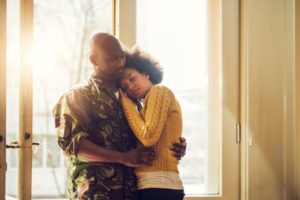 Posttraumatic stress (PTSD) can develop following any exposure to trauma—including trauma another person experienced. A military spouse may get PTSD after learning about or otherwise being exposed to trauma their partner faced. This is sometimes called vicarious trauma or secondary trauma.
How Do Military Spouses Get Traumatized?
According to the Diagnostic and Statistical Manual of Mental Disorders (DSM-5), a person doesn’t have to directly experience trauma to develop PTSD. Witnessing someone else’s trauma, learning a loved one was hurt, or repeatedly hearing details about a traumatic event can also cause PTSD.
A military spouse might develop PTSD stemming from their partner’s trauma by:
- Repeatedly listening to their partner’s traumatic stories.
- Witnessing gruesome military combat on television, either during or after a partner’s deployment.
- Feeling unable to escape the trauma their partner continually relives.
Some military spouses also develop PTSD due to their own military-related trauma. Depending on the mission, a spouse may not be able to locate or talk to their deployed partner. They may spend months or years terrified about their partner’s well-being. This fear can be compounded by graphic media coverage.
Military spouses who experience symptoms of PTSD should know that military combat is not the only reason people develop posttraumatic stress. PTSD symptoms may be related to another trauma, such as a car accident, sexual assault, or child abuse.
A 2011 study followed 170 female military spouses who reported symptoms of PTSD. Researchers asked about the women’s experiences of stress and trauma and found:
- 12.9% of wives attributed their symptoms solely to a spouse’s deployment-related trauma.
- Most wives (62.4%) said their distress was wholly unrelated to a partner’s military service.
- 24.7% said their distress was due to a combination of their partner’s military service and other factors.
For people who have already experienced trauma, exposure to a loved one’s trauma may re-trigger the previous trauma.
How Common Is PTSD Among Military Family Members?
PTSD is a common experience. According to the National Institutes of Health, about 7.7 million Americans have PTSD at any given time. The 2011 study above found 21.6% of military wives qualified for a PTSD diagnosis.
Whether or not a military spouse develops PTSD depends on multiple factors, including:
- Previous and ongoing trauma: For instance, a sexual assault survivor may be more likely to develop PTSD, or to re-experience trauma, in response to a spouse’s trauma.
- Support system: A person may become socially isolated as they await the return of their loved one. Someone with little social support and few coping skills may be more likely to struggle.
- Overall mental health: A person who is already struggling with mental health issues may be more likely to develop PTSD.
Children can also be affected by a parent’s military experiences. Children who develop secondary trauma may have nightmares, unusual fears, or increased irritability. Trauma can also shift the way children relate to one or both parents. The likelihood of a child developing PTSD depends on their age, gender, and general family functioning.
Military Spouses and Compassion Fatigue
Military spouses who act as caregivers for their loved ones can experience compassion fatigue. Over time, the demands of continually caring for someone can deplete empathy. A spouse might begin feeling resentful instead of compassionate. Compassion fatigue can harm the relationship, and it may lead to worsening symptoms of PTSD in one or both spouses.
Trauma is not a contest…Everyone affected by PTSD needs and deserves help.Support from expert caregivers, such as therapists and doctors, can be crucial. Regular breaks from the demands of caregiving can also be important. A person who intends to provide all the care their loved one needs, without any assistance, is much more vulnerable to compassion fatigue.
Romantic relationships are an important outlet for many people. Spouses often rely on one another for emotional support, freely venting and seeking empathy. When a partner is struggling with serious mental health symptoms, they may be less able to provide comfort. This change deprives the caregiving partner of an important source of emotional support during a time when they need it most.
Therapy can help partners manage the effects of PTSD on a relationship. With the right therapist, military spouses can stop feeling like caregivers and begin feeling like partners again. Therapy can also help the care recipient feel understood and supported. A couple may find the process of navigating trauma together deepens their relationship in the long run.
Self-Care for Military Spouses
As a military spouse, you may feel guilty for struggling with your own trauma. You may believe you cannot have PTSD if you didn’t experience combat. Or you may recognize your symptoms but hide your distress because your spouse “had it much worse.â€
Trauma is not a contest. You might face unique stressors that your partner does not. It doesn’t matter who has it worse or who has suffered more. Everyone affected by PTSD needs and deserves help.
Some self-care strategies that can help military spouses cope include:
- Limiting exposure to triggering media, such as war movies or graphic news stories.
- Taking frequent breaks from caregiving. No one can provide 24/7 care with no support. Schedule time to do things that make you feel good several times a week.
- Talking to loved ones about your own struggles and trauma.
- Joining a support group for military spouses.
- Getting plenty of exercise. Exercise can help with depression, trauma, and anxiety.
- Getting adequate sleep.
Military spouses who struggle with secondary PTSD can find much relief in therapy. Therapy helps you understand how your partner’s trauma affects you. It may also help you identify traumatic experiences in your own life that play a role in your PTSD. Therapy can be a supportive place to discuss your feelings without judgment. The right therapist can help you make healthy lifestyle changes and boost your resilience.
PTSD isn’t just for soldiers. You don’t have to suffer alone. You can find a therapist who can help you manage secondary trauma here.
References:
- Cook, C. R., Slater-Williams, A. A., & Harrison, L. R. (2012). Secondary PTSD in children of service members: Strategies for helping professionals [PDF]. In VISTAS (Article 6). Retrieved from https://www.counseling.org/resources/library/VISTAS/vistas12/Article_6.pdf
- How to deal with stress as a caregiver. (2018, March 21.) Military OneSource. Retrieved from https://www.militaryonesource.mil/-/how-to-deal-with-stress-as-a-caregiver
- Renshaw, K. D., Allen, E. S., Rhoades, G. K., Blais, R. K., Markman, H. J., & Stanley, S. M. (2011). Distress in spouses of service members with symptoms of combat-related PTSD: Secondary traumatic stress or general psychological distress? Journal of Family Psychology,25(4), 461-469. Retrieved from https://www.ncbi.nlm.nih.gov/pmc/articles/PMC3156850
- PTSD: A growing epidemic. (2009). NIH Medline Plus, 4(1), 10-14. Retrieved from https://medlineplus.gov/magazine/issues/winter09/articles/winter09pg10-14.html
- Yehuda, R., Hoge, C. W., McFarlane, A. C., Vermetten, E., Lanius, R. A., Nievergelt, C. M., . . . Hyman, S. E. (2015, October 8). Post-traumatic stress disorder. Nature Reviews Disease Primers, 1. Retrieved from https://www.nature.com/articles/nrdp201557/tables/1
 In the wake of terror attacks and acts of violence around the world—such as the white supremacy demonstrations in Charlottesville, Virginia, that led a man to plough a vehicle into a crowd of counter-protesters, killing a woman—many parents may be unsure how to talk to their children about the news.
The American Academy of Pediatrics offers parents several tips. The discussion, the organization says, should begin by asking children what they already know. Parents should offer encouragement and reassurance, maintain a consistent routine, and shield young children from graphic images of violence. They should also monitor children for signs of depression and trauma, such as sleep, behavioral issues, and changes in eating habits.
Many want to talk with their children about race in a way that raises a child’s consciousness without being frightening. Most experts emphasize the need to be honest in an age-appropriate way. Parents must also explore their own feelings about race and racism before attempting to educate their children. Like other challenging conversations, ignoring the issue won’t make it go away. Rather than having one conversation, parents should begin as early as possible, have frequent discussions, and maintain open lines of communication.
The Psychology of the Eclipse: ‘You Just Feel Connected With Everybody’
[fat_widget_right]As excitement about Monday’s solar eclipse increases, some mental health experts say the eclipse can foster a connection. Experiencing something out of the ordinary can break down the usual barriers to connection, fostering a sense of unity and closeness—even with strangers.
Some Companies Want You to Take a Mental Health Day
A mental health day can be as important for good health and job satisfaction as sick leave. Yet, many workers are reluctant to tell their managers they need one. Some companies now encourage employees to take mental health days, citing increases in productivity and job satisfaction among employees with good mental health.
What’s Worse Than Being Unemployed? A Bad Job, Say Researchers
Many workers think long-term unemployment is the most stressful job experience they can have. According to new research, however, staying in a bad job might be worse. Researchers followed people who were unemployed during 2009 and 2010. Those who took “poor quality work†had higher stress levels than those who remained jobless.
Rand Study Recommends Improvements to Mental Health Care for Service Members
A new Rand Corporation study suggests lack of access to quality mental health care remains an issue for current and former soldiers. The study, which surveyed 520 providers, found less than half were able to see people with depression or posttraumatic stress (PTSD) weekly. Instead, they saw these people biweekly or less. This suggests soldiers may not get the consistent care they need to see improvements in mental health.
How White Supremacists Use Victimhood to Recruit
Research on white supremacist groups suggest their members see themselves—not the minority groups they target—as the real victims. They believe white people are the real targets for systemic oppression. In other words, they are prevented from expressing their “white pride,†their victimization erodes self-esteem, and the ongoing victimization of white groups is part of a plan to eliminate the white “race.â€
Now, Manage Your Mental Health and Chronic Conditions With an App
A new smartphone app promises to help middle-age and older adults manage their physical and mental health. The app, which is designed to meet the average technical abilities of older adults, involves three months of training in 10 sessions. The sessions cover health topics such as stress, medication and substance abuse, and the role of mental health in physical health.
 Imagine being able to make significant progress in healing from posttraumatic stress in one therapy session. Several mental health practitioners using accelerated resolution therapy (ART) have told me of such stories.
ART is a relatively new brief therapy for treating a variety of behavioral health issues. Effective relief has been shown to be achieved even for combat veterans in only three to five sessions (Kip et al., 2013). It is now being used in a number of U.S. Army hospitals, such as Walter Reed and Fort Belvoir, and is expected to expand through the armed services rapidly. The Federal Substance Abuse and Mental Health Services Administration (SAMHSA) has recognized ART as an evidence-based treatment for depression and depressive symptoms, personal resilience and self-concept, and trauma and stressor-related conditions (PTSD) (Accelerated Resolution Therapy, 2015).
What Is ART?
ART is an eye-movement therapy. The person in therapy moves their eyes back and forth following the therapist’s hand, and the therapist gives specific directions before each set of eye movements. ART draws on a number of other established and evidence-based therapies, such as cognitive behavioral theory, gestalt, and eye movement desensitization and reprocessing (EMDR). However, it is unique in being a procedurally oriented therapy. Other therapies typically focus on the content of the person’s thoughts and emotions.
[fat_widget_trauma_ptsd_right]
Since ART is procedurally oriented, the person in therapy doesn’t have to talk about what happened. This makes the approach great when working with people who may have trouble talking about their emotions, as might some individuals in the military. It also may be easier on the therapist, who doesn’t have to experience secondary (vicarious) trauma as a result of hearing about terrible things.
ART Is Said to Work Quickly
Very rapid healing is a hallmark of accelerated resolution therapy. Many therapists trained in ART report people can heal from a single traumatic event—such as an auto accident, assault, or witnessing an atrocity—in as little as one session. Some therapists report healing phobias in one session as well.
One consideration when choosing a therapy is how likely the person is to complete the full course of treatment. The longer a therapy takes to complete, the less likely it is the person will complete it. Because it is such a brief treatment, more people may be likely to complete a course using ART.
I recently watched the developer of ART, Laney Rosenzweig, heal a woman from two phobias in less than an hour. These very rapid results may seem unbelievable to someone familiar only with other therapies. Most of the evidence-based therapies for treating posttraumatic stress expect to take between 12 and 20 sessions to be effective. ART, meanwhile, has been shown to be effective in only three to five sessions in scientific studies of both military and civilian populations (Kip et al., 2012; Kip et al., 2013; Kip et al., 2014). It was even shown to be effective working with a population of homeless veterans (Kip et al., 2016). Some of them didn’t complete treatment because they found jobs or housing, but despite this, a study found a success rate of over 50%.
One consideration when choosing a therapy is how likely the person is to complete the full course of treatment. The longer a therapy takes to complete, the less likely it is the person will complete it. Because ARTÂ is such a brief treatment, more people may be likely to complete a course using this approach to healing.
How Does ART Work?
Research is still pending, but eye movements used in ART are believed to have some link to the sort of eye movement seen in REM sleep, when the brain is believed to be processing the day’s events. We used to believe memories were fixed and that accessing one was like taking a book from a library, looking at it, and then putting it back. In fact, we have found accessing a memory makes it plastic; it can then be altered by the sort of techniques employed by ART. After four to six hours, the memory reconsolidates and the altered (new) memory is stored.
Who Can Benefit from ART?
ART has been used with a wide variety of people. Children as young as 4 have been treated with ART, and I recently utilized the approach to help a 16-year-old male with an IQ of 66. This method has been researched in both military and civilian populations, and similar effectiveness results have been obtained within both populations. (Kip et al., 2015).
Basically, three things are necessary for ART to be successful. The person receiving the treatment must be motivated to heal, capable of tracking the therapist’s hand with their eyes, and able to hold on to a thought.
How ART Differs from EMDR
Col. Charles Hoge, an Army psychiatrist who trained in both EMDR and ART, compared the two and noted 10 points of difference (Hoge, 2015). Some of the major ones are:
- EMDR uses a variable number of eye movements, while ART uses a fixed number.
- EMDR uses free association, while ART therapists are directive.
- EMDR pays attention to content, whereas ART therapists focus on visual imagery and emotional sensations.
- EMDR is content-oriented, while ART has a procedural orientation.
Why You May Not Have Heard of ART
If ART is so good, why haven’t you heard of it? There are two good reasons.
First, it’s new, having been introduced only in 2008 by its developer, Rosenzweig. Most other evidence-based treatments for posttraumatic stress have been around for over 25 years. Awareness is mostly spread by word of mouth, from one therapist to another, from one person in therapy to another. So far, fewer than 1,000 therapists have been trained in ART, and the vast majority of these therapists are located on the east coast of the U.S.
The second reason is sheer disbelief—based on the length of time it takes for other therapies to work, the ability to heal a person from one traumatic event in only a few sessions (or perhaps just one) simply seems unbelievable to many people, including therapists.
What’s Next for ART?
SAMHSA has identified ART as a “promising†therapy for disruptive behavior issues and antisocial behaviors; phobias, panic, and generalized anxiety; and sleep and wake conditions. These areas all need to be investigated via further research.
In addition, many therapists are reporting success in treating substance abuse and obsessive-compulsive issues with ART, but this type of treatment requires two sessions a week in the early stages.
References:
- Accelerated resolution therapy. (2015, May 22). Retrieved from http://nrepp.samhsa.gov/ProgramProfile.aspx?id=7
- Hoge, C.W. (2015). Accelerated resolution therapy (ART): Clinical considerations, cautions, and informed consent for military mental health clinicians. Walter Reed Army Institute of Research. Retrieved from http://acceleratedresolutiontherapy.com/wp-content/uploads/2016/08/ART-vs-EMDR_by-Hoge.pdf
- Kip, K.E., D’Aoust, R.F., Hernandez, D.F., Girling, S.A., Cuttino, B., Long, M.K., … Rosenzweig, L. (2016). Evaluation of brief treatment of symptoms of psychological trauma among veterans residing in a homeless shelter by use of Accelerated Resolution Therapy (ART). Nursing Outlook, 64:411-223.
- Kip, K.E., Elk, C. A., Sullivan, K. L., Kadel, R., Lengacher, C. A., Long, C. J., … Diamond, D. M. (2012). Brief treatment of symptoms of post-traumatic stress disorder (PTSD) by use of accelerated resolution therapy (ART®). Behavioral Sciences, 2(4), 115–134. doi:10.3390/bs2020115
- Kip, K.E., Hernandez, D.F., Shuman, A., Witt, A., Diamond, D.M., Davis, S.E., … Rosenzweig, J. (2015). Comparison of accelerated resolution therapy (ART) for treatment of symptoms of PTSD and sexual trauma between civilian and military adults. Military Medicine, 180:964-971. PMID: 26327548
- Kip, K.E., Shuman, A., Hernandez, D.F., Diamond, D.M., Rosenzweig, L. (2014). Case report and theoretical description of accelerated resolution therapy (ART) for military-related post-traumatic stress disorder. Military Medicine, 179(1): 31-7, 2014. Retrieved from http://www.ncbi.nlm.nih.gov/pubmed/24402982
- Kip, K.E., Rosenzweig, L., Hernandez, D.F., Shuman, A., Sullivan, K.L., Long, C.J., … Diamond, D.M. (2013). Randomized controlled trial of accelerated resolution therapy (ART) for symptoms of combat-related post-traumatic stress disorder (PTSD). Military Medicine, 178(12): 298-309. Retrieved from http://www.ncbi.nlm.nih.gov/pubmed/24306011
Dear GoodTherapy.org,
Three months ago, my husband returned from his second deployment to the Middle East. I was excited to see him and resume our life together, but he came back to me a changed man, and not for the better. He barely talks to me. He just sits there and watches television or goes out drinking or lays in bed all day. Every time I try to talk to him, he gets snippy and tells me to leave him alone. I can count the number of times we’ve had sex on one hand. He has made me cry numerous times and he acts like I’m not even in the room, let alone tries to comfort me or apologize.
[fat_widget_right]
I have gathered from people I’ve talked to that he witnessed some horrific things while deployed, including bombings, shootings, and several deaths. He has told me he was shot at repeatedly. I don’t mean to downplay the effects that can have on a human being. I can’t imagine having been in that position. I don’t doubt that it would change me, too. I know he’s hurting terribly, and I want to help, but he won’t let me. He won’t let me in.
After talking it over with my parents, I’ve decided to leave him, at least for now. I just can’t subject myself to the hurtful language and behavior anymore. He’s not treating me like a wife or even a friend, but rather like the enemy. And yes, for the record, I feel guilty about leaving, but should I? I feel like I’ve done everything I can do. Maybe you have other ideas. I hurt for him, for me, and for our marriage. —Not the Enemy
Submit Your Own Question to a Therapist
Dear NTE,
Thank you for writing. I read your question with a heavy heart, feeling sadness for your husband and for you. I would not blame yourself or consciously nurture guilt or shame. It sounds as though distancing yourself was a necessary last resort. I do not think your husband is fully conscious of what he is doing, nor do I think you are acting selfishly.
Not to downplay your suffering in the slightest, but your husband has been to hell and back. His feelings and behavior are not inconsistent with other veterans exposed to such horrific trauma. It may be posttraumatic stress (PTSD) or dissociative numbness or some/all of the above, but I do know that too many of our veterans are not receiving the treatment they need and ought to have, considering their selflessness and risk. Not long ago I read that PTSD is not a qualifying condition for receiving the Purple Heart, that only obvious physical injuries qualify. This, I think, indicates the stigma of shame and corresponding ignorance accompanying mental health issues, which only superficially appears to undermine stereotypes of “bravery†and so forth. As always, we tend to be afraid of what we can’t tangibly see or explicitly define, and psychology remains a curious mix of art and science (and philosophy, and literature …).
Yet what could be braver than facing one’s own inner “demons� A veteran I once treated briefly for addiction said he found facing “the monster within†was more frightening than actual gunfights he’d seen on assignment. Your husband is in the awful predicament of needing to process indescribably hellacious experiences, within the right setting with a trained professional, of course. This could never be expected of a partner or loved one.
Acute trauma also, as indicated by your empathic, eloquent question, affects the families of those suffering, as the traumatized one’s behavior pushes others away. You, too, sound traumatized in being neglected, shut out, demeaned, and so forth—painful experiences for someone who, I surmise, longs to reconnect with a long-absent spouse.
It is interesting that some people, including some professionals, call patterns of psychological suffering “disorders.†But if you put it in context, both you and your husband are having a normal, human reaction to extreme circumstances which would be “disordering†to anyone. Being abused in childhood or traumatized in battle might, for instance, lead to addictive or depressive (or other) issues, though it’s worth asking whether it is the person or their traumatizing experiences that are disordered.
Your husband returned to “normal life†with profound suffering and perhaps shame, and reacts by “acting out†(I mean this non-pejoratively) what he is feeling, keeping you at a painful distance and emotionally wounding you in the process. Perhaps he feels too overwhelmed or ashamed to express his pain and corresponding inadequacy, and so he enacts his trauma on those closest to him as a way of unconsciously expressing what he feels inside but cannot express, hiding his vulnerability defensively, even hurtfully. Clearly, there is some kind of unbearable risk for him in allowing the kind of intimacy you so understandably want and miss.
Often trauma makes a person into a kind of wary rescue animal—strong but brutalized, rowling or hissing angrily over and over again at anyone who approaches, until they can, slowly and painstakingly, learn to trust again. It is hard, if not impossible, for us to do this without the proper support.
His own repressed or dissociated trauma feelings are, in other words, probably similar to what you are feeling: shame, a sense of feeling torn, abandoned, and abandoning (since he may also long to reconnect but is too terrified or wounded to do so, perhaps guilty or ashamed he left you behind or is doing so now in his withdrawal). In a bizarre way, he may feel he is protecting you from the chaos within; if he feels he is drowning in unexpressed pain and terror, he may not want to pull a beloved into the maelstrom. He may say, in other words, “You couldn’t handle it,†while you respond, “Try me.â€
Often trauma makes a person into a kind of wary rescue animal—strong but brutalized, rowling or hissing angrily over and over again at anyone who approaches, until they can, slowly and painstakingly, learn to trust again. It is hard, if not impossible, for us to do this without the proper support.
Of course, what your husband may be missing or repressing is that the distancing itself is hurtful to you and the relationship, and ultimately self-sabotaging, since what he (likely) needs most of all is human connection, emotional safety, and deep validation of his suffering, in a way that confirms (and not undermines) his manhood. (He may unconsciously feel he is “the enemy†for being so “weak†and shamefully afraid, may feel shame or guilt that he could not protect or save those who died—again, a common reaction.)
At a certain point, however, we have to get in the lifeboat even if our loved one refuses to do so. It is an impossibly painful choice. This leads me to reiterate, again, that there is no “right†decision here for you. You can stay and risk drowning, or find safety yourself while anxious you have “left him behind.â€
If only we could somehow culturally redefine “strength†to mean addressing and healing, rather than avoiding or numbing, our own psychic pain and isolation. If only, in such a masculinized culture like the police or military, emotional sensitivity is not equated with being “wimpy,†etc. It’s actually the “keep a stiff upper lip and carry on†mentality that is dangerous after the battle has ended.
Perhaps, then, you can role model for your husband the kind of strength I’m talking about. I cannot recommend enough the following: support, support, and more support. I strongly suggest you seek out the kind of education and emotional assistance your husband needs. Is there a “wives of veterans†group, in person or online, from which you can find sustenance, both practical and psychological? Can the local or online VA provide helpful info? I would bet what you are experiencing is also not uncommon. It is too early to abandon hope, and helping yourself is helping the relationship since you are 50% of the equation.
You might also seek out counseling, either individual or group, via a therapist with specific training and experiencing in this area. Trauma resulting from military service or firefights is not quite like any other, given the specifics of military culture, codes of honor and bravery, and so forth. You can look via GoodTherapy.org, if you like. But do find something, because this is agonizing, if not impossible, to handle on one’s own. Ending the pain of your guilt and isolation will make it easier to communicate with your husband, and I would urge you to not make a final decision until after you have found some peer or professional support.
I thank you again for writing. You, too, are doing your country a duty in attempting to help yourself and your husband address the wounds he carries inside.
Kind regards,
Darren
Dear GoodTherapy.org,
Our son, who turned 18 last month, is about to graduate from high school. He’s a great kid, an Eagle Scout, and a straight-A student (3.96 grade-point average). He’s the president of his senior class and has multiple full-ride scholarship offers from elite schools across the country, including Stanford and Princeton.
[fat_widget_right]
So why, pray tell, would he possibly want to join the military? This is the dilemma our family faces. Bernie Sanders isn’t president. College isn’t cheap. A quality college education is unaffordable for many families, including ours. By the time our son would complete his service, it seems doubtful at best that opportunities like this will still be waiting for him, and we won’t be in position to help him much. We feel like he is leaving not only free money (and a lot of it) on the table, but also his future, and for what?
His mother and I both see the nobility in wanting to serve our country and we admire him for it, but this decision puts not only his financial future at risk but also, potentially, his life. It’s an unstable world we live in, and not too many people who enlist these days manage to avoid deployment. We’ve tried to talk some sense into our son, but he says he’s made up his mind. Easy to say for someone who has never had to pay for anything in his life.
Please help us. How can we convince our son that going to college is a much better choice than going to war? —Dumbfounded Dad
Dear Dumbfounded,
Thank you for writing. I can’t help but think the answer to your question lies in the emotional undertone of the question itself.
As I’m sure you already know, the teen years are often a roller-coaster for teens and parents alike. It’s a phase marked by intense contradiction, as a burgeoning young adult seeks individuation and freedom while under the care and protection of the very people they are trying to separate from. It’s easy to get lost in the minutiae of curfews, driving privileges, allowances, homework, drugs, sex, and so on.
Though I find it a worthy question to ask, what is really at the heart of this? Usually it’s anxiety or fear. On the parents’ side, there is the fear the child will be somehow unsafe, now or later, and is throwing away a once-in-a-lifetime opportunity. Parents fear that the kid who struggles in school may not be well enough prepared for college later; the kid who experiments with pot may be “setting themselves up for failure†down the road; and the son who says no to full-ride scholarships at elite schools has somehow gone off-track. What the heck is he thinking? That does it, I’m putting my foot down!
The teen, meanwhile, worries about the same thing, only from a different angle. Can I survive and flourish—socially, financially—once I’ve left the nest? If I’m too reliant on mom or dad now, what happens later when I’m working or at college? I can’t rely on them forever. I know they want me to take these scholarships, get an education, but I want a different kind of education. What’s wrong with that? To hell with ’em! I’m on my own!
Anxiety, in other words, rules the day, as each side feels disrespected or abandoned or shut out by the other.
Your letter is full of understandable parental anxiety focused mostly, it seems to me, on the future. He is “potentially†risking his life or possibly throwing away opportunities that may or may not be “waiting for him†later on. One could say these scholarships are once-in-a-lifetime opportunities. You could also say any kid with the smarts to get into these schools with a 3.96 GPA, and with a willingness to take the road less traveled, will likely continue to find opportunities. I know plenty of struggling adults who went to Ivy League schools, and successful people who went to community college, then specialized in grad school or elsewhere later on.
You have, again understandably for a parent, developed a vision for the best path forward for your son. What father wouldn’t want his son to go to Princeton or Stanford? I empathize with your confusion and frustration. I imagine you’re tearing your hair out.
But this is the great challenge of this mind-warping transition phase. As a parent myself, I foresee a time when my daughter will announce to us she has decided to become a doctor or lawyer (or better yet, a psychologist!)—which means, of course, that when she’s 18 she’ll announce to us she’s skipping college to join a punk band or travel to Antarctica to save seals. We want our kids to be safe; they want us to back off so they can test limits, take a bite out of the world, and dance near the edge. This is itself the delicate, anxious dance between teens and parents at this complicated phase.
As I often do in this column, I’ll throw out my 2 cents regarding some practical suggestions, followed by a more psychological angle.
First, talk to your son—as neutrally as possible—about what you’re seeing as the risks involved. The idea here is to model balanced decision making. Make sure he knows your “agenda†is only to talk through the decision with him. Does he know what a rare opportunity these scholarships actually are, how few kids get into these schools, for a free ride, no less? That these schools provide first-rate opportunities for networking and lifelong connection for just about any field of interest? That he could always enlist after getting his undergrad degree, or try college first and then decide? You could also talk about what assistance you can and possibly can’t provide both now and later.
Which branch of the military is he most interested in? What about it, specifically, draws him? What are they offering in terms of higher education down the road? What about any interest in specialty training? Also, to your points about his safety, is he interested in being deployed on dangerous assignments or tours of duty? If the answer is yes, would he be interested in doing some more research, such as talking to veterans who have served where he’s interested in going?
I don’t know your son, so he may or may not be taking some of his cues from you. If he is, try as best you can to be an example of curiosity over judgment, and most of all empathy for what he hopes to gain from the military.
I don’t know your son, so he may or may not be taking some of his cues from you. If he is, try as best you can to be an example of curiosity over judgment, and most of all empathy for what he hopes to gain from the military.
Empathy is the key, saith the psychotherapist. By this, I mean I would try to get as curious as you can about what draws him. Does he like the idea of discipline, training, and order? Is it weaponry and combat he’s interested in? Is it the idea of the safety of a “strong†institution to which he will belong, a new kind of family?
Listen for the hopes and yearnings more than the literal aspects. Then you might—as calmly as you can—explain why this is difficult for you (and possibly your wife). You have your own hopes and wishes for him as a caring dad.
Try to avoid a trap a lot of us fall into, which is playing the “this isn’t normal†card. Example: “It’s not normal for a kid as smart as you to enlist and blow off Stanford; it’s just not rational.†The implication there is he’s weird, an oddball, or worse. It will probably make him dig his heels in even deeper. Make your statements personal, not about “what kids your age normally do†or in the vein of “what’s really best for a guy like you, though clearly you don’t see it, is …†It’s possible he does see it and wants to do something else. Better to say, “Well, here’s what I foresee for you, and why, and I guess I just don’t get it, so help me get it.†Or, “As your dad, it makes me uneasy to think of you in harm’s way. We think that’s rare or never happens, but it does. I’m not saying don’t do it, but I am saying be clear about the risks.†You could also ask the gutsy question of, is his seeking out enlistment a way of compensating for something he felt he never got at home or school? You might also be listening for how he thinks this experiencing will point him toward whatever definition of manhood he has developed.
But again, be respectful, as this is his dream, his decision. You can disagree with it, but I would honor the fact the son you love finds it important.
Parenting can be extremely difficult, and it’s a never-ending duty. But sometimes kids somehow have to do the one thing they know drives us batty. It can be a test to see if they will still be loved by us in spite of their decisions, or that they are capable of making their own decisions completely free from parental influence. If there is any element of rebellion in his decision, try to be understanding rather than dead-set against it, as that puts you in opposition and back in the tug-of-war.
I wish you the best of luck, and encourage you to post any follow-ups to let us know what happens.
Thanks again for writing!
Best wishes,
Darren
 Research on mindfulness shows that it can be beneficial for improving a person’s attention, mood, pain tolerance, and immune function. It can also be used to reduce stress and increase a person’s cognitive functioning. Therapists use it to treat depression, anxiety, drug addiction, and a vast number of other mental health issues. Recently, the practice, rooted in some of the principles of Buddhism, has found an unlikely advocate in the Department of Defense (DoD), which has also started using mindfulness to help soldiers prepare for and return from combat.
Its use in the military is considered somewhat controversial by some, as traditional mindfulness practices are often associated with an opposition to conflict and the promotion of peace.
“Mindfulness can be used as a tool to manage attention, regulate affect, and monitor cognition,” mindfulness practitioner Andrew Archer, LCSW said. “I imagine this form of grounding and centering could prepare people for extremely charged, chaotic environments. However, mindfulness has been best practiced with the act of conscientious objection to war.”
Why Is Mindfulness Taught in the Military?
[fat_widget_right]Proponents of mindfulness training for the military explain that although war is not ideal, it remains a reality for society today. If soldiers must participate in war, they should receive training that will not only help prepare them for combat, but also help them manage the stress and trauma associated with it.
For the military to be successful, soldiers must be able to absorb a large amount of information at once and be able to make quick decisions without succumbing to overwhelm or stress. For this reason, mindfulness-based training programs are being introduced in the military, one of the most visible being Mindfulness-based Mind Fitness Training (MMFT).
MMFT is a 20-hour course designed to increase resilience to stress for those working in high-stress environments. The program is based on the principle of mental fitness. Mentally fit, according to the program, is defined as being efficient in four capacities:
- Attention
- Mental agility
- Situational awareness
- Emotional awareness
Mindfulness training teaches these important skills that not only help soldiers on the battlefield, but also help ease their return home.
Mindfulness Before Combat
The period before a combat deployment for many in the military is highly demanding both mentally and physically. Not only are service members intensively training for their upcoming mission, but they’re also psychologically preparing to leave their families behind and enter into a dangerous environment.
The University of Miami conducted a mindfulness study of 75 soldiers stationed in Hawaii awaiting deployment to Afghanistan. The results of the study indicated that just 8 hours of mindfulness training during an 8-week period helped improve the soldiers’ attention span and prevented their minds from wandering when subjected to tests that measured those factors. The University of Miami study suggests even brief mindfulness training programs may help improve the cognitive functioning of deploying military personnel.
The University of California, San Diego School of Medicine and Naval Health Research Center published a study in May 2014 in the American Journal of Psychiatry that explored whether integrating mindfulness practices to increase mind and body awareness into pre-deployment training could help reduce the occurrence of posttraumatic stress (PTSD), depression, and anxiety in returning soldiers.
During this study, pre-combat Marine infantrymen learned various mindfulness meditation techniques, including interoception, which is the ability to help the body regulate and sustain its homeostasis by cultivating awareness of bodily sensations such as heart rate, stomach tightening, and skin tingling. The Marines then underwent a mock combat scenario with a highly realistic ambush in a scene designed to resemble one they might encounter in the Middle East. The study examined the Marines’ heart and breathing rates and compared the results of those who received mindfulness training to a group that did not. The group that received mindfulness training returned to baseline sooner than those who hadn’t.
Mindfulness After Combat
The U.S. Department of Veterans Affairs (VA) estimates about 1 in 5 Iraq and Afghanistan veterans return experiencing PTSD. With such a high rate of occurrence, it is important that soldiers have access to effective treatment options. Although medication is still highly prescribed, it may not be effective for treating all the emotional and cognitive aspects of PTSD. Mindfulness training, according to the VA’s National Center for PTSD, The U.S. Department of Veterans Affairs (VA) estimates that about 1 in 5 Iraq and Afghanistan veterans return experiencing PTSD. With such a high rate of occurrence, it is important that soldiers have access to effective treatment options. Although medication is still highly prescribed, it may not be effective for treating all the emotional and cognitive aspects of PTSD.however, has been proven to help those experiencing PTSD cope with anxiety and hyperarousal—two conditions commonly reported by returning veterans. Additionally, the National Center for PTSD says mindfulness can be useful either as a complementary or stand-alone treatment.
Virtual mindfulness training programs have also been used to help teach veterans mindfulness practices as well as connect them to a larger veteran community, all in the comfort of their own homes. Coming Home, a project developed by the University of Southern California’s Institute for Creative Technologies and sponsored by the U.S. Army’s Research, Development, and Engineering Command, is a post-deployment transitional support program offered virtually to veterans who are reintegrating into civilian life. Through this program, veterans learn the principles of mindfulness-based stress reduction using an avatar character in the 3D virtual world of Second Life. The program not only helps veterans learn mindfulness and reduce stress, but it also provides a social component, which may be especially valuable for veterans living in areas where they may not have access to services or a larger veteran community locally.
Research continues to reveal benefits mindfulness training provides for soldiers both before and after combat. These benefits in some cases have the potential to be life-saving, both from improved situational awareness and stress resilience during battle and from decreasing the intensity and occurrence of posttraumatic stress symptoms, which are often linked to a high rate of veteran suicides.
References:
- Gregoire, C. (2015, February 18). Mindfulness training improves resilience of active duty soldiers. Huffington Post. Retrieved from: http://www.huffingtonpost.com/2015/02/18/mindfulness-military-_n_6704804.html
- Minds at Attention: Military and Mindfulness. (2015, February 12). University of Miami: College of Arts and Sciences. Retrieved from: http://www.as.miami.edu/news/news-archive/minds-at-attention-military-and-mindfulness.html
- PTSD: National Center for PTSD. (n.d.). Mental Health Effects of Servicing in Afghanistan and Iraq. Retrieved from http://www.ptsd.va.gov/public/PTSD-overview/reintegration/overview-mental-health-effects.asp
- Stanley, E.A. & Schaldach, J.M. (2011 January). Mindfulness-based mind fitness training (MMFT). Mind Fitness Training Institute. Retrieved from: http://www.mind-fitness-training.org/MMFTOverviewNarrative.pdf
- Teaching Veterans Virtually. (2011, April 5). Retrieved from: http://www.mindful.org/news/teaching-veterans-virtually
- University of California, San Diego. (2014, May 16). War and Peace (of Mind): Mindfulness training for military could help them deal with stress. ScienceDaily. Retrieved from www.sciencedaily.com/releases/2014/05/140516092519.htm
- Veterans Relearn Compassion through Meditation. (n.d.) Retrieved from: http://www.mindful.org/the-mindful-society/veterans-relearn-compassion-through-meditation
 When soldiers are killed in battle, families grieve and nations mourn for some of their bravest citizens. However, wars claim thousands of lives even decades after agreements have been reached and treaties are signed. According to the U.S. Department of Veterans Affairs (VA), approximately 22 military veterans commit suicide each day in the United States. While physical injuries obtained during military service are often immediately addressed, deep psychological wounds may go untreated for years—silently festering into suicidal ideation or other mental health issues.
Mental toughness is a highly valued trait in the military. Fresh military recruits train for months to toughen themselves physically and mentally because combat situations expose soldiers to many traumatic events such as being shot at, seeing a friend get shot, or seeing death up close and personal.
Despite their diligent efforts to prepare, some soldiers are not able to cope with the intense trauma they may encounter in combat. As a result, they can become severely scarred emotionally and psychologically. With mental injuries left unaddressed or simply ignored, many military veterans discover that going home may be even more difficult than going to war.
Military Suicide Rates
Veteran suicide statistics obtained from the Department of Veterans Affairs indicate that a veteran commits suicide approximately every 65 minutes. This rate translates to over 8000 suicides per year. And as astounding as these figures are, they are likely underestimated. The data used to determine the high rate of veteran suicide in the U.S. has been challenged numerous times as it was obtained from residents of only 21 of 50 American states. Some of the largest states with high veteran populations, including California and Texas, were not included in the Department of Veterans Affairs’ report on military suicide rates.

Suicide rates among veterans are much higher than those among American civilians. Approximately 20% of all suicides in the U.S. are committed by current or former military personnel, despite the fact that veterans make up only 10% of the population.
While resources for treating posttraumatic stress (PTSD), depression, and other hallmark psychological injuries are available, only 56% of qualified Operation Enduring Freedom/Operation Iraqi Freedom (OEF/OIF) veterans make use of them (2013). Similarly, of the reported 22 veterans who commit suicide each day, only 5 are in the Veterans Affairs Health Care system.
The good news is that we know when veterans do get help, it makes a difference. In 2007, the Veterans Health Administration launched an intensive suicide prevention effort and has since reported a decrease in:
- Overall rates of suicide among veterans with mental health conditions.
- Rates of suicide in the 12 months following a survived suicide attempt among veterans.
- Rates of suicide for veterans ages 35-64, which is one of the highest risk groups.
- An overall decrease in non-fatal suicide attempts.
The Stigma of Mental Health Care in the Military
Mental health issues and the receipt of mental health care treatment can be highly stigmatized within the military. The military promotes ideals such as self-sufficiency, endurance, mental fortitude, and strength, values that also support the notion—however unfair—that those seeking mental health treatment are deficient, dependent, or weak.
Factors that significantly affect service members’ decisions to seek mental health treatment may include:
- How higher-ranking officers and non-commissioned officers talk about mental health treatment.
- The belief that seeking mental health treatment will have negative repercussions on a service member or veteran’s career.
- The gender of the service member or veteran.
- The marital status of a service member or veteran.
- His or her military occupational specialty (MOS).
- Public expectations of how service members and veterans are supposed to cope with trauma.
Stigmas surrounding mental health treatment, both in the military and outside of it, greatly reduce the number of at-risk veterans that will seek treatment. Lisa Danylchuk, EdM, LMFT, E-RYT, an Oakland, California-based therapist and posttraumatic stress Topic Expert, believes, “Stigmas like these can increase feelings of shame and isolation, which can increase feelings of depression and decrease the likelihood that a depressed or suicidal person will reach out for help.”
In addition to these social pressures, veterans may believe that seeking treatment goes against their core principles and will damage their very identity.
Mental Health Issues Veterans Face When They Come Home
The Department of Veterans Affairs posits that posttraumatic stress, anxiety, depression, bipolar tendencies, and substance abuse are among the most common mental health issues affecting veterans of OEF and OIF.
When members of the armed forces return home, they often experience difficulties with reintegration. The 2014 Iraq and Afghanistan Veterans of America (IAVA) Member Survey states that loss of identity and mental health concerns were two of the top three challenges service members faced when transitioning out of the military. Of the 2,089 Iraq and Afghanistan combat veterans who completed the survey, 53% reported having a mental health injury.
Traumatic brain injury (TBI) is another health concern for veterans that has received much attention from the medical community in recent years, due primarily to the high number of OEF and OIF veterans who have endured blasts and injuries to the head and returned home with symptoms of TBI.
TBI may occur as the result of striking the head with an object, hitting the head during a fall, or, as is usually the case with combat veterans, the head being affected by a nearby blast or explosion. TBI can result in numerous health concerns, including emotional, behavioral, cognitive, and physical deficits. Records indicate that 18% of IAVA Member Survey responders were diagnosed with traumatic brain injury and have reported an increase in anger as well as changes in their personality.
Depression and anxiety are also major concerns for veterans. The Anxiety and Depression Association of America explains that veterans may feel out of sync with family and friends, but they should try to avoid social isolation. When veterans are cut off from social support, depressed thoughts may quickly lead to suicidal ideation. According to the IAVA Member Survey, 31% of Iraq and Afghanistan veterans have contemplated taking their own life since joining the military, compared to only 6% prior to joining.
Veteran Mental Health Resources
Though many veterans will experience their greatest mental health struggle after combat, in recent years, a number of mental health services and programs have been established specifically to aid military veterans. Many services within the VA Health Care system are free of charge, and many local mental health professionals and agencies offer their expertise at a reduced cost to veterans. If you are a current or former service member experiencing mental health issues, please reach out to these available resources for assistance:
- Call the Veterans Crisis Line at 988. Press 1 to speak to a Department of Veterans Affairs responder. People reaching out for assistance can also chat online or send a text message to 838255. Loved ones of veterans are encouraged to use the crisis line too.[fat_widget_right]
- Enroll in and obtain VA Health Care, which provides access to numerous mental health services at affordable rates or free of charge depending on the veteran’s economic and discharge status.
- Participate in regular post-deployment screenings that attempt to assess the mental health of military personnel after their service and encourage fellow veterans to do the same. These post-deployment screenings are designed to identify risk factors and gather data to help other veterans.
- Seek a qualified local therapist who can offer personalized care. Many therapists have specialized training to help those experiencing PTSD.
- Reach out to local support groups and veteran service organizations. Support from fellow veterans can aid in successful mental health treatment.
Family members and friends can also help veterans cope with their psychological wounds. Danylchuk encourages veterans to seek mental and emotional support not only professionally, but also within their social circles. Danylchuk recommends to friends and family members of veterans, “Listen with a non-judgmental ear, but don’t push someone to talk about something they are not ready to share. Encourage mindfulness practices like yoga, meditation, tai chi, and qigong. Remind veterans that they are having a normal reaction to an extreme experience, and that their experiences of anxiety, depression, and/or PTSD do not mean something negative about them; it just means they are still processing parts of their experience.â€
References:
- Anxiety and Depression Association of America. (n.d.). Tips for soldiers and veterans. Retrieved November 15, 2014, from http://www.adaa.org/living-with-anxiety/military-military-families/tips-soldiers-and-veterans
- Bagalman, E. (2013). Mental disorders among OEF/OIF veterans using VA health care: Facts and figures. Retrieved from http://fas.org/sgp/crs/misc/R41921.pdf
- Iraq and Afghanistan Veterans of America. (2014). 2014 IAVA member survey. Retrieved from http://media.iava.org/IAVA_Member_Survey_2014.pdf
- Kemp, J., & Bossarte, R. ( 2012 ). Suicide data report, 2012. Retrieved from http://www.va.gov/opa/docs/suicide-data-report-2012-final.pdf
- Miggantz, E. L. (2014). Stigma of mental health care in the military. Retrieved from http://www.med.navy.mil/sites/nmcsd/nccosc/healthProfessionalsV2/reports/Documents/Stigma%20White%20Paper.pdf
- United States Department of Veterans Affairs, Employee Education System. (2010). Traumatic brain injury. Retrieved from http://www.publichealth.va.gov/docs/vhi/traumatic-brain-injury-vhi.pdf
- United States Department of Veterans Affairs. (2011). VA suicide prevention program. Retrieved from http://www.goyourownway.org/GOYOUROWNWAY/DOCUMENTS/VETERANS/VA%20Suicide%20Prevention%20Fact%20Sheet.pdf
- United States Department of Veterans Affairs. (2014). How common is PTSD? Retrieved November 15, 2014, from http://www.ptsd.va.gov/public/PTSD-overview/basics/how-common-is-ptsd.asp
- United States Department of Veterans Affairs. (2014). Polytrauma/TBI system of care. Retrieved November 15, 2014, from http://www.polytrauma.va.gov/understanding-tbi/
