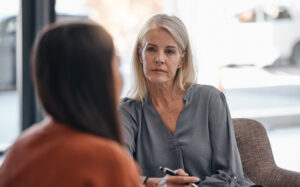
 Women who work in the helping field face unique challenges. You were probably drawn to this field because empathy comes naturally to you. Helping professionals want a job that is meaningful and helping people in need is very fulfilling. Unfortunately, women tend to give too much for a variety of reasons, putting their mental health at risk. Let’s explore some of the reasons this happens. Â
What are some common problems women helpers face?Â
- Anxiety
- Unchecked personal stress
- Lack of self-care
- Putting everyone else first
- “Lone wolf”Â
AnxietyÂ
The demands of a helping career can create a lot of anxiety. Helping work is often unpredictable because we’re dealing with human beings who are often in high-stress situations. Employers and co-workers can also be a source of stress, especially if we aren’t meeting their expectations or don’t fit in. This can lead to dreading the work day, trouble sleeping, trouble relaxing in your free time, and feeling very drained when the work day is over. Â
Unchecked Personal StressÂ
It’s likely that if you are good at helping people in your job, you’re also good at helping people in your personal life. Friends, family members, spouses, children – they all come to you with their personal problems and demands. If you identify strongly with the helper identity, you may feel obligated to put your needs aside and be there for them. It’s admirable, but not sustainable.Â
Lack of Self-CareÂ
I’m not talking about luxuries like vacations, spa days, or a shopping spree here. I’m talking about basic self-care like eating, drinking enough water, and making time for rest throughout the workday. It sounds simple, but when you’re stressed it’s easy to put these things off until after work. Unfortunately, this keeps your body in a state of panic and you will crash when you get home. If you find yourself binge eating after a long day of work, taking naps, or needing caffeine to get through the evening, you might be lacking basic self-care during the work day.Â
Putting Everyone Else FirstÂ
Are you working on someone else’s time clock? Many helping professionals work in fast-paced environments where they are expected to see clients from morning to night, be available for crises, keep up with overwhelming paperwork demands, or be in meetings all day long and somehow make time for projects. It’s not fair, but you want to be perceived as strong and capable so you strive to meet those demands. This might be okay for a while, but you are going to get burned out and resentful at some point. Â
“Lone Wolf”Â
Lone Wolf employees want others to see them as strong and capable. They don’t ask for help, they don’t share their emotions, they don’t complain, and they don’t interact much with their co-workers. There is a wall up – likely as a survival mechanism however, it could hold you back from future career success. Making social connections is an important part of advancing your career. If you want to make a change, you will need connections like references, letters of recommendation, or maybe just peer support. Â
Do you see yourself in any of these areas? Maybe all of them? If you find yourself being judgmental or critical of yourself, pause for a moment, and let’s try to get curious about why you struggle in these areas by examining some underlying themes. Â
Underlying factors:Â
- Worthlessness
- Trauma
- Cultural Influences
- ADHDÂ Â
Worthlessness Â
If you are struggling with feeling worthy in your personal life, but excel in your work life, you might start to use your job as a way to cope with feelings of worthlessness. This can set you up for perfectionistic thinking. You can’t make a mistake without being very ashamed of yourself. You struggle with unrealistic expectations and boundaries, which can make you vulnerable to exploitation by employers and even clients. You focus on being liked over being respected. Â
TraumaÂ
Many people with trauma histories are drawn to the helping field. It can be very healing for survivors to help others, but it can also set you up for over-empathizing with your clients. This could lead to overworking and poor boundaries. You start to rescue people instead of empowering them to discover their own path. You don’t trust that other people can do this work.Â
Experiencing trauma directly or even indirectly also changes your beliefs about the world. Working with people who are suffering can create or reinforce beliefs about the world being a terrible place. You might start to feel powerless, helpless, and hopeless.Â
Cultural InfluencesÂ
In today’s culture, women are barraged with rigid expectations and there is a very small window for error. Expectations like – being assertive, not aggressive; being friendly but not overly emotional; being knowledgeable but not arrogant; being flexible but not weak. All of this pressure can lead to perfectionism, which is when you strive to achieve impossible expectations and feel shame when you don’t achieve them. Being a woman of color increases the pressure because you have to work even harder against prejudice and discrimination. Many women of color have to hide aspects of themselves to be perceived positively in the workplace.  Â
Could you have ADHD?Â
It’s pretty well known that women with ADHD are underdiagnosed. I’m not an expert in this area, but here are some observations I’ve made among clients and co-workers. If you think you have ADHD, I would encourage you to seek out neuro-psych testing or an evaluation by a provider that specializes in ADHD.  Â
Symptoms of ADHD in the WorkplaceÂ
- Being late to work very oftenÂ
- Procrastinating on tasks you find tedious and then rushing to catch up at the last minuteÂ
- Easily distracted with socializingÂ
- Impatience and conflict with co-workers or supervisorsÂ
- Work missing details or getting hyperfocused on unnecessary detailsÂ
So check in and see, how are you feeling now? My hope is that you understand yourself a little bit better and are feeling less judgmental. You might think you’re the only one who has these problems but I assure you that you’re not alone. These issues are very common among professional helping women and we don’t talk about them enough.  Â
Â

by Nicole Urdang, MS, NCC, DHM, LMHC, in Buffalo, New York
Maiden, Mother & Crone Archetypes for Mental Health
You don’t have to be a neopaganist to appreciate the beauty of the ancient archetypes of Maiden, Mother, and Crone. Each life phase has its own role and responsibilities, and each is valued equally.
An Overview
The Maiden
The innocent and energetic maiden explores life with young eyes. It’s a time of firsts: first period, love interest, dreams, and passions. This age is marked by curiosity about almost everything. It’s a time of discovery, early exploration of the self, and choosing initial life paths.
The Mother
The mother archetype does not just refer to women who give birth or choose to adopt. This age is marked by a deepening awareness of maternal, loving, giving, feminine energy. This nurturing can appear in creative endeavors, parenting, social connections, and learning. It has a vibrancy and strong forward-moving energy. Perimenopause occurs in the latter part of this phase. Here, the tasks are sharing knowledge, mentoring, greater or lesser community involvement, and reflecting on the past, present, and future.
The Crone
The crone archetype is notable for the way it integrates what has preceded it. Physically, it is marked by menopause. While physical energy may have waned, there is a trove of life experience on which to draw. New possibilities include more time for introspection, greater self-confidence, stillness, greater interest in meditation, and a newfound appreciation of the simplest pleasures.
It can also be a time of grieving — not just of the aging process, itself, but of other losses as well. This allows space to let go of past patterns, roles, and dreams that may no longer be possible. The greatest gift of the crone is feeling freer and safer to be oneself.
Engaging with These Archetypes
By embracing each stage as you progress through life, you inhabit your truest self and prepare for the next phase.
While no life transition is especially easy to navigate, women entering the third age have a particularly difficult time in our culture as we are bombarded by messages that say we should stay young. Exactly the opposite advice that would help us move forward.
As with most life decisions, there are no cookie-cutter answers about how to live in each phase. One woman’s choices might be completely wrong for another. The hard part of continuing to evolve into your unique self is deeply listening to your own inner guides. Of course, they sometimes pepper you with conflicting messages, but if you’re patient and willing to wait, the path becomes clear.
Want help making peace with your life or support as you make hard decisions? Search for a therapist who can help.
Reflections on Cronehood
I was sitting in the park yesterday, the paradigm of a little old lady on a bench, and I felt an incredible sense of freedom. With no pressure to be physically appealing to anybody and not looking for anyone to complete me, I felt fully myself. It was a glorious experience. Embracing my cronehood. Who knew?
Every single thing I have ever been led to believe about being an old woman evaporated in that moment. I felt seen. People smiled at me, and one young man sat with me to chat for a little while.
I like to remind myself that Yoda and ET weren’t beautiful, yet they were wise, loving, and fully present — not to mention respected and loved.
In my younger years, I enjoyed many aspects of the maiden and mother roles. Now, it’s time to take off those mantles and allow this stage to unfold. I have no interest in chasing a youth that at 68 is truly behind me. And what is “young at heart†anyway? I want to be wise, compassionate, generous, and kind at heart. I couldn’t give a rat’s meow about being or looking young. I want to be what I am: an old woman.
It’s hard, though. The media show me pictures of women my age who — through all sorts of machinations — look a lot younger. Don’t get me wrong, I want to be vibrant and healthy, but I can be those things at 68 and look my age. I don’t want to be young again. Been there, done that. What’s interesting is discovering this third age. I love sharing my experience of 45+ years as a holistic psychotherapist.
Life Wisdom for the Crone
Someone very wise once said to me that if I were comfortable with my choices, the chances are other people would be, too. Not only have I found that to be true, but by living my most authentic life I give people a cosmic permission slip to live theirs.
We all need examples of what’s possible. Thankfully, I have seen other older women do their own thing and find it incredibly inspiring. I can only hope my ways will inspire people to feel good about their choices, even when they go against the prevailing societal tides.
This third age can be a fertile time full of discovery. That may manifest as trying new things externally, plumbing your own depths, or a combination of both.
For many women, it might entail long periods of rest. Even though that can feel “unproductive,†it may prove to be just the peaceful, healing break your body-mind-spirit needs.
Aging with Awareness and Self-Compassion
Like an old injury that still might be seen in a faint scar on your body, some things naturally lessen over time. Other issues, like childhood trauma, keep paying emotional dividends. It’s never too late to get good therapy. You can evolve until you drop the body.
One of the biggest challenges in life is fully accepting whatever stage you’re in and allowing the present to unfold with new possibilities. This process can happen as we grow out of things naturally and organically, or through therapy.
When it comes to entering the crone age and swimming against the tide of our youth-oriented culture, that may entail a conscious, concerted effort to be your true self. This is never easy. It’s even more challenging when you’re aging in an age-denying society where media bombards you 24 hours a day. Still, it can be done. The effort is worth the reward of authenticity. In addition, you can be a beacon to younger people by showing them what it means to age with some measure of grace and acceptance.
Of course, it’s also important to be honest about the challenges of aging, just as it is to be present with the tasks of maidenhood and motherhood. No stage is easy, but by navigating them with awareness and not hiding behind a facade of everything being all good all the time, we can support each other in a new compassionate way.Â
Finding a therapist who can help you navigate the challenges of life’s bumps, twists, and turns can be incredibly helpful to embracing the stage you’re in. Search for therapists in your area, then narrow your search using the filters on the left of your search results. If you’re looking for help with accepting your cronehood, you might use the Common Specialties filter, selecting All other issues > Aging and Geriatric Issues to see your options.

The Change: Menopause and Mental HealthÂ
As women age, it’s only a matter of time before menopause sets in. Since every person is unique, the timing of menopause varies from one person to the next. But, generally speaking, menopause affects women, transgender men, and some nonbinary individuals in their late 40s and early 50s.Â
While menopause is a completely natural process, individuals can feel its effects quite differently. For example, some people going through menopause might feel nothing much out of the ordinary while others might feel anxiety and depression. In extreme cases, some women going through menopause can experience a condition called menopausal psychosis. Â
But before we examine the different phases of menopause and how menopause and mental health tie together, let’s take a step back and take a deeper look at what menopause entails.Â
What Is Menopause?Â
Menopause is the process of transitioning from a fertile individual who can get pregnant to an infertile individual who can no longer give birth. When an individual passes menopause, they become post-menopausal, i.e., someone who hasn’t had a period in at least one year.Â
As women endure this process, they may experience a number of medical symptoms as the ovaries stop producing as much estrogen and progesterone. Some of these symptoms include hot flashes, vaginal dryness, weight gain, insomnia, and mood swings. Â
As a result, many women going through menopause also lose quite a bit of their sex drive.Â
Going Through Menopause: The PhasesÂ
Generally speaking, there are three distinct phases of menopause:Â
- Perimenopause starts when women begin to become less fertile and the body stops producing as much estrogen and progesterone. At this stage, a woman might start having irregular periods.
- Menopause occurs when a woman hasn’t had a period in at least 12 months. On average, this occurs between the ages of 45 and 55.
- Postmenopause is the final phase of the process and describes women, transgendered men, and nonbinary individuals who have gone through menopause. Due to a lack of hormone production, women at this stage are more likely to develop conditions like heart disease and osteoporosis.Â
Now that you have a better idea of the process menopausal woman go through, let’s turn our attention to some of the signs that might indicate someone is experiencing menopause.Â
What Are the Symptoms of Menopause?Â
The most common symptom of menopause is hot flashes, which affect as many as 70 percent of those going through the process. These sudden overwhelming feelings of heat can last as long as 10 minutes.Â
Here are some additional symptoms menopausal people may experience:Â
- Vaginal dryness, which causes discomfort during sex and contributes to a decreased sexual appetiteÂ
- Incontinence, with women having to go to the bathroom more frequently and potentially leaking small amounts of urine when laughing or sneezingÂ
- Slower metabolism, making it easier to gain weight and harder to lose itÂ
- Reduced bone density, which can lead to osteoporosis and broken bonesÂ
On top of these physical symptoms, women may also experience mental health problems. In addition to insomnia and mood swings, some women may also encounter memory issues and have shortened attention spans.Â
What’s more, some women may also become very anxious during menopause. After all, this is a major life transition; not everyone is willing to easily accept that they’ve arrived at this moment in their lives. Unfortunately, research suggests that women with anxiety can exacerbate the symptoms of menopause.Â
Further, women going through menopause are more likely to experience depression. In fact, one recent study found that 60 percent of perimenopausal and menopausal women were experiencing anxiety, 60 percent were experiencing depression, and 80 percent had brain fog. According to Harvard, women are twice as likely to become depressed during menopause.Â
What Is Menopausal Psychosis?Â
While 60 percent of women experience mild menopausal symptoms, 20 percent experience no symptoms at all. The remain 20 percent, however, experience menopause moderately to severely, which may lead to other problems and require professional help.Â
For example, some women going through menopause may develop a condition called menopausal psychosis. Women who’ve been diagnosed as schizophrenic are perhaps most likely to see a resurgence of that condition. Should they find themselves developing menopausal psychosis, women would be wise to enlist the services of a therapist to help them navigate these choppy waters.Â
While society has long held that women going through menopause tend to be overly emotional, the science increasingly points in the other direction: that there is a major correlation between menopause and mental health, and that this is a major transition that has a massive impact on the body and mind. In fact, studies show that women endure the same kind of rapid hormonal shifts as they undergo during puberty. Â
For these reasons, it’s important for menopausal women to recognize the severity of the process and learn what they can do to decrease the chances that menopause causes serious mental health problems for them.Â
How Menopausal Women Can Deal with The ChangesÂ
While there’s nothing women can do to prevent the process of menopause from happening, there are some tactics they can employ to reduce the severity of the symptoms they might experience during the journey:Â
1. Pay attention to your diet.
Research suggests that caffeine, alcohol, and spicy foods can all trigger hot flashes. To reduce the likelihood and severity of hot flashes, women going through menopause are advised to avoid these three substances as much as they can.Â
2. Get your exercise.
Menopausal women can also benefit from doing various kinds of exercise. For example, kegel exercises, i.e., pelvic-floor exercises, can help women develop stronger pelvic muscles, which gives them more control over their bladders. Further, research suggests that women who practice yoga can lessen their stress and improve their mood, which can decrease the chances they’re affected by depression and anxiety.Â
3. Use lubrication for sex.
When women experience vaginal dryness, sex can become painful, causing libidos to decrease substantially. If a menopausal woman is in the mood for sex, she should consider using over-the-counter lubricants to make the act more pleasurable. Â
In addition to these options, menopausal women — and particularly those who are having a very difficult time dealing with the condition — should strongly consider looking for a therapist to work through the issue. Â
The right therapist will be able to help you navigate this trying period and help you overcome things like body image issues, stress, and grief while helping you improve your self-esteem and conquer sleeplessness and depression.Â
Ready to begin working through the problems related to menopause? Start your search for a therapist today.Â
 It’s difficult to spend time in any women’s community, online or otherwise, without hearing a reference to retail therapy. In the popular press, shopping is gendered as a pursuit for women. So resources for people with compulsive buying disorder, sometimes called oniomania, often focus on women. The truth is that men, women, and people not on the gender binary can struggle with shopping addiction.
What Is Shopping Addiction?
Buying things is an inescapable part of life. Most people who can afford to do so make some unnecessary purchases. It can even be difficult to discern what constitutes an unnecessary purchase—are seeds or a rose bush really unnecessary to a dedicated gardener? These factors all make it difficult to separate typical shopping behavior from a shopping addiction.
Additionally, the Diagnostic and Statistical Manual (DSM-5) does not list shopping addiction or compulsive buying as a separate addiction. This makes diagnosis more challenging, especially for those who want to know whether they meet diagnostic criteria.
People who are addicted to shopping are often preoccupied with it. While most spend money, some simply think about or plan to shop. Some characteristics of shopping addiction as opposed to normal shopping include:
- Shopping that continually causes negative personal consequences, such as debt or relationship problems.
- Being preoccupied by shopping and spending time thinking about shopping instead of other pursuits.
- Feeling guilty or ashamed about shopping.
- Concealing purchases or shopping.
- Being unable to quit shopping or thinking about shopping.
- Continually using shopping to cope with negative emotions.
- Spending more money than one can afford.
- Consistently buying things that go unused.
Shopping addiction can have devastating effects on a person’s life. It may undermine their ability to make important purchases such as buying a home or funding college. It can cause them to drain their savings. It may lead to debt and bankruptcy or destroy relationships.
Because people who compulsively shop often do so to cope with stress, the stress of compulsive shopping can actually fuel more shopping.
People of all genders can experience an addiction to shopping or buying. Most research estimates that 6-7% of people worldwide compulsively shop.
What Research Says About Shopping Addiction and Women
People of all genders can experience an addiction to shopping or buying. Most research estimates that 6-7% of people worldwide compulsively shop.
Research on gender differences is mixed and inconclusive. A German study found equal rates of compulsive buying among men and women. A Spanish study arrived at a different conclusion, finding slightly higher rates of compulsive shopping among women.
Despite the fact that people of all genders may shop too much, 80-94% of people seeking treatment for compulsive buying are women. A 2016 analysis argues that this may not be because of gender differences in shopping style. Instead, this may be due to an increased likelihood that women will recognize and seek help for a problem with shopping.
A 1997 article analyzed compulsive shopping among women through a feminist lens. That article argues compulsive shopping is often compensatory in nature. Compensatory consumption is an attempt to overcome perceived or actual deficits in status, relationships, or self-perception. In a sexist society, the article argues, compensatory consumption may be one way women cope with gender inequity.
Culture, Family, and Genetics: What Leads to Shopping Addiction?
Like other mental health issues, no single factor has been proven to cause all cases of shopping addiction. Shopping addiction is a complex mental health challenge that may be caused or exacerbated by numerous factors.
While some analysts speculate that compulsive shopping may be genetic, no research has found a clear genetic link to compulsive buying. However, many people who shop compulsively have another mental health condition such as depression or anxiety. These diagnoses do have genetic underpinnings, so genetics could play an indirect role.
Despite a dearth of genetic research, compulsive shopping sometimes runs in families. This may be because parents and other caregivers model to children that shopping is a good way to relieve psychological distress.
Some other factors that may play a role in the development of compulsive shopping include:
- Living in a market economy in which numerous purchase options are available.
- A materialistic outlook.
- Low self-esteem or a weak sense of identity.
- Access to credit cards or to enough disposable income to compulsively shop.
Brain imaging scans of people with behavioral addictions, including compulsive shopping, have found differences in several regions of the brain. Those include the limbic system, which plays a role in memory and emotion, and various areas of the brain associated with reward and motivation.
Why Do People Become Compulsive Shoppers?
Most research suggests that people who shop compulsively do so to alleviate feelings of boredom, anxiety, sadness, depression, and other painful emotions. In some cases, people shop to alleviate discomfort caused by shopping itself. For instance, a person who receives a large credit card bill may try “retail therapy†to cope.
People who use shopping to deal with psychological pain are more likely to have certain personality traits. Those include:
- Impulsiveness
- Compulsiveness
- A high sensitivity to rewards
- A desire for novelty and excitement
For When You Can’t Stop Shopping: Overcoming Shopping Addiction
Shopping addiction often happens in secret, but admitting you have a problem is the first step to recovery. Shopping addiction is not a character defect. It’s a real diagnosis that warrants real treatment.
Some people find relief from 12-step programs such as Debtors Anonymous. Others find that antidepressants, especially selective serotonin reuptake inhibitors (SSRIs) help, possibly by alleviating underlying psychological symptoms. Most people with an addiction to shopping need therapy to help them quit.
Cognitive behavioral therapy, which helps people understand the connection between their thoughts, emotions, and behaviors, has proven particularly helpful for fighting compulsive shopping. Other forms of therapy may also help by:
- Supporting people as they manage painful emotions without shopping.
- Helping repair broken relationships.
- Offering emotional support for managing debt and other financial issues.
Shopping addiction is treatable, as are the many problems it can cause in a person’s life. For help managing an addiction to shopping, begin your search for a therapist here.
References:
- Granero, R., Fernández-Aranda, F., Mestre-Bach, G., Steward, T., Baño, M., Pino-Gutiérrez, A. D., . . . Jiménez-Murcia, S. (2016). Compulsive buying behavior: Clinical comparison with other behavioral addictions. Frontiers in Psychology, 7. doi: 10.3389/fpsyg.2016.00914
- Mattos, C. N., Kim, H. S., Requião, M. G., Marasaldi, R. F., Filomensky, T. Z., Hodgins, D. C., & Tavares, H. (2016). Gender differences in compulsive buying disorder: Assessment of demographic and psychiatric co-morbidities. PLoS One, 11(12). doi: 10.1371/journal.pone.0167365
- Pinna, F., Dell’Osso, B., Di Nicola, M., Janiri, L., Altamura, A. C., Carpiniello, B., & Hollander, E. (2015). Behavioural addictions and the transition from DSM-IV TR to DSM-5. Journal of Psychopathology, 380-389. Retrieved from http://www.jpsychopathol.it/wp-content/uploads/2015/12/12_Art_ORIGINALE_Pinna1.pdf
- Piquet-Pessôa, M., Ferreira, G. M., Melca, I. A., & Fontenelle, L. F. (2014). DSM-5 and the decision not to include sex, shopping, or stealing as addictions. Current Addiction Reports, 1(3), 172-176. doi: 10.1007/s40429-014-0027-6
- Woodruffe, H. R. (1997). Compensatory consumption: Why women go shopping when they’re fed up and other stories. Marketing Intelligence & Planning, 15(7), 325-334. Retrieved from https://www.emeraldinsight.com/doi/abs/10.1108/02634509710193172
 Earlier this week I participated for the first time in a “ladies’ night out” tennis round robin event in my community. Throughout the evening, I found myself noticing how many exclamations of “sorry†I kept hearing across all the courts.
From my work in leading self-esteem workshops, I know many women tend to personalize mistakes and over-apologize for even the smallest of errors. Thus, I found it amusing to witness firsthand how many apologies were being thrown around during what was ultimately a laid-back, fun event.
I began to wonder: Do men say “sorry†this much when they are playing sports? Do they apologize for every missed shot or fumble? While I don’t know for sure, I assume that overall, women probably do this more often. This is not meant to stereotype, but the fact is, in general, women seem to struggle with the tendency to over-apologize. And it likely relates to self-esteem.
While looking at research for my recently released book The Self-Esteem Workbook for Women: 5 Steps to Gaining Confidence and Inner Strength, I came across the results of an interesting study that found women do have lower levels of self-esteem than men and this discrepancy is observed worldwide (Bleidorn, 2016).
In recent years, we are learning more and more about the brain and figuring out how neurological factors play a role in various conditions. Historically, few studies have looked at the neurological basis of self-esteem; however, a 2014 Dartmouth College study showed that levels of self-esteem are related to how different regions of the brain connect: People with strong white matter connections from the medial prefrontal cortex, the area dealing with self-knowledge, to the ventral striatum, the area dealing with reward systems, demonstrated high levels of self-esteem over the long-term. A well-functioning connection with high levels of activity between these two areas correlated with high self-esteem in the moment. These results suggest that feelings of self-worth may stem from neurological connections integrating information about the self with positive affect and reward.
This description may sound complicated and highly technical, but the important point behind this research is that connections and integrations in the brain play a role in self-esteem. And these connections may work differently for men and women.
It’s interesting to consider how biology contributes to the self-esteem differences we witness between genders, but what does this mean for women? Because women appear to be predisposed to lower levels of self-esteem, it’s all the more important for women to actively take steps to build self-esteem. How do we do this?
Unfortunately, the tools necessary to help build self-esteem aren’t taught in childhood or in most school systems; often, they are things individuals learn only when they wind up struggling with mood or relationship problems that cause them to seek help. But I believe everyone, especially women, deserves self-confidence and can benefit from developing an awareness of what it takes to find inner strength. Because self-esteem impacts every area of life—career, relationships, parenting, emotional health, and overall well-being—it’s vital to gain a better understanding of how you can actively build and maintain a healthy sense of self-worth.
Because women appear to be predisposed to lower levels of self-esteem, it’s all the more important for women to actively take steps to build self-esteem.
In The Self-Esteem Workbook for Women, I provide five steps with exercises and case studies to guide women in improving their self-esteem. Outlined below is an overview. For a deeper look into the five steps, I encourage you to check out the workbook, where you can move though each step on a personal level and at your own pace.
1. Know Yourself
Building self-esteem first involves knowing who you are: identifying what you like, knowing what you want out of life, and developing an awareness of how your past experiences have shaped the person you are today. It requires paying attention to how you treat yourself and developing an awareness of the internal messages you grapple with.
2. Care for Yourself
Developing healthy self-esteem also encompasses recognizing how powerful your internal voice is and learning to rewire your brain by developing more effective thinking patterns. It involves acting as your own cheerleader and being mindful that things such as diet, exercise, sleep, and setting realistic expectations all play a role in how you feel about yourself. Beyond the basics, caring for yourself means ensuring you take time out to nurture your spirit by doing things you enjoy.
3. Respect Yourself
Respecting yourself is vital to maintaining healthy self-esteem. It involves assessing and upholding your values without sacrificing your well-being to please others. It’s about developing trust in yourself and learning skills to become more assertive.
4. Accept Yourself
Fostering healthy self-esteem involves acknowledging your limits and imperfections, accepting mistakes, and learning to more effectively deal with criticisms. It necessitates knowing your threshold for stress, developing self-compassion, and forgiving yourself for faults or missteps.
5. Love Yourself
To truly demonstrate self-esteem, you must believe in your worth and care about your future. Loving yourself means treating yourself as well as you treat friends and loved ones. Doing this involves creating better boundaries in relationships. It also entails celebrating your strengths and learning to accept compliments.
[amazon_affiliate]
These steps may sound overly simplistic; conversely, they may sound overwhelming. But building healthy self-esteem is possible. It does require you to actively turn inward and develop a greater sense of self-awareness. With dedicated effort, focused attention, and a willingness to put new tools into practice, you can build self-esteem and experience a greater level of confidence. Doing so will help you to ultimately achieve a more rewarding life.
If you struggle with self-esteem, contact a licensed therapist in your area.
References:
- Bleidorn, W., Denissen, J.A., Gebauer, J. E., Arslan, R.C., Rentfrow, P.J., Potter, J., & Gosling, S.D. (2016, September 1). Age and Gender Differences in Self-Esteem—A Cross-Cultural Window. Journal of Personality and Social Psychology, 111(3): 396-410.
- Dartmouth researchers discover a source of self-esteem in the brain. (2014, June 16). Retrieved from https://www.dartmouth.edu/press-releases/brainselfesteem061614.html
- MacCutcheon, M. (2018). The self-esteem workbook for women: 5 steps to gaining confidence and inner strength. Emeryville, CA: Althea Press.
 Adolescence is well known to be a challenging time. Much has been written about the difficulties of early adolescence, especially as it relates to the development of girls. Dr. Mary Pipher’s 2005 book, Reviving Ophelia: Saving the Selves of Adolescent Girls, written from her years of experience working with young women in therapy, is an exploration of her discovery that the process of developing into women is painful for many girls. Development in young women, she found, often involves the loss of self, which happens as girls internalize the pressure to be in service to others by becoming what other people seem to expect of them. In this way, they are fulfilling the desires of others. These pressures can manifest in many ways. The onset of negative body image or eating disorders are just two examples.
In my practice I have seen this loss of identity myself, in people who have struggled for years with disordered eating and poor body image. Many young women make an effort to control and hide their emotions by over-focusing on the body, hoping to earn back a sense of stability by attaining a certain ideal. But when attempts of trying to cope with difficult feelings and social pressures are externally focused, girls can end up losing who they are in the struggle.
[fat_widget_right]
Rather than determining on their own who they are and how they want to navigate adulthood, many girls don’t know how they feel about anything, independent of the opinions of others. They cannot identify their likes or dislikes, and they no longer know what they stand for anymore. Sometimes they are unable to determine whether they are angry, bored, or hungry. They talk about feeling lost. I have found that the more time girls have spent fixated on the body and the way they look, the more work they often have to do to reclaim their sense of self.
Recently, researchers have been studying how social media affects the development of young women today. Consumption of social media can contribute to poor body image. One study found an overwhelming majority of girls had both home internet access and social media accounts. The time they spent online “significantly related” to unhealthy body monitoring and the internalization of the thin ideal. Further, the girls who used Facebook scored higher on all body image concern measures than those who did not use Facebook (Tiggermann &Â Slater, 2013).
In another study, girls who had positive body images tended to be critical of the body ideals presented to them on social media and had a more complex and personal view of beauty. The authors discussed the importance of teaching media literacy and feminist theory to create more resilience in young women faced with societal pressure to achieve and maintain a certain type of body or appearance.
Helping Young Women Develop Strong Selves
We often cannot prevent the young women in our lives from being exposed to pressures such as the thin ideal, but we can protect them. Specifically, we can help girls increase their resilience by encouraging the growth and sustenance of a strong sense of self.
- Open discussion of the ways society pressures girls to please others and conform to certain standards of beauty can help them understand how and why these standards are flawed. Talk openly at home with young teens about their social experiences. Do they feel pressured to fit in by conforming to the expectations of others? Encourage them to question how they can grow their strongest sense of internal self if they focus on external aspects.
- Avoid focusing on body size or shape. Encourage them to give time and attention to interests that are not about the body or appearance. Encourage nutritious food choices and physical activity in addition to other healthy habits, but avoid “diet talk” and discussion of size or weight (your own as well as theirs—if you disparage your own body, your child is likely to absorb this language and behavior). Speak of food in terms of the energy it provides and how it fuels the body, not in terms of how it affects size.
- Encourage them to critically reflect on gender role expectations, especially with regard to their bodies. Is their body for strength, movement, their own enjoyment—or is it there for the pleasure of others? Does it matter to them what others think of their body? If so, why? What do they personally see as an ideal body? Where did they get that idea from?
- Encourage them to think critically about the ideas they encounter. If they show you a photo of a friend on Facebook and comment on the person’s appearance, or compare their own, take the opportunity to discuss their thoughts (without criticizing them). Ask why they feel the way they do. Ask how the images they see online make them feel. You might share how how social comparison in general makes you feel, and ask how it makes them feel.
- Allow for a full range of expressed emotion. We learn about boundaries and self-regulation through expression. Allow your children to (safely) be happy, sad, angry, excited, or anything else. Encourage them to explore healthy coping methods for difficult emotions, and help them learn to practice self-regulation so they do not feel the need to conceal, suppress, or escape their feelings.
- Be a good role model for emotional self-acceptance and self-care. Showing your own acceptance of and love for all aspects of your body is one of the most effective ways to help your children learn to love and accept their own bodies. Devote regular time to self-care, and encourage your child to do the same.
If you are unsure of how to begin exploring any of the above issues with your child, the support of a compassionate, qualified therapist or counselor may be of benefit. You might also consider seeking professional help if you struggle with your own emotions or sense of self or if your daughter is preoccupied with her weight or body and these conversations do not seem to helping.
We recognize the many challenges of adolescence, especially those related to body image and social pressures, are not specific to girls and young women. While this article focuses on the experience of young women, individuals of any gender may experience body image issues and disordered eating. If you (or your child) are struggling, we encourage you to seek support from a counselor. Help is available for all.Â
References:
- Pipher, M. (2005). Reviving Ophelia: Saving the selves of adolescent girls. New York, NY: Riverhead Books.
- Holmqvist, K., & Frisén, A. (2012). “I bet they aren’t that perfect in reality:†Appearance ideals viewed from the perspective of adolescents with a positive body image. Body Image, 9(3), 388-395. Retrieved from https://www.ncbi.nlm.nih.gov/pubmed/22542634
- Santa Cruz, J. (2014, March 10). Body image pressure increasingly affects boys. The Atlantic. Retrieved from https://www.theatlantic.com/health/archive/2014/03/body-image-pressure-increasingly-affects-boys/283897
- Tiggermann, M., & Slater, A. (2013). NetGirls: The internet, Facebook, and body image concern in adolescent girls. International Journal of Eating Disorders, 46(6). 630-633. Retrieved from https://www.ncbi.nlm.nih.gov/pubmed/23712456
 Many people reach adulthood without ever receiving adequate or accurate information about how their bodies work. As a result, many—women in particular—suffer in silence over symptoms they are embarrassed by. These hidden symptoms are often associated with vaginal, gynecological, and sexual issues. It’s time to remove the cloak of silence from one of these specific issues, called vaginismus.
Vaginismus: What Is It?
Vaginismus is the involuntary tightening of pelvic floor muscles that surround the vagina; this can make penetration very painful, if not impossible. It may prevent people from using tampons or menstrual cups, having a pelvic exam, or engaging in sexual intercourse. Some describe the experience as their vagina turning into a brick wall upon anticipation or initiation of penetration.
Vaginismus is believed to be one of the more common sexual issues a woman may experience (Spector & Carey, 1990). The condition occurs in about 1-6% of women (van Lankveld, Granot, Weijmar Schultz, Binik, Wesselmann, Pukall, Bohm-Starke, & Achtrari, 2010). Vaginismusawareness.com reports that 2 out of every 1,000 women have vaginismus. Many experts in women’s sexual health believe these numbers are underestimated due to the shame surrounding this condition and other difficulties obtaining accurate numbers.
Stigma, Isolation, and Frustration
Often accompanied by emotions such as shame, embarrassment, fear, frustration, and sadness, vaginismus may cause many to put off seeking medical care and live with the condition alone and in silence. Once, a woman shared with me that she felt broken because she wasn’t capable of engaging in one of the most primal of instincts, consensual sex. But those who experience this concern have no need to feel shame or embarrassment. In fact, there is hope for ending vaginismus. Some sources suggest that most of the clinical trials investigating treatments show success rates to be around 95% effective. [fat_widget_right]
Vaginismus is often characterized by determining if it is primary or secondary. Primary vaginismus occurs when a sexually active individual has never experienced pain-free vaginal penetration. The term “secondary vaginismus†is used when an individual has had vaginal penetration without pain in the past and suddenly develops the condition.
The Society of Obstetricians and Gynecologists of Canada (SOGC) also finds it helpful to determine if vaginismus is situational or global. “Situational†means the issue occurs in certain circumstances only, such as during sexual intercourse but not when using a tampon. “Global†is when the condition is pervasive and occurs in any situation where vaginal penetration is present.
What Can Cause Vaginismus?
Root causes of vaginismus are usually a combination of non-physical and physical triggers. Often, vaginismus involves fear or anxiety that any kind of vaginal penetration will be painful. Medical issues like urinary tract infections, yeast infections, endometriosis, vulvodynia, menopause, vaginal dryness, pelvic surgeries, and childbirth may lead to pelvic pain and vaginismus. Vaginismus can also be caused by traumatic experiences, including sexual abuse and rape.
Once, a woman shared with me that she felt broken because she wasn’t capable of engaging in one of the most primal of instincts, consensual sex. For anyone experiencing this concern, there is no need to feel shame or embarrassment.
The pubococcygeus (PC) muscle group in the pelvic floor plays the biggest role in vaginismus. Typically, a negative feedback loop produces a conditioned response for the PC muscle to tighten or contract when fear of pain is present. The pelvic floor tries to protect from injury by tightening the PC muscle, but in reality, this contraction makes the situation worse. Therapy for vaginismus is, therefore, a combination of mind and body interventions that remove the conditioned, involuntary contraction response of the PC muscle group.
Since vaginismus can have many causes, it is important to see a gynecologist for a proper diagnosis. This will help determine if any medical causes need to be addressed and allow you to develop the best customized treatment plan for pelvic floor healing.
There Is Hope: Treatment and Resources
There are many treatment approaches for vaginismus. These treatments usually take a multi-faceted approach, using methods such as graded exposure with vaginal dilators, physical therapy with or without biofeedback, therapist-assisted relaxation training, cognitive behavioral therapy (CBT), and relationship and sex counseling.
Often, counselors work closely with physical therapists that specialize in dealing with pelvic floor muscles and related issues to treat vaginismus. These specialists are often called pelvic health or women’s health physical therapists (PHPT). Pelvic health physical therapists may use biofeedback, which can help them identify the muscles that are contracting and thereby discover how to relieve the tension. These physical therapists, who often work to treat the entire body with relation to pain, can be invaluable resources in rehabilitating the pelvic floor muscles.
Dr. Peter Pacik designed a treatment program for more severe forms of vaginismus, and it received FDA approval for further study in 2010. He uses a combination of Botox injections to the vaginal muscles affected most and progressive dilation under anesthesia, followed by counseling services. This combined treatment approach has yielded high rates of success.
In addition, the website community Vaginismus.com is dedicated to providing resources and education about vaginismus. Those who prefer to work independently can also find out how to purchase a book on the topic and dilators. However, given the multimodal nature of vaginismus, it is recommended to have some professional supervision as you work on healing.
If you are struggling with painful or difficult vaginal penetration, or if vaginal penetration is impossible, know that there is hope. Although lack of awareness about vaginismus extends from the general public to even a portion of the medical community, there are many medical professionals who are aware of the condition and can help you address it. Above all, it is important to remember: you no longer need to struggle alone. Treatment is available, and there is no reason to feel shame!
References:
- Spector I. P., & Carey M. P. (1990). Incidence and prevalence of the sexual dysfunctions: A critical review of the empirical literature. Archives of Sexual Behavior, 19(4), 389–408. Retrieved from https://www.ncbi.nlm.nih.gov/pubmed/2205172
- Vaginismusawareness.com. (n.d.). Retrieved from http://www.vaginismusawareness.com
- Van Lankveld, J. J., Granot, M., Weijmar Schultz, W. C., Binik, Y. M., Wesselmann, U., Pukall, C. F., Bohm-Starke, N., & Achtrari, C. (2010). Women’s sexual pain disorders. Journal of Sexual Medicine, 7(1), 615–631. doi: https://doi.org/10.1111/j.1743-6109.2009.01631.x
- When sex hurts–Vaginismus. (n.d.). The Society of Obstetricians and Gynaecologists of Canada. Retrieved from https://sogc.org/publications-resources/public-information-pamphlets.html?id=27
 Cultural issues can heavily affect women’s sexuality, according to a study published in Sexuality & Culture. They are particularly salient for women who are lesbian and bisexual.
Prior Research
Previous research focused on the way individual factors affect sexuality. For instance, a 2016 study showed women who endorse benevolent sexism are less likely to assert their sexual needs. They are also more likely to tolerate sexual selfishness from their partners.
A 2017 study found relationship issues often prompt women to feign orgasms. They may be prioritizing their partner’s ego or avoiding an argument. Sometimes women fake orgasms to end sex sooner.
Despite the breadth of research on female sexuality, the Sexuality & Culture study is one of the first to compare desire in heterosexual and non-heterosexual women.
[fat_widget_right]
Cultural Factors in Women’s Sexuality
This study involved interviews with 31 women ages 20-69. The researchers interviewed women identifying as bisexual, heterosexual, and lesbian. Questions focused on the relationships between women’s sexual desire, their identity, and their experiences.
Cultural themes played a key role in women’s sexual experiences. The most prominent themes included:
- Gender roles: The gender binary, relationship dynamics, and body image concerns
- Religion: Spiritual beliefs regarding sex and gender
- Cultural shifts: Changes in sexual taboos and expectations
- Minority stress: Heteronormativity, stigma, and coming out
These cultural themes affected a diverse group of women. However, their role was most prominent among women who identified as non-heterosexual. The researchers suggest this disparity occurs because non-heterosexual women must face challenges related to both sexism and heteronormativity. Compounded stigmas seem to increase their sensitivity to cultural expectations.
To empower women’s sexual expression, advocates should be mindful of how systems of privilege affect sexual desire. Individuals experiencing distress or difficulty relating to these issues may find it beneficial to discuss them with a counselor or therapist.
References:
- LGBQ* women’s sexual desire particularly impacted by social and cultural pressures. (2017, December 06). University of Kentucky News. Retrieved from https://uknow.uky.edu/research/lgbq-women-s-sexual-desire-particularly-impacted-social-and-cultural-pressures
- Rosenkrantz, D. E., & Mark, K. P. (2017). The sociocultural context of sexually diverse women’s sexual desire. Sexuality & Culture. doi:10.1007/s12119-017-9462-6
 When I was 13 years old, I was a huge fan of “I Dream of Jeannie,” a show from the 1960s about a female genie who lives with her male “master†in his suburban home in the United States. Setting aside the psychoanalysis of my choice of character, when Halloween rolled around that year, I was desperate to obtain an I Dream of Jeannie Halloween costume. I remember having to convince my parents to let me buy the costume and how, due to the midriff-baring top and translucent pink pant legs, I had to compromise by wearing a nude leotard and pink tights underneath the costume in order to go trick-or-treating.
Thinking back on this encounter, I am flummoxed. Why, at 13 years old, was I already so aware of the fact that showing my belly and legs, something done every summer at the beach without restrictions or shame, was somehow different when done on October 31st?
Gendered Marketing of Halloween Costumes
The question of what is appropriate dress on Halloween is not a new one, especially for women and girls. The gendered marketing of costumes increasingly makes the news as consumers become more aware of the choices, or lack thereof, presented in stores. Research has shown that, out of eight archetypal categories available for costume choices, women are typically presented with only two: overtly feminine heroes and overtly infantilized, non-human characters such as animals (Sullivan, Hipple, and Hyers, 2017). [fat_widget_right]
This matters in ways that go far beyond a seemingly innocuous holiday. When we sexualize a female warrior or infantilize a lion we are removing agency and power from what that character initially represents. A female warrior doesn’t exist to do battle so much as to showcase her legs; a lion isn’t here to terrorize the Serengeti but rather to passively twirl its beribboned tail at others. A modern woman who wants to dress up as Batman will, in all probability, be unable to find a simple Batman costume. Instead, options will be cute, sexy, and/or unrealistic (i.e. wearing high heels to fight crime). In other words, the original intention of Halloween—disguising oneself in ways outside the “normâ€â€”now includes an unspoken demand for women: above all else, we must still be able to be recognized and seen as female.
Why is this? Some research has gone so far as to wonder if infantilized and/or sexualized costumes for young women are as prevalent as they are in order to reinforce underlying gender roles and myths about the lack of female competence and ability, especially considering that the uptick in availability of these types of costumes starts at an age when young women are beginning to learn about their own agency and sexuality (Sullivan, Hipple, and Hyers, 2017).
Another point to consider as we get closer to Halloween is the idea of sexual expression as a form of independence or freedom. Third-wave feminism has presented self-sexualization, even with intentions to attract the sexual gaze, as proof of female liberation and agency (Erchull & Liss, 2013). Reclaiming the female body, including how it’s dressed and for what purpose, makes the idea of dressing up as a cutesy lion or sexy warrior seem like more of an inside joke and expression of power. In other words, it can become a sort of “wink-wink” among women who know the marketers’ game and have decided to play along—but only because we feel like it.
Reclaiming the female body, including how it’s dressed and for what purpose, makes the idea of dressing up as a cutesy lion or sexy warrior seem like more of an inside joke and expression of power. In other words, it can become a sort of “wink-wink” among women who know the marketers’ game and have decided to play along—but only because we feel like it.
Celebrating our sexuality through overt dress can absolutely be a part of empowerment. However, with this empowerment comes the double-edged sword women carry of being responsible for our own safety. Research abounds regarding so-called violence prevention that rests solely on the shoulders of women, putting heightened scrutiny on our abilities to reign in our bodies and the choices we make regarding how we showcase them (Crooks, Goodall, Hughes, Jaffe, and Baker 2007). Dressing scantily on Halloween, viewed through this lens, becomes not only a rebellious act but also one that carries an undertone of risk, however unwarranted. (Unwarranted, because of course, sexual harassment, assault, or other violence is never the fault of any victim for any reason.
Awareness and Safety: Make Halloween Fun Again
Can Halloween just be fun again? With a few considerations, I think so. The main takeaways here, I believe, are the importance of (1) awareness and (2) fostering a community of safety.
First, let’s separate the costume from the person. After all, the original intent of Halloween was to disguise oneself from evil spirits (Sullivan, Hipple, and Hayes, 2017). By reminding ourselves of this fact, we can allow a sexy cat costume to simply be a costume, not necessarily a reflection of, or invitation to, the person underneath. Next, it’s important for everyone to remember that no costume is ever an indication of or substitute for consent. Finally, let’s all work to continue the push for greater choice when it comes to female costumes, across all age ranges. This will allow Halloween to be a part of healthy experimentation for young folks, and perhaps more inclusive of people of all genders, rather than a siphoning point for “boys vs. girls.”
It’s also helpful to encourage ourselves and others to increase our media literacy. Our ability to decode the underlying messages presented via commercials, magazines, and yes, even Halloween costume packaging allows us to become more aware of what we are consuming and better able to make choices reflective of our actual desires.
I’ll leave you with another costume story. When I was 10, I had a burning desire to be Elvis Presley for Halloween. There were no Elvis Presley costumes to be found in the stores, so my mom set out to make me one. She helped me pin up my hair in a faux duck-tail swoop, spray-painted it black, and helped me draw on cartoonishly large eyebrows so that my oft-practiced lip snarl would have corresponding eyebrow movements. My legs were so sore that night from pulling one too many hip-swivel and finger point moves. Looking back, I’m amazed my parents felt more confident in my dressing as a male who was an actual sex symbol than my showing off my female body in a Jeannie costume.
Perhaps with more awareness, choice, and body positivity, the next generation of Jeannies and Elvis Presleys can be free to dress up without toting along all the other baggage.
References:
- Sullivan, J., Hipple, E., & Hyers, L. (2017). Female disempowerment disguised as a Halloween costume. The Open Family Studies Journal, 2017(9), 60-75.
- Erchull, M. J., & Liss, M. (2013). Feminists who flaunt it: Exploring the enjoyment of sexualization among young feminist women. Journal of Applied Social Psychology, 2013(43), 2341-2349.
- Crooks, C. V., Goodall, G. R., Hughes, R., Jaffe, P. G., & Baker, L. L. (2007). Engaging men and boys in        preventing violence against women: Applying a cognitive behavioral approach. Violence against Women, 13(3), 217-239.
 Sixty-one percent of mothers have been criticized for their parenting choices, according to new data from the C.S. Mott Children’s Hospital National Poll on Children’s Health. Rather than questioning their choices, most women (67%) reported that the criticism made them feel more strongly about their parenting choices.
Mom Shaming a Common Annoyance
“Mom shaming†is the practice of criticizing a woman’s parenting choices, often without considering the role of fathers, other caregivers, cultural factors, or financial constraints in these choices. Parenting decisions can carry significant emotional and cultural weight. Mom shaming can be a source of distress that labels women as bad mothers.
To explore the prevalence and effects of mom shaming, researchers asked a sample of mothers of children ages 0-5 about their experiences with mom shaming. The survey asked about specific sources of mom shaming, such as breastfeeding versus bottle-feeding, sleep habits, and car seat safety. It also included questions about who shamed mothers and how they reacted.
[fat_widget_right]Most women (61%) faced criticism of their parenting choices. Their parents were the most common source (37%), followed by their spouse or co-parent (36%) and in-laws (31%). Friends (14%) were less likely to criticize, as were other mothers in public settings (12%). Social media accounted for just 7% of shaming. Health care providers (8%) and childcare providers (6%) were also less frequent critics.
Discipline was the most common source of criticism (70%), though feeding choices (52%) and sleep (46%) also figured prominently.
How Does Shaming Affect Mothers?
Mothers reported a range of responses to shaming. Most sought out more information (60%) or asked a health care provider (53%). About a third (37%) changed the way they parent, but for most mothers, criticism solidified their belief in their own parenting choices.
A significant number (42%) also reported increased insecurity in their parenting choices due to criticism. Half said they avoid critical people, and 56% said their experiences of mom shaming caused them to stop criticizing other mothers.
Reference:
Mom shaming or constructive criticism? Perspectives of mothers. (2017, June 19). Retrieved from http://mottnpch.org/reports-surveys/mom-shaming-or-constructive-criticism-perspectives-mothers