Dear GoodTherapy.org,
I’m a 27-year-old dental student with no serious medical issues other than sports injuries. Over the past few years, I have developed these thoughts about getting/being sick. I am constantly paying attention to my body. Any little thing I notice, I freak out. I am frequently going to the doctor for one thing after another and can’t seem to control my brain immediately thinking the worst. And every time I go, I am perfectly healthy.
[fat_widget_right]
I also think that because I am believing in these fake ailments, it’s causing my brain to create symptoms! It’s frustrating because I don’t know how to stop feeling like this even though I know it’s mostly in my head. At this point, my girlfriend and family are getting sick of me asking things like “This isn’t cancer, right?” or “I’m going to be okay, right? It’s not going to kill me or anything?”
My main question is why am I always thinking of the worst-case scenario with my health? Why can’t I just have a sore throat and think “I must have a cold” instead of “I must have a rare infection that’s going to eventually kill me”? Any help would be awesome because as of now I feel myself worrying about being sick more than actually enjoying my life. Thank you. —Worried Sick
Submit Your Own Question to a Therapist
Dear Worried Sick,
You’ve asked a great question, and you are not alone in asking it: Why do you seem to always think of the worst-case scenario when it comes to your health, and what can you do differently so you are not immediately thinking the worst? The answer to this question is very much tied to understanding what may be behind this in the first place.
How you describe your concerns is consistent with what is conceptualized in the DSM-5 (the most recent version of the Diagnostic and Statistical Manual) as illness anxiety, as well as what prior to this would have been considered hypochondriasis (debilitating worry about having a serious illness). Regardless, please know there are things you can do to keep the worry from getting the better of you.
It’s worth stating this about anxiety more generally: some people are more prone to either anxiety or hypervigilance (heightened awareness about small sensations or possible threats, in this case health-related symptoms) than others. This can happen for any number of reasons, and it’s okay if you tend to be that way. What you are doing, essentially, is making sense of your experiences and protecting yourself from perceived threats of danger. While this can be adaptive—as doing so can tune you in to something that is wrong—it may become a problem when your interpretations are in overdrive. Furthermore, when you worry excessively, there is a negative filter operating on your thoughts which further intensifies and reinforces the worry.
You can learn how to modify your thoughts through psychotherapy. By seeking help for this, you can learn and practice skills to help you reduce hypervigilance and significantly reduce the tendency to immediately think the worst.
The bottom line is thoughts are powerful. When we experience a symptom such as pain, fatigue, or bloating, many people try to better understand and make sense of the experience, and depending on our thoughts, this may work for us or it may signal our thoughts are in overdrive. Additionally, constantly paying attention to bodily symptoms—and perhaps even creating symptoms, as you indicated—is a pattern worth changing. When we think the worst, this sends us down a dark path leading to debilitating anxiety. Furthermore, the way we think significantly affects the way we feel. So it makes sense that if we are thinking the worst about our health, we will feel bad. We are focusing on even the slightest discomfort or sensation and then feeling distressed over the worry around what it could mean. Clearly, you have realized that health-related anxiety or worry can become extremely uncomfortable.
By modifying the thoughts you have around bodily sensations, you can change your level of comfort. You will, in fact, be able to do just as you want—to be able to enjoy your life. Imagine how powerful a small shift in a thought can be. Instead of “This means I have a rare infection that will kill me,†try something else. Perhaps, “It is possible this is something that warrants medical attention, but it is also possible this will go away on its own.†You can learn how to modify your thoughts through psychotherapy. By seeking help for this, you can learn and practice skills to help you reduce hypervigilance and significantly reduce the tendency to immediately think the worst.
Here are some other tips that are important to consider:
- Beware of conducting your own health-related research. Many individuals who experience illness anxiety find they spend a lot of time online researching suspected conditions or symptoms. I suspect you know this already, being a dental student, but sometimes reading about things that “could†happen serves as an unnecessary trigger for anxiety. Be mindful of the amount of time you spend conducting such research, as well as how you feel while reading information (especially compared to times when you are not reading about symptoms). I suspect such information may spike anxiety in you. If so, consider whether this is useful for you to do.
- Consider new ways of coping and reframing. You mentioned you gather that the people close to you are already getting annoyed by you regularly seeking reassurance. This is one mechanism you have developed as a pattern to manage anxiety. Another is to frequently make medical appointments for these symptoms, which is essentially doing the same thing. You want reassurance that everything is okay. Because neither of these practices is sustainable in the long run, you’ll have to learn additional coping and reframing skills so you can adequately assess when it may be appropriate to seek reassurance.
- Implement relaxation as a regular practice. What usually helps you reduce anxiety? Finding a healthy outlet for stress and anxiety can be a useful tool to have at your disposal, regardless of the stressors you face.
Glad you’ve reached out!
Best wishes,
Dear GoodTherapy.org,
I’m afraid of everything. I seriously mean everything. Spiders, clowns, heights, germs, dying, dogs, small spaces, large crowds, undercooked meats, darkness, terrorist attacks, natural disasters … I could go on. These irrational fears have been affecting my life for as long as I can remember, and I never seem to get over them. If anything, I only find new things I’m afraid of.
I did a ton of research to find a place to live that was least risky—no hurricanes, no tornadoes, unlikely earthquakes, the least number of bugs, etc. I’ve insulated myself as much as humanly possible. I’m still miserable and afraid.
[fat_widget_right]
Only a small number of these fears actually have roots in personal experiences. For instance, I was once bitten by a large dog, which explains my fear of dogs. But I have never been traumatized by a clown, never been caught in a violent attack, never experienced a natural disaster. I never had a negative experience in an elevator, but I have a panic attack almost every time I step foot in one.
Why do these things bother me so much? Is it possible to “cure” fears that have no basis in personal history? I want to live more freely and feel better about normal things and occurrences that should, at most, evoke minimal discomfort. Please help! —Dread Locked
Dear Dread Locked,
You write that you are scared of everything and there is no reason for most of your fears. I disagree. I think you do have reasons, even if you may not be fully aware of them, and these reasons can be worked with.
Sure, if you’ve been bitten by a dog, it makes logical sense you’d be afraid of dogs—there’s a reason for the saying “once bitten, twice shy,†after all. But you don’t have to have been in an elevator, necessarily, to be afraid of elevators—claustrophobia (fear of being trapped in small places) and agoraphobia (fear of situations that might cause panic and feelings of helplessness) are both pretty common.
Some of the other fears you describe—fear of spiders (arachnophobia), fear of heights (acrophobia), fear of germs (mysophobia), fear of clowns (coulrophobia), fear of dying (thanatophobia), and fear of earthquakes (seismophobia)—are prevalent enough to have their own names, too.
You ask whether there is a cure. That’s a strong word, and while nothing is guaranteed, I feel confident in saying therapy can help you understand your fears better, which in turn may help you manage them in more effective and productive ways.
It’s telling to me that you describe your fears as irrational. If you look at these fears, you no doubt recognize they are about things and events that do sometimes happen or present problems in human experience, but remember: the brain is wired to protect itself. Consider your fear of dying, for instance. Would you agree most people fear death on some level? Fundamentally, fear of death is protective, as it is our brain telling us to make decisions that are in the best interests of its preservation. Your brain is in fact being rational, not irrational, when it tells you to, say, keep your distance from the edge of the cliff, or to slow down, or to not eat those two-week-old leftovers. (Thanks, brain!)
Some of these fears can also go along with emotional experiences—claustrophobia, for example, can be linked to early experiences. You may not have been stuck in an elevator at any point, but you may have a history of being stuck or trapped in other, perhaps figurative, more emotional ways. As a result, seeking and finding safety may have become paramount in your life. Based on the extent of your fears and the lengths to which you go to avoid feeling fearful, I imagine that being vulnerable—as we all are in one way or another—is not something that sits especially well with you.
Can you do anything about being fearful? Well, yes. I think your best bet would be to seek a therapist who specializes in helping people with anxiety, fear, and worry. Starting therapy can be scary too, of course, but working with someone who is grounded, accepting, and knowledgeable about how to help people in your situation is a fine step toward learning how to handle your feelings.
You say you’ve “insulated†yourself as much as “humanly possible,†but you are still afraid and “miserable.†Clearly, the actions you’ve taken to protect yourself, while well-intentioned, aren’t working for you. You yearn for some relief. You ask whether there is a cure. That’s a strong word, and while nothing is guaranteed, I feel confident in saying therapy can help you understand your fears better, which in turn may help you manage them in more effective and productive ways.
I salute you for identifying an issue that is blocking you. You’ve taken a fine first step by writing in and explaining your situation. I wish you well as you take the next step in addressing your fears by partnering with a qualified mental health professional.
Take care,
Lynn
 Bed bugs.
The mere mention of these critters sends shivers down my spine and can bring immediate itchiness to anyone aware of these pests and their elusive nature. Bed bugs are small, parasitic insects that tend to take up habitation in—you guessed it—the beds of us poor, unsuspecting humans, then feed on our blood when we sleep. They are in the news frequently and may have even sprung up in your area. Perhaps you have encountered bed bugs in your home or in your travels. This has been an epidemic for several years, but when a person is struggling with an infestation it is rarely talked about.
Unfortunately, bed bugs carry with them a certain stigma. There is a misguided perception they exist only in homes or dwellings that are not clean. Also, people may be “bugged out†when they find out someone has a bed bug issue. Perhaps they have read how easily they are transmitted from one person or place to another and want as much distance between them and the other person/place as possible.
At least that’s what many people with bed bugs fear—and what can keep them from turning to others for emotional support.
[fat_widget_right]
On top of the sense of isolation people may experience because of bed bugs, they must contend with the simple knowledge that in their own sanctuary, the place they call home, they have been invaded by a near-invisible parasite that feeds on you in your most vulnerable state. Argh! If your skin is crawling just reading this, welcome to the experience of a person living with bed bugs.
Bed bugs may have invaded your space, but they do not need to take up all the space in your head!
Not only is treating a bed bug infestation costly both socially and financially, it can take a serious toll on mental health. I have worked with countless individuals dealing with these pests. I have also had my own bed bug scares, nearly sending me off the deep end. What I learned from others’ experiences and my own is that these bugs don’t simply impact our physical environment; perhaps worse, they invade our minds and can lead to an experience of extreme stress and isolation.
Perusing the internet on the topic of bed bugs could bring any person to a panic, whether they are struggling with the issue or not. My goal with this article is to provide anyone dealing with an infestation with some tips and tools to help them calm down and emotionally cope with their unexpected visitors. Bed bugs may have invaded your space, but they do not need to take up all the space in your head!
How to emotionally cope with bed bugs in eight steps:
- First, know you are not alone. A simple walk around my neighborhood in Philadelphia showcases countless mattresses thrown outside in what may mark a first panicked attempt at getting rid of bed bugs. A simple internet search on bed bugs yields thousands of results, indicating this problem is being experienced by way more people than just you. You may feel like a social pariah when dealing with bed bugs, but the truth is, due to the stigma and secrecy associated with bed bugs, you never know who else is dealing with them. Take refuge in the simple knowledge you are not the only one suffering the insufferable.
- Use some positive self-talk. Say to yourself, “I am a separate person from this problem. This is simply just a problem I am coping with, and it is not my entire life, nor does it represent who I am.†Think about all your positive roles and qualities. Parent, teacher, kind person, clean person—whatever makes up who you are, remind yourself of these things and that you are not just a person who has bed bugs. Each time the thoughts creep back in regarding the bugs, actively change your thoughts. It is not worth it to obsess about them; all you can do is proactively try to take care of the problem, and otherwise try to give your mind a break.
- Get outside. If the weather permits, do yourself a huge emotional favor and go for a walk. Sit under a tree. Bring a book. Nature has the power to heal us and bring us back to our sanity. In this case, it also gets you out of your hellhole of a home! Remember, you do not deserve the stress of these bugs. You deserve a break from the environment they have invaded, as well as a mental and emotional break.
- Remember that bed bugs are not really any different than other types of bugs. Think of them as less dangerous mosquitoes. Unlike mosquitoes, beg bugs are not known to be vectors of disease. Yes, they are gross. No, they can’t kill you.
- Use deep breathing. Breathe in, breathe out … slowly. Count your breaths as you focus on the sensation of breathing in and out. What does it feel like as the breath enters your nose, travels down to your lungs, and then begins to release? See, you already forgot about the bugs. Deep breathing is a form of meditation that helps us focus on the experience of the body rather than the constant thoughts roaming around our heads. Give yourself a moment to stop thinking about the bugs and to relax your nervous system.
- Get some exercise. Exercise has the power to not only increase your endorphins (feel-good chemicals in the brain), but it can get your mind off the problem. Exercise IN your home. Take back YOUR territory while pumping iron and gaining a sense of power and control. If you can’t stomach the thought of spending another moment near the source of the infestation, go to the gym or exercise outside. Special note: Yoga is wonderful for stress and can help you be kind to yourself during this terrible time.
- Tell someone! Don’t keep this to yourself. Yes, it can feel intimidating telling someone about an issue you might feel embarrassed about, but the relief of bringing someone into the experience of this issue can be a huge help and can take away the sense of isolation often incurred when someone has bed bugs. Tell a few people if you can, and make sure they know you don’t want this information passed around. Ask for a hug, if you feel so inclined; physical touch can be comforting.
- Lastly, do everything in your power to get rid of the bugs. Call an exterminator and follow all advice they give. The bugs CAN be beat and you WILL conquer them. Don’t allow the bugs to make you feel incapable and powerless—you are not.
In the end, you will get rid of the bugs. For now, the true goal is maintaining sanity and not allowing the bugs to wreak havoc on both your emotional and physical health. As with many other challenges we face, the worry is the worst part.
 ’Tis the season for ghosts and goblins and creepy crawlies real and imagined … so I want to talk about one of the human mind’s scariest inventions, one nearly all of us believe in from time to time.
The bubble.
As in, “I’m just waiting for this bubble to burst.â€
What, exactly, is the bubble? For many, it represents a happy time in life, a time when things are going well or some relief from a problem has been realized, a too-good-to-be-true moment or relationship. But it comes with a nagging feeling, a sense that it will all come crashing down at some point. People are uneasily content inside their bubbles; believing it could burst at any moment creates anxiety, fear, and worry. They fret themselves into pretzels and struggle to appreciate good fortune because they are so preoccupied with the possibility it will end.
I’ve seen people finally meet the partners of their dreams, only to walk around terrified that their new love is too perfect, the relationship too easy. They find themselves “waiting for the other shoe to drop.†I’ve seen mothers with healthy, beautiful families who, on the one hand, talk about how much they love motherhood and how thankful they are but, on the other, are so terrified their kids will get sick or injured that they spend most of their time researching symptoms online and seeking reassurances from doctors’ offices.
[fat_widget_right]
At first glance, these two examples might seem to have nothing in common—a type of self-esteem issue and a form of hypochondria—but both are signs that a scary-feeling bubble of sorts has taken over and prevented each person from fully enjoying what they have.
There are many interesting things to discover about each person’s unique bubble. For someone in a new relationship, we can talk about the joys of the “honeymoon†phase and how important it is for lasting connection. We can talk about the person’s belief that he or she is not worthy of a good relationship. For the mom with an overly involved parenting style, we can connect to her sense of responsibility and her deep love and desire to protect her children. We can gently poke at the bubble and remind these folks that, like all creatures, they deserve good things in their lives and don’t have to “pay†for them with bad fortune later.
Indeed, bad fortune does come to some of us some of the time, but the bubble doesn’t prepare us. We might look back and say, “Oh, I knew my luck would run out†or “The relationship was bound to fail at some point,†but the bubble didn’t help matters. It’s imaginary. We invented it out of thin air.
More importantly, the bubble doesn’t protect us from anything. It just causes us stress. The bubble is our safeguard against all that we fear: as long as we put ourselves in this happy bubble over here, but feel impending doom (or at least some alternative, negative reality) over there, we can stay in a fantasy.
Yes, terrible things may happen from time to time, but this anxious mind-set—the bubble—does not keep terrible things at bay. Creating a doom-filled scenario for the future does not protect our happy state right now.
There is no bubble. All of these feelings and states and phases in our lives are just part of our lives.
We have grown accustomed to the idea that there is a “honeymoon†phase at the beginning of relationships and that it’s not a bubble that bursts. It is a stage that we can be grateful for, one that graduates to something else. Similarly, we should get used to the fact there will be times of health, connection, and success without expecting “payback†down the road. Just because something wonderful is happening in our lives doesn’t mean it must be followed by something terrible.
Yes, terrible things may happen from time to time, but this anxious mind-set—the bubble—does not keep terrible things at bay. Creating a doom-filled scenario for the future does not protect our happy state right now.
The best we can do when things are going well, when we have healthy children or a flourishing relationship, is to stay mindful of what we have and enjoy it. Spend more time flourishing, enjoying your good health, and cultivating happy things. This is the cornerstone of a solution-focused mind-set.
Here are some ways I help people in therapy through their bubble mind-sets:
- Use anxiety as a reminder to feel gratitude. When you think, “Nobody’s gotten sick yet this winter, so a bad flu must be on its way,†use this as a reminder to feel grateful for the health your family has enjoyed so far, and to keep doing what’s working to keep you all healthy. Try hard to translate what’s working into actual behaviors.
- When the bubble tells you that this can’t last, counter it. Identify the ways it’s trying to make you nervous, then challenge it by saying, “Nothing lasts forever, so I’m going to enjoy what I have right now. Being worried about when it will end isn’t going to help me cope in the future and will make it harder to enjoy this time.â€
- Spread your confidence and gratitude to others. When you hear someone expecting the good in their life to end, counter it. Point out that nobody deserves bad fortune, and encourage the person to enjoy what they are experiencing as long as they can.
- Seek therapy and support when bad events do happen. Perhaps the worst thing about the bubble mind-set is it allows for bad fortune to feel like it makes sense. If we believe we are in a bubble that can be popped by bad luck, a wrong move, or negligence, it may always seem like we are doomed. Partnering with a counselor can help challenge this line of thinking and get to work on solving the actual problem: the bad event itself.
Remember, bubbles are every bit as imaginary as ghosts and goblins. Happy Halloween!
I think you have quite a bit of insight about your problem: your childhood experiences and past relationships have shaped your worldview in such a way that you don’t trust your current reality.
[fat_widget_relationships_right]
You have made yourself vulnerable by committing to not hurting your husband—and that feels scary to you. We all carry some baggage from our formative experiences into current relationships. It seems, however, that your fears are preventing you from enjoying your relationship as you could. I imagine you find yourself in a pretty constant state of anxiety or fear—watching and waiting for evidence that you might get hurt. That’s exhausting. It also can be a self-fulfilling prophecy. We expect someone to tire of us, and we push for reassurance or we accuse them of not caring enough until they do tire of our behaviors and disengage from the relationship. That then confirms what we believed all along—that people will hurt us and leave us.
Most people will leave us if we push them away hard enough. The challenge is not to push when we feel scared or vulnerable, but to engage and connect.
To accept love, you must feel worthy of love. It sounds as if that may be a significant part of your struggles.
There is no quick fix or easy answer to your question. I recommend that you find a therapist to work through your relationship fears and feelings of self-worth. There is quite a bit of healing that will likely need to happen before you can fully embrace being in relationship with another person.
To accept love, you must feel worthy of love. It sounds as if that may be a significant part of your struggles. You can talk with a therapist about how to bring your husband into the work you do together—as he can likely be a great support for you. If he understands your triggers and how to respond most effectively to you, that can only enhance your relationship. However, I do not suggest focusing on couples work. I think you would benefit first and foremost from individual work to address your concerns.
Best wishes,
Erika
 People I work with in psychotherapy often tell me how they manage bothersome thoughts or worries: “I just try not to think about it.†This process of mental avoidance—trying not to think about specific thoughts or feelings—can actually trigger unwanted thoughts. For example, if I instruct you not to picture an elephant, what happens? Do you not think of an elephant?
Our ability as humans to distract and compartmentalize our problems and emotional experiences is part of an evolutionary and complex mental system. Avoidance is not inherently good or bad as a widely applied coping skill. However, the way one avoids stress may affect his or her level of engagement with others. Mentally speaking, avoidance is a typical response to stressful thoughts and events. Crossing the street so as to not pass by someone walking in your direction is an example of physical avoidance. The paradoxical effect of anxiety and mental avoidance leads us to a new therapeutic model.
Acceptance-based behavioral therapy (ABBT) is from the third wave of cognitive behavioral therapy (CBT) approaches. This new flood of therapies incorporates mindfulness practices. ABBT, for its part, focuses on the management of cognitive avoidance. It addresses the omnipresent suffering that encompasses the mind’s ability to project into the future and dwell or ruminate on the past. Our thinking in this department is more complex than for any other mammal on the planet, but to a fault.
[fat_widget_right]
The worry that we create through habitual patterns of thinking serves as a form of avoidance from the present moment experience. The avoidance becomes automatic or habitual over time, so we tend not to be aware that we are avoiding things. We might not realize that the worrying or our perception of an association in the future distracts us from other emotional topics.
This is especially resonant in American culture. Westernized values center on productivity and success as determinants of self-worth. This egocentric position ingrains our fixation on what the future will bring. It is eloquently framed the “intolerance of uncertainty.â€
Worrying or attempting to not fixate on an idea or memory is viewed by ABBT as a “natural response†rather than inherent pathology. The worrying takes place as a way to reduce physiological arousal around something aversive or feared, but allows us to avoid more distressing issues. One of the ways this directional thinking or grasping (i.e., future or past) causes us so much stress is that the observation becomes self-identification. An inability to tolerate the ambiguity of an uncertain future creates a tendency to respond in a negative way. Negative prediction or judgments of the future lead us to further worry, which we then try to manipulate as the cycle perpetuates.
Take an invitation to public speaking as an example. If you are asked to give a presentation in front of a group of coworkers tomorrow, you might start thinking about material to reference or what the room looks like that you will present in. Then you ponder how many people will be in attendance. You consider what type of attire you should wear and how people will be staring at you. What if you make a mistake? The thinking and worrying narrows your focus toward potential social threats (the coworkers watching, the bosses evaluating, etc.).
The associations can begin to entangle the person and they become hooked by their own mental processes around the potential experience. The cognitive aspect pairs with physical reactivity such as increased heart rate or a sinking feeling in one’s stomach to condition the anxiety. Rather than noting this experience as anxiety, people often self-define as saying or thinking, “I’m really anxious!†The idea of being anxious is fused with the person. The person views himself or herself negatively and further worries about how he/she will respond in this perceived state of mind. A conclusion often stems from personal judgments around the anxious state and can come in the form of a belief: I am weak.
If your way of operating includes attaching to these beliefs, certain states of mind (fear, sadness, anxiousness) become framed as personal deficits or flaws. Put more simply, the idea that there is “something wrong with you†is cemented. When a person believes there is something wrong with him or her, often the thought is that if I could just fix [insert a perceived deficit], then my life would be better. The self-criticism and judgmental thinking—not the perception of stress or deficit—tends to be the issue needing addressing. Awareness of your state of mind throws a wrench in this way of thinking and changes the operating system.
Acceptance-based behavioral therapy facilitates a system of operation with an emphasis on active awareness of one’s mind. Thoughts and feelings are not being replaced or altered. You recognize or observe what is occurring in the present moment.
Acceptance-based behavioral therapy facilitates a system of operation with an emphasis on active awareness of one’s mind. Thoughts and feelings are not being replaced or altered. You recognize or observe what is occurring in the present moment. Initial worry manifests as a thought and not who you are. However, beginning to worry about the worry and the avoidance strategies that accompany that way of operating is the process ABBT is directed toward. It also arranges a structured framework for therapists to work with the reactions of people in therapy (i.e., the behavioral component to the CBT coin).
The ABBT approach presents as a new way of operating for some people. Think about the functional change that occurs in the transition from desktop computers to mobile devices for using the Internet. The first major step of ABBT is being connected. It is like finding a Wi-Fi network to link with. The connection enables you to cultivate an expanded awareness or Wi-Fi signal as opposed to the narrow Ethernet cord-to-wall technology of the desktop computer. One must carry this signal of awareness and not be tangled up or fused with internal experiences (i.e., thoughts, rumination, etc.). The second step is a willingness to read or face the news of your experience (i.e., feeling states). The analogy here is once you are connected to a signal, you can open up a single web browser like Google or Internet Explorer. Engaging with the browser (don’t be tempted by random advertisements, Facebook or Twitter) offers the third metaphorical piece to ABBT: mindfully participating in personally meaningful behaviors.
As humans, we all benefit from increased awareness and empathic responses to environmental changes. Cultivating this practice of momentary acceptance while observing one’s own internal states will intrinsically create meaning within the activities one engages in. Put simply, if you are open and willing to put out a clear signal and connect with the world, your options for engagement are boundless.
Reference:
Roemer, L., & Orsillo, S. M. (2014). An Acceptance-Based Behavioral Therapy for Generalized Anxiety Disorder. In: D.H. Barlow (ed.) Clinical Handbook of Psychological Disorders. Fifth Edition. New York: The Guildford Press, pp. 206-236.
 More than a quarter of Americans experience mental health issues each year, and the World Health Organization reports that depression is the leading cause of disability worldwide. However, many Americans think mental health care is both expensive and difficult to access, according to a study jointly sponsored by the National Action Alliance for Suicide Prevention, the Anxiety and Depression Association of America, and the American Foundation for Suicide Prevention.
In a survey of 2,000 adults, most (almost 90%) said they equally valued physical and mental health. One third reported that mental health care is hard to access, and 40% said high costs are a barrier to treatment. Forty-seven percent thought they had experienced a mental health issue, but only 38% of them had received treatment.
[fat_widget_right]Among those who sought treatment, therapy was the most popular option, with 82% pursuing psychotherapy and 78% taking medication. Eighty-six percent said that they knew mental health conditions such as depression increase the risk for suicide, but only 47% knew that anxiety-related conditions could also increase one’s suicide risk.
Though federal laws mandate equal coverage for mental and physical health, a number of recent reports suggest that many insurers continue to deny mental health claims.
64% of Psychology Experiments Fail Replication Test
In May, GoodTherapy.org reported on research suggesting that the majority of psychology studies could not be reproduced by subsequent researchers. Reproducibility is a hallmark of sound science. When a study’s results cannot be recreated, this suggests that the study could have been flawed, biased, or a fluke. Now, the results of that research have been published in Science, sparking debates about a so-called crisis in psychology. The research argues that the results of only a quarter of social psychology experiments and half of cognitive psychology experiments could subsequently be reproduced.
Living Small: The Psychology of Tiny Houses
Tiny houses are trending all over social media. For young people facing an expensive housing market, more economically sized homes can be enticing. These houses encourage people to reduce their carbon footprint by living simply, offer greater mobility because they can easily be moved by a trailer, and are much more affordable than standard-size homes. Moving into a tiny home may require significant downsizing of clothing, furniture, and belongings, but the advantages may include increased control over one’s housing experience, a private alternative to keeping costs down, and the ability to personalize design to fit one’s mood.
 Health Buzz: Alcohol Education Should Begin at Age 9
Parents often delay talking to their kids about alcohol until the adolescent years, but a new survey published in the American Academy of Pediatrics suggests that these conversations should begin much earlier. The survey found that two thirds of teens had consumed alcohol by their high school graduation and that a quarter have had more than just a few sips before eighth grade. Researchers also found that children and teens drink more heavily than adults, raising concerns about alcohol poisoning and addiction. To give kids accurate and relevant information, the report recommends parents begin the alcohol conversation by the time their children are 9 years old.
Religion Rarely Part of ICU Conversation
Though three quarters of people charged with making health care decisions in an intensive care unit report that religion and spirituality are “fairly†or “very†important in their lives, less than 20% of family health care meetings involve discussion of religion or spirituality with doctors and other caregivers. Particularly when discussing end-of-life decisions, religion can be important, but it is usually the caregiver, not the doctor, who broaches the subject.
Japan’s Worst Day for Teen Suicides
September is National Suicide Prevention Month. For many Japanese parents, it may also be a time of increased concern about suicide among their teens. In Japan, more school students commit suicide on September 1 each year than on any other day. Though experts have posited various explanations—such as worries regarding bullying at school after a summer break free of emotional and physical attacks from peers—suicide remains common. Japan has one of the world’s highest suicide rates, and suicide is the leading cause of death among people aged 15 to 39. Figures from the Japanese government show that more than 18,000 adolescents under the age of 18 committed suicide between 1972 and 2013.
Oliver Sacks, Renowned Neurologist Who Wrote About His Cancer, Dies at 82
Famed author and neurologist Oliver Sacks died of cancer at his home on Sunday, August 30. Sacks wrote about unusual neurological conditions, often naming books after symptoms he saw in his clinical practice, such as The Man Who Mistook His Wife for a Hat. He was the inspiration for the doctor played by Robin Williams in the 1990 movie Awakenings, which is based on Sacks’ 1973 book of the same name.
Lack of Sleep Puts You at Higher Risk for Colds, First Experimental Study Finds
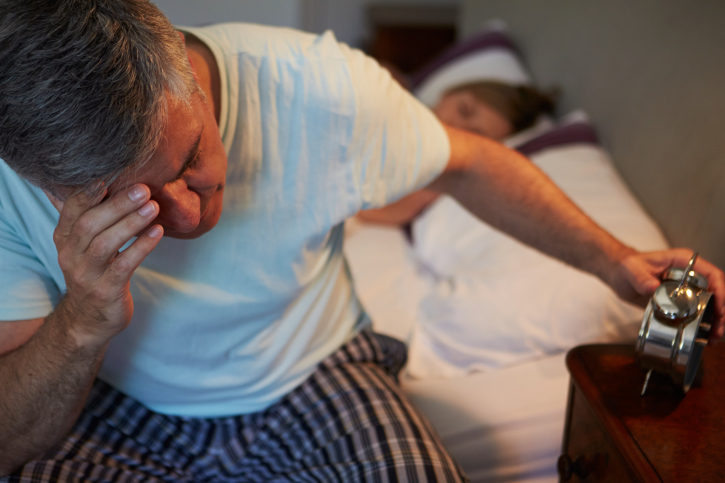 According to a study of 164 healthy people, inadequate sleep could increase the risk of developing a cold. Scientists monitored participants’ sleep patterns for a week, then quarantined them in a hotel for five days and exposed them to a cold virus. Researchers also checked the participants’ blood for an antibody that fights the common cold, then removed participants who had the antibody to make sure those participants would not bias the infection rates of the group.
At the end of the quarantine period, 45.2% of those who slept less than five hours a night exhibited at least one sign of illness—revolving around mucus production—and one other immune response. Of those who slept five to six hours, the cold rate was 30%, compared to 22.7% for those who slept six to seven hours. The rate was only 17.2% for those who got more than seven hours of sleep. At the end of the study, researchers determined that people who slept less than five hours per night were 4.5 times more likely to get sick than those who slept seven hours or more.
 Sometimes, anxiety feels a lot like riding too fast on a spinning carousel at an amusement park. It takes hold of a particular thought or fear and spins on it nonstop. It’s frustrating and exhausting, and it can feel out of our control.
The temptation in that situation is to do one of two things to feel better: (1) distract ourselves from the thoughts or (2) indulge them. Distraction maneuvers include watching television, calling a friend, taking a pill, or checking Facebook. Indulging behaviors might look like making endless lists and notes about anxious thoughts, researching whatever the issue is for hours, or calling people to talk through the same problems over and over.
The tough truth is that we can’t run from what’s bothering us, and we can’t necessarily “solve†it, either. If our minds are telling us to be very worried about a work meeting tomorrow, the answer is not to spend hours thinking about that meeting. This gives us the illusion of control—“If I can imagine every possible issue that could arise during the meeting, I’ll be able to handle whatever happensâ€â€”while keeping us tired out and high-strung. Trying to solve an irrational fear through rational thought is, as it sounds, impossible.
[fat_widget_anxiety_right]
Instead, we have to do something that feels pretty counterintuitive: To keep anxiety at bay, we should sit with it. This means choosing actions that address the anxiety itself rather than dealing with the subject we think we’re anxious about. “Sitting with the feelings†sounds a lot harder; who wants to lean into feeling scared and worried? But we’ve already tried distraction and indulgence, so we know those are temporary fixes without any long-term gain. Once the fear about the work meeting is soothed, another problem will be waiting to frighten us, and we’ll have to start working feverishly again to calm that thought.
There are many ways to attack anxiety more productively. The tools below are described in their simplest form. If you see one that appeals to you, a professional, a book, or even a website could help you flesh them out and practice them. Other ideas can be tried here and now, on your own.
To keep anxiety at bay, we should sit with it. This means choosing actions that address the anxiety itself rather than dealing with the subject we think we’re anxious about.
1. Words
When your mind is spinning, there’s a story that you’ve created. First, try to figure out the words the anxiety is using to scare you. Perhaps they’re “don’t bother asking that girl on a date, she’ll never say yes.†Or “if you drive on the freeway, you will be in danger.†Write down this message in the clearest words possible, then see if there’s any deeper message underneath it. If you’re afraid to ask someone out, could there be a fear underneath that such as “no one ever likes me� Does anxiety about driving also include the larger worry that “the world is unsafe� When we uncover the core message, we can sometimes see that it’s exaggerated and devastating. It’s a huge generalization.
Next, try to find a replacement thought that is more balanced, more realistic. It doesn’t have to be something magical like “everyone always loves me!†or “no one ever gets into car accidents!†These will be difficult to focus on because they’re hard to trust. A more reasoned statement might be “I can handle rejection†or “some women have wanted to date me in the past.†When you come up with a thought that feels more positive and easy to believe in, consciously stop yourself whenever the anxious thought arises, push it away, and replace it with the new thought. Over and over, practice the new words to create a new thought process.
2. Images
If you’re drawn more to pictures than to words, visualizations are a wonderful and powerful way to calm your spinning mind. Try to discern how your anxiety looks to you. Maybe it’s a field of pulsating red, or a spiky ball. Close your eyes and take a deep breath. Imagine holding your anxiety in your hands. Feel its texture, its weight, its temperature. Then imagine chilling this anxiety with a breeze of fresh, cool air. See it shrinking in your hand. It becomes as small as a medicine ball, then a kickball, then a handball. Soon, it’s as tiny as a ball bearing. Continue to hold and shrink the anxiety whenever it occurs.
Another way to calm anxiety with images is through creative visualization. There are many such resources available online as audio, video, or written scripts. These stories walk you through a calming experience, simultaneously helping your body relax and moving your mind away from the distressing thoughts and into a more peaceful, controlled state. Practicing these mini-meditations trains your mind to focus less on outside subjects, which we have little control over, and more on our inner selves, which we have complete control over (although this often doesn’t feel true). One lovely visualization can be found here.
3. Physical Feelings
Finally, relaxation and anxiety management can be found by changing how your body is functioning. Sometimes, anxiety starts in the body instead of as a thought. The sympathetic nervous system gets triggered, we feel a thumping heartbeat, quicker breathing, and twitchy muscles, and then the mind looks for something to blame it on. What am I so upset about? Suddenly we’re searching for a cause and choosing targets that may or may not be relevant or significant. It must be my relationship. And then we’re off on the cycle of repetitive thoughts that feel unmanageable.
Anxious thoughts and an anxious response in our bodies are almost always linked, and they need to be dealt with on both levels. First, taking deep breaths and slowing our body movements can help bring some oxygen and blood flow back to the brain, making it easier to think logically. Experts suggest breathing in to a count of four and out to a count of five, both through the nose. The slower out-breath mimics breathing patterns while we sleep, and can help trick the brain into thinking we’re relaxed before we actually are.
These techniques represent just the beginning of ways to address anxiety directly, without trying to run from it. The good news is, once you find a way (or two or three) of gaining control of your spinning thoughts, there can be a powerful sense of mastery and relief. The carousel does not have to rule your mind and body. Rather than pretending it doesn’t exist, you can slow the ride, dismount from the horse, and get a good night’s sleep.
 “I wanted a perfect ending. Now I’ve learned, the hard way, that some poems don’t rhyme, and some stories don’t have a clear beginning, middle, and end. Life is about not knowing, having to change, taking the moment and making the best of it, without knowing what’s going to happen next. Delicious ambiguity.â€Â —Gilda Radner
You’ve shown up for work only to be told that your position has been eliminated, and now you find yourself jobless and afraid. You find out that your spouse has been having an affair, and suddenly you are in a panic about what the future holds and how your life will change. You have a health condition and begin to live in a space where nothing seems certain. In moments like these, anxiety takes up residence in our minds: What will the future look like? Can I handle what is coming down the road? Will I be OK?
We’ve all been there at one time of another: stuck in uncertainty. It’s a scary place to be, and can leave you feeling out of control, hopeless, and helpless.
Although each of us differs in how much of life’s ambiguity we can tolerate, there are some situations that challenge even the most risk tolerant among us. Humans love a sense of order and predictability; chaos and the random nature of life can be very scary.
[fat_widget_right]
When you are living with uncertainty and feel like some of your power in life has been taken from your hands, how do you cope? How do you manage to live in that ambiguous place without falling apart or dissolving into stress and worry?
This is a challenge I’ve faced as a person living in the shadow of cancer. As a cancer survivor, living with the knowledge that your cancer could come back and ultimately end your life is a significant challenge. Finding a way to manage and live with that uncertainty is necessary in order to lead a fulfilling and whole life, as it is with all uncertainty we face.
Here are some tips on how to find peace in an uncertain time:
1. Recognize That Total Certainty Is an Illusion
This is where we take a turn for the philosophical. In learning to live with uncertainty, it took me some time to recognize that the life I had been living pre-cancer was not necessarily any more secure than the life I am living post-cancer. In considering the temporary nature of all things and in acknowledging that change can come at any moment, we can see that total certainty in life is but an illusion.
As much as we would like to deny it, we are always in a state of uncertainty. We take for granted that things will remain relatively constant and have a hard time accepting that huge changes can befall us with nary a warning. As distressing as it is to consider, the truth is that your life can change on a dime.
Driving home from work today, you could be hit by another car and find yourself permanently paralyzed. You could find out that your newborn has a significant medical or mental health issue that will impact your family for the rest of your lives. You could arrive home to find that your house has been gutted by fire and you have no place to live. Alternately, a sudden windfall of cash could land in your lap from the estate of Great Aunt Agnes, or you could get a call from the employer of your dreams, asking you to join the team.
We like to believe we have total control over what lies before us, and, in truth, we do maintain a huge amount of control in the trajectory of our lives. But we don’t control all of it. It’s helpful to remember this during hard times. Just because you now recognize the uncertainty in your life because it is bolded, highlighted, and in flashing neon lights doesn’t mean uncertainty wasn’t there before. It just means it wasn’t as in-your-face as it is now.
Knowing that this is the case makes it much easier to accept that uncertainty is not necessarily an indication that things are going all wrong—uncertainty is the natural state of things. Once you recognize this truth, it’s easier to loosen from the grip of anxiety around the unknown.
2. Practice Meditation
A growing body of research shows that meditation can be of tremendous benefit to people coping with anxiety and depression. I will frequently draw in a mindfulness piece when working with people in therapy, and often this includes meditation.
The real benefit of mindfulness meditation is that it allows you to create some distance between you and your automatic thoughts and emotional reactions. Putting even a 15-minute practice into place in the morning will provide a space for your mind to calm and your anxiety to be reduced.
3. Utilize Exercise
I recently attended a workshop focused on releasing stress and trauma held in the body. The woman leading the workshop noted that, in the wild, animals often shake as a way to reduce tension. She pointed out that after an antelope runs from a lion and survives, it will spend some time shaking as a way to discharge the physical tension and release the energy brought on by the fight-or-flight response. Many animals release tension this way, but humans don’t have such a built-in response for discharging the stress we carry. Exercise can function for us in much the same way that the need to tremble functions for a dog.
Running, walking, aerobics, yoga, and weight training are all great for discharging physical and emotional energy that we carry with us during the day. Getting proper physical exercise can also help with getting good sleep, which is essential in thinking clearly and being our optimal selves.
4. Take Action Where You Can
Frequently when we are living with uncertainty, we feel as though our power to control the direction of our lives has been taken from us. This can feel very unsettling, to say the least.
While it’s important to acknowledge that uncertainty is a natural part of life, it’s also important to take action on those parts of your life that you have control over. Sometimes, the only thing we have control over is how we choose to react to the challenges we face. How you choose to face uncertainty is all up to you. Consider how you’d like to move forward with this in mind.
5. Get Support
When difficulties befall you, it’s easy to feel alone. The reality is that each of us experiences suffering. It’s a part of the human condition. The feelings you are feeling have been felt by millions of others. People all over the world, in your town, in your neighborhood, are dealing with uncertainty, too.
Reaching out to others for support can be helpful. Find that friend who has faced some really hard times, who has been through the wringer and kept going. Talk to them about what you are coping with. Some people prefer to seek out a therapist in this circumstance; therapy can be grounding during uncertain times. No matter whom it is, find someone who can help you reconnect with yourself when you start floating into anxiety about what the future holds.
Learning to live with uncertainty is one of the great challenges of life. It’s not an easy task, but learning to tolerate ambiguity is an essential skill for living a satisfying life. It will carry you through many challenging times, and you’ll find yourself living with more appreciation of the moment, which is really all we ever have anyway. Uncertainty can be a great teacher; allow it to be yours!
 Parenthood makes worry inevitable, but the threats parents worry about change with each generation. The National Poll on Children’s Health, conducted annually by the University of Michigan C.S. Mott Children’s Hospital, is a phone survey that asks a nationwide sample of adults to list the top 10 threats faced by children in their communities, as well as for children across the country.
The most recent poll suggests that violence and health are ongoing concerns for most parents. Over the years, obesity tends to top the list of concerns among those polled, along with bullying and substance abuse, and this year’s poll brings gun-related injuries and school violence into the mix.
What Do Parents Fear?
When parents were surveyed on the biggest threats to children across the United States, 55% put childhood obesity on the list, making childhood obesity the greatest concern of all.
The top 10 “big problems†affecting children nationwide, according to adults surveyed, include:
[fat_widget_left]
1. Childhood obesity – 55%
2. Bullying – 52%
3. Substance abuse – 49%
4. Smoking – 47%
5. Violence at school – 44%
6. Child abuse – 42%
7. Alcohol abuse – 41%
8. Internet safety – 40%
9. Gun-related injuries – 39%
10. Teen pregnancy – 37%
Adults frequently expressed different concerns for children living in their local communities. Childhood obesity still topped the list, with 29% of parents ranking it as a major local threat.
The top 10 biggest local threats included:
1. Childhood obesity – 29%
2. Smoking – 26%
3. Drug abuse – 26%
4. Bullying – 23%
5. Stress – 22%
6. Alcohol abuse – 19%
7. Internet safety – 18%
8. Child abuse and neglect – 18%
9. Teen pregnancy – 16%
10. Not enough physical activity – 15%
The Most Common Threats for Children
Parents’ fears can be influenced by media coverage of frightening events, such as mass shootings. In some cases, parental fear is reflective of common threats. Child abuse, for example, is startlingly common, with more than 6 million cases reported to state child protection organizations in 2012.
Parents don’t always worry about the biggest threats, though. Some leading causes of childhood deaths didn’t make the list. Among babies, the leading causes of death are sudden infant death syndrome (SIDS), developmental and congenital conditions, and low birth weight. Among children ages 1–14, cancer, developmental and genetic conditions, and accidents are the leading causes of death. Suicide, homicide, and accidents top the list among older teenagers.
Though parents’ worries might not always directly reflect the threats their children face, it makes sense that parents might feel anxious in general. In 2013, UNICEF rated child welfare in industrialized countries. The U.S. had the second-highest child poverty rate, and overall, the U.S. ranked 26 out of 29 countries on measures of child welfare.
References:
- Child abuse and neglect stats. (2014, August). Retrieved from https://www.firststar.org/library/national-statistics.aspx
- Death among children and adolescents. (2012, August 1). Retrieved from http://www.nlm.nih.gov/medlineplus/ency/article/001915.htm
- School violence, gun-related injury among top 10 child health concerns nationally. (2014, August 11). Retrieved from http://www.mottchildren.org/news/archive/201408/school-violence-gun-related-injury-among-top-10-child-health
- Schwayder, M. (2013, April 11). UNICEF report on child well-being shows U.S. near bottom of list. Retrieved from http://www.ibtimes.com/unicef-report-child-well-being-shows-us-near-bottom-list-1186975