 In Kundalini yoga there is a practice called the Ego Eradicator. To do it, you raise your hands, put them in a specific position called a mudra, and begin a long series of sharp exhalations that rhythmically pump the diaphragm (known as Kapalabhati breathing).
This practice is found by many to be invigorating and energizing, but it will not actually eradicate your ego. We are born with an ego, and we will die with one. This fact can make it easy to take things personally.
In general, we humans have a tendency to see the world through our own eyes, using ourselves as reference points. Because of this, we tend to end up taking most things to heart. A natural, usually unconscious, extension of this tendency is using what happens to support or contradict what the ego seeks.
As you may well imagine, the ego wants praise and validation. This would not be such a big problem—except the ego has a way of magnifying and distorting even minor comments and reactions from other people. How many times in life have you felt hurt by something small that mushroomed into something enormously offensive because your ego felt bruised? [fat_widget_right]
It’s Not About You
One way we can become more resilient to the behavior of others is by reminding ourselves that the behavior is not a reflection of us. In fact, it may have little or nothing to do with us. Once we realize this, we can consciously choose to ignore more. This is easier said than done, of course. But in time, with enough practice, we can actually train ourselves to stop taking everything personally.
Most things in life are not about us, but the ego generally doesn’t want to believe this. Luckily, we are more than our ego. When we change our perspective, other parts will welcome this shift, as it can allow us to feel calmer and more in control of our reactions.
We are in our own minds, bodies, and emotions 24/7. As a result, we can end up unconsciously projecting our thoughts and feelings onto others. Once we realize we are doing this, it often becomes easier to see people‘s comments and reactions as a reflection of who they are, not who we are. A logical extension of this awareness is the appealing practice of ignoring more. At first, learning to ignore more may be somewhat difficult, but it becomes easier every time we do it.
Learn to Ignore for Inner Growth
What does ignoring more actually look and feel like?
Let’s say someone says something you find offensive. First, remind yourself their words are a reflection of them and have nothing to do with you. Then simply let the offense go. Yes, this might take a Herculean effort the first time, or even the first few times. But this response will get easier and easier until eventually it becomes almost automatic. When this happens, you may feel lighter, freer, and happier. (But watch out—in the beginning you might find yourself thinking you’re giving the person a free pass, that you’re doing this for their benefit. Nothing could be further from the truth—you are doing this to lighten your emotional load.
Understanding that people’s comments and behaviors come from within them can allow us a little time to evaluate the situation. We can then make a conscious choice to ignore, to not add more bricks to the load we are carrying.
Choosing to ignore and let something go, whether that something is a jibe from a friend, a comment from a boss, or a well-intentioned criticism from a parent, can improve all of our relationships. Think about it: When you take everything to heart, we tend to make a bigger deal out of each comment, facial expression, or behavior. This can kindle strife in our relationships. If we ignore more, we may find we can let many comments or facial expressions go without feeling bad or challenging them.
Understanding that people’s comments and behaviors come from within them can allow us a little time to evaluate the situation. We can then make a conscious choice to ignore, to not add more bricks to the load we are carrying. There is something very freeing about refusing to act the way we might have in the past. The excitement of inner change and growth can be exactly the catalyst to need to become more content with the world as it is.
Training your mind to ignore more can be challenging. It generally doesn’t happen overnight. At first you might slip back into old patterns of taking things personally, ruminating over the responses of others, and escalating issues by over-processing them through lengthy discussion of what was said and what was meant. But I encourage you to be patient with yourself! Even if you succeed in ignoring just a little bit more, you are likely to notice significant changes in your sense of freedom, empowerment, and peace.
If you struggle to adopt this practice into your life, or you find yourself affected by the words and actions of others despite attempting to ignore and let things go, consider seeking support from a therapist or counselor.
 Eastern traditions have long recognized the importance of the mind-body connection for general wellness, and Western thought is beginning to follow suit. An increasing amount of research is emerging to support this link. Yoga in particular has become especially popular in recent years as a way to facilitate the mind-body connection and is now one of the most widely practiced forms of complementary health care in the United States.
Demonstrated to have benefit in the treatment of numerous physical health conditions and mental health concerns, stress and trauma-related issues among them, yoga is utilized by many to cultivate mindfulness through a combination of physical movement, breathing exercises, and relaxation. Yoga therapy, in fact, is a growing field of mental health treatment.
Yoga and the Stress Response
Many studies have observed the effect of yoga on the fight-or-flight response, which is the body’s natural reaction to stressful and life-threatening situations. The fight-or-flight response, intended to save us from immediate physical danger, can also be experienced when we encounter stress, such as a life change, a toxic relationship, or the challenges of addiction recovery. [fat_widget_right]
Chronic stress and levels of cortisol (the body’s primary stress hormone) that are consistently elevated underlie many physical and mental health issues. Regular practice of yoga, however, has been found to naturally decrease cortisol levels. This natural decrease of cortisol can give the body a chance to return to a state of restful awareness. Restful awareness allows the physical impact of the flight-or-flight response to normalize and gives the body the opportunity to heal.
Treating Trauma
During traumatic experiences, the body may become dysregulated by either over-activation or suppression of the fight-or-flight response. When this occurs, we become overloaded, and the result may be a state of mind that is too anxious, trapped, or some sort of fluctuation between the two. Trauma may be held in the body through heightened or dysregulated physiological states and somatic symptoms. The body itself, then, contains and manifests much of the pain experienced after a traumatic event. As has been said, “The issues live in the tissues.â€
When working with individuals who have experienced interpersonal trauma, mental health professionals may find traditional talk therapy alone is not always the most effective course of action.
Trauma and its effects are so often entrenched and complex that a change in a cognitive frame or behavioral pattern ignores a very basic but critical element: the body.
A cognitive symptom of trauma exposure is difficulty or impaired ability to remember, verbalize, and/or process one’s experiences. Therefore, insight-based approaches often are not sufficient on their own. Furthermore, trauma and its effects are so often entrenched and complex that a change in a cognitive frame or behavioral pattern ignores a very basic but critical element: the body.
Techniques working to help increase awareness of internal states and physiological responses to both internal and external stimuli have demonstrated promise in addressing trauma in the body. Reorienting an individual to their body is often a key to unlocking their pain and building a path toward healing.
What Is Trauma-Sensitive Yoga?
An evidence-based practice designed to directly address symptoms associated with traumatic exposure, trauma-sensitive yoga focuses on body awareness in the present moment. Based on the theoretical underpinnings of attachment theory, trauma theory, and neuroscience, TSY helps individuals in treatment recognize choices relating to the body and develop the ability to take effective action based on the knowledge of these choices. The language used in treatment is invitational and emphasizes choice for the person in treatment. The experience is shared, and no physical assists are used.
Unlike traditional yoga, TSY always places emphasis on the internal experience of the individual, not on achieving proper form. The facilitator of the treatment will, while practicing with the individual, help them become accustomed to feeling their body in the present moment, whether by guiding them to feel the way their feet contact the ground or how a particular muscle contracts. Through this guidance, people in treatment can learn what to do about the experience in real time by taking effective action. Everything about the practice is optional, gentle, and designed to help individuals befriend their bodies.
The practice of yoga, with its focus on the mind-body connection, offers both symptom reduction and opportunities for people practicing yoga to heal and grow. Yoga, known to benefit the mind as well as the body, has been proven beneficial for addressing stress, trauma, depression, anxiety, addiction recovery, and even personal growth.
Beyond yoga’s other benefits, research has found individuals who combined TSY with psychotherapy were more likely to experience a decrease in trauma-related symptoms and an increase in positive traits and emotions such as grace, compassion, relating with self and others, acceptance, centeredness, and empowerment.
If you are interested in incorporating yoga into your wellness practices, self-care routine, or mental health treatment but are unsure of where to start, consider bringing it up with your therapist or counselor or primary care physician to see if this approach might benefit you.
References:
- Buric, I., Farias, M., Jong, J., Mee, C., & Brazil, I. (2017, June 16). Meditation and yoga can ‘reverse’ DNA reactions which cause stress, new study suggests. Frontiers in Immunology. Retrieved from https://medicalxpress.com/news/2017-06-meditation-yoga-reverse-dna-reactions.html
- Emerson. D., Sharma, R., Chaudhry, S., & Turner, J. (2009). Trauma-sensitive yoga: Principles, practice, and research. International Journal of Yoga Therapy, 19. Retrieved from http://www.traumacenter.org/products/..%5Cproducts%5Cpdf_files%5Cijyt_article_2009.pdf
- Garfinkel, M. (2006). Yoga as a complementary therapy. Geriatrics and Aging, 9(3). Retrieved from http://www.medscape.com/viewarticle/525187
- Jackson, K. (2014, November 17). Trauma-sensitive yoga. Social Work Today, 14(6). Retrieved from http://www.socialworktoday.com/archive/111714p8.shtml
- MacMillan, A. (2017, June 16). Yoga and meditation can change your genes, study says. Time. Retrieved from http://time.com/4822302/yoga-meditation-genes-stress
- McCall, T. (2008, June 20). Understanding the mind-body connection. Yoga Journal. Retrieved from https://www.yogajournal.com/teach/yoga-therapy-and-the-mind-body-connection-part-1
- Woodyard, C. (2011). Exploring the therapeutic effects of yoga and its ability to increase quality of life. International Journal of Yoga, 4(2). Retrieved from https://www.ncbi.nlm.nih.gov/pmc/articles/PMC3193654
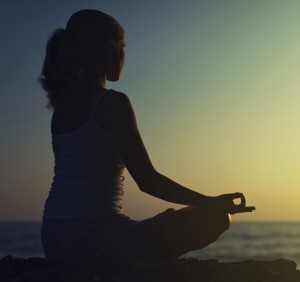 Americans are famous for being a hard-working bunch, taking the fewest paid vacation days off. I, for one, spent the summer studying advanced yoga therapy techniques on weekends, and working during the week, especially during the months of June and August. But I made sure to take some time off at the beginning and again at the end of the season so I could relax a bit, and I’m glad I did. Studying ways to help people relax is hard work, and it can be pretty stressful!
What did I learn at yoga school? I studied what happens to your body when it is subjected to relentless stress, and the importance of learning how to relax and let go. The stress response works great if you’re running away from a hungry tiger, but prolonged stress is bad for you because it weakens the body and the brain.
This is why:
- Your adrenal glands pump adrenaline, which raises your heart rate, your blood pressure, and increases the amount of sugar in your blood. Your adrenal cortex sends out cortisol, part of the stress response. This helps you run fast when you’re escaping the tiger, but when it becomes habitual and there aren’t any tigers to run away from, it is destructive.
- Stress kills brain cells; a calm environment permits their growth. It is not true that brain cells stop growing when you’re an adult, they just grow more slowly. So help them out and give them a nice place to live.
- Stress is associated with depression and anxiety. No fun.
- Your immune system doesn’t work as well as it should. Ah-choo!
- The right amount of stress is beneficial, but too much is deadly.
[fat_widget_right]
That’s why relaxation is as important as eating well and getting enough exercise and should be part of your regular health routine. It’s a way to take care of yourself and show yourself some love. So if it’s not a part of your usual day, you might want to think about adding it to your program. Don’t have much time? I bet you can find five or 10 minutes to call your own if you look hard.
Maybe your family is demanding. Make some demands of your own in return. You need a break just as much as anyone needs anything.
Working hard for a tyrannical boss? Find a way to make your work environment more pleasant. Look around and see if there’s some small thing you can do to make things better for you—adding a foot rest, for example, if your seat is too high for you, or wearing really comfortable shoes if you spend a lot of time on your feet.
One powerful relaxation technique is restorative yoga. Like all yoga, the sequence is based on bending forward, backward, sideways, and twisting. The difference is that these poses are held for a long time—five or even 10 minutes. You place yourself in a pose, child’s pose, for example, but your body is supported by bolsters so that you are in complete and absolute comfort.
I invite you to try the restorative version of child’s pose. Start child pose the usual way, but with the short end of a bolster in front of you, and then fold over it lengthwise so your body is supported by the bolster. There are many such adaptations of yoga poses you may already know. You can get DVDs that will show you how, but I think if you are able, it’s best to visit a class or two and learn directly from a teacher.
Finally, if you absolutely can’t stop the worried, anxious chatter in your brain and you’re always wired, consider seeing a therapist for some help.
Below are some of my favorite ways to relax. Like everyone, I need time out for myself, even if it’s only a few minutes. I don’t always feel like I have to respond immediately to help other people. I need to take care of myself first, and you do, too.
- Take warm, relaxing baths.
- Go for a walk in the park.
- Water and admire your plants.
- Fill the room with a lovely scent.
- Take a yoga class, or give yourself one.
- Meditate.
- Read.
- Listen to music.
- Have a nice visit with someone.
- Watch television.
- Go swimming.
- Breathe.
- Give yourself enough time to do things, so you’re not always rushing.
- Laugh. This is very important. Among other things, laughter opens up the airways and pumps fresh air into your lungs. Also, it’s fun.
- Dance.
- Jog.
- Pet the cat, dog, or other pets.
I bet you have many other favorite ways to relax, things you enjoy doing. The secret is to remember to do them. Helping others helps with your stress, by the way, so why not post your favorite ways to relax and give us more ideas? (If you feel like it, that is!)
References:
- Berzin, R. (2014, July 20). 10 Reasons Why Stress Is The Most Dangerous Toxin In Your Life. Retrieved from http://www.mindbodygreen.com/0-14560/10-reasons-why-stress-is-the-most-dangerous-toxin-in-your-life.html
- Krantz, D., Thorn, B., & Kiecolt-Glaser, J. (2013). How Stress Affects Your Health. Retrieved from http://www.apa.org/helpcenter/stress-facts.pdf
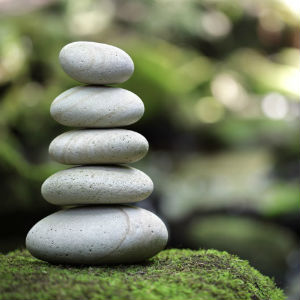 “That’s so Zen,†people say, meaning peaceful, accepting, and soothing. But what is Zen, exactly? You might picture a room filled with fluffy pillows decorated in blues and grays, lavender incense, and synthesizer sound waves punctuated by gongs. I’d probably like hanging out on those pillows, but Zen is much more than relaxation. It’s a way of life emphasizing the value of meditation and intuition, and realizing one’s true nature—the purpose of Zen.
We complain about stress, about losing ourselves in the hectic din of constant activity, always on the go, busy, and in touch. We even sleep with our phones kept handy on the nightstand, so we can be available 24/7. That is too much stress, but stress is not only a bad guy, it’s a good guy, too, often supporting growth.
[fat_widget_right]
Think of how stress helps in the gym. Muscles get bigger with resistance training—which is a form of stress (on the muscles). “No strain, no gain†and “use it or lose it†are popular refrains, but we have to find the optimal amount of strain that promotes growth. We need to work those biceps with the proper weight. Too much will tear our muscles, and too little will leave us with spaghetti arms. This is where a trainer in the gym, or a meditation teacher, a spiritual leader, or a psychotherapist, can come in handy, making sure that the stress you’re experiencing is optimal, be it physical, cognitive, spiritual, or emotional. We need to balance stress and relaxation.
Zen practitioners develop a sense of balance, as well as simplicity, order, and harmony. Right diet, regular exercise, enough sleep, right livelihood, and mindfulness activities such as meditation, yoga, prayer, and other techniques help us recover from too much stress. When we quiet the mind and the body, we have a better chance of finding the true self. That’s the goal of Zen—finding the deep self, who you really are, a key to a more rewarding life, and why psychotherapists often include meditation techniques as part of their treatment plan, although it is not a replacement for psychotherapy.
Zen is a peaceful way of life which avoids killing or harming another living thing, shuns stealing, promotes sexual responsibility, and practices truthful speech that does not hurt anyone. Drinking and drugging, anything that diminishes consciousness, is to be avoided. The Shakyamuni Buddha simplified what a Zen life looks like when he said that Zen means “to do no evil, to cultivate the good, and to purify one’s mind.†These are down-to-earth principles which help us live the good life, without too much stress.
A central aspect of Zen is meditation. Often it’s wise to start a meditation practice by resolving to meditate every day, at the same time if possible, and for a period of perhaps five minutes, so when your meditation time is over you want more and you’re ready to start again the next day. You can use a timer, if you wish; just choose a sound that you like. There are some really good apps for that! You can gradually lengthen the time spent meditating.
Meditation practice is simply sitting quietly while maintaining good posture and focusing on one thing, often the breath. Watching the outbreath is emphasized because the outbreath is a relaxing breath by its nature. We breathe out, let go, and then wait through the pause and on to the next breath, a bead in the necklace of your life’s breaths.
While you meditate and focus on the breath, you try not to get caught in the endless thoughts, stories, and fantasies that our brains are constantly spinning. Each time you catch sight of your thoughts, you simply say “thinking without judgment,†and then you return your attention to the breath. The “without judgment†part? I say it twice; it’s that important. NO JUDGMENT. Meditation is not a self-improvement program. It is a getting-to-know-and-accept-yourself program, after which you can get to know and accept other people, too.
People often get angry with themselves when they catch themselves thinking instead of meditating. They might feel like failures, but it’s exactly the opposite. Catching yourself thinking is the sweet spot. You didn’t do something bad, but just the reverse—you noticed, you woke up and were aware; this is the essence of meditation, the gentle road to mindfulness which leads inside to your true nature. Mindfulness is an extended awareness, throughout the day, noticing, not simply reacting.
Meditation reduces stress by increasing positive feelings and decreasing anxiety. As you get to know yourself better and learn to treat yourself and others with greater kindness, your ability to navigate your emotional reactions with more skillfulness also leads to a greater ability to get along with yourself and with others. Self-acceptance, again, is key.
There have been many scientific investigations into the benefits of mindfulness. An early one was the relaxation response developed by Dr. Herbert Benson, who founded the Mind-Body Institute, affiliated with Harvard University. He reports that meditation produces healthful changes in metabolism, heart rate, respiration, blood pressure, and brain chemistry. The National Institutes of Health concur. Other findings reveal that long-term meditators have increased grey matter in their brains, and an increase in alpha-wave activity.
Meditation can be an important part of your daily life. With patience, you will reap great benefits of consciousness and emotional development. Following basic Zen principles of compassion and nonviolence, and establishing a regular meditation practice, makes for a satisfying life with less stress—and provides the tools to handle stress when you need to. A Zen mind-set can go a long way toward teaching us to deal with stress. You don’t have to make a huge change to gain its benefits.
Recommended reading:
- The Wisdom of No Escape by Pema Chodron
- The Trauma of Everyday Life: A Guide to Inner Peace by Mark Epstein
- Peace Is Every Step: The Path of Mindfulness in Everyday Life by Thich Nhat Hanh, Arnold Kotler, and H. H. the Dalai LamaÂ
- Mind and Life: Discussions with the Dalai Lama on the Nature of Reality by Pier Luigi Luisi with Zara Houshmand
 “It feels heavy right here,†Rebecca* said, crying and touching her chest, “like a huge rock is sitting on me. It’s like that old cartoon, where a boulder would fall off a cliff and pin the roadrunner to the ground—it feels like I can’t move.â€Â Rebecca, a 32 year-old successful marketing professional whose older sister had recently been diagnosed with a psychotic condition, had come to see me last year. She seemed lost in grief. Fluctuating bewilderment, sadness, fear, anger, tenderness, and love were tying knots in every part of her.
I thought that untying some of the knots in her body, with the help of mindfulness practices, might help her begin to lift the boulder.
Growing up, Rebecca’s sister had provided unconditional loving support which protected Rebecca from demanding, neglectful, and painfully critical parents. She had always relied on her sister to guide and comfort her; they had always been best friends. She said that now it felt like she was standing at the edge of the ocean, watching her sister sit on a raft drifting out to sea. She had been crying uncontrollably off and on for days. What made things even harder was that her sister sometimes acted like her old self, then became delusional again. Rebecca’s emotions were rising and crashing along with her sister’s state of mind.
Mindfulness of the Body: Body Scanning and Stretching
The first foundation of mindfulness is mindfulness of the body. It is cultivated with body scanning and movement practices, like yoga and walking meditation, anchored in feeling the sensations of breathing. A body scan involves directing one’s attention to different areas, one at a time, and focusing on the sensations in each place. A scan can begin with feeling the moisture on one’s skin, sensations of warmth or coolness, pressure or tingling. Then we scan the interior of the body, noting muscle tightness or ease near the surface and going deeper, where emotions express themselves as inner physical sensations.
Building brief body scans into a sustained stretch can begin to soften tight muscles—created from strong emotions—and release the mind from thinking for a while.
Prior to entering therapy, Rebecca had taken an 8-week course in Mindfulness-Based Stress Reduction (MBSR) from me. MBSR is based on the work of Jon Kabat-Zinn at the University of Massachusetts, and is taught in hundreds of hospitals, corporations, and schools in the US and around the world. Rebecca had done many body scans as part of the course. She knew how to locate and identify the physical sensations accompanying her emotional states. The following intervention was natural to offer, and easy to do with her.
Untying Knots in the Body
As Rebecca continued to cry, we talked about the benefits of recognizing and allowing her grief. But after 20 minutes of repeated bouts of intense sobbing, she asked me to help her stop. I asked if she would like me to guide her through some breathing and mindful stretching; she immediately said yes. We did a four- or five-minute sequence of stretches, while she remained seated on the couch. I guided her to stretch gently, to her limit, with each pose, holding it for 20+ seconds, and remembering to breathe. While holding each stretch, she scanned, place by place throughout her entire body, for unnecessary tension—inviting it to soften (without insisting) wherever she found it.
“Psychotherapeutic approaches that utilize mindfulness offer well-developed non-verbal exercises that enable the individual to dip into direct sensation beneath the veil of words that may often conceal the mind’s pain. This sensory immersion enables the individual to disengage from those bottom-up enslavements at the root of suffering….†(Siegel, 2007)
“Our poses can strongly influence our emotional states. For instance, because of the expansive inhalation and opening of the chest, backbending, traditionally a stimulating practice, can elevate a low mood. Exhale-intensive poses such as forward bends tend to calm an agitated mind. In any balance practice, both inhale-oriented and exhale-oriented postures are executed in order to create equilibrium in the body and breath and to gain emotional
harmony.†(Gerstein)
Untying Knots in the Mind and Heart
This practice creates a state of non-thinking in the midst of strong feelings. Non-thinking helps release habitual, reactive thought patterns as attention is redirected to the body—what is called the neutral ground of attention. If, in the heat of raw emotion, we give free rein to thinking or emotions, our familiar and deeply grooved cascades of mental and emotional activity take their usual course, often intensifying the emotions, or cordoning them off from awareness. Instead, if we direct ourselves to notice “what am I feeling in my big toe right now?†the cascade slows, or even stops, for a while. Awareness remains intact, and new, more balanced, and less distorted thoughts have a chance to arise.
When she sat up again after her last slow, deep forward bend, Rebecca’s face had softened, her breathing was quiet, and she said “it’s gone, the heaviness is gone.†She said she felt sad, but less afraid and overwhelmed. She began to speak with compassion for herself and her sister, while remaining more relaxed for the duration of the session.
Before ending, we rehearsed the practice again: she brought the feelings back into her awareness on purpose, then, increasingly independently, guided herself through stopping, breathing consciously, body scanning, and stretching/releasing tension.
Rehearsal increased the chances that she would remember to use breathing and stretching in the days ahead. Later, she reported with some relief that she had remembered and been able to stop and practice, and that it had helped sometimes. Directing focus away from thinking, and into the body, gave her a sense of independence in calming herself, and also helped her to use her considerable intelligence to understand her sister’s situation, and to face the frightening challenge of becoming independent of her sister for the first time in her life.
Practices like these are not intended to offer an easy fix for difficult emotions or life experiences. Mindfulness, at its core, involves observing things as they are and not fighting them. One formula used is Pain x Resistance = Suffering (PxR=S). Paradoxically, allowing ourselves to be with our pain, sadness, fear, or anger, frees us to go beyond them for a while. And, according to Daniel Siegel, when practiced enough, “… an intentionally and repeatedly created state can become an effortless trait of our being.â€
Is prior training required for this intervention to be effective?
A person must be open to locating and feeling different body sensations. Not having this training is a limiting factor. In my experience, however, the breathing, stretching and scanning practice can lead to a similar shift in people who are receptive, regardless of having prior training in mindfulness.
*Names and identifying information have been changed for privacy
http://drdansiegel.com/
References:
- Gerstein, Nancy. (n.d.). How Yoga Affects Emotions. OmPlace.com. Retrieved from http://www.omplace.com/articles/Yoga_Emotion.html
- Siegel, Daniel J., M.D. (2007). Reflections on the Mindful Brain. New York: W. W. Norton & Company
- Siegel, Daniel J., MD. (2010). The Mindful Therapist: A Clinician’s Guide to Mindsight and Neural Integration. New York: W. W. Norton & Company